







TACLOBAN CITY – Around P5.89 billion is needed for the full repair of San Juanico Bridge in the next two years, an official said Tuesday.
P5.9 B needed for full repair of San Juanico Bridge
Published May 27, 2025 03:43 pm


Of the proposed funding requirement, P1.96 billion is for dry shotcrete application, P1.62 billion for foundation retrofitting, P1.09 billion for girder retrofitting, P437.55 million for box and truss, P345.57 million for replacement of bearing, P225.72 million for painting works, P164.08 million for catwalks, and P52.83 million for joint expansion.
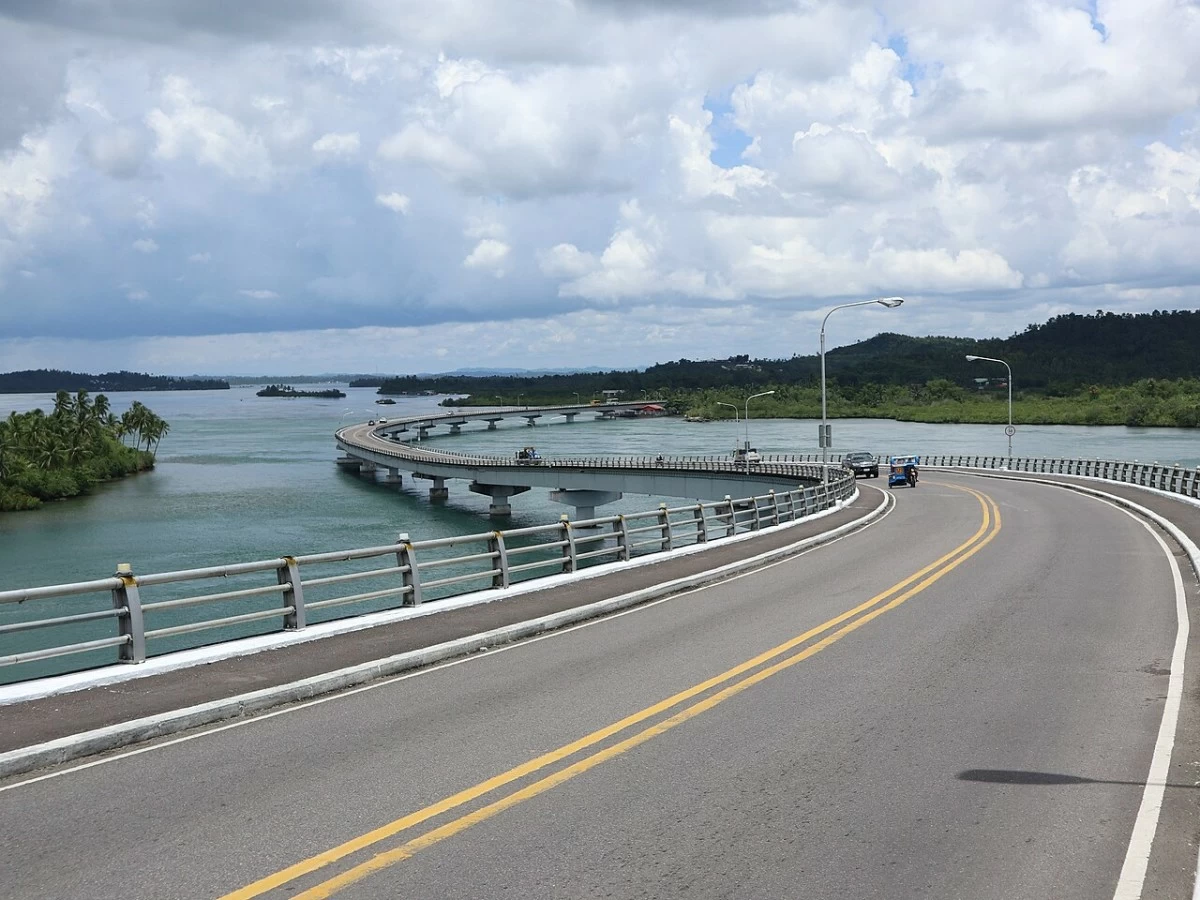
SAN Juanico Bridge (Wikipedia)
This amount was endorsed by the Regional Development Council (RDC) as requested by the Department of Public Works and Highways (DPWH), according to Eastern Visayas RDC vice chairwoman and Department of Economy, Planning, and Development Regional Director Meylene Rosales.
She said the RDC passed a resolution to include the proposed estimated budget in the 2026 and 2027 General Appropriations Act of the DPWH to ensure the repair completion within two years.
“Per the budget calendar, it is still realistic to add the proposed budget since the process for the 2026 budget approval is ongoing. We recommend to the DPWH to come up with a program of works for the multi-year contract authority,” she told the Philippine News Agency.
With no significant budget appropriated this year for the bridge repair, the RDC is seeking the immediate release of P500-million calamity funds to cover some works for the repair of the 2.16-kilometer San Juanico Bridge, a vital link of the country’s three major island groups, since the crisis can be treated as a disaster.
Based on the updated analysis, an extensive repair and rehabilitation of the whole stretch of the bridge is further needed, according to DPWH.
The DPWH regional office is currently finalizing plans, programs of work, and cost estimates for the bridge's repair and rehabilitation, prioritizing methods that do not require closure.
The three-ton load limit of the 53-year-old bridge has barred trucks and buses from crossing since May 15. This situation has created logistical challenges for the provinces of Leyte and Samar.
Several ports in the islands of Leyte and Samar have been identified as alternative roll-on, roll-off routes for cargo trucks. (PNA)