






Manila Bulletin
 Lifestyle
People and Events
Celebrated artists bring life and legacy to Davao's cultural spaces
Lifestyle
People and Events
Celebrated artists bring life and legacy to Davao's cultural spaces
Lifestyle
People and Events
Celebrated artists bring life and legacy to Davao's cultural spaces
Celebrated artists bring life and legacy to Davao's cultural spaces
By MB Lifestyle
Published May 27, 2025 06:01 am


By Jinggoy I. Salvador
April showered the Davao art scene with visual delights blooming with creativity from prominent figures in the industry. It was a “twin-twin” situation, so to speak, with two exhibitions featuring two artists each. Both were well-attended.
At the Davao Museum of History and Ethnology, two renowned Davao women artists transformed a museum space into a Garden of Eden in “Flora + Fauna: Art by Ann Pamintuan and Josie Tionko.” With their distinctly individual styles yet complementary artistic visions, the duo showcased flowers, foliage, and creatures of land, sea, and air in tranquil beauty.
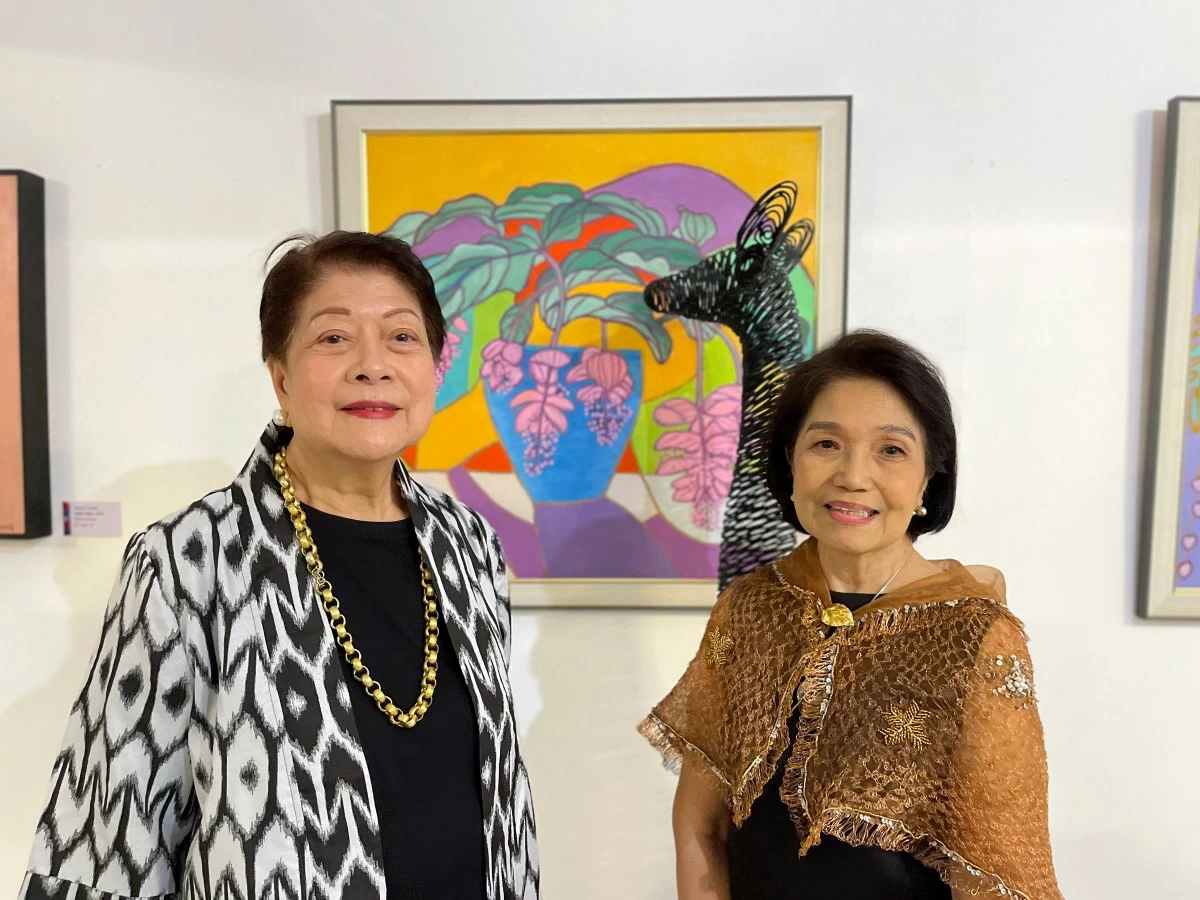
Josie Tionko and Ann Pamintuan
Ann Tukinhoy Pamintuan, famed for her Cocoon Chair that catapulted her to global fame and earned her international distinctions—including being the first Asian woman designer featured in the International Design Yearbook—exhibited her passion for metal and mastery in sculpture. Giraffes, whale shark, turtle, pigs, and geese in flight—Ann’s curated collection left her audience in awe.
Meanwhile, Josie Tionko’s flora provided a delicate contrast to Ann’s metallic fauna. Influenced by Matisse, Gauguin, Klimt, and Van Gogh, Josie’s floral images burst in bold, vivid hues. A self-taught artist, she presented a luminous, layered oil technique developed through years of practice. Her canvases became homages to nature’s quiet grace—“serene and peaceful, like in prayer,” says the artist.
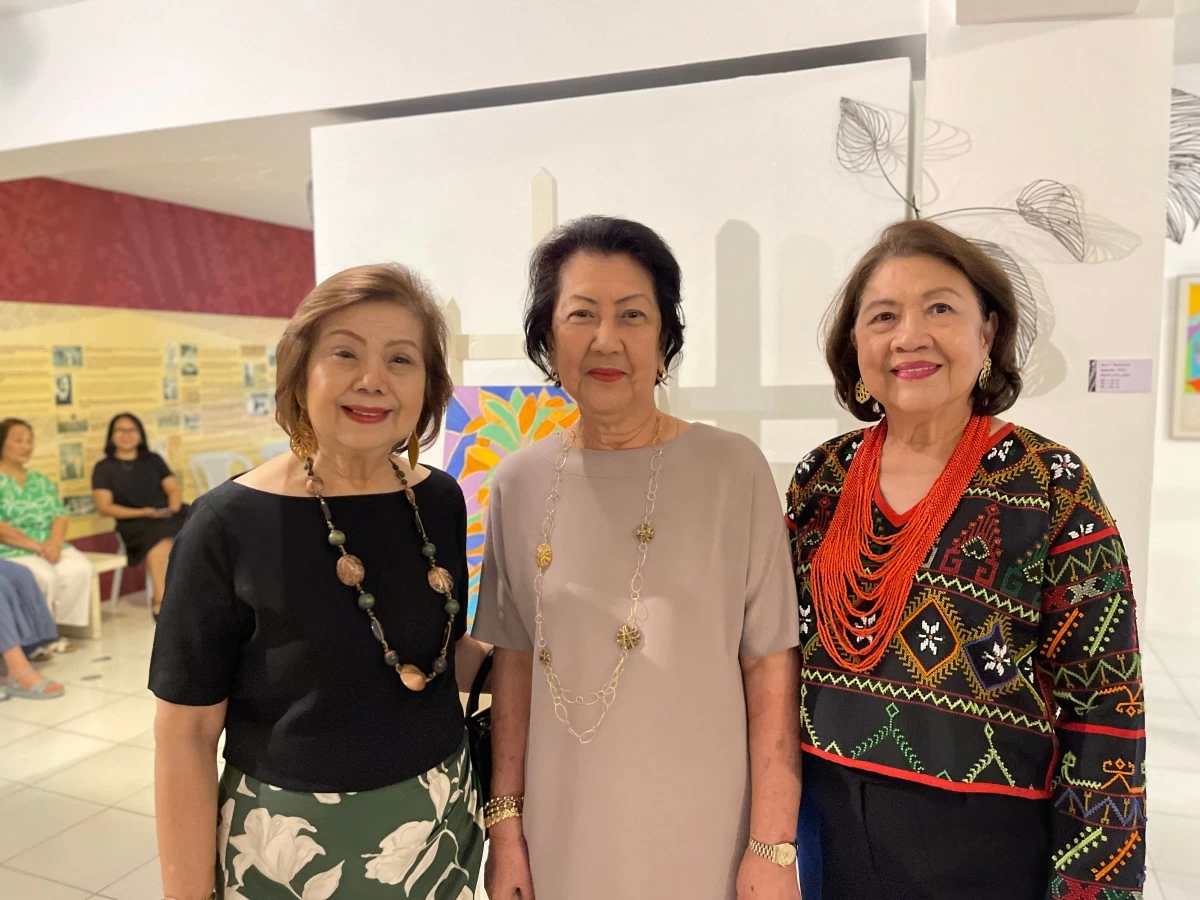
Fe Dacudao, Sylvia Garcia, and Sylvia Lorenzana
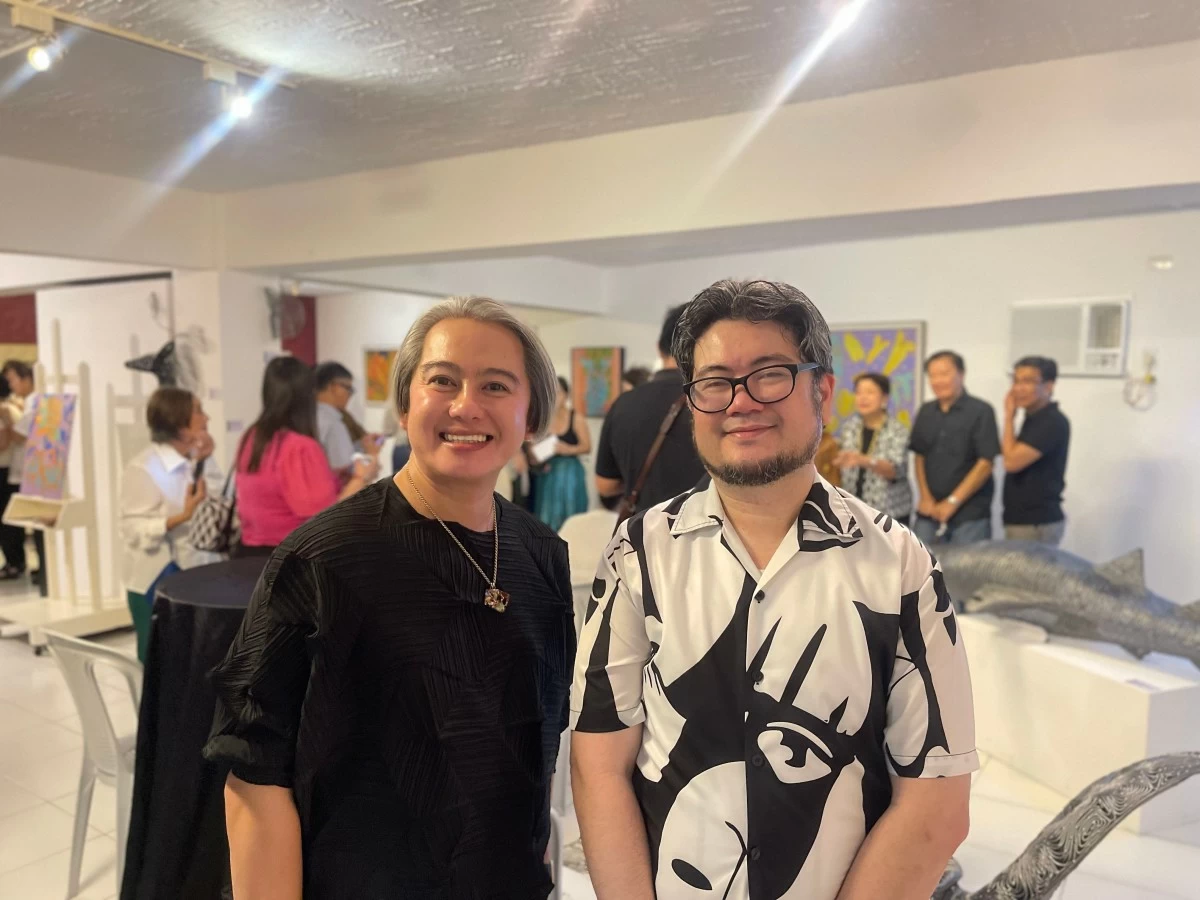
Emi Englis and Rob Tañedo
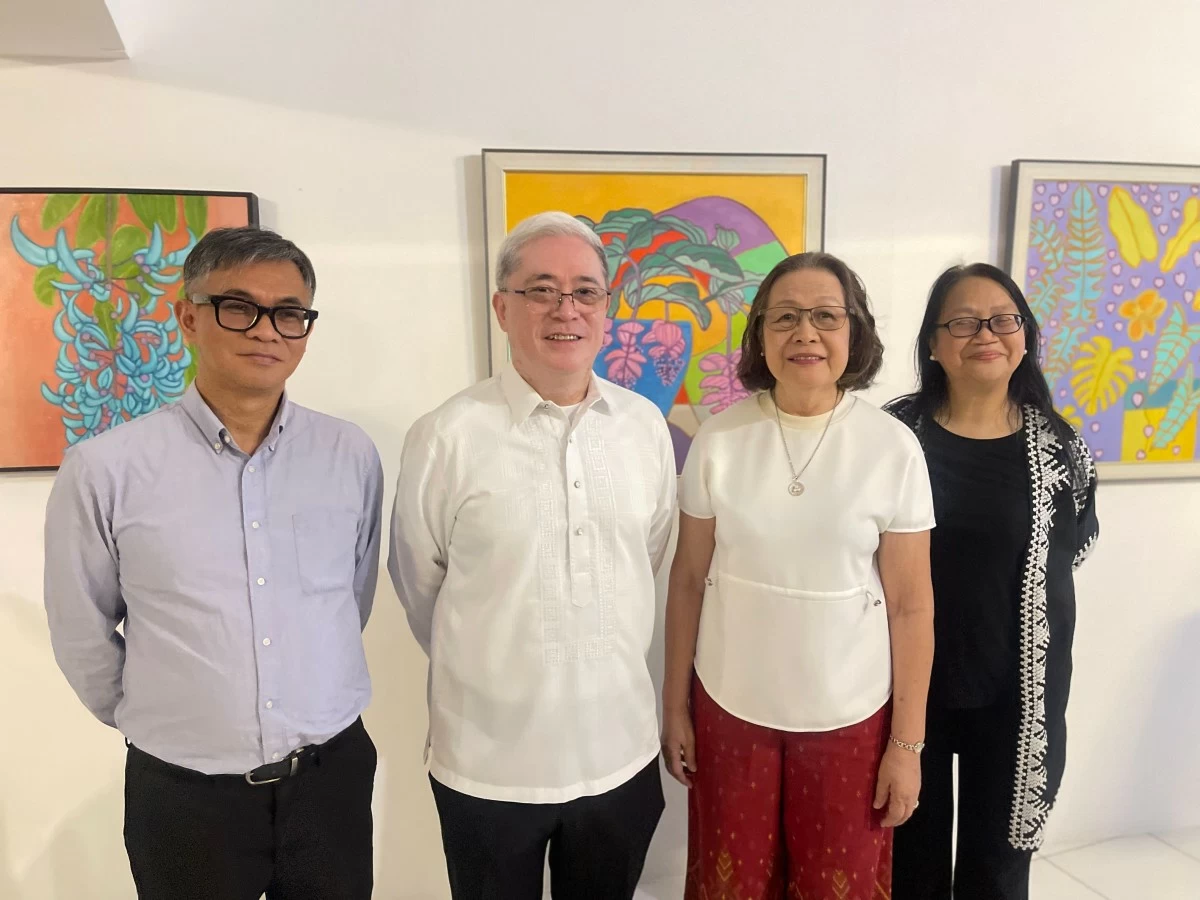
Jeremy S. Eliab, Karel S. San Juan, Judy Ann C. Prantilla, and Pamela R. Castrillo
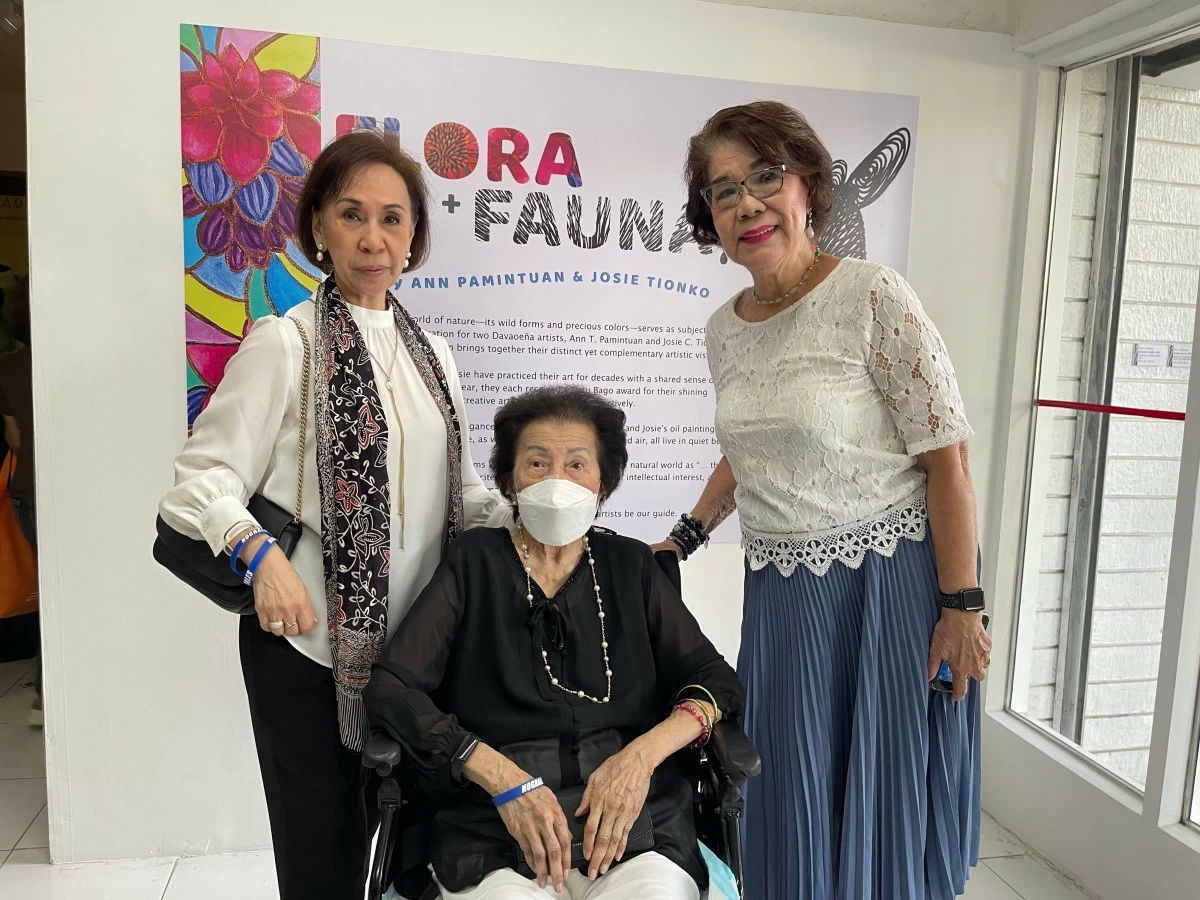
Baby Montemayor, Pat Montemayor, and Brenda Barba
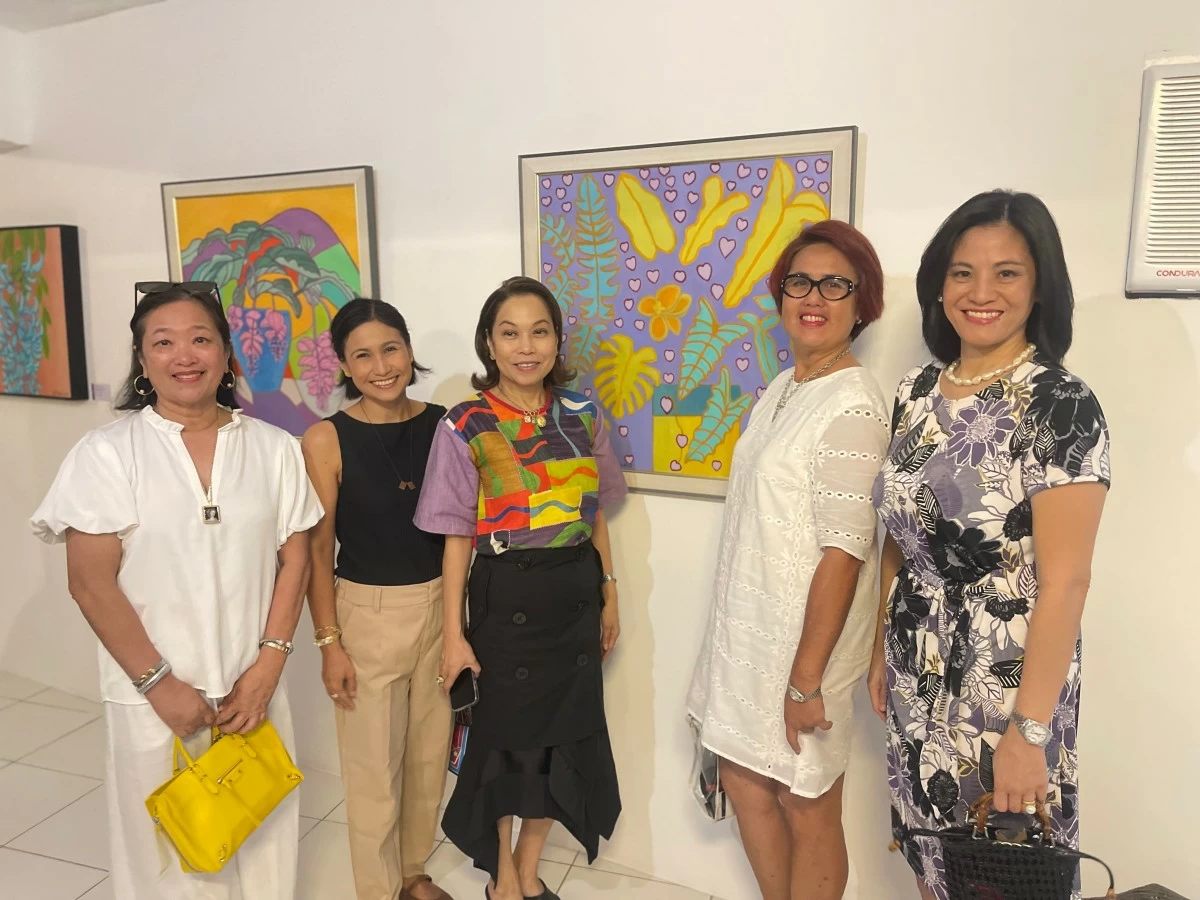
Nena Daluz, Lea Imperial, Tonette Tionko, Bambi Perez de Tagle, and Marissa Tionko
Recently, Ann and Josie were conferred with the Datu Bago Award for Creative Arts and Visual Arts, respectively. The Datu Bago Award is the highest honor given to Davaoeños for their extraordinary contributions to the city’s growth, leaving a lasting legacy of excellence and service.
Present at the affair were members of the Zonta Club of Davao, officials of Ateneo de Davao University, the artists’ fellow Datu Bago awardees, and the city’s patrons of the arts.
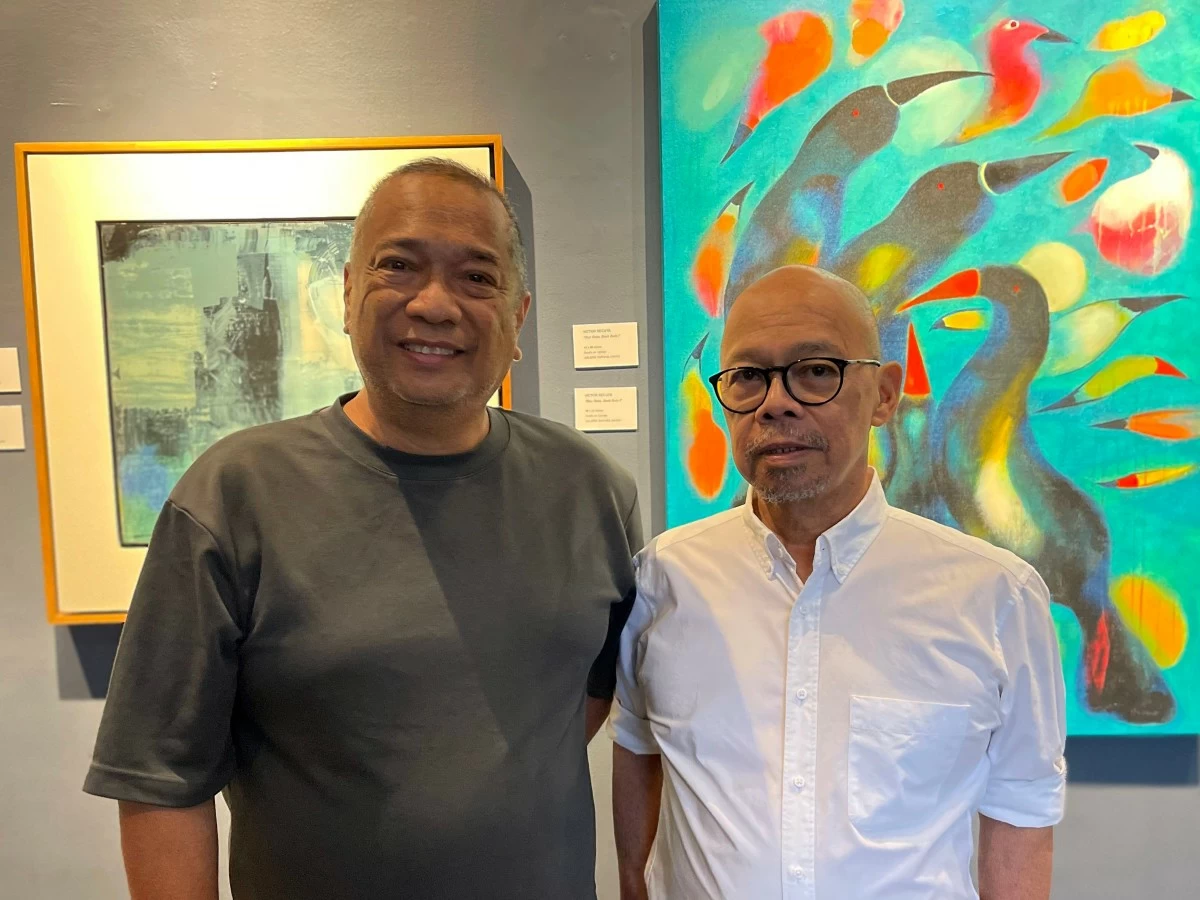
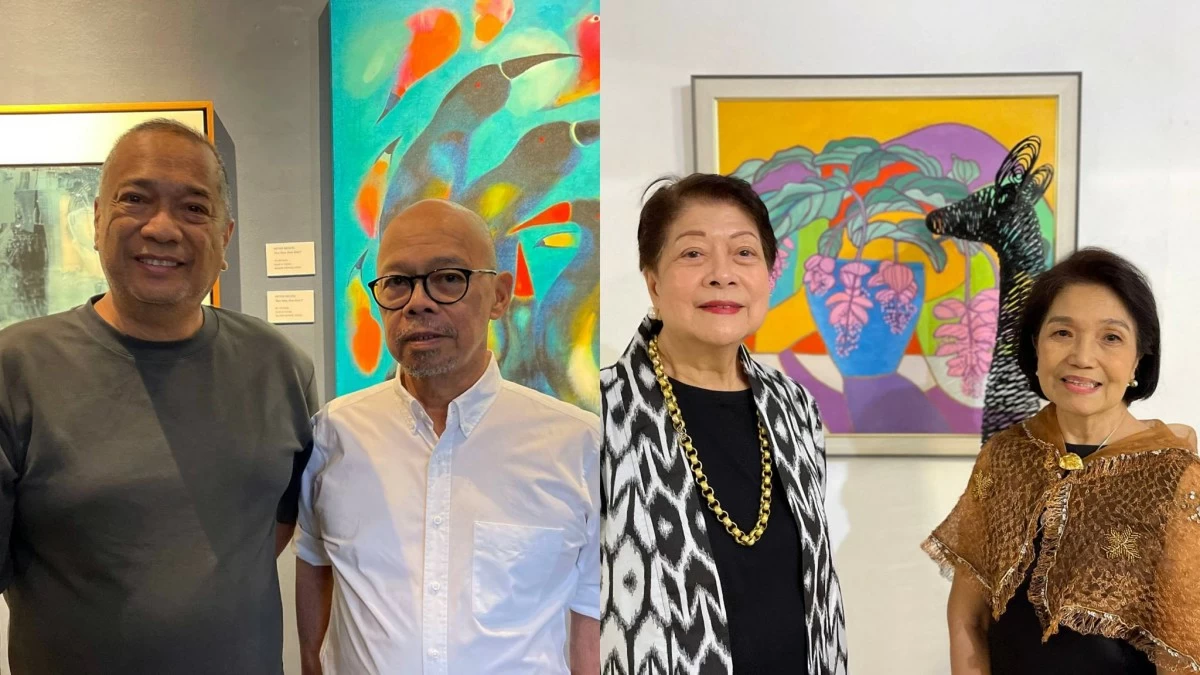
Carlo Magno and Victor Secuya
At Galerie Raphael Davao in Azuela Cove, it was a back-to-back exhibition by male artists. Modernist painters from Davao and Manila unveiled their obras in Interstice by Manila artist Carlo Magno and Waves of Blue by Davao’s Victor Secuya.
In Interstice, Carlo invites his audience to “explore the enigmatic spaces that exist between form and fusion, light and dark, as well as the real and ethereal. It challenges viewers to recognize the beauty in the spaces we often overlook, celebrating the transformative power of art to bridge the gaps between our perceptions and experiences.”
By blending paint, metal, and resin, Carlo reveals how each element interacts to create a dialogue between presence and absence. His work immerses viewers in the interplay of materials and concepts.
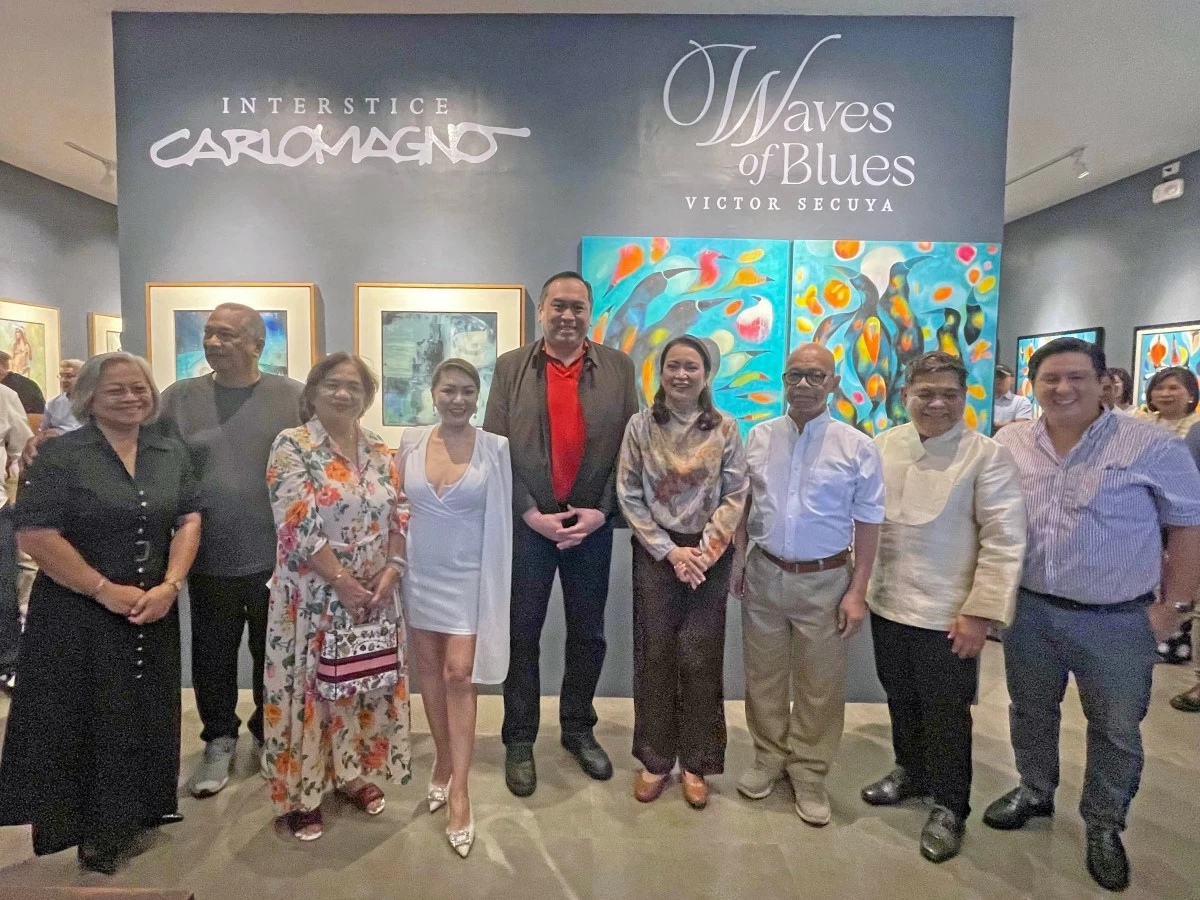
Susanne Tiausas, Carlo, Pomida Lu Daniel, Golda Divinagracia, Mabel Acosta, Victor, Oscar Casaysay, and Andy Tuason
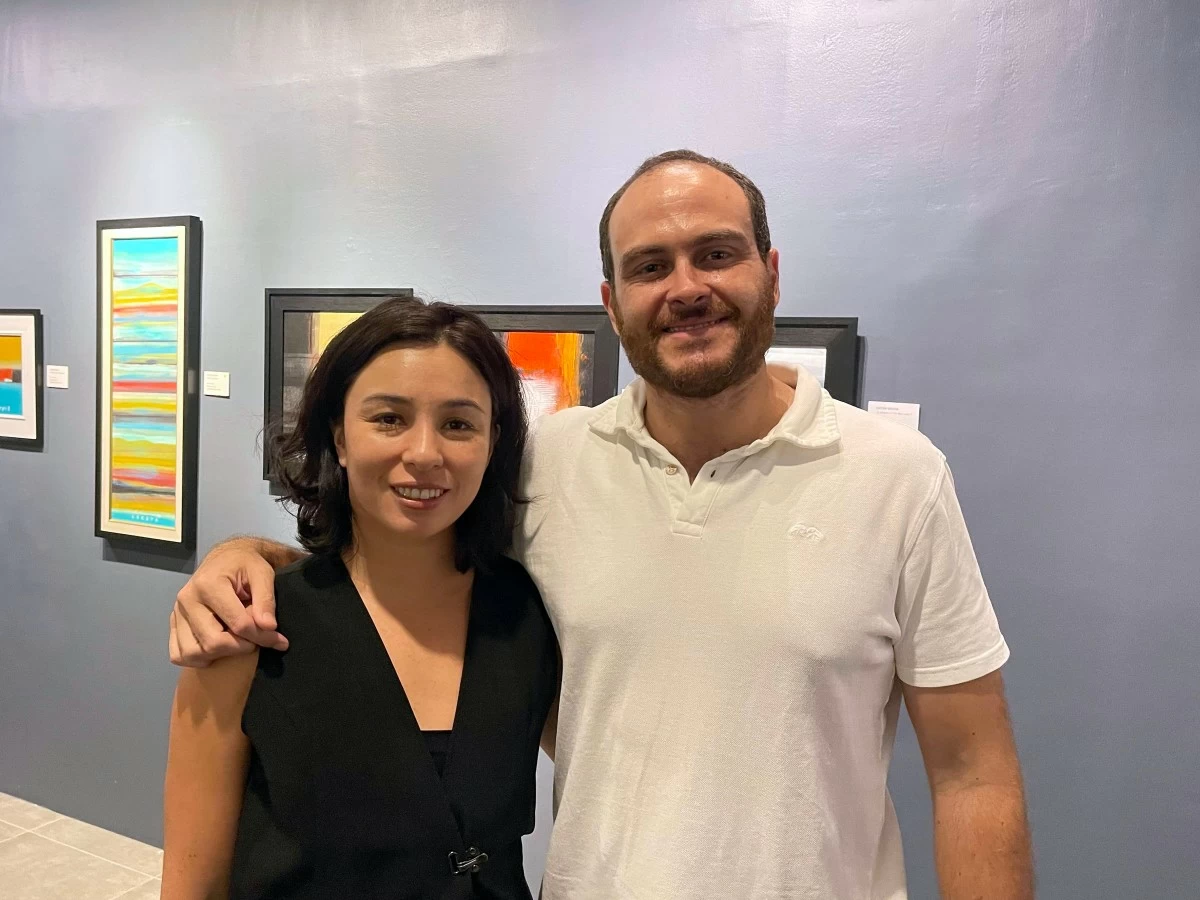
Monica Floirendo-Ugarte and husband Keenan Ugarte
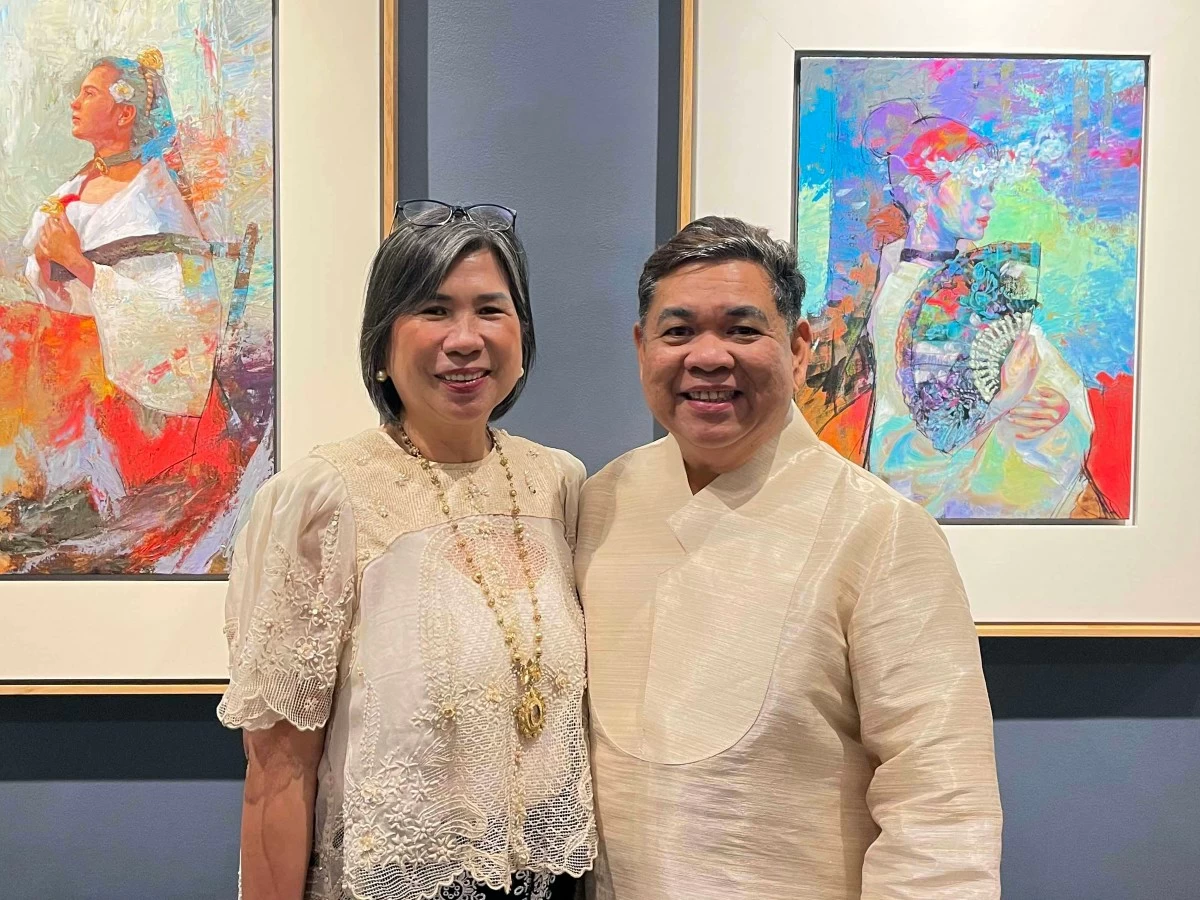
Susan Antipuesto and Oscar Casaysay
Davao artist Victor Secuya invites his audience to delve into Waves of Blue. He says the exhibit visualizes the poem of an aching spirit—its tender hums and echoes explored through palettes of strong color and form. Painted in tones of blue representing the artist’s deepest parts, the abstract figures carry the identity of Secuya’s emotional journey.
Complementing the visual art exhibit was “spoken art.” During a poetry reading session, guests were invited to read excerpts from their favorite poems.