ADVERTISEMENT

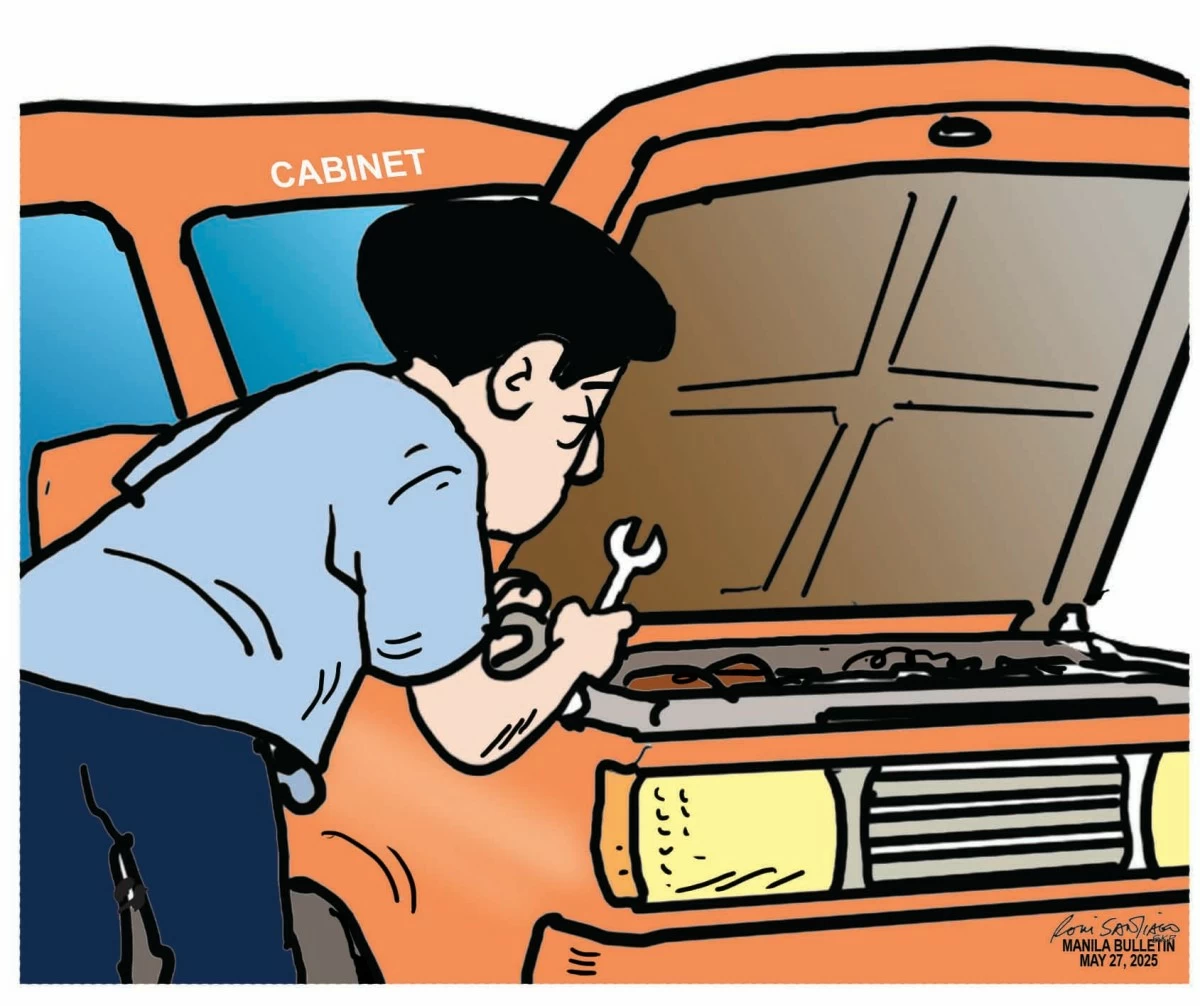
Cabinet revamp must lead to better governance

Published May 27, 2025 12:05 am  |  Updated May 26, 2025 05:39 pm
In the wake of the 2025 midterm elections, President Ferdinand Marcos Jr.’s call for courtesy resignations from all Cabinet members should help bring about a more responsive and effective executive branch. Otherwise it would even further dissipate valuable political capital for his administration that has been eroded by the poor showing of his candidates who finished outside the winning circle.
The President promptly replaced three Cabinet members, namely, the secretaries of foreign affairs, environment and natural resources, and human settlements and urban development. Two of the three were reassigned to other positions with Cabinet rank. Meanwhile, the public is eager to find out if the revamp will be more comprehensive, especially since it was also announced that all five members of the economic management team have been retained.
The call for courtesy resignations is not without precedent. President Corazon Aquino, governing after the 1986 People Power Revolution, wielded this tool multiple times to solidify authority, encourage accountability, and usher in reforms. Most notably, in 1990, amid a spate of coup attempts and political instability, she asked for the courtesy resignations of her entire Cabinet to reassert control and refresh her team’s commitment.
President Gloria Macapagal-Arroyo also turned to this mechanism during periods of crisis and transition. In 2005, following the controversial “Hello Garci” scandal, she asked her Cabinet to tender resignations as a symbolic act of cleansing and renewal, eventually retaining a core group of loyalists and technocrats to stabilize governance.
The results of the 2025 elections have reshuffled political alliances and recalibrated the balance of power. The window for transformative leadership narrows quickly as political actors begin to set their sights on 2028. A swift and transparent process for evaluating Cabinet performance is essential—not only to preserve policy continuity but also to ensure the bureaucracy retains focus and morale.
The call for resignations can introduce uncertainty, disrupt momentum, and demoralize civil servants. Government programs—especially those requiring inter-agency coordination—may be slowed if department heads are in a state of limbo or distracted by leadership transitions. The potential loss of institutional memory is also a serious concern. The administration must carefully manage the optics and operational impact of this transition. While the act of requesting resignations can project decisiveness, the aftermath must communicate competence, clarity, and consistency. Any hint of political purges or factional consolidation could undermine public trust.
In short, this process must go beyond symbolism. It must show a genuine commitment to responsive, reform-oriented governance. A leadership team driven by public service—not proximity to power—will be crucial in delivering on the promises of the Marcos administration during its final stretch.
With three years left, this is the time to consolidate gains and finish strong. The administration must demonstrate that it is not merely reacting to political developments but actively shaping the future. A refreshed Cabinet—chosen not only for loyalty but also for competence—can re-energize key programs in infrastructure, agriculture, and social development.
The people deserve no less than a Cabinet defined by integrity, effectiveness, and vision. Now is the time to turn a symbolic gesture into substantive governance.
ADVERTISEMENT
.most-popular .layout-ratio{ padding-bottom: 79.13%; } @media (min-width: 768px) and (max-width: 1024px) { .widget-title { font-size: 15px !important; } }

{{ articles_filter_1561_widget.title }}

.most-popular .layout-ratio{ padding-bottom: 79.13%; } @media (min-width: 768px) and (max-width: 1024px) { .widget-title { font-size: 15px !important; } }

{{ articles_filter_1562_widget.title }}

.most-popular .layout-ratio{ padding-bottom: 79.13%; } @media (min-width: 768px) and (max-width: 1024px) { .widget-title { font-size: 15px !important; } }

{{ articles_filter_1563_widget.title }}

{{ articles_filter_1564_widget.title }}

.mb-article-details { position: relative; } .mb-article-details .article-body-preview, .mb-article-details .article-body-summary{ font-size: 17px; line-height: 30px; font-family: "Libre Caslon Text", serif; color: #000; } .mb-article-details .article-body-preview iframe , .mb-article-details .article-body-summary iframe{ width: 100%; margin: auto; } .read-more-background { background: linear-gradient(180deg, color(display-p3 1.000 1.000 1.000 / 0) 13.75%, color(display-p3 1.000 1.000 1.000 / 0.8) 30.79%, color(display-p3 1.000 1.000 1.000) 72.5%); position: absolute; height: 200px; width: 100%; bottom: 0; display: flex; justify-content: center; align-items: center; padding: 0; } .read-more-background a{ color: #000; } .read-more-btn { padding: 17px 45px; font-family: Inter; font-weight: 700; font-size: 18px; line-height: 16px; text-align: center; vertical-align: middle; border: 1px solid black; background-color: white; } .hidden { display: none; }
function initializeAllSwipers() { // Get all hidden inputs with cms_article_id document.querySelectorAll('[id^="cms_article_id_"]').forEach(function (input) { const cmsArticleId = input.value; const articleSelector = '#article-' + cmsArticleId + ' .body_images'; const swiperElement = document.querySelector(articleSelector); if (swiperElement && !swiperElement.classList.contains('swiper-initialized')) { new Swiper(articleSelector, { loop: true, pagination: false, navigation: { nextEl: '#article-' + cmsArticleId + ' .swiper-button-next', prevEl: '#article-' + cmsArticleId + ' .swiper-button-prev', }, }); } }); } setTimeout(initializeAllSwipers, 3000); const intersectionObserver = new IntersectionObserver( (entries) => { entries.forEach((entry) => { if (entry.isIntersecting) { const newUrl = entry.target.getAttribute("data-url"); if (newUrl) { history.pushState(null, null, newUrl); let article = entry.target; // Extract metadata const author = article.querySelector('.author-section').textContent.replace('By', '').trim(); const section = article.querySelector('.section-info ').textContent.replace(' ', ' '); const title = article.querySelector('.article-title h1').textContent; // Parse URL for Chartbeat path format const parsedUrl = new URL(newUrl, window.location.origin); const cleanUrl = parsedUrl.host + parsedUrl.pathname; // Update Chartbeat configuration if (typeof window._sf_async_config !== 'undefined') { window._sf_async_config.path = cleanUrl; window._sf_async_config.sections = section; window._sf_async_config.authors = author; } // Track virtual page view with Chartbeat if (typeof pSUPERFLY !== 'undefined' && typeof pSUPERFLY.virtualPage === 'function') { try { pSUPERFLY.virtualPage({ path: cleanUrl, title: title, sections: section, authors: author }); } catch (error) { console.error('ping error', error); } } // Optional: Update document title if (title && title !== document.title) { document.title = title; } } } }); }, { threshold: 0.1 } ); function showArticleBody(button) { const article = button.closest("article"); const summary = article.querySelector(".article-body-summary"); const body = article.querySelector(".article-body-preview"); const readMoreSection = article.querySelector(".read-more-background"); // Hide summary and read-more section summary.style.display = "none"; readMoreSection.style.display = "none"; // Show the full article body body.classList.remove("hidden"); } document.addEventListener("DOMContentLoaded", () => { let loadCount = 0; // Track how many times articles are loaded const offset = [1, 2, 3, 4, 5, 6, 7, 8, 9, 10]; // Offset values const currentUrl = window.location.pathname.substring(1); let isLoading = false; // Prevent multiple calls if (!currentUrl) { console.log("Current URL is invalid."); return; } const sentinel = document.getElementById("load-more-sentinel"); if (!sentinel) { console.log("Sentinel element not found."); return; } function isSentinelVisible() { const rect = sentinel.getBoundingClientRect(); return ( rect.top < window.innerHeight && rect.bottom >= 0 ); } function onScroll() { if (isLoading) return; if (isSentinelVisible()) { if (loadCount >= offset.length) { console.log("Maximum load attempts reached."); window.removeEventListener("scroll", onScroll); return; } isLoading = true; const currentOffset = offset[loadCount]; window.loadMoreItems().then(() => { let article = document.querySelector('#widget_1690 > div:nth-last-of-type(2) article'); intersectionObserver.observe(article) loadCount++; }).catch(error => { console.error("Error loading more items:", error); }).finally(() => { isLoading = false; }); } } window.addEventListener("scroll", onScroll); });

Sign up by email to receive news.