







The Six Ps of peace
Published May 26, 2025 12:05 am
|
Updated May 25, 2025 03:55 pm


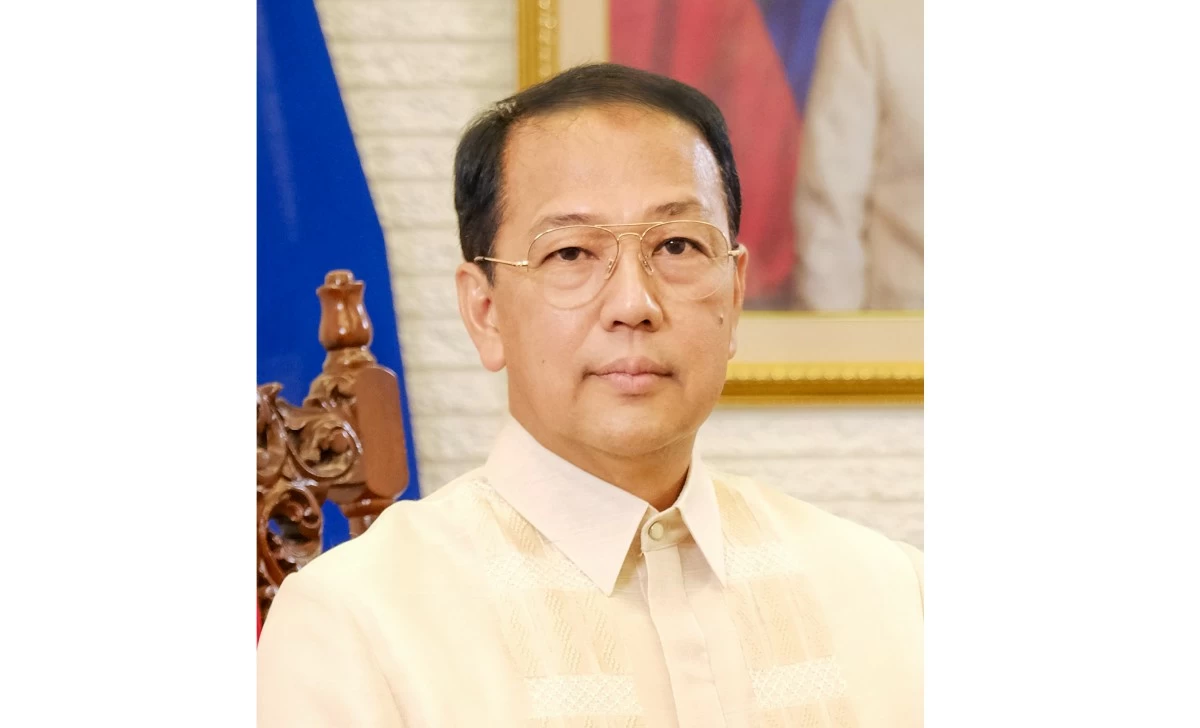
PEACE BY PEACE
On January 2024, the Office of the Presidential Adviser on Peace, Reconciliation and Unity (OPAPRU) created the International Private Partnership Office (IPPO) by expanding the mandate of the International Cooperation and Partnership Office (ICPO). This move recognizes the importance of the role that the private sector plays in sustaining our gains in peacebuilding and prevent the recurrence of conflict.
The decision to institutionalize the inclusion of the private sector in the convergence framework for peace sustainability is Inspired by our experience with the active and voluntary contributions of the private sector in the nationwide rollout of the COVID-19 vaccination and guided by the government’s formal declaration of the Public-Private-Partnership (PPP) policy on December 2023. The convergence framework and setup includes the local government units, the national government agencies through the PAMANA program, International and private sector partnerships, social healing, and the various peace tables being managed by OPAPRU.
The private sector has been helping through their corporate social responsibility (CSR) programs and peacebuilding has benefitted from the philanthropy that often fills the gaps missed by government programs, The IPPO has been given the strategic objective of negotiating for partnerships that will catalyze the creation of trade and commerce in the peace zones. Trade and commerce are key in bringing economic activities and in creating values that should be inherent in the normalization and transformation efforts. The PPP strategy has successfully given birth to both infrastructure and non-infrastructure projects that brought development and progress in both rural and urban areas. The roads and bridges we traverse to get to our places of work and business are the more visible results of PPP.
In OPAPRU, through IPPO, the program called Public-Private-Partnership for Peace (4Ps) has been formulated to give direction for the pursuit of enterprise agreements.
The idea of creating or setting up a sizable economic activity in an area is not new nor novel. Our economic zones were based on this idea. Mexico’s ‘maquiladoras’ and South Korea’s ‘chaebols’ are similarly patterned after the strategy of operating a big concern to give birth to supporting micro-small-medium enterprises (MSMEs). The MSMEs are either suppliers of goods and services; or, support sub-industries or businesses for sub-contracting. A carinderia and sari-sari store that start operations near post-harvest processing facilities to serve the workers, for example, are micro-small enterprises in the context of smaller rural communities.
Fast forward to May 2025, the OPAPRU and the Kennemer Group after signing a Memorandum of Understanding (MOU) on April 2025, conducted a levelling workshop in Davao City to identify the pilot areas and the timelines in putting together community based sustainable agriculture, land restoration, forest/biodiversity protection and conservation in support of enterprises that create opportunities for employment and livelihood. The Kennemer Group has been operating in the Paquibato District in Davao City (and in Mati, Davao Oriental) for about 10 years (the last 3 years for agroforestry). Paquibato was a CPP/NPA stronghold and I have very memorable experiences in the district from my early years as an Army officer.
Kennemer engages the farmer residents of Paquibato, many of them former rebels (FR) and indigenous people (IP), in developing their capacity to protect the forest, to plant trees to recover the forest, and to plant cacao and other crops. Kennemer has successfully integrated Paquibato in the cacao value chain. Their produce are purchased, processed and exported by Kennemer. The forest which is now sustainably protected also produce revenue through carbon credit, and the community get a share of the proceeds. Several beneficiaries of the arrangement between the company and the community have started to venture as entrepreneurs, mostly as consolidators of cacao from other plantations. The networks that Kennemer manages are guaranteed to raise values through horizontal and vertical integrations which create opportunities to the various stakeholders.
The technical teams of OPAPRU saw the Paquibato model as a proof of concept for a viable and sustainable enterprise partnership model that can be piloted and later on implemented in other peace communities and peace zones. We will see in the next few months the operationalization of these pilots in areas formerly afflicted by violence.
Peacebuilding must be seen as a shared responsibility wherein everyone must be involved and has a key role to play. This is what the MOU between the OPAPRU and Kennemer represents; it is a symbol of the greater synergy and cooperation between the government and the private sector to sustain the peace while protecting the environment.
To the management and personnel of the Kennemer Group headed by its dynamic Chief Executive Officer Simon Bakker and Country Manager Jonathan Joson, thank you for partnering with the OPAPRU and fully supporting the Marcos Administration’s vision of bringing a just and lasting peace to our nation and all Filipinos.
We shall henceforth follow your lead and expand the coverage of our program to 6Ps, that is with the inclusion of People and Planet in the mix of Ps. The inclusion of ‘Planet’ shall remind us of sustainability as our commitment to the UN Sustainable Development Goals. The ‘People’, so as not to lose track of the very essence of peace and development, the welfare of the People, ang taong Pilipino.
For OPAPRU there are six Ps for Peace.
(Secretary Carlito G. Galvez, Jr., is the presidential adviser on peace, reconciliation and unity.)