







The banner headline of the Manila Bulletin on May 21, 2025—“Brace for Carmaggedon”—may have sounded apocalyptic, but its deeper message is one of urgent transformation. Metro Manila is bracing for major traffic disruptions as several overlapping infrastructure projects accelerate in preparation for the Philippines’ hosting of the ASEAN Summit in 2026.
'Carmaggedon' now, progress later
Published May 26, 2025 12:05 am
|
Updated May 25, 2025 03:48 pm


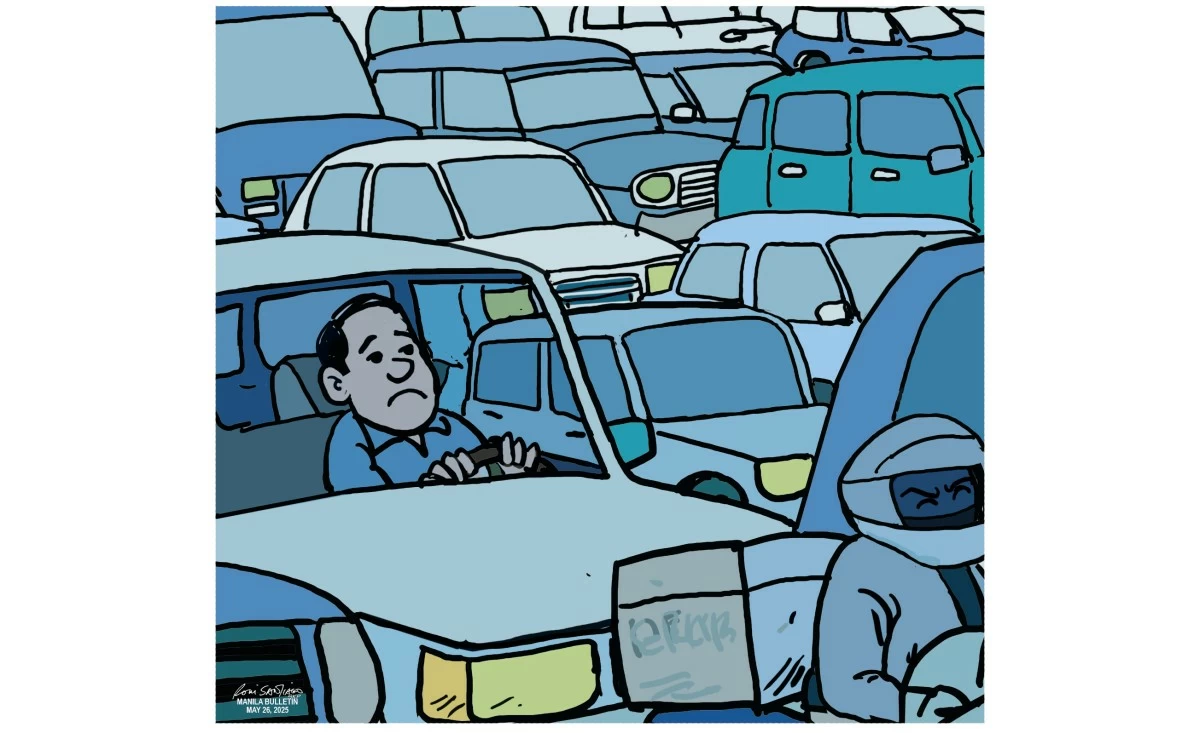
The immediate outlook is undeniably grim: narrowed roads, rerouted traffic, extended travel time, and frayed tempers. Commuters and motorists will have to endure months of congestion, noise, and dust. But beneath the looming inconvenience lies a rare opportunity—one that must not be squandered—for long-term urban improvement and national prestige.
The Department of Public Works and Highways (DPWH), in coordination with the Department of Transportation (DOTr), the Metro Manila Development Authority (MMDA), and other agencies, has launched a wave of major infrastructure works, including the widening of key roads, modernization of transport corridors, upgrading of airports, and enhancement of drainage systems. These are essential—not only to host the ASEAN Summit with credibility and efficiency—but also to restore Metro Manila’s long-lost mobility and competitiveness.
We must remember that the costs of inaction are far worse. Metro Manila has long been plagued by chronic congestion that costs the economy over ₱3.5 billion daily in lost productivity, according to government estimates. Traffic gridlock has become a fact of daily life, draining the energy of workers, impeding commerce, and reducing quality of life.
While the phrase “Carmaggedon” evokes fear of chaos, it must also be seen as a call to awareness and civic discipline. The traffic burden is real—but so too are the stakes. Hosting the 2026 ASEAN Summit places the Philippines once again in the regional spotlight. Heads of state, business leaders, and media from across Southeast Asia and beyond will converge in Metro Manila. This is more than a logistical challenge; it is a test of national readiness and global perception.
Infrastructure upgrades must therefore be pursued not just with speed, but with vision and sustainability. Proper coordination among agencies is essential to minimize disruption. Transparent timelines and clear communication with the public can ease tensions. Incentivizing remote work, adjusting school and office hours, and deploying smart traffic solutions will help mitigate the pain.
At the same time, we call on the public to share in the responsibility. Cooperation and patience, though difficult in the heat of daily struggle, will be critical to managing this transition. Carmaggedon may well be the price of long-overdue progress—an urban rite of passage toward a better National Capital Region (NCR).
If planned and executed well, these infrastructure projects will outlast the ASEAN Summit. They can redefine urban mobility, improve connectivity, and serve as tangible legacies of the Marcos administration. But they must not be rushed simply for cosmetic impact. Quality and resilience must not be compromised in the name of speed.
While the proverbial storm is coming, the prospect of sunrise must also be hailed. Let this period of hardship be the start of genuine transformation. Metro Manila deserves more than short-term fixes. It deserves a future that moves.