






 Philippines
National
PH cites stable labor market, growing employment at APEC HR meet
Philippines
National
PH cites stable labor market, growing employment at APEC HR meet
PH cites stable labor market, growing employment at APEC HR meet
By Trixee Rosel


At A Glance
- DOLE Undersecretary Carmela I. Torres led the Philippine delegation to the 7th APEC HRD Ministerial Meeting in Jeju Island, South Korea.
- The country reported an increase in employment from 94.6% in 2022 to 96.1% in 2023; unemployment declined to 3.9%.
- Torres emphasized stronger youth participation and ongoing workforce transformation.
- Key labor frameworks presented include the Labor and Employment Plan 2023–2028 and Trabaho Para sa Bayan Plan 2025–2034.
- APEC members reaffirmed their commitment to building inclusive and sustainable labor markets.
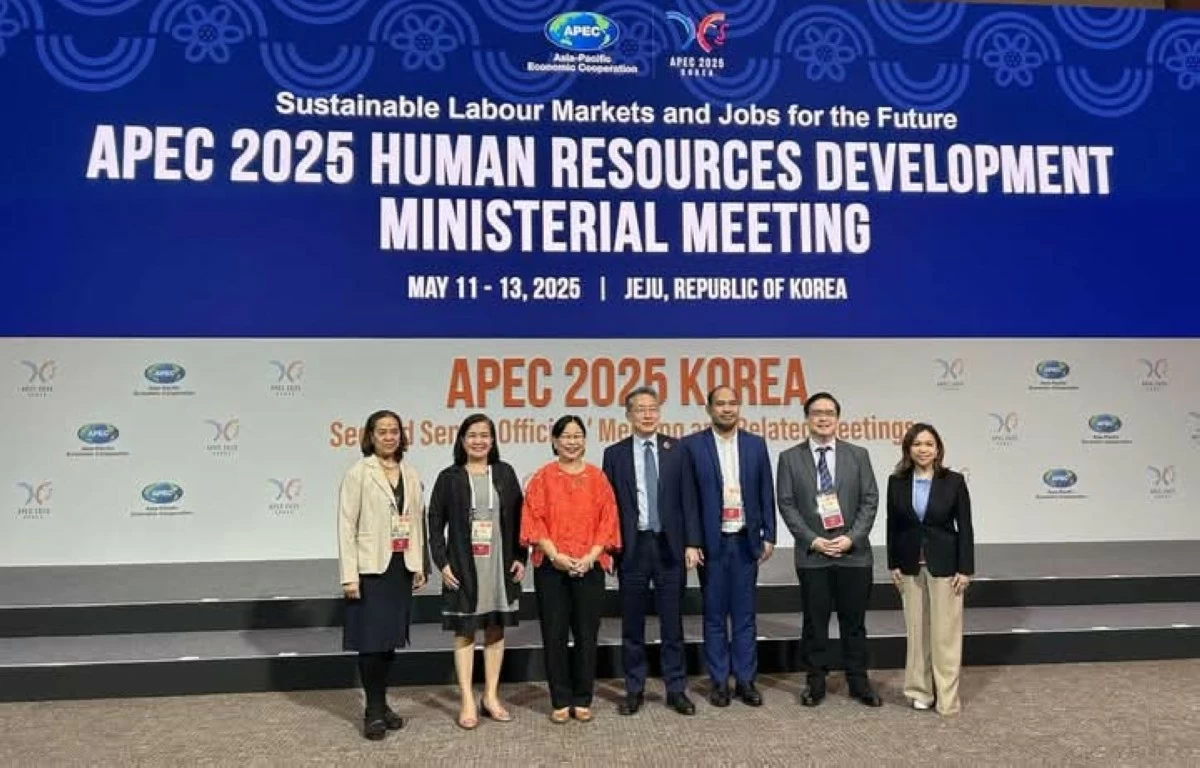
The Department of Labor and Employment (DOLE) highlighted the Philippines’ steady employment gains and ongoing workforce transformation during the 7th Asia-Pacific Economic Cooperation (APEC) Human Resources Development Ministerial Meeting (HRDMM) in South Korea.
DOLE Undersecretary Carmela I. Torres led the country’s delegation to the top-level meet and reported that the country's employment rate rose from 94.6 percent in 2022 to 96.1 percent in 2023, while unemployment declined from 5.2 percent to 3.9 percent.
“We have seen improved labor force participation and a positive shift toward higher-skilled, paid occupations, especially among the youth,” she said, adding that the government remains focused on ensuring every Filipino secures decent, productive, and sustainable work.
Under the theme “Sustainable Labor Market and Jobs for the Future,” the meeting gathered labor ministers from APEC economies to discuss workforce challenges amid technological, climate, demographic, and geopolitical shifts.
Torres emphasized that inclusive and sustainable employment remains a priority despite global uncertainties.
The Philippines showcased its long-term employment frameworks — the Labor and Employment Plan 2023–2028 and Trabaho Para sa Bayan Plan 2025–2034 — focusing on skills development, employment facilitation, and social protection to future-proof the workforce.
Key strategies include demand-driven training, expanded micro-credentialing with the Technical Education and Skills Development Authority (TESDA), improved labor market information systems, and support for micro, small, and medium enterprises (MSMEs).
Torres also cited labor regulation reforms and formalization of the informal sector as critical steps toward creating more decent jobs.
Highlighting the country’s support for ethical artificial intelligence (AI) use and digital inclusion, Torres stressed the need to pair digitalization with inclusive growth and worker protection.
National laws such as the Philippine Green Jobs Act and the Caregivers’ Welfare Act were noted as vital to preparing workers for opportunities in emerging green, digital, and care sectors.
The ministerial meeting ended with a joint statement unanimously adopted by all APEC members, reaffirming their commitment to building sustainable, inclusive, and adaptable labor markets for the future.