






 Business
Banking & Finance
US remittance tax to affect Philippine inflows—think tank
Business
Banking & Finance
US remittance tax to affect Philippine inflows—think tank
US remittance tax to affect Philippine inflows—think tank


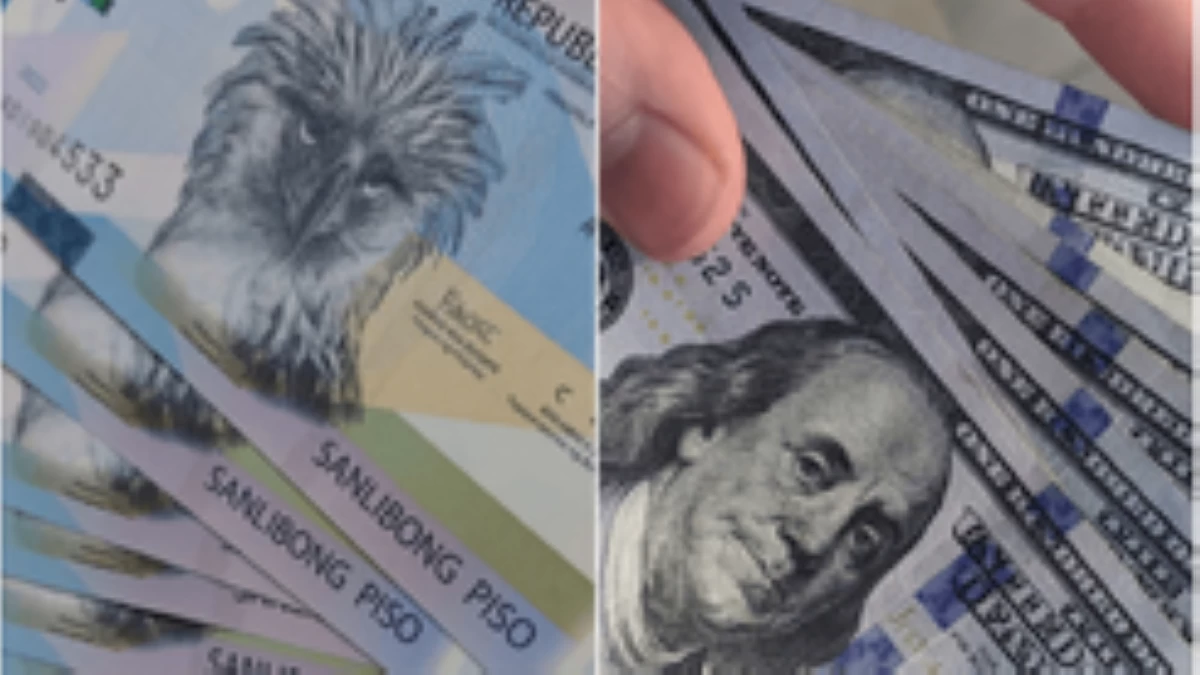
Money sent home by Filipinos working and living in the United States (US) is seen at risk from the remittance tax proposal pending in the US Congress, according to the think tank Capital Economics.
"The proposed five-percent US tax on remittance outflows would have a particularly large negative impact on Central American economies such as Honduras, Guatemala and El Salvador. A drop in remittance flows could plausibly be of the order of one percent of GDP [gross domestic product] in these countries... Among the larger EMs [emerging markets], there could be a discernible effect on Mexico and the Philippines," Capital Economics chief EM economist William Jackson said in a May 21 report.
The think tank was referring to "The One, Big, Beautiful" bill published by the ways and means committee of the US Lower House last week, which included a measure slapping tax on remittances from the US by non-US nationals.
"While we don't know the precise share of remittances sent by non-nationals, a [US] Census Bureau report from 2010 put the figure at 84 percent. We presume the figure has remained at similar, high levels since then," it noted.
In general, "the implications of such a tax depend on how people wanting to send money abroad respond," Capital Economics said, citing, for instance, that "remitters could decide to increase the dollar value of the money that they send back home to offset the value of the tax (essentially absorbing the tax)."
"[Remitters from the US] may turn to cryptocurrencies or informal channels to remit in order to skirt around the tax. A tax could also spur companies that transfer remittances to make efficiency gains that reduce the cost of sending money abroad, mitigating the impact," it said.
For Capital Economics, "it seems likely that such a tax would lead to a decline in the dollar value of money remitted abroad."
Capital Economics said the Philippines "stands out as dependent on US remittances" among large EMs, with such inflows equivalent to about three percent of GDP.
"In countries with floating exchange rates, such as Mexico and the Philippines, exchange rate depreciations would help to cushion the impact on domestic demand by increasing the local currency value of inward remittances," the think tank said.
"Weaker currencies would also facilitate any required adjustment in the balance of payments (BOP) as a result of lower remittance income by boosting the competitiveness of domestic goods," it added.
Based on the latest Asia Economics Weekly reports of Capital Economics, its senior Asia economist Gareth Leather revised his foreign exchange (forex) forecast to ₱60:$1 by end-2025 from ₱62 against the US dollar previously.
But Leather expects the peso to fall to ₱62 versus the greenback next year. The local currency is currently trading at the ₱55:$1 level.
Capital Economics also slashed its 2025 gross domestic product (GDP) growth forecast for the Philippines to 5.3 percent from six percent previously.
Earlier Capital Economics reports—before the Philippine government reported the dismal 5.4-percent first-quarter GDP expansion early this month—had even cited the country as among a few EMs whose growth rate this year would likely outpace last year's. The Philippine economy grew by 5.7 percent in 2024.
Leather has yet to respond to Manila Bulletin's inquiry sent early this week.