






Recent reports by the Global Hunger Index show a continuing improvement in our country’s hunger rates. From the year 2000, we have managed to reduce our level of hunger from serious (20 to 34.9) to moderate (14.4). Even with these improving statistics, though, malnutrition continues to plague our country. From the report’s findings, over 5.9 percent of the population is still undernourished. Here are some ways we can continue to fight against malnutrition.
Manila Bulletin
 Lifestyle
Health and Wellness
Here's how we can lower our malnutrition rates even more
Lifestyle
Health and Wellness
Here's how we can lower our malnutrition rates even more
Lifestyle
Health and Wellness
Here's how we can lower our malnutrition rates even more
Here's how we can lower our malnutrition rates even more
Working toward a healthier future for Filipino families
By MB Lifestyle
Published May 22, 2025 09:57 am
|
Updated May 22, 2025 05:08 pm


At A Glance
- Rising prices in commodities have even led some families to adapt by borrowing money or spending savings to put meals on their tables.

Fortifying staple food
Think about the daily things an average Filipino family consumes. A mainstay for most is rice. Based on a 2018 study from the World Health Organization (WHO), there are ways rice kernels can be fortified with micronutrients like vitamin A, zinc, and iron to improve the health status of their consumers. By enriching basic food items that we consume on a regular basis, we can slowly improve our quality of life.
Addressing underlying poverty
A report by the World Food Programme in 2022 shares how one out of 10 households in the Philippines is food insecure. Rising prices in commodities have even led some families to adapt by borrowing money or spending savings to put meals on their tables. Job creation and financing businesses are some ways to help alleviate poverty. By giving people a proper means of livelihood, accessing nutritious food becomes easier and helps lessen malnutrition rates.
Strengthening the community
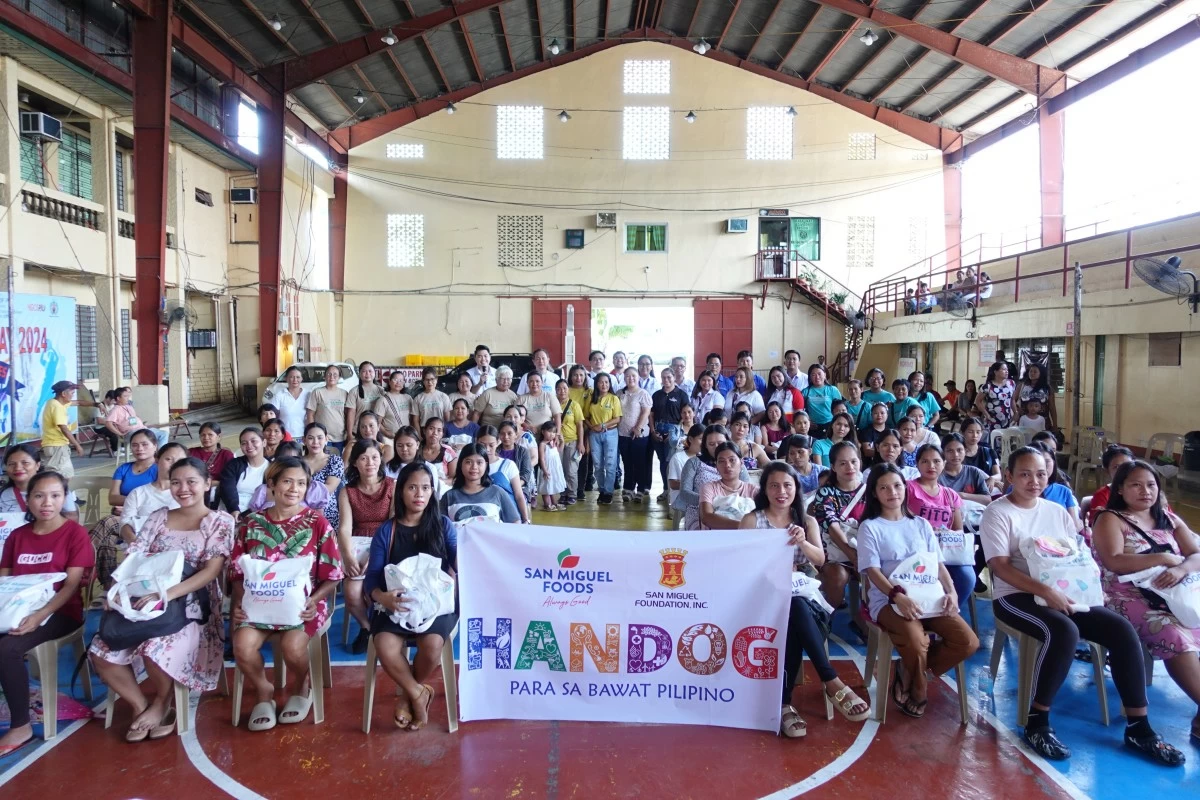
Initiating health programs in barangays, the root of our community, is another way of tackling malnutrition head-on. One such program is San Miguel Foods Inc. (SMFI)’s “Happy si Mommy, Malusog si Baby.” After its initial launch in 2022 in nine pilot barangays with 254 mother-and-child pairs, the program has since grown to cover more than 400 families in Luzon, over 300 in the Visayas, and more than 250 in Mindanao. Data from the program shows that 89 percent of children enrolled have reached normal height and weight. Underweight cases have dropped to two percent, and only nine percent remain classified as malnourished. The initiative supports mothers and infants during the first 1,000 days of life, from pregnancy to age two, a critical period for early development and long-term health. The initiative is implemented in partnership with San Miguel Foundation (SMF), local government units, and private sector partners. It provides prenatal checkups, ultrasounds, maternal health education, and Mingo Meals, a fortified food made of rice, mung beans, and moringa, developed by the Department of Science and Technology’s Food and Nutrition Research Institute (DOST-FNRI) and produced by the Negrense Volunteers for Change Foundation. The program is part of San Miguel’s broader sustainability agenda, which includes a commitment to uplift the lives of 15 million Filipinos by 2030.
Beyond direct health support, the program also focuses on training barangay health workers (BHWs). To date, 102 BHWs have been trained through webinars led by DOST-FNRI, covering topics such as breastfeeding, postpartum care, and early childhood nutrition. These health workers then cascade knowledge to participating mothers in their communities.