ADVERTISEMENT

Marcos on reset mode; collective effort crucial

Published May 21, 2025 12:05 am  |  Updated May 20, 2025 05:49 pm
President Marcos is pressing the reset button.
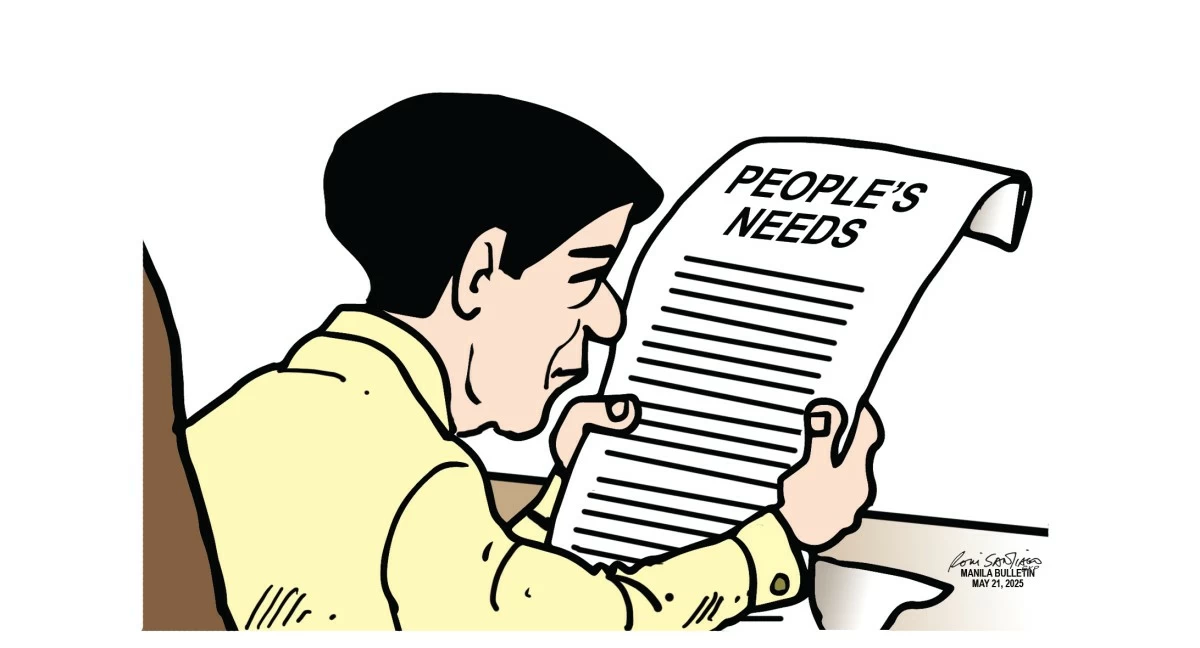
In the aftermath of the just concluded midterm elections, President Marcos has acknowledged the electorate’s message: Filipinos are weary of endless politicking and demand tangible improvements in their daily lives. In a candid admission through his podcast, President Marcos recognized that the government’s focus had strayed from the immediate concerns of the people. From zeroing in on long-term developments like infrastructure, the President has vowed to redirect efforts toward addressing these pressing issues affecting the Filipino masses.
Admitting a mistake, particularly in public, is no easy task. It takes a lot of courage to do so. This act is one of the hallmarks of a good leader. And the President’s acknowledgment is a crucial first step to restore order. However, words alone are insufficient. The President's commitment must translate into concrete actions that resonate with the everyday Filipino. His Cabinet, Congress, and the judiciary each have pivotal roles to play in this renewed focus on the people’s welfare. Everyone has to walk the talk, no ifs nor buts.
The Cabinet must serve as the President’s immediate partners in this endeavor. In fact, they are his alter ego and they are expected to enforce his policies. Government functionaries should prioritize programs that alleviate the burdens of ordinary citizens. This includes streamlining processes in health, education, transportation, and social services to ensure efficiency and accessibility. For instance, the Department of Health could expedite the distribution of medicines and medical supplies, while the Department of Education might focus on enhancing the quality of public schooling and addressing the needs of underprivileged students.
Moreover, the executive must demonstrate transparency and accountability. Implementing digital platforms for public services can reduce red tape and corruption, fostering a government that is both responsive and responsible.
Congress must craft laws that directly impact the daily lives of Filipinos. Lawmakers should prioritize legislation that addresses economic disparities, such as promoting livelihood opportunities, job creation, affordable housing, and accessible healthcare. Additionally, Congress must ensure that the national budget reflects the administration’s renewed focus on the people’s needs, allocating resources to programs that provide immediate relief and long-term benefits.
Furthermore, oversight is essential. Legislators must hold the executive accountable for the implementation of policies, ensuring that promises made are promises kept.
On the part of the judiciary, it must see to it that justice and fairness is upheld at all times for everyone—the rich and the poor, the mighty and the weak. It must ensure that the rule of law prevails and that justice is accessible to all.
Courts should expedite cases that involve violations of citizens’ rights, particularly those related to corruption and abuse of power. By doing so, the judiciary can restore public confidence in the legal system and reinforce the government’s commitment to justice.
Addressing the daily concerns of Filipinos requires a collective effort. The President’s call to “stop politicking and start working for the people” should resonate across all branches of government. This unified approach can lead to meaningful reforms that improve the quality of life for all Filipinos.
President Marcos’ acknowledgment of the electorate’s message is crucial. However, it is the subsequent actions of the executive, the legislative, and the judicial branches that will determine the success of this renewed focus—and ultimately the future of this country. By working together, the government can rebuild trust and create a nation where the needs of the ordinary Filipino are met with urgency and compassion.
Now, the ball is in every Filipino’s hands—from the President down to Filipinos on the fringes. Together, the Philippines can be great again.
ADVERTISEMENT
.most-popular .layout-ratio{ padding-bottom: 79.13%; } @media (min-width: 768px) and (max-width: 1024px) { .widget-title { font-size: 15px !important; } }

{{ articles_filter_1561_widget.title }}

.most-popular .layout-ratio{ padding-bottom: 79.13%; } @media (min-width: 768px) and (max-width: 1024px) { .widget-title { font-size: 15px !important; } }

{{ articles_filter_1562_widget.title }}

.most-popular .layout-ratio{ padding-bottom: 79.13%; } @media (min-width: 768px) and (max-width: 1024px) { .widget-title { font-size: 15px !important; } }

{{ articles_filter_1563_widget.title }}

{{ articles_filter_1564_widget.title }}

.mb-article-details { position: relative; } .mb-article-details .article-body-preview, .mb-article-details .article-body-summary{ font-size: 17px; line-height: 30px; font-family: "Libre Caslon Text", serif; color: #000; } .mb-article-details .article-body-preview iframe , .mb-article-details .article-body-summary iframe{ width: 100%; margin: auto; } .read-more-background { background: linear-gradient(180deg, color(display-p3 1.000 1.000 1.000 / 0) 13.75%, color(display-p3 1.000 1.000 1.000 / 0.8) 30.79%, color(display-p3 1.000 1.000 1.000) 72.5%); position: absolute; height: 200px; width: 100%; bottom: 0; display: flex; justify-content: center; align-items: center; padding: 0; } .read-more-background a{ color: #000; } .read-more-btn { padding: 17px 45px; font-family: Inter; font-weight: 700; font-size: 18px; line-height: 16px; text-align: center; vertical-align: middle; border: 1px solid black; background-color: white; } .hidden { display: none; }
function initializeAllSwipers() { // Get all hidden inputs with cms_article_id document.querySelectorAll('[id^="cms_article_id_"]').forEach(function (input) { const cmsArticleId = input.value; const articleSelector = '#article-' + cmsArticleId + ' .body_images'; const swiperElement = document.querySelector(articleSelector); if (swiperElement && !swiperElement.classList.contains('swiper-initialized')) { new Swiper(articleSelector, { loop: true, pagination: false, navigation: { nextEl: '#article-' + cmsArticleId + ' .swiper-button-next', prevEl: '#article-' + cmsArticleId + ' .swiper-button-prev', }, }); } }); } setTimeout(initializeAllSwipers, 3000); const intersectionObserver = new IntersectionObserver( (entries) => { entries.forEach((entry) => { if (entry.isIntersecting) { const newUrl = entry.target.getAttribute("data-url"); if (newUrl) { history.pushState(null, null, newUrl); let article = entry.target; // Extract metadata const author = article.querySelector('.author-section').textContent.replace('By', '').trim(); const section = article.querySelector('.section-info ').textContent.replace(' ', ' '); const title = article.querySelector('.article-title h1').textContent; // Parse URL for Chartbeat path format const parsedUrl = new URL(newUrl, window.location.origin); const cleanUrl = parsedUrl.host + parsedUrl.pathname; // Update Chartbeat configuration if (typeof window._sf_async_config !== 'undefined') { window._sf_async_config.path = cleanUrl; window._sf_async_config.sections = section; window._sf_async_config.authors = author; } // Track virtual page view with Chartbeat if (typeof pSUPERFLY !== 'undefined' && typeof pSUPERFLY.virtualPage === 'function') { try { pSUPERFLY.virtualPage({ path: cleanUrl, title: title, sections: section, authors: author }); } catch (error) { console.error('ping error', error); } } // Optional: Update document title if (title && title !== document.title) { document.title = title; } } } }); }, { threshold: 0.1 } ); function showArticleBody(button) { const article = button.closest("article"); const summary = article.querySelector(".article-body-summary"); const body = article.querySelector(".article-body-preview"); const readMoreSection = article.querySelector(".read-more-background"); // Hide summary and read-more section summary.style.display = "none"; readMoreSection.style.display = "none"; // Show the full article body body.classList.remove("hidden"); } document.addEventListener("DOMContentLoaded", () => { let loadCount = 0; // Track how many times articles are loaded const offset = [1, 2, 3, 4, 5, 6, 7, 8, 9, 10]; // Offset values const currentUrl = window.location.pathname.substring(1); let isLoading = false; // Prevent multiple calls if (!currentUrl) { console.log("Current URL is invalid."); return; } const sentinel = document.getElementById("load-more-sentinel"); if (!sentinel) { console.log("Sentinel element not found."); return; } function isSentinelVisible() { const rect = sentinel.getBoundingClientRect(); return ( rect.top < window.innerHeight && rect.bottom >= 0 ); } function onScroll() { if (isLoading) return; if (isSentinelVisible()) { if (loadCount >= offset.length) { console.log("Maximum load attempts reached."); window.removeEventListener("scroll", onScroll); return; } isLoading = true; const currentOffset = offset[loadCount]; window.loadMoreItems().then(() => { let article = document.querySelector('#widget_1690 > div:nth-last-of-type(2) article'); intersectionObserver.observe(article) loadCount++; }).catch(error => { console.error("Error loading more items:", error); }).finally(() => { isLoading = false; }); } } window.addEventListener("scroll", onScroll); });

Sign up by email to receive news.