

ADVERTISEMENT

Korea launches ambitious green project to help PH, ASEAN mitigate methane

Published May 20, 2025 02:02 pm
South Korea has launched an ambitious $20-million green project to help the Philippines and other Southeast Asian countries mitigate methane, which is actually more potent than carbon dioxide (CO2).
Seoul's envoy to the Association of Southeast Asian Nations (ASEAN), Lee Jang-keun, flew to Manila to lead the kick-off of the ASEAN-Korea Cooperation for Methane Mitigation (AKCMM) project, an initiative expected to significantly contribute to the targets set forth in the Philippines' climate-resilient development plan.
In an interview with select media on Tuesday, May 20, Lee said the Philippines is among the first ASEAN countries where the project has already started.
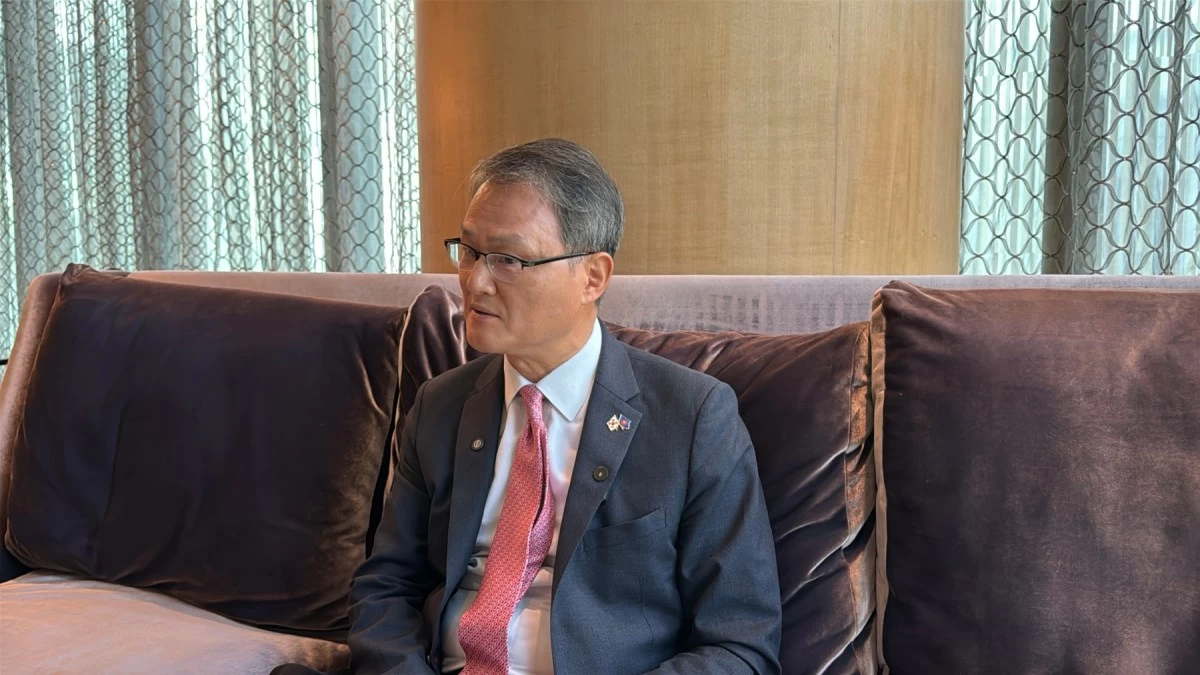
“The Philippines is one of the pioneers in promoting the climate action and environment cooperation in this region,” he said.
“And the Philippines was one of the first countries that were ready and prepared to start this project. And that is the reason why I come here and taking the opportunity, I hope to highlight the importance of this project, not only for the Philippines, but also for the entire region, especially in ASEAN,” he added.
Emissions from greenhouse gases contribute to the greenhouse effect and global warming as they get trapped in the atmosphere.
Methane, mainly emitted from agriculture, livestock and waste, is one of the examples of greenhouse gases.
Other greenhouse gases are carbon dioxide (CO2), which primarily comes from burning fossil fuels and deforestation; nitrous oxide (N2O), from agriculture and certain industrial processes; and fluorinated gases (F-gases), synthetic gases used in refrigeration and other industrial applications.
Lee said Korea decided to launch a project—with a budget so huge for a single project—that primarily focuses on methane mitigation because there is "not enough awareness or understanding" on methane emissions, unlike CO2.
According to the Global Green Growth Institute (GGGI), the partner institute of Seoul that will implement the project in the Philippines, methane is about 28 to 80 "times more potent than CO2."
Methane, although it has a shorter lifespan, is much more efficient at trapping radiation. It also has a warming effect 86 times stronger than CO2, the Climate and Clean Air Coalition said.
"Even though its potency is high, our attention is not that high enough," Lee said.
In an interview, Climate Change Commission (CCC) Secretary Robert Borje said collaboration between the Philippines, ASEAN and Korea is important "because mitigation, or reduction of greenhouse gasses, addresses the root causes of climate change."
"The Philippines has two strategies: adaptation and mitigation. And mitigation addresses this, in particular, and the importance of assessing methane is to help us determine effective pathways to greenhouse gas reduction," Borje said.
GGGI said the project aims to reduce methane emission in the Philippines and other ASEAN countries through establishing a strong institutional, technical and financial foundation.
It will be achieved through a set of activities, such as methane measurements, regional guidelines and cooperation promotion as well as support for methane reduction projects.
Lee said the short-term goal of the project is to raise awareness on the importance of mitigating methane in addressing climate change.
"And secondly, we are aiming at making some kind of methane mitigation roadmap for ASEAN countries," he added.

Related Tags

PH-Korea methane ASEAN-Korean Cooperation for Methane Mitigation
ADVERTISEMENT
.most-popular .layout-ratio{ padding-bottom: 79.13%; } @media (min-width: 768px) and (max-width: 1024px) { .widget-title { font-size: 15px !important; } }

{{ articles_filter_1561_widget.title }}

.most-popular .layout-ratio{ padding-bottom: 79.13%; } @media (min-width: 768px) and (max-width: 1024px) { .widget-title { font-size: 15px !important; } }

{{ articles_filter_1562_widget.title }}

.most-popular .layout-ratio{ padding-bottom: 79.13%; } @media (min-width: 768px) and (max-width: 1024px) { .widget-title { font-size: 15px !important; } }

{{ articles_filter_1563_widget.title }}

{{ articles_filter_1564_widget.title }}

.mb-article-details { position: relative; } .mb-article-details .article-body-preview, .mb-article-details .article-body-summary{ font-size: 17px; line-height: 30px; font-family: "Libre Caslon Text", serif; color: #000; } .mb-article-details .article-body-preview iframe , .mb-article-details .article-body-summary iframe{ width: 100%; margin: auto; } .read-more-background { background: linear-gradient(180deg, color(display-p3 1.000 1.000 1.000 / 0) 13.75%, color(display-p3 1.000 1.000 1.000 / 0.8) 30.79%, color(display-p3 1.000 1.000 1.000) 72.5%); position: absolute; height: 200px; width: 100%; bottom: 0; display: flex; justify-content: center; align-items: center; padding: 0; } .read-more-background a{ color: #000; } .read-more-btn { padding: 17px 45px; font-family: Inter; font-weight: 700; font-size: 18px; line-height: 16px; text-align: center; vertical-align: middle; border: 1px solid black; background-color: white; } .hidden { display: none; }
function initializeAllSwipers() { // Get all hidden inputs with cms_article_id document.querySelectorAll('[id^="cms_article_id_"]').forEach(function (input) { const cmsArticleId = input.value; const articleSelector = '#article-' + cmsArticleId + ' .body_images'; const swiperElement = document.querySelector(articleSelector); if (swiperElement && !swiperElement.classList.contains('swiper-initialized')) { new Swiper(articleSelector, { loop: true, pagination: false, navigation: { nextEl: '#article-' + cmsArticleId + ' .swiper-button-next', prevEl: '#article-' + cmsArticleId + ' .swiper-button-prev', }, }); } }); } setTimeout(initializeAllSwipers, 3000); const intersectionObserver = new IntersectionObserver( (entries) => { entries.forEach((entry) => { if (entry.isIntersecting) { const newUrl = entry.target.getAttribute("data-url"); if (newUrl) { history.pushState(null, null, newUrl); let article = entry.target; // Extract metadata const author = article.querySelector('.author-section').textContent.replace('By', '').trim(); const section = article.querySelector('.section-info ').textContent.replace(' ', ' '); const title = article.querySelector('.article-title h1').textContent; // Parse URL for Chartbeat path format const parsedUrl = new URL(newUrl, window.location.origin); const cleanUrl = parsedUrl.host + parsedUrl.pathname; // Update Chartbeat configuration if (typeof window._sf_async_config !== 'undefined') { window._sf_async_config.path = cleanUrl; window._sf_async_config.sections = section; window._sf_async_config.authors = author; } // Track virtual page view with Chartbeat if (typeof pSUPERFLY !== 'undefined' && typeof pSUPERFLY.virtualPage === 'function') { try { pSUPERFLY.virtualPage({ path: cleanUrl, title: title, sections: section, authors: author }); } catch (error) { console.error('ping error', error); } } // Optional: Update document title if (title && title !== document.title) { document.title = title; } } } }); }, { threshold: 0.1 } ); function showArticleBody(button) { const article = button.closest("article"); const summary = article.querySelector(".article-body-summary"); const body = article.querySelector(".article-body-preview"); const readMoreSection = article.querySelector(".read-more-background"); // Hide summary and read-more section summary.style.display = "none"; readMoreSection.style.display = "none"; // Show the full article body body.classList.remove("hidden"); } document.addEventListener("DOMContentLoaded", () => { let loadCount = 0; // Track how many times articles are loaded const offset = [1, 2, 3, 4, 5, 6, 7, 8, 9, 10]; // Offset values const currentUrl = window.location.pathname.substring(1); let isLoading = false; // Prevent multiple calls if (!currentUrl) { console.log("Current URL is invalid."); return; } const sentinel = document.getElementById("load-more-sentinel"); if (!sentinel) { console.log("Sentinel element not found."); return; } function isSentinelVisible() { const rect = sentinel.getBoundingClientRect(); return ( rect.top < window.innerHeight && rect.bottom >= 0 ); } function onScroll() { if (isLoading) return; if (isSentinelVisible()) { if (loadCount >= offset.length) { console.log("Maximum load attempts reached."); window.removeEventListener("scroll", onScroll); return; } isLoading = true; const currentOffset = offset[loadCount]; window.loadMoreItems().then(() => { let article = document.querySelector('#widget_1690 > div:nth-last-of-type(2) article'); intersectionObserver.observe(article) loadCount++; }).catch(error => { console.error("Error loading more items:", error); }).finally(() => { isLoading = false; }); } } window.addEventListener("scroll", onScroll); });

Sign up by email to receive news.