







Government's ₱20/kilo rice seen to lower retail prices


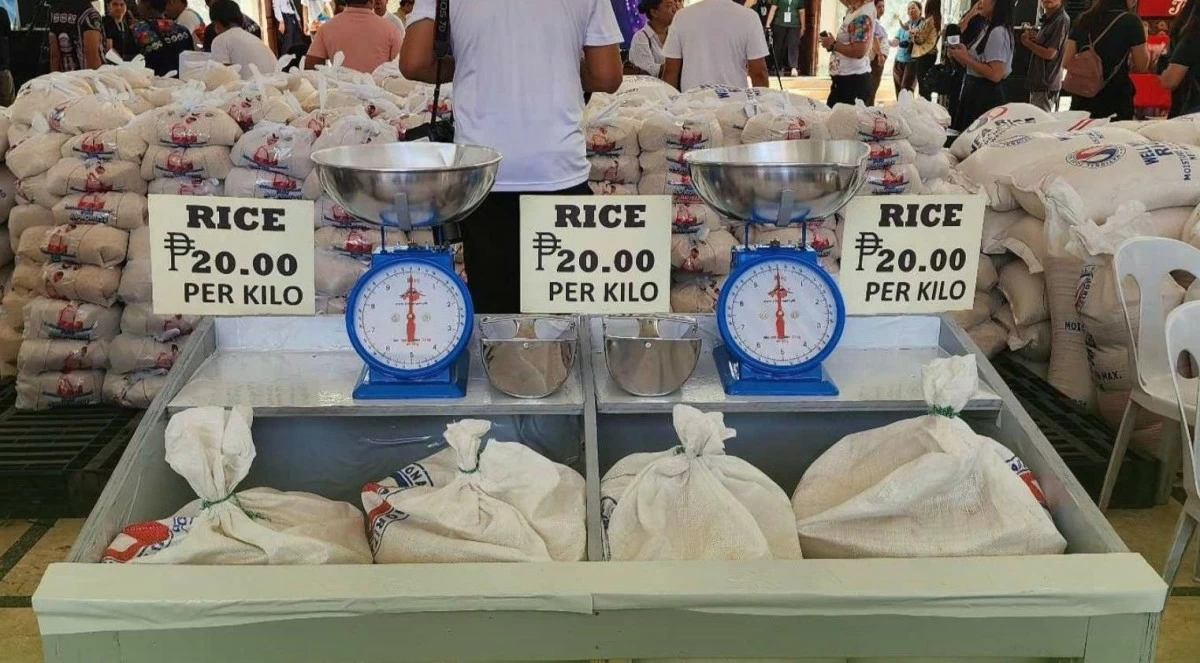
The Department of Agriculture (DA) is expecting retail prices of rice to decline as retailers seek to compete with the government’s ₱20-per-kilo rice program, which is now available across a number of cities and municipalities.
DA Assistant Secretary Arnel de Mesa said the agency has received reports that certain retailers are voluntarily bringing down the price of their rice.
De Mesa said the move is meant to attract customers who are now opting to buy the ₱20 rice at Kadiwa ng Pangulo (KNP) stores.
Essentially, he said, this is the power of market intervention, as over 250,000 metric tons (MT) of buffer stocks from the National Food Authority (NFA) are being redirected to the market.
However, while he acknowledged that this is a “good effect” of the program, De Mesa said the agency will look into the unintended consequences of the price decline among retailers and farmers.
“How will it affect ‘yung presuhan at ano ‘yung magiging epekto rin doon sa ibang klase ng bigas? And of course, doon sa farm gate sa level ng ating mga magsasaka,” said De Mesa, also the DA’s spokesperson.
(How will it affect pricing, and what will be the impact on other types of rice? And of course, on the farm gate level, how will it affect our farmers?)
“Kailangan itong pag-aralan mabuti before we go into next phase, the third phase, and eventually next year. Ganon ang strategy ni Secretary [Francisco Tiu Laurel],” he added.
(This needs to be properly studied before we go into the next phase, the third phase, and eventually next year. That’s the strategy of Secretary Francisco Tiu Laurel.)
At a Palace briefing on Monday, Laurel announced that the ₱20 program—otherwise known as the Benteng Bigas Meron Na Program—is set to launch in July, divided into two phases.
The first phase is already being implemented in Visayas.
Phase two, set to start in July, will cover Cotabato City, Basilan, Zamboanga del Norte, Tawi-Tawi, Maguindanao del Sur, Davao Oriental, Sorsogon, and Maguindanao del Norte.
Meanwhile, phase three will be in Lanao del Norte, Sultan Kudarat, Catanduanes, Agusan del Sur, Sarangani, and Dinagat Islands. This phase will start in September.
Laurel said these areas were chosen for the program based on their respective high poverty incidences.
In Metro Manila, 34 KNP stores are currently selling the subsidized ₱20 rice.
Currently, the cheaper rice is only available for underprivileged sectors—senior citizens, persons with disabilities (PWDs), solo parents, and members of the pantawid pamilyang Pilipino program (4Ps).
De Mesa said the agency is planning to expand this to low- to lower-middle-income families in the near future.
He said this will add 15 million households—or around 60 million Filipinos—to the eligible beneficiaries of the program.