ADVERTISEMENT

Bridging AI gap for equitable growth

Published May 20, 2025 12:05 am  |  Updated May 19, 2025 05:38 pm
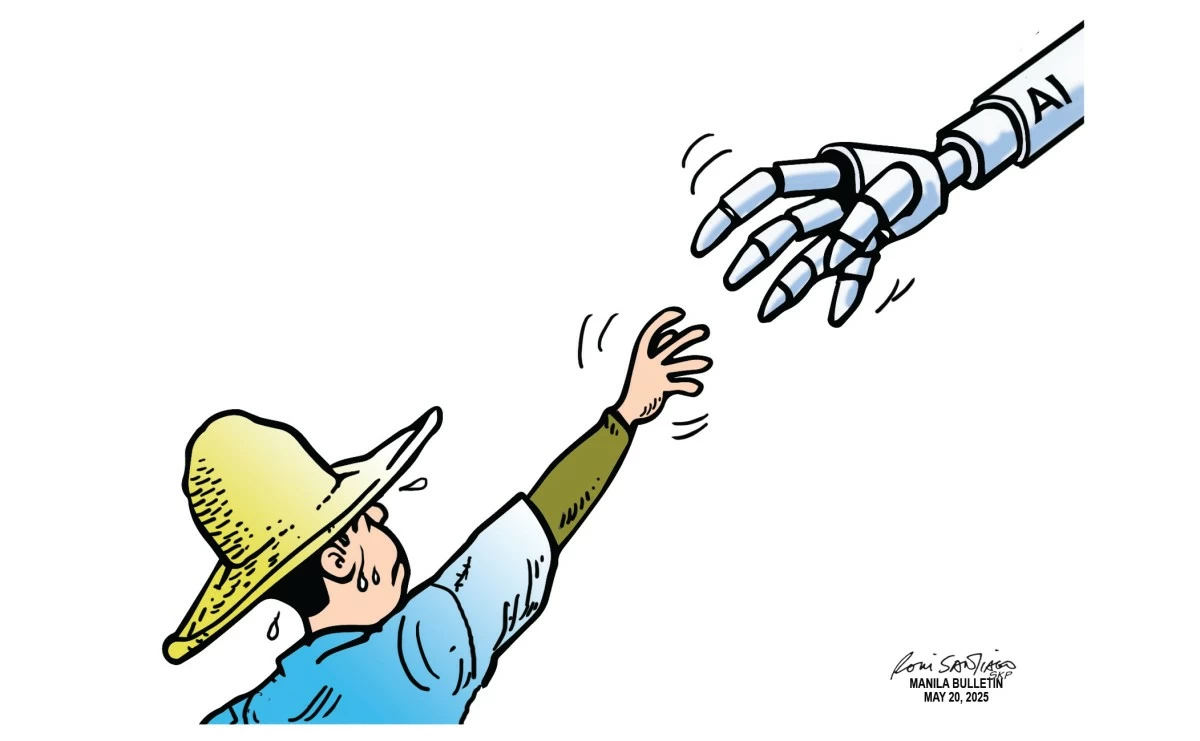
The recent call of the Senate Committee on Public Services for the responsible and beneficial use of artificial intelligence (AI) comes at a pivotal time for the Philippines. As the global AI revolution accelerates, Sen. Grace Poe’s message underscores a crucial national challenge: how to harness AI not merely as a tool of progress for the few, but as a lever of inclusive and equitable growth for the many. The possibilities for growth that are opened up by AI are clear and unmistakable. AI can automate routine tasks, improve public services, forecast natural disasters, enhance healthcare diagnostics, and revolutionize education. Yet, as our national leaders have realized, the potential of AI will remain unevenly distributed—and even exacerbate inequalities—if we do not address the stark realities of the Philippines’ digital divide.
Despite high mobile phone ownership and social media usage, large swaths of the population continue to suffer from unreliable or non-existent internet connectivity. According to the Department of Information and Communications Technology (DICT), many rural barangays still lack access to high-speed broadband. For AI to benefit Filipino farmers through climate-smart agriculture apps, or help students learn via intelligent tutoring systems, these tools must first be reachable. This is where the gap lies.
To ensure that AI serves as a platform for inclusive development rather than a catalyst of exclusion, both the legislative and executive branches of government must act with foresight and urgency. We propose several concrete steps.
First, legislate a National AI Inclusion Act. Congress should pass a law that mandates equitable AI development, anchored on access, ethics, and inclusion. Such a law must set standards for data governance, AI literacy, and fair access to AI-enabled services across all regions, particularly underserved areas.
Second, accelerate the rollout of internet infrastructure. The executive branch, through DICT and in partnership with LGUs, must fast-track the National Broadband Plan. Priority should be given to public schools, barangay health centers, and agricultural zones. Public-private partnerships with telcos can be further incentivized to expand last-mile connectivity.
Third, create AI Centers for Public Good. Establish AI innovation hubs in state universities and colleges (SUCs) outside Metro Manila. These centers can be platforms for research, localized AI application development, and digital upskilling tailored to regional economies—from fisheries in Mindoro to sugar in Negros.
Fourth, promote AI literacy at all levels. The Department of Education (DepEd) and the Commission for Higher Education (CHED), must integrate AI literacy and digital citizenship into curricula from high school to higher education. Policymakers must ensure that tomorrow’s workers and citizens can critically engage with AI, not just passively consume it.
Fifth: institutionalize ethical AI governance. Finally, a national AI ethics council—composed of government, academe, civil society, and tech industry leaders—should be convened to ensure that AI use respects human rights, privacy, and local cultural contexts. Transparency in algorithmic decision-making must be upheld.
AI can be a great equalizer—but only if we lay down the rails to carry its benefits to every Filipino, in every corner of the archipelago. Senator Poe’s call is timely and urgent. What is needed now is a unified, whole-of-government approach to ensure that in the age of artificial intelligence, no one is left behind.
ADVERTISEMENT
.most-popular .layout-ratio{ padding-bottom: 79.13%; } @media (min-width: 768px) and (max-width: 1024px) { .widget-title { font-size: 15px !important; } }

{{ articles_filter_1561_widget.title }}

.most-popular .layout-ratio{ padding-bottom: 79.13%; } @media (min-width: 768px) and (max-width: 1024px) { .widget-title { font-size: 15px !important; } }

{{ articles_filter_1562_widget.title }}

.most-popular .layout-ratio{ padding-bottom: 79.13%; } @media (min-width: 768px) and (max-width: 1024px) { .widget-title { font-size: 15px !important; } }

{{ articles_filter_1563_widget.title }}

{{ articles_filter_1564_widget.title }}

.mb-article-details { position: relative; } .mb-article-details .article-body-preview, .mb-article-details .article-body-summary{ font-size: 17px; line-height: 30px; font-family: "Libre Caslon Text", serif; color: #000; } .mb-article-details .article-body-preview iframe , .mb-article-details .article-body-summary iframe{ width: 100%; margin: auto; } .read-more-background { background: linear-gradient(180deg, color(display-p3 1.000 1.000 1.000 / 0) 13.75%, color(display-p3 1.000 1.000 1.000 / 0.8) 30.79%, color(display-p3 1.000 1.000 1.000) 72.5%); position: absolute; height: 200px; width: 100%; bottom: 0; display: flex; justify-content: center; align-items: center; padding: 0; } .read-more-background a{ color: #000; } .read-more-btn { padding: 17px 45px; font-family: Inter; font-weight: 700; font-size: 18px; line-height: 16px; text-align: center; vertical-align: middle; border: 1px solid black; background-color: white; } .hidden { display: none; }
function initializeAllSwipers() { // Get all hidden inputs with cms_article_id document.querySelectorAll('[id^="cms_article_id_"]').forEach(function (input) { const cmsArticleId = input.value; const articleSelector = '#article-' + cmsArticleId + ' .body_images'; const swiperElement = document.querySelector(articleSelector); if (swiperElement && !swiperElement.classList.contains('swiper-initialized')) { new Swiper(articleSelector, { loop: true, pagination: false, navigation: { nextEl: '#article-' + cmsArticleId + ' .swiper-button-next', prevEl: '#article-' + cmsArticleId + ' .swiper-button-prev', }, }); } }); } setTimeout(initializeAllSwipers, 3000); const intersectionObserver = new IntersectionObserver( (entries) => { entries.forEach((entry) => { if (entry.isIntersecting) { const newUrl = entry.target.getAttribute("data-url"); if (newUrl) { history.pushState(null, null, newUrl); let article = entry.target; // Extract metadata const author = article.querySelector('.author-section').textContent.replace('By', '').trim(); const section = article.querySelector('.section-info ').textContent.replace(' ', ' '); const title = article.querySelector('.article-title h1').textContent; // Parse URL for Chartbeat path format const parsedUrl = new URL(newUrl, window.location.origin); const cleanUrl = parsedUrl.host + parsedUrl.pathname; // Update Chartbeat configuration if (typeof window._sf_async_config !== 'undefined') { window._sf_async_config.path = cleanUrl; window._sf_async_config.sections = section; window._sf_async_config.authors = author; } // Track virtual page view with Chartbeat if (typeof pSUPERFLY !== 'undefined' && typeof pSUPERFLY.virtualPage === 'function') { try { pSUPERFLY.virtualPage({ path: cleanUrl, title: title, sections: section, authors: author }); } catch (error) { console.error('ping error', error); } } // Optional: Update document title if (title && title !== document.title) { document.title = title; } } } }); }, { threshold: 0.1 } ); function showArticleBody(button) { const article = button.closest("article"); const summary = article.querySelector(".article-body-summary"); const body = article.querySelector(".article-body-preview"); const readMoreSection = article.querySelector(".read-more-background"); // Hide summary and read-more section summary.style.display = "none"; readMoreSection.style.display = "none"; // Show the full article body body.classList.remove("hidden"); } document.addEventListener("DOMContentLoaded", () => { let loadCount = 0; // Track how many times articles are loaded const offset = [1, 2, 3, 4, 5, 6, 7, 8, 9, 10]; // Offset values const currentUrl = window.location.pathname.substring(1); let isLoading = false; // Prevent multiple calls if (!currentUrl) { console.log("Current URL is invalid."); return; } const sentinel = document.getElementById("load-more-sentinel"); if (!sentinel) { console.log("Sentinel element not found."); return; } function isSentinelVisible() { const rect = sentinel.getBoundingClientRect(); return ( rect.top < window.innerHeight && rect.bottom >= 0 ); } function onScroll() { if (isLoading) return; if (isSentinelVisible()) { if (loadCount >= offset.length) { console.log("Maximum load attempts reached."); window.removeEventListener("scroll", onScroll); return; } isLoading = true; const currentOffset = offset[loadCount]; window.loadMoreItems().then(() => { let article = document.querySelector('#widget_1690 > div:nth-last-of-type(2) article'); intersectionObserver.observe(article) loadCount++; }).catch(error => { console.error("Error loading more items:", error); }).finally(() => { isLoading = false; }); } } window.addEventListener("scroll", onScroll); });

Sign up by email to receive news.