ADVERTISEMENT

AboitizPower releases sea turtle hatchlings, highlights conservation efforts

Published May 20, 2025 03:39 pm

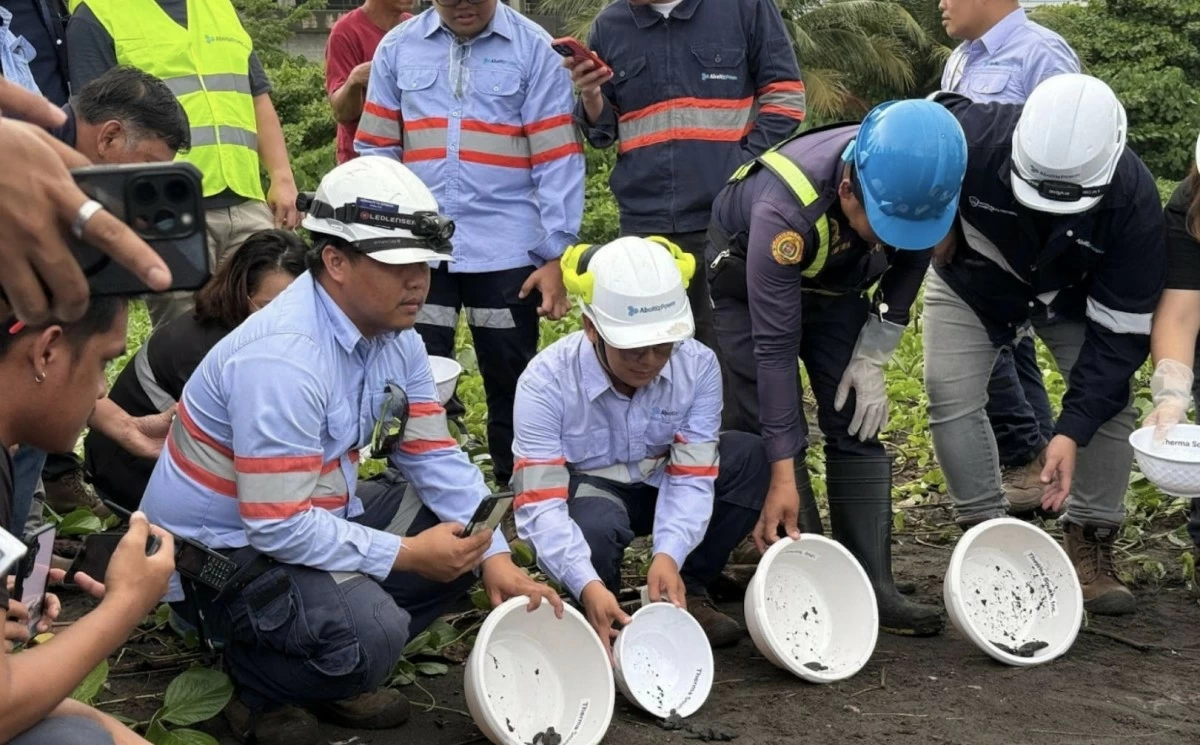
Therma South, Inc. (TSI), an Aboitiz Power Corporation subsidiary, recently released 67 hatchlings from the first of five sea turtle (pawikan) nests found along the shoreline of the power plant in Binugao, Toril, Davao City. TSI team members, local barangay officials, and experts from Ridge to Reef Environmental Consultancy participated in the conservation event. Ridge to Reef also conducted a Marine Turtle Management Training for security personnel of TSI.

Close to 500 eggs were first discovered in April after an Olive Ridley mother pawikan was observed in the area earlier this year. Experts relocated 115 eggs from the first nest to a safer location. Subsequent nests contained 76, 88, 108, and 109 eggs, respectively.

The plant’s coast has been a known nesting ground for Olive Ridley sea turtles, with a nesting mother frequently returning and laying eggs. 

Thirty pawikan hatchlings were first discovered and released at TSI in December 2018. The next year, 303 hatchlings from four nests followed. Pawikan nests were found again in 2024, with 86 of 120 hatchlings released by TSI team members, officials from the Department of Environment and Natural Resources - Environmental Management Bureau, and Aboitiz Cleanergy Park caretakers trained to handle pawikan hatchlings.

“There was a gap in nesting timing from 2019 to 2024. It may be attributed to the survival rate of previous hatchlings released into the wild or the mother pawikan nesting on the nearby beach area instead,” explained Ridge to Reef President Marie Antoinette Pana-Tautho.

“It is very important to manage marine turtles, especially since we believe that, according to a study in 2019, there are three species in the area: Olive Ridley, Green Sea Turtle, and Hawksbill Sea Turtle,” she added.

Currently, the Safety, Health, and Environment Department of TSI, led by Environmental Supervisor Geol. Reeka Angela Llenado, closely monitors the remaining pawikan nests. The team has built barricades around the nests to protect them from predators like birds, dogs, snakes, and even humans.

Olive Ridleys, while the most abundant of all the sea turtles, are considered a vulnerable species by the International Union for Conservation of Nature. 

“We will continue to actively monitor our shoreline and help protect its marine biodiversity as part of our environmental stewardship and communal responsibility in its host communities of Davao City and Sta. Cruz,” shared Llenado.

Related Tags

Therma South Inc. Aboitiz Power Corporation Reeka Angela Llenado Davao City sea turtles pawikan
ADVERTISEMENT
.most-popular .layout-ratio{ padding-bottom: 79.13%; } @media (min-width: 768px) and (max-width: 1024px) { .widget-title { font-size: 15px !important; } }

{{ articles_filter_1561_widget.title }}

.most-popular .layout-ratio{ padding-bottom: 79.13%; } @media (min-width: 768px) and (max-width: 1024px) { .widget-title { font-size: 15px !important; } }

{{ articles_filter_1562_widget.title }}

.most-popular .layout-ratio{ padding-bottom: 79.13%; } @media (min-width: 768px) and (max-width: 1024px) { .widget-title { font-size: 15px !important; } }

{{ articles_filter_1563_widget.title }}

{{ articles_filter_1564_widget.title }}

.mb-article-details { position: relative; } .mb-article-details .article-body-preview, .mb-article-details .article-body-summary{ font-size: 17px; line-height: 30px; font-family: "Libre Caslon Text", serif; color: #000; } .mb-article-details .article-body-preview iframe , .mb-article-details .article-body-summary iframe{ width: 100%; margin: auto; } .read-more-background { background: linear-gradient(180deg, color(display-p3 1.000 1.000 1.000 / 0) 13.75%, color(display-p3 1.000 1.000 1.000 / 0.8) 30.79%, color(display-p3 1.000 1.000 1.000) 72.5%); position: absolute; height: 200px; width: 100%; bottom: 0; display: flex; justify-content: center; align-items: center; padding: 0; } .read-more-background a{ color: #000; } .read-more-btn { padding: 17px 45px; font-family: Inter; font-weight: 700; font-size: 18px; line-height: 16px; text-align: center; vertical-align: middle; border: 1px solid black; background-color: white; } .hidden { display: none; }
function initializeAllSwipers() { // Get all hidden inputs with cms_article_id document.querySelectorAll('[id^="cms_article_id_"]').forEach(function (input) { const cmsArticleId = input.value; const articleSelector = '#article-' + cmsArticleId + ' .body_images'; const swiperElement = document.querySelector(articleSelector); if (swiperElement && !swiperElement.classList.contains('swiper-initialized')) { new Swiper(articleSelector, { loop: true, pagination: false, navigation: { nextEl: '#article-' + cmsArticleId + ' .swiper-button-next', prevEl: '#article-' + cmsArticleId + ' .swiper-button-prev', }, }); } }); } setTimeout(initializeAllSwipers, 3000); const intersectionObserver = new IntersectionObserver( (entries) => { entries.forEach((entry) => { if (entry.isIntersecting) { const newUrl = entry.target.getAttribute("data-url"); if (newUrl) { history.pushState(null, null, newUrl); let article = entry.target; // Extract metadata const author = article.querySelector('.author-section').textContent.replace('By', '').trim(); const section = article.querySelector('.section-info ').textContent.replace(' ', ' '); const title = article.querySelector('.article-title h1').textContent; // Parse URL for Chartbeat path format const parsedUrl = new URL(newUrl, window.location.origin); const cleanUrl = parsedUrl.host + parsedUrl.pathname; // Update Chartbeat configuration if (typeof window._sf_async_config !== 'undefined') { window._sf_async_config.path = cleanUrl; window._sf_async_config.sections = section; window._sf_async_config.authors = author; } // Track virtual page view with Chartbeat if (typeof pSUPERFLY !== 'undefined' && typeof pSUPERFLY.virtualPage === 'function') { try { pSUPERFLY.virtualPage({ path: cleanUrl, title: title, sections: section, authors: author }); } catch (error) { console.error('ping error', error); } } // Optional: Update document title if (title && title !== document.title) { document.title = title; } } } }); }, { threshold: 0.1 } ); function showArticleBody(button) { const article = button.closest("article"); const summary = article.querySelector(".article-body-summary"); const body = article.querySelector(".article-body-preview"); const readMoreSection = article.querySelector(".read-more-background"); // Hide summary and read-more section summary.style.display = "none"; readMoreSection.style.display = "none"; // Show the full article body body.classList.remove("hidden"); } document.addEventListener("DOMContentLoaded", () => { let loadCount = 0; // Track how many times articles are loaded const offset = [1, 2, 3, 4, 5, 6, 7, 8, 9, 10]; // Offset values const currentUrl = window.location.pathname.substring(1); let isLoading = false; // Prevent multiple calls if (!currentUrl) { console.log("Current URL is invalid."); return; } const sentinel = document.getElementById("load-more-sentinel"); if (!sentinel) { console.log("Sentinel element not found."); return; } function isSentinelVisible() { const rect = sentinel.getBoundingClientRect(); return ( rect.top < window.innerHeight && rect.bottom >= 0 ); } function onScroll() { if (isLoading) return; if (isSentinelVisible()) { if (loadCount >= offset.length) { console.log("Maximum load attempts reached."); window.removeEventListener("scroll", onScroll); return; } isLoading = true; const currentOffset = offset[loadCount]; window.loadMoreItems().then(() => { let article = document.querySelector('#widget_1690 > div:nth-last-of-type(2) article'); intersectionObserver.observe(article) loadCount++; }).catch(error => { console.error("Error loading more items:", error); }).finally(() => { isLoading = false; }); } } window.addEventListener("scroll", onScroll); });

Sign up by email to receive news.