







The key to advancing the territorial defense mission
Published May 19, 2025 12:05 am
|
Updated May 18, 2025 03:50 pm


BARRACKS AND STRATEGY
On May 15, 2025, the 5th Infantry Division (5ID), Philippine Army, proudly celebrated its 44th Founding Anniversary. The theme underscores the evolving role of the Division—from counterinsurgency to a broader, more complex territorial defense mission.
For over four decades, the 5ID has been a central pillar in the Armed Forces of the Philippines’ counterinsurgency efforts. Its roots trace back to the 5th Infantry Brigade (Separate), which served as the nucleus for 5ID’s activation amid the growing communist threat in Northern Luzon. A key turning point was the 1972 seizure of high-powered firearms from the M/V Karagatan in Palanan, Isabela—a successful operation by the defunct AFP Northeastern Command that dealt a major blow to the CPP-NPA's planned offensive. Since then, 5ID has remained a model in the fight against communist insurgency.
Operational reach and legacy
The Division’s area of responsibility spans 13 provinces in Northern Luzon—covering 215 municipalities, two cities, and 4,499 barangays. This territory encompasses approximately 4.96 million hectares or 16.5 percent of the Philippine landmass, with a population of 4.39 million.
This vast and rugged terrain—with its natural resources, guerrilla-suited topography, and isolated barangays—became fertile ground for communist influence. Yet, the notable decline in insurgency activities today is a testament to the 5ID’s mission success. Its achievements are rooted in the unwavering fighting spirit of its officers and enlisted personnel, strategic clarity anchored in democratic values, superior training, efficient logistics, and effective leadership.
Transition to territorial defense
As geopolitical tensions rise in the Asia-Pacific—particularly in the Taiwan Strait and due to China’s aggressive regional maneuvers—the defense landscape has transformed. With the designation of the 5ID area as one of the Enhanced Defense Cooperation Agreement (EDCA) sites, the Division now holds a pivotal role in the country’s external defense strategy.
While the Air Force and Navy remain central to territorial defense, ground forces are indispensable. Modern conflicts—from Ukraine to Israel—demonstrate that control of terrain remains vital to achieving strategic outcomes. Ground warfare ultimately dictates the resolution of conflict, making the Army’s role indispensable.
Key components of preparation
Territorial defense demands two primary foundations:
1. Advanced training – Beyond basic combat proficiency, it requires technical expertise, mental resilience, and a doctrinal shift from tactical counterinsurgency to conventional and hybrid warfare.
2. Reinforcement of the reserve force – A strategically structured, rapidly deployable, and multi-functional Reserve Force is crucial. It must be capable of supporting civil-military operations, disaster response, and conventional defense. The Israeli Defense Forces serve as a prime model, where the Reserve Force is the backbone of national readiness.
Political leadership must recognize the urgency of investing in this structure—before external threats materialize on our shores. The possibility of conscription should also be examined as a viable approach to rapidly develop defense capacity.
Modern command and control
In today’s fast-evolving battlefields, command centers must be equipped with digital infrastructure capable of real-time data fusion, operational command, and rapid decision-making. However, even with the best technology, success hinges on the caliber of military leadership.
Leadership embodied:
MGen. Gulliver L. Senires
Maj. Gen. Gulliver L. Senires, current Commander of the 5th Infantry Division, exemplifies the qualities of a strategic leader. His profile reflects three core strengths: academic excellence, training innovation, and valor.
Educator and mentor – As a two-time recipient of the PMA Military Tactics Instructor and the PMA Foundation Inc. Award for Teaching Excellence, he played a pivotal role in shaping future military leaders.
Strategic thinker – Serving as Chief of Staff of the Army Doctrine and Training Command, he introduced reforms to prepare the Army for external defense roles.
Battle-tested warrior – Decorated with the Distinguished Service Star, Gold Cross, and Bronze Cross, Gen. Senires has shown exceptional bravery in combat.
Academically, he holds three prestigious master's degrees:
Master of Strategic Affairs (with Merit) from Australian National University
Master of Military Art and Science from the U.S. Command and General Staff College
Master in National Security Administration (Salutatorian) from the National Defense College of the Philippines
A military scholar and a true professional soldier, Gen. Senires represents the ideal profile of a commander who is intellectually equipped and operationally prepared to meet the complexities of territorial defense.
In closing, as a former Commanding General of the 5th Infantry (STAR) Division, I take pride in the legacy of this unit and the strategic transition it is now undertaking. The path ahead is complex, but with visionary leadership and national commitment, the 5ID will continue to rise as a guardian of national sovereignty.
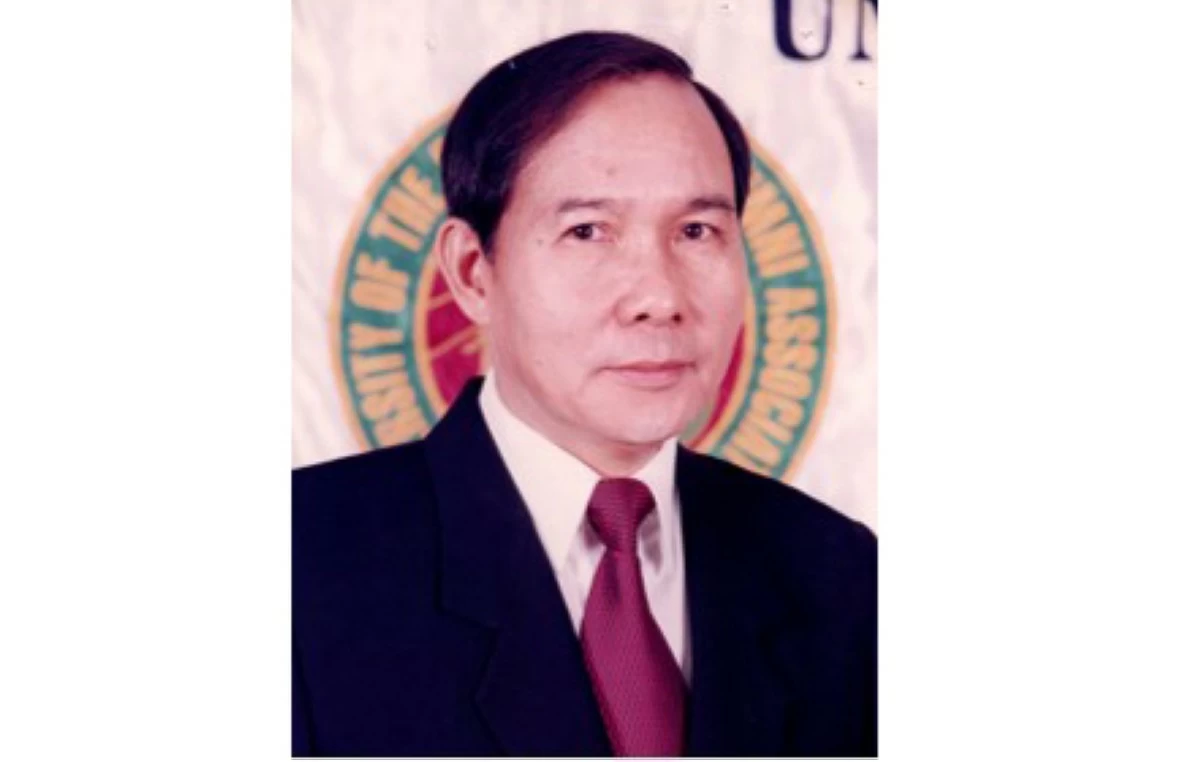
(Lt. Gen. Jaime S. de los Santos served with distinction as a military professional, 42nd Commanding Gen. Philippine Army, 1st Force Commander, UN Multi-National Peacekeeping Force in East Timor, former member, UP Board of Regents and Professorial Lecturer II (part-time), UP-Diliman.)