






 Business
Trade & Industry
EU partners with Philippines to study critical raw materials
Business
Trade & Industry
EU partners with Philippines to study critical raw materials
EU partners with Philippines to study critical raw materials


At A Glance
- European Union (EU) Ambassador to the Philippines Massimo Santoro said the 27-member bloc is collaborating with the Department of Environment and Natural Resources (DENR) for the study on critical raw minerals.
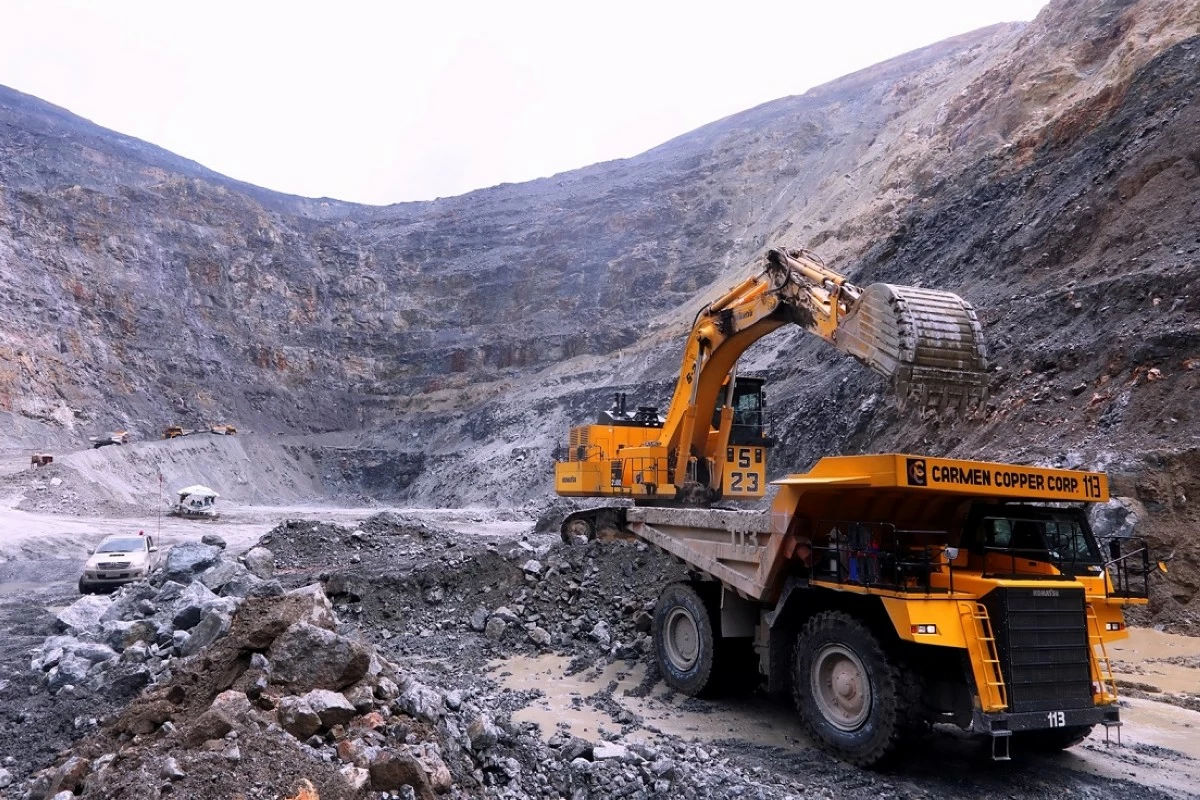
As part of its bilateral cooperation with the Philippines, the European Union (EU) is set to conduct a scoping study of mineral-rich sites in the country to identify potential sources of critical raw materials, ensuring sustainable utilization of resources and promoting new investment opportunities.
EU Ambassador to the Philippines Massimo Santoro said the 27-member bloc is collaborating with the Department of Environment and Natural Resources (DENR) for the study, which he described as a “work in progress.”
Santoro said the study will not pave the way for the EU to extract these minerals.
Instead, it will establish a “normative framework” that combines both the Philippines’ and the EU’s best modalities in sustainable mining.
He added that this will serve as a platform to exchange experiences in safeguarding the rights of those that will be affected by the extraction of critical raw materials, particularly that of indigenous peoples (IPs).
“We are cooperating with the Philippine authorities about the sustainability of the access and use of critical raw materials, about the norms, in exchange of experiences with the Philippine side, which would guide the access to the critical raw materials,” Santoro said in a forum hosted by the Makati Business Club (MBC) last week.
Gaining access to critical raw materials, he said, would foster investments from European companies to local mining firms.
“There is a mutual commitment that whenever you invest in critical raw materials, we do ensure sustainability to that investment,” Santoro told reporters.
“Because you cannot simply go there, extract whatever, and do not take into account the specificities, the place where we are operating, how much critical raw materials you have at your disposal,” he added.
The bilateral cooperation on critical raw materials was among the major topics discussed in the meeting of President Ferdinand “Bongbong” Marcos Jr. and EU President Ursula von der Leyen in Manila in July 2023.
A copy of von der Leyen’s statement before Marcos, published on the European Commission’s (EC) website, shows that the EU leader sees the Philippines as having “great potential” in the field of critical raw materials.
“We want to work in partnership with you. So let us start by identifying projects that would develop your local mining industry, supporting your communities, and that contribute to a secure global supply of critical raw materials,” said von der Leyen in her statement.
“Our existing partnerships on critical raw materials do not only invest in extraction, but across the whole value chain. We share technology and knowledge, we train the local workforce, and we empower local communities. And of course, we abide by the highest environmental standards,” she added.
Critical raw materials—which are key ingredients in technologies related to defense, digitalization, and the green industry—are deemed “critical” given their significance in relation to the risk of supply interruption.
Santoro said the EU is looking into diversification of supply lines, given that recent instability, such as Russia’s invasion of Ukraine, shows that access to critical raw materials could easily be hindered.
Under the Critical Raw Materials Act, the bloc aims to secure access to a secure and sustainable supply of critical raw materials to enable the region’s industries to remain competitive.
The EU considers 34 minerals as critical raw materials, which include cobalt, gallium, magnesium, natural graphite, phosphate rock, silicon metal, and tungsten, among others.