






Manila Bulletin
 Philippines
National
DPWH: Plastic bottle waste now standard in national road projects
Philippines
National
DPWH: Plastic bottle waste now standard in national road projects
Philippines
National
DPWH: Plastic bottle waste now standard in national road projects
DPWH: Plastic bottle waste now standard in national road projects
By Trixee Rosel
Published May 19, 2025 01:42 pm


At A Glance
- The Department of Public Works and Highways (DPWH) has institutionalized the use of polyethylene terephthalate (PET) plastic bottle waste in asphalt mixtures as a standard for national road construction to enhance pavement durability and promote sustainable infrastructure.
- A newly adopted specification, Item 310 (19), requires all regional and district offices to use PET-infused asphalt in upcoming infrastructure projects nationwide.
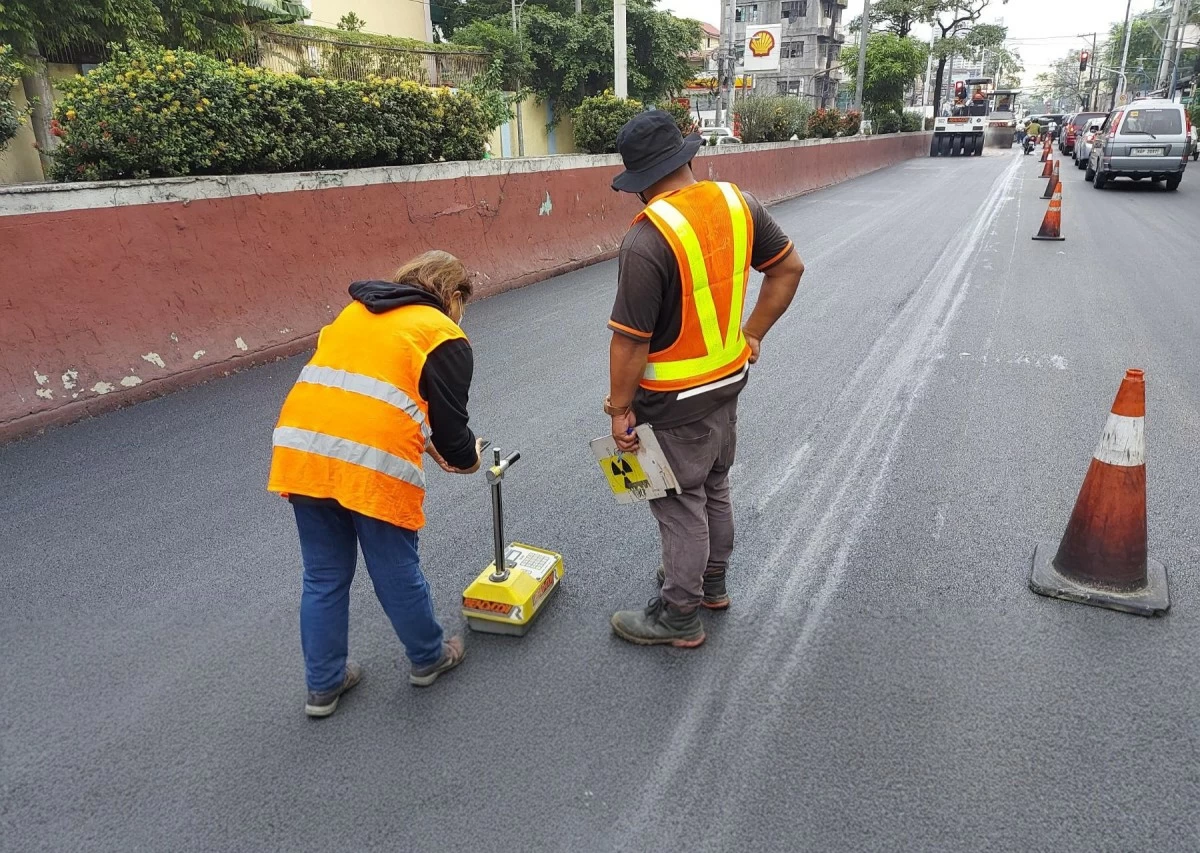
(Photo courtesy of DPWH)
The Department of Public Works and Highways (DPWH) has institutionalized the use of polyethylene terephthalate (PET) plastic bottle waste in asphalt mixtures as a standard for national road construction to enhance pavement durability and promote sustainable infrastructure.
This follows the issuance of a department order by DPWH Secretary Manuel M. Bonoan, formalizing the adoption of a new specification for PET-infused asphalt under the agency’s sustainable construction program.
Designated as Item 310 (19) and officially titled “Bituminous Concrete Surface Course with PET Plastic Bottle Waste, Hot-Laid,” the specification reflects the agency’s broader push to integrate recycled materials into public infrastructure development.
The initiative builds on DPWH’s 2024 policy permitting the use of low-density polyethylene (LDPE) plastic bag waste in road projects.
With the updated specification now part of the DPWH Standard Specification for Highways, Bridges, and Airports, Volume II, the PET-infused mix will be applied by regional offices, Unified Project Management Office (UPMO) clusters, and District Engineering Offices in all upcoming projects.
To ensure consistency in implementation, the standard has also been integrated into the department’s Project and Contract Management Application (PCMA), covering planning, procurement, and monitoring processes.
“Turning waste into a valuable resource for building better and more roads is the future of public infrastructure development in the country,” Bonoan said, adding that the department remains committed to innovations that support climate-resilient and eco-friendly construction.