ADVERTISEMENT

Cleaning up after the election campaign

Published May 18, 2025 12:05 am  |  Updated May 17, 2025 04:04 pm
The midterm elections produced many unexpected results – the highest voter turnout; candidates who were not expected to win, won; those who surveys placed in the bottom list moved way up the winning dozen; the youth vote changed the plans of many politicians; and celebrities, despite the familiarity of their names, lost to almost-unknowns.
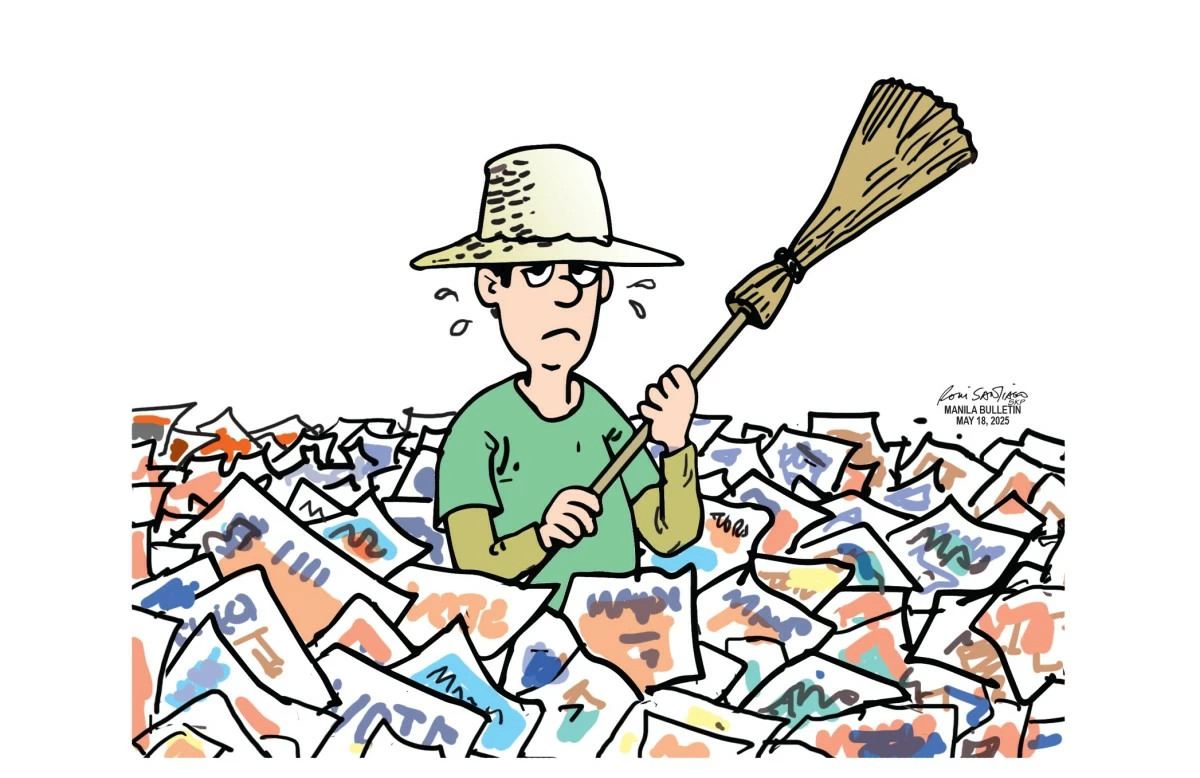
But one thing remained – the mountains of waste from campaign-related paraphernalia and the litter voters left around the polling places. The volume of waste is staggering, and it is a vivid reflection of the environmental cost of our democratic process.
The day after the midterm elections, the Metropolitan Manila Development Authority (MMDA) collected more than 11 tons of campaign-related garbage across Metro Manila. In Manila alone, at least 12 truckloads of posters, tarpaulins, and other election paraphernalia have been cleared.
Environment Secretary Maria Antonia Yulo Loyzaga has instructed the Environmental Management Bureau (EMB) and its regional offices to lead a nationwide clean-up drive and recovery efforts targeting campaign paraphernalia. She said these materials would end up polluting waterways and degrading landscapes, leading to increased pollution, habitat destruction, and a decline in biodiversity.
The Commission on Elections (Comelec) has made it clear—candidates, regardless of the outcome, are responsible for removing their campaign materials by yesterday, May 17. Failure to comply may lead to election offense cases.
Many candidates have complied with this order as shown by the absence of campaign posters and billboards along major thoroughfares in Metro Manila. But along the inner streets in the metro and in the provinces, there are still posters glued on walls and hanging from electric posts. Taking them down will require much work, a task the barangay will likely take on, but which a responsible candidate should do.
Other campaign materials—especially those made of polyvinyl chloride (PVC) and polyethylene—pose environmental and health hazards. According to the EcoWaste Coalition, the chemicals in tarpaulins are toxic and can persist in ecosystems for years, harming plants, animals, and waterways.
The MMDA and local government units (LGUs) have stepped in where many candidates have failed. In Bacoor City, over 5,500 kilos of tarpaulins and other materials have been collected and will be repurposed into practical items such as bags and fans through the City Livelihood and Development Office. In Imus City, about 80 percent of campaign materials have been cleared from 97 barangays, with coordination between the CENRO and community leaders.
In Taguig, campaign materials are now in the process of becoming tote bags, pouches, and cardholders through the LGU’s initiative in partnership with local sewing cooperatives and the Taguig Manpower Training and Assessment Center.
These initiatives highlight that proper waste management is possible—but it shouldn’t fall solely on the shoulders of local governments. Candidates must take the lead in post-election cleanups and demonstrate true leadership by taking responsibility for the waste they generated. Political ambition must come with civic responsibility.
But the most effective solution lies not in post-election cleanup—it lies in prevention. Since billboards and posters will continue to be used in political campaigns, candidates should also focus attention on choosing materials that can be recycled, and not just discarded as waste. And their campaign plans should include a livelihood program to make functional products from campaign materials.
This cycle of waste and neglect must end. The responsibility to dismantle campaign materials is not just a legal obligation—it is a moral one. If candidates want to prove their capacity for leadership, let them start by cleaning up after themselves. The future of our environment depends on it.
ADVERTISEMENT
.most-popular .layout-ratio{ padding-bottom: 79.13%; } @media (min-width: 768px) and (max-width: 1024px) { .widget-title { font-size: 15px !important; } }

{{ articles_filter_1561_widget.title }}

.most-popular .layout-ratio{ padding-bottom: 79.13%; } @media (min-width: 768px) and (max-width: 1024px) { .widget-title { font-size: 15px !important; } }

{{ articles_filter_1562_widget.title }}

.most-popular .layout-ratio{ padding-bottom: 79.13%; } @media (min-width: 768px) and (max-width: 1024px) { .widget-title { font-size: 15px !important; } }

{{ articles_filter_1563_widget.title }}

{{ articles_filter_1564_widget.title }}

.mb-article-details { position: relative; } .mb-article-details .article-body-preview, .mb-article-details .article-body-summary{ font-size: 17px; line-height: 30px; font-family: "Libre Caslon Text", serif; color: #000; } .mb-article-details .article-body-preview iframe , .mb-article-details .article-body-summary iframe{ width: 100%; margin: auto; } .read-more-background { background: linear-gradient(180deg, color(display-p3 1.000 1.000 1.000 / 0) 13.75%, color(display-p3 1.000 1.000 1.000 / 0.8) 30.79%, color(display-p3 1.000 1.000 1.000) 72.5%); position: absolute; height: 200px; width: 100%; bottom: 0; display: flex; justify-content: center; align-items: center; padding: 0; } .read-more-background a{ color: #000; } .read-more-btn { padding: 17px 45px; font-family: Inter; font-weight: 700; font-size: 18px; line-height: 16px; text-align: center; vertical-align: middle; border: 1px solid black; background-color: white; } .hidden { display: none; }
function initializeAllSwipers() { // Get all hidden inputs with cms_article_id document.querySelectorAll('[id^="cms_article_id_"]').forEach(function (input) { const cmsArticleId = input.value; const articleSelector = '#article-' + cmsArticleId + ' .body_images'; const swiperElement = document.querySelector(articleSelector); if (swiperElement && !swiperElement.classList.contains('swiper-initialized')) { new Swiper(articleSelector, { loop: true, pagination: false, navigation: { nextEl: '#article-' + cmsArticleId + ' .swiper-button-next', prevEl: '#article-' + cmsArticleId + ' .swiper-button-prev', }, }); } }); } setTimeout(initializeAllSwipers, 3000); const intersectionObserver = new IntersectionObserver( (entries) => { entries.forEach((entry) => { if (entry.isIntersecting) { const newUrl = entry.target.getAttribute("data-url"); if (newUrl) { history.pushState(null, null, newUrl); let article = entry.target; // Extract metadata const author = article.querySelector('.author-section').textContent.replace('By', '').trim(); const section = article.querySelector('.section-info ').textContent.replace(' ', ' '); const title = article.querySelector('.article-title h1').textContent; // Parse URL for Chartbeat path format const parsedUrl = new URL(newUrl, window.location.origin); const cleanUrl = parsedUrl.host + parsedUrl.pathname; // Update Chartbeat configuration if (typeof window._sf_async_config !== 'undefined') { window._sf_async_config.path = cleanUrl; window._sf_async_config.sections = section; window._sf_async_config.authors = author; } // Track virtual page view with Chartbeat if (typeof pSUPERFLY !== 'undefined' && typeof pSUPERFLY.virtualPage === 'function') { try { pSUPERFLY.virtualPage({ path: cleanUrl, title: title, sections: section, authors: author }); } catch (error) { console.error('ping error', error); } } // Optional: Update document title if (title && title !== document.title) { document.title = title; } } } }); }, { threshold: 0.1 } ); function showArticleBody(button) { const article = button.closest("article"); const summary = article.querySelector(".article-body-summary"); const body = article.querySelector(".article-body-preview"); const readMoreSection = article.querySelector(".read-more-background"); // Hide summary and read-more section summary.style.display = "none"; readMoreSection.style.display = "none"; // Show the full article body body.classList.remove("hidden"); } document.addEventListener("DOMContentLoaded", () => { let loadCount = 0; // Track how many times articles are loaded const offset = [1, 2, 3, 4, 5, 6, 7, 8, 9, 10]; // Offset values const currentUrl = window.location.pathname.substring(1); let isLoading = false; // Prevent multiple calls if (!currentUrl) { console.log("Current URL is invalid."); return; } const sentinel = document.getElementById("load-more-sentinel"); if (!sentinel) { console.log("Sentinel element not found."); return; } function isSentinelVisible() { const rect = sentinel.getBoundingClientRect(); return ( rect.top < window.innerHeight && rect.bottom >= 0 ); } function onScroll() { if (isLoading) return; if (isSentinelVisible()) { if (loadCount >= offset.length) { console.log("Maximum load attempts reached."); window.removeEventListener("scroll", onScroll); return; } isLoading = true; const currentOffset = offset[loadCount]; window.loadMoreItems().then(() => { let article = document.querySelector('#widget_1690 > div:nth-last-of-type(2) article'); intersectionObserver.observe(article) loadCount++; }).catch(error => { console.error("Error loading more items:", error); }).finally(() => { isLoading = false; }); } } window.addEventListener("scroll", onScroll); });

Sign up by email to receive news.