







Marvin Quizon’s ongoing exhibit at Eskinita Art Farm in Tanauan, Batangas is a dialogue between life and death. More than just a collection of artworks, “Muling Buhay (Rebirth)," running until June 1, showcases love, loss, and the power of the human spirit to find renewal even in the face of mortality.
Marvin Quizon on love, loss, and the art of becoming
The artist's 'Muling Buhay' at Eskinita Art Farm is an intimate exploration of pain and renewal
By S.C. Fojas
Published May 17, 2025 08:58 am


At A Glance
- The exhibit treats death not as an end but as a transition, a rite of passage, where meaning is resurrected.
For Marvin, love isn’t a refuge but a fundamental connection, “the most essential of human communion.” It’s the wellspring of meaning, a thread that overcomes the boundaries of sacrifice and draws us beyond ourselves. The core message of his exhibit: “In dying, we are reborn.” It tells us that beyond the suffering, lessons emerge, and pain will be a catalyst for growth. Love, then, becomes a courageous act of reaching out, a trust in the unknown. The exhibit is Marvin’s devotion to this brave, sacred act.
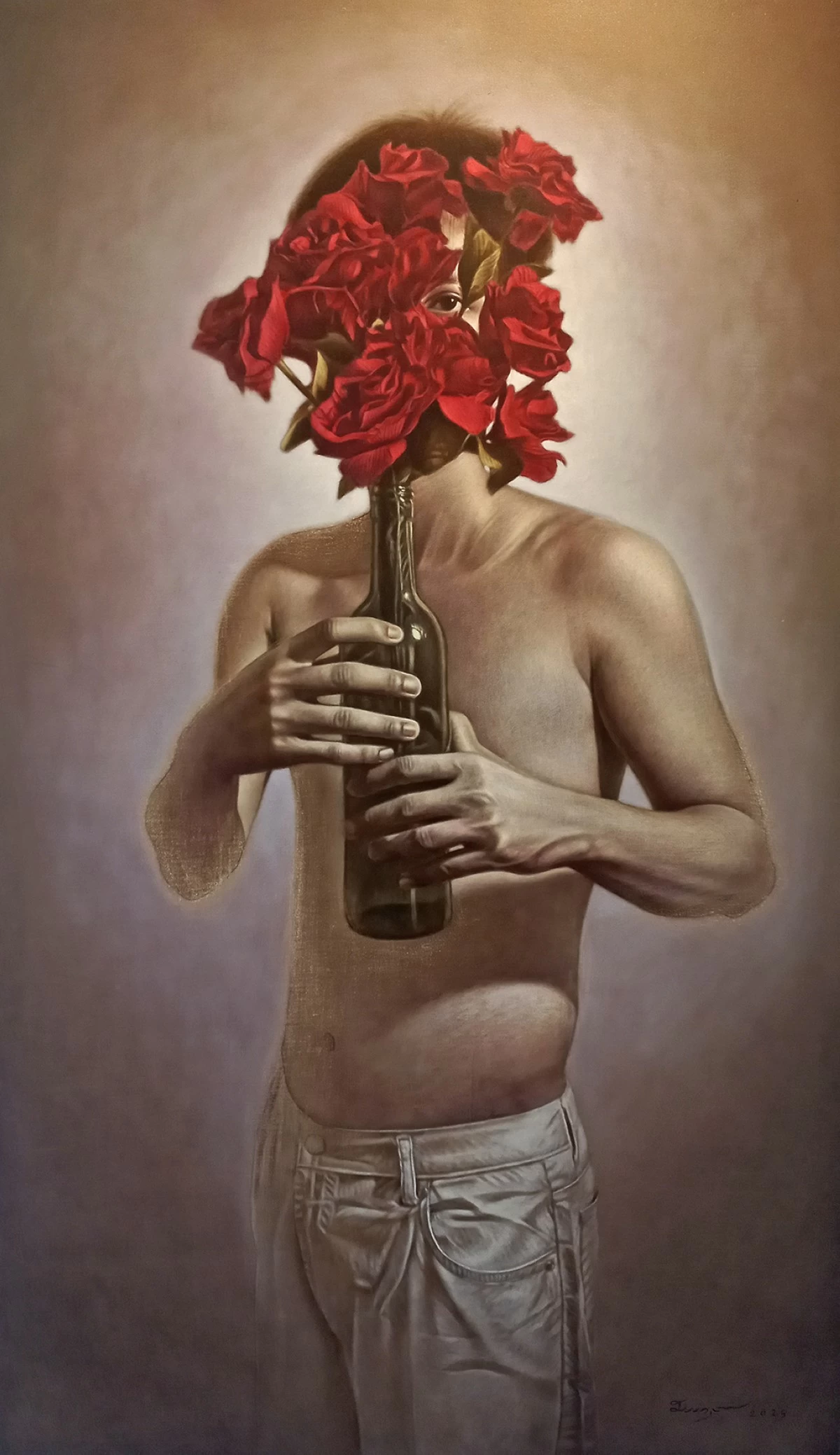
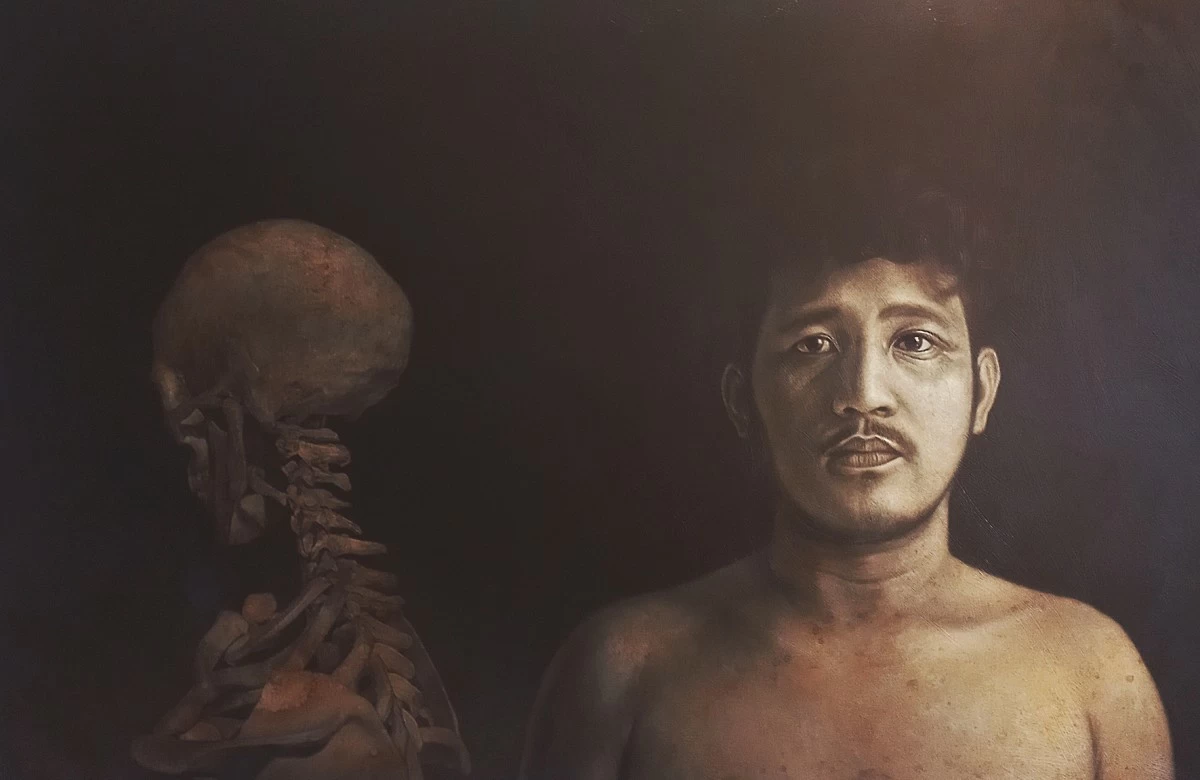
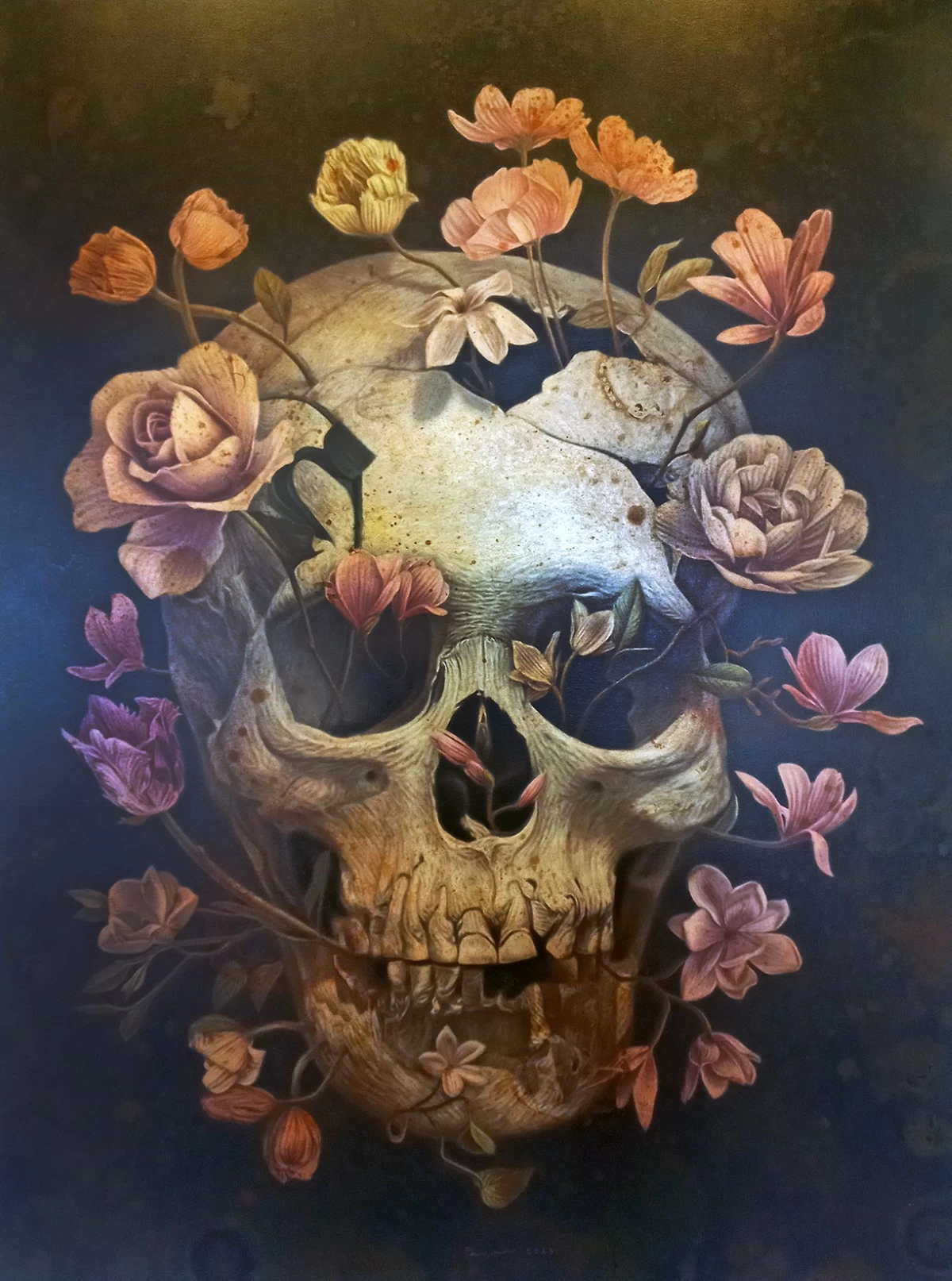
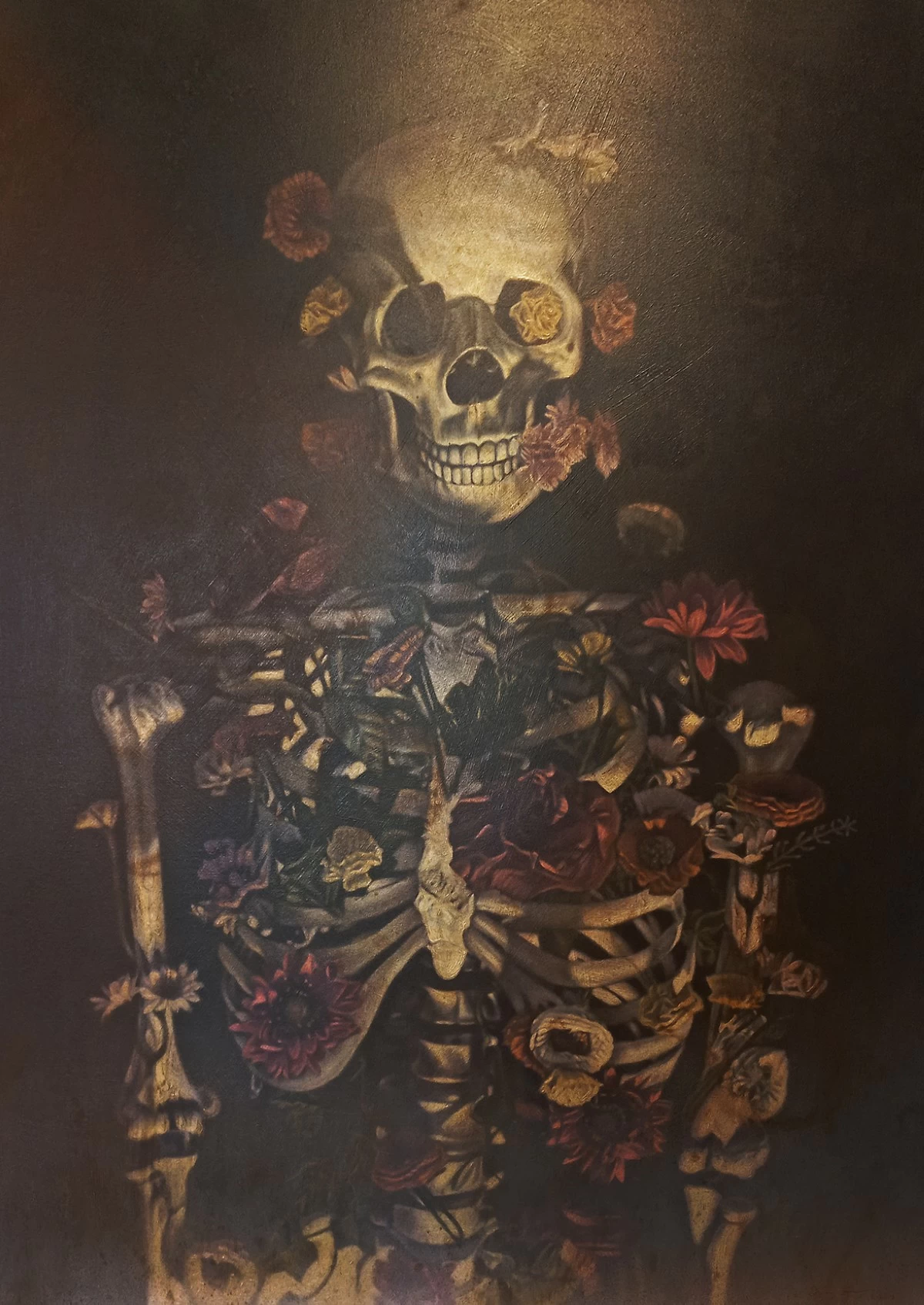
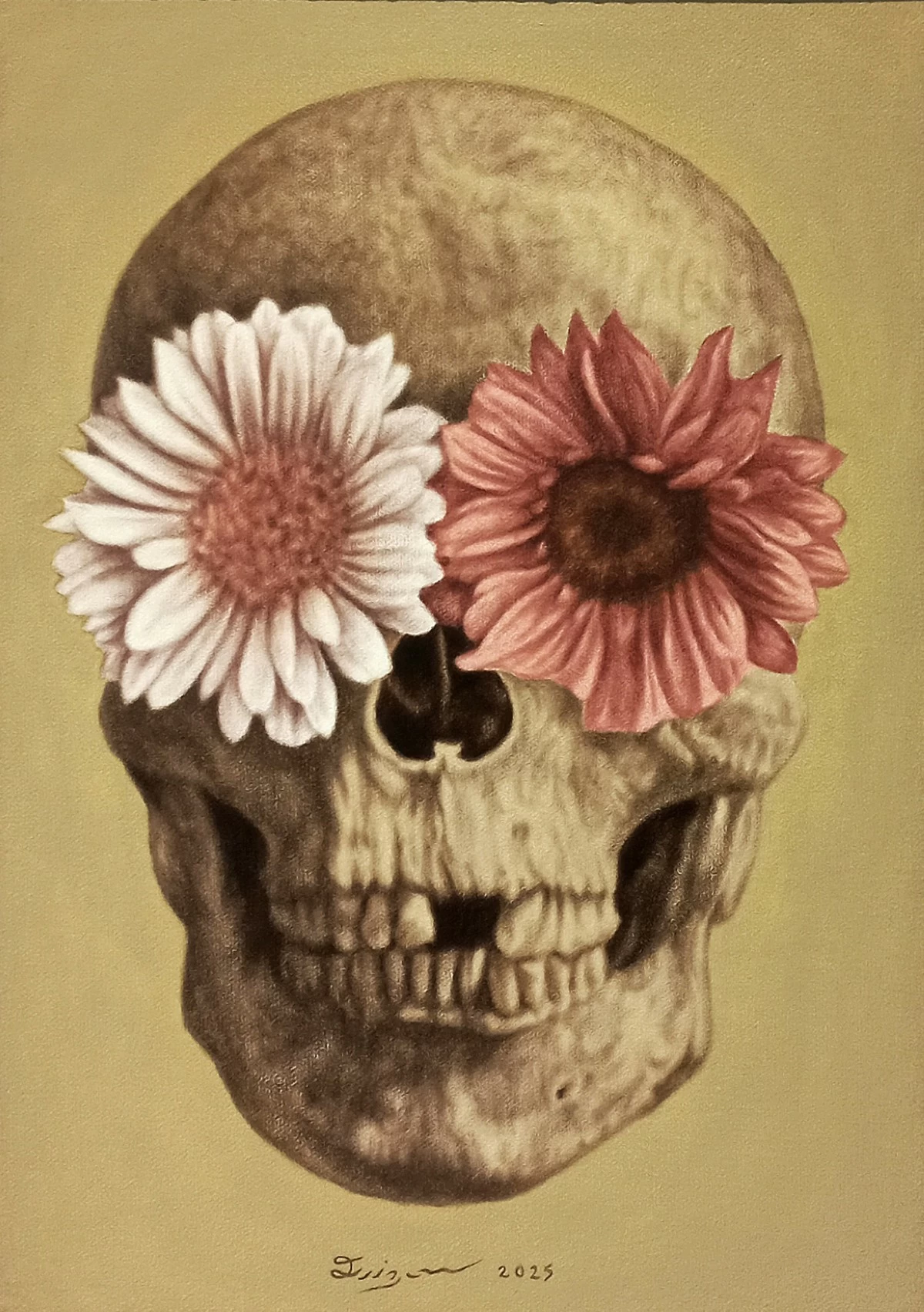
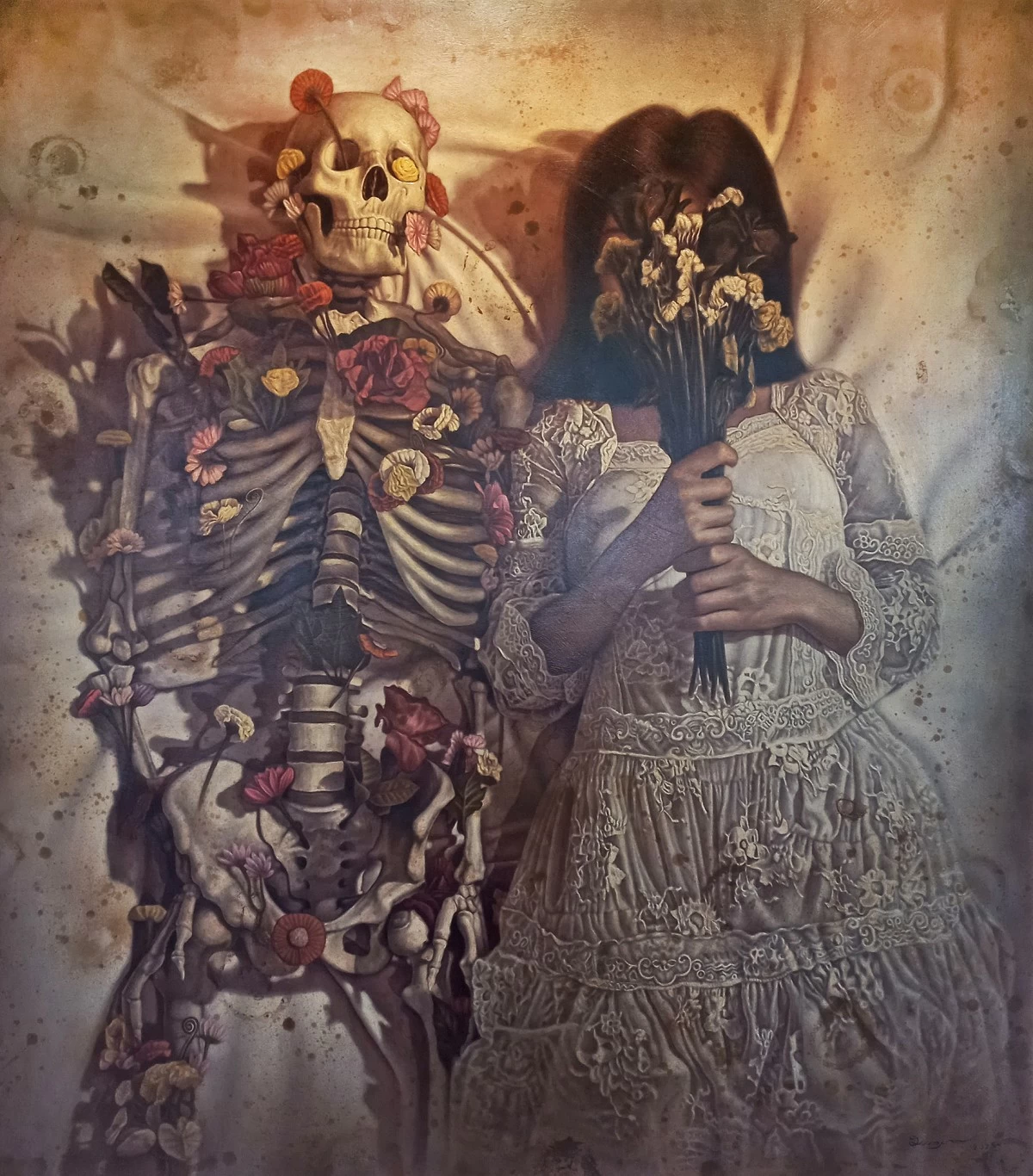
In the exhibit, skeletons intertwine with blooming flowers. Pieces like “Nawasak at Namukadkad (Shattered and Blossomed),” “Sa Mata ng Bungo (In the Eye of the Skull),” and “Resureksyon (Resurrection)” celebrate life’s profound ironies. He delves into themes of hidden selves and shifting identities in “Ikinubli (Hidden),” “Larawan ng Dating Sarili (Portrait of a Former Self),” and “Walang Hanggang Paalam 2 (Eternal Farewell 2),” where vulnerability finds shelter within the self. These are silent revelations, pulsing with unspoken strength.
Even Marvin’s creative process mirrors the exhibit’s themes. He begins with somber sepia tones, laying a foundational weight of time before introducing a clearer layer revealing muted colors of the past. The technique captures the passage of time, bearing witness to its weight while embracing its fading lightness.
The creation of the exhibit was a dedicated process. “I had a three-month art residency at Eskinita Art Farm, where I made the pieces. But before the residency started, I was already working on it for two months. All in all, it took me five months to finish,” Marvin shares.
The exhibit treats death not as an end but as a transition, a rite of passage, where meaning is resurrected. The exhibit marks a full circle for Marvin, revisiting and concluding themes from his first solo show, “Bones and Blooms” in 2018. It is a journey that, like love, “never truly ends.”
The story behind ‘Muling Buhay’
When asked about the title, Marvin explains, “‘Muling Buhay’ is about people’s experiences of suffering and the wisdom they gain from those sufferings. Once you gain from those learnings, there will be a rebirth. When the old self, toxic habits, and the old ways die, a new life is born.”
He shares that his inspiration comes from personal experience, saying, “I drew from my own moments of falling. The pain can feel like dying—but overcoming it makes you feel reborn, and stronger than before.”
The title also reflects the duality of life and death. “Death isn’t the end—it simply marks a new beginning. That’s why, from the image of the skeleton, new flowers emerge. It’s the same with pain: Every difficult experience has a counterpart. Something beautiful grows within you. You bloom as a person. That’s the wisdom—the flowers that have blossomed through hardship.”
Skeletons and flowers
The striking pairing of skeletons and flowers is deliberate. Marvin elaborates, “Throughout history, the image of the skeleton has been used to show strength or fear, for example, by pirates to look scary and dangerous. The skull on their flag also symbolizes death. When a person dies, all that remains are their bones.”
This fascination with skeletons led him to a deeper purpose. “I want to stir a sense of conscience in viewers, because when we witness death (a skeleton), we tend to value life more. ‘Memento mori.’ The fact that you are alive right now suddenly matters more. It’s a call to live fully. Many of us are too bombarded with future needs or desires to the point that we forget to live in the present moment. I want this exhibit to serve as a reminder to viewers of the importance of life. My show is really pro-life, but to awaken people, it’s necessary to show the opposite.”
The exhibit has resonated deeply with viewers. “Many people can relate,” Marvin notes, adding the serendipitous time of the opening: “Plus, the opening date was Easter Sunday, the date of the resurrection.”
He also shared a comment on his meticulous technique. “Someone told me that my painting process or technique is very painstaking because of the details, but rewarding. That’s the same as what the show wants to convey. Suffering is painstaking, but rewarding when you overcome each challenge. And the show is not necessarily about physical death.”
A day in the studio
For Marvin, art is integrated into daily life. “In the studio, everyday life is part of the process. I make art almost every day. I start with sketching projects, then photoshoots, because my painting is mostly photo-based. Then I do carpentry for my canvases. During my painting breaks, I watch films, old and new. And there’s always one day when I don’t do much, to recharge for the next.”
“Muling Buhay” is an invitation to contemplate the nature of existence, the power of life, and the beauty that can emerge from the act of suffering.
Exhibit runs until June 1, 2025 at Eskinita Art Farm, 353 & 355 Purok 5, Janapol Occidental, Tanauan, Batangas