ADVERTISEMENT

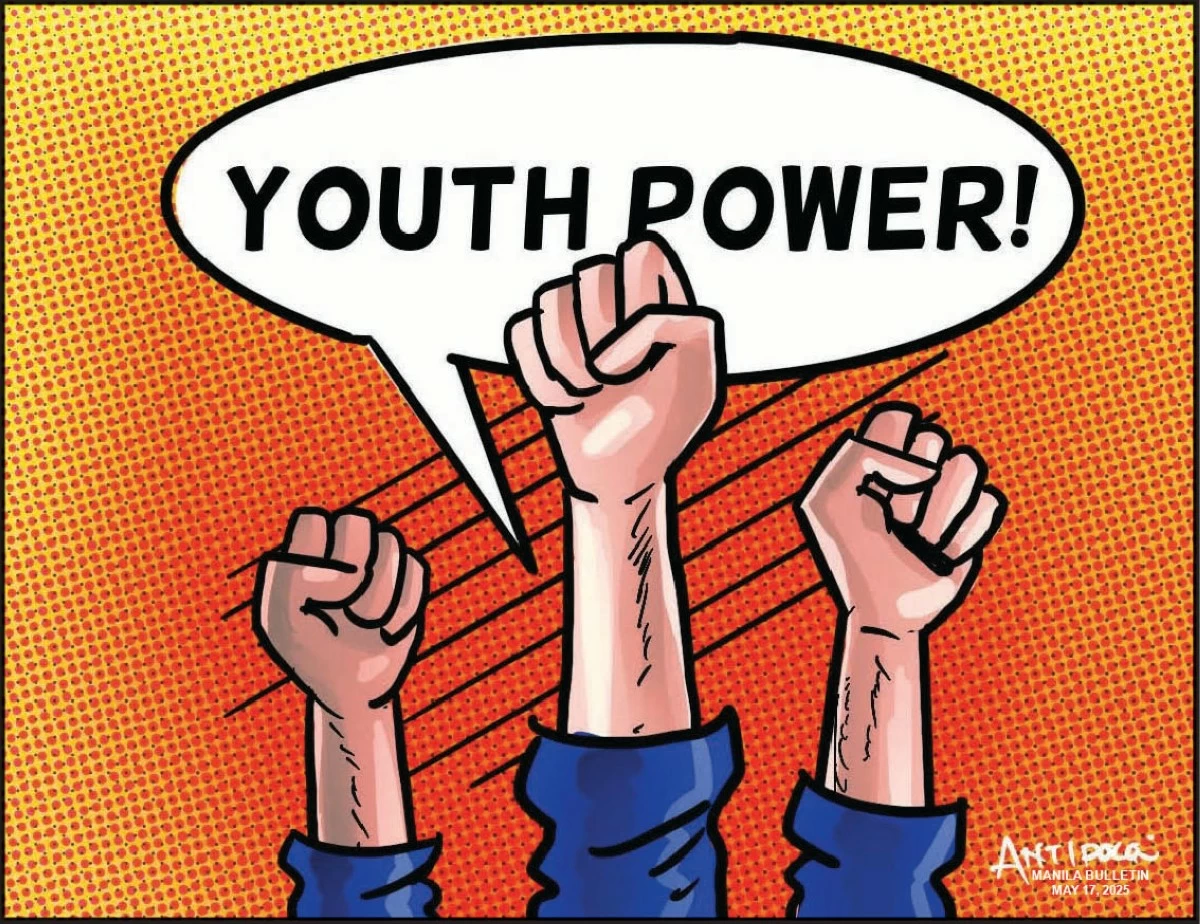
Harness youth's potent force; invest in our future

Published May 17, 2025 12:05 am  |  Updated May 16, 2025 05:32 pm
A statement vote has just been delivered. It was a statement that resonated in the polling places in the just concluded midterm elections. It came at a time when the country is highly polarized due to intertwining events that emerge. It was a crucial moment in the country’s democracy, as the youth emerged as a formidable force that reshaped the political landscape.
With over 21 million registered voters aged 18 to 30, comprising nearly a third of the electorate, their collective voice became the defining factor in an election that defied expectations. It sent a clear message—the youth are no longer passive observers but active participants in shaping the future.
Pre-election surveys had relegated candidates like Bam Aquino and Kiko Pangilinan to the periphery, predicting their exclusion from the Senate’s Magic 12. However, the actual results had a different story. Aquino made a big surprise by receiving the second most number of votes, while Pangilinan is in the middle of the Magic 12 pack. Their lofty showing was largely propelled by overwhelming support from the youth sector. This unexpected outcome underscored a deep-seated truth—when united, the youth possess the power to alter the course of history.
The surge in youth voter turnout was a testament to a generation’s awakening. Commission on Elections (Comelec) Chairman George Garcia acknowledged that the youth’s active participation was instrumental in achieving a historic 81.65 percent voter turnout, the highest in Philippine midterm election history. This unprecedented engagement reflects a deep-seated desire among young Filipinos to influence the policies that will define their lives and the nation’s future.
The issues that galvanized the youth were deeply personal and immediate. Economic stability, job opportunities, food security, and environmental sustainability emerged as top priorities. Candidates who championed these causes resonated with the electorate, particularly among Gen Z and millennial voters who are acutely aware of the challenges facing the nation. Their support was a vote for a collective endorsement of a vision that aligns with their aspirations for a just, equitable, and sustainable future.
This electoral outcome serves as a clarion call to the government and political institutions: the youth are a dynamic and discerning constituency whose concerns demand attention and action. There is nothing that can appease them—not even lofty promises and “ayuda” (aid)—if their legitimate demands for accountability and nation-building are not met.
The government must now harness this newfound strength. Officials and the institutions that they represent must invest in policies that address the root causes of youth disenchantment—such as unemployment, underemployment, and the erosion of democratic norms. Moreover, fostering an environment that encourages civic engagement and political literacy will ensure that the youth remain active participants in the democratic process.
The youth’s involvement in the 2025 midterm elections was a harbinger of a more engaged and informed electorate. Their participation signifies a shift toward a politics of accountability, transparency, and responsiveness. As the nation moves forward, it is crucial to recognize that the youth are leaders of today, capable of driving the change that the Philippines so desperately needs. We used to perceive them as potential leaders of tomorrow. That no longer holds.
The 2025 midterm election was a profound statement of the Filipino youth’s intent. Their collective action has just illuminated a path toward a more inclusive and progressive society. Now, it is incumbent upon all sectors—government, civil society, and the private sector—to support and empower this generation, ensuring that their voices continue to echo in the halls of power and beyond, shaping a future that reflects their hopes and dreams.
ADVERTISEMENT
.most-popular .layout-ratio{ padding-bottom: 79.13%; } @media (min-width: 768px) and (max-width: 1024px) { .widget-title { font-size: 15px !important; } }

{{ articles_filter_1561_widget.title }}

.most-popular .layout-ratio{ padding-bottom: 79.13%; } @media (min-width: 768px) and (max-width: 1024px) { .widget-title { font-size: 15px !important; } }

{{ articles_filter_1562_widget.title }}

.most-popular .layout-ratio{ padding-bottom: 79.13%; } @media (min-width: 768px) and (max-width: 1024px) { .widget-title { font-size: 15px !important; } }

{{ articles_filter_1563_widget.title }}

{{ articles_filter_1564_widget.title }}

.mb-article-details { position: relative; } .mb-article-details .article-body-preview, .mb-article-details .article-body-summary{ font-size: 17px; line-height: 30px; font-family: "Libre Caslon Text", serif; color: #000; } .mb-article-details .article-body-preview iframe , .mb-article-details .article-body-summary iframe{ width: 100%; margin: auto; } .read-more-background { background: linear-gradient(180deg, color(display-p3 1.000 1.000 1.000 / 0) 13.75%, color(display-p3 1.000 1.000 1.000 / 0.8) 30.79%, color(display-p3 1.000 1.000 1.000) 72.5%); position: absolute; height: 200px; width: 100%; bottom: 0; display: flex; justify-content: center; align-items: center; padding: 0; } .read-more-background a{ color: #000; } .read-more-btn { padding: 17px 45px; font-family: Inter; font-weight: 700; font-size: 18px; line-height: 16px; text-align: center; vertical-align: middle; border: 1px solid black; background-color: white; } .hidden { display: none; }
function initializeAllSwipers() { // Get all hidden inputs with cms_article_id document.querySelectorAll('[id^="cms_article_id_"]').forEach(function (input) { const cmsArticleId = input.value; const articleSelector = '#article-' + cmsArticleId + ' .body_images'; const swiperElement = document.querySelector(articleSelector); if (swiperElement && !swiperElement.classList.contains('swiper-initialized')) { new Swiper(articleSelector, { loop: true, pagination: false, navigation: { nextEl: '#article-' + cmsArticleId + ' .swiper-button-next', prevEl: '#article-' + cmsArticleId + ' .swiper-button-prev', }, }); } }); } setTimeout(initializeAllSwipers, 3000); const intersectionObserver = new IntersectionObserver( (entries) => { entries.forEach((entry) => { if (entry.isIntersecting) { const newUrl = entry.target.getAttribute("data-url"); if (newUrl) { history.pushState(null, null, newUrl); let article = entry.target; // Extract metadata const author = article.querySelector('.author-section').textContent.replace('By', '').trim(); const section = article.querySelector('.section-info ').textContent.replace(' ', ' '); const title = article.querySelector('.article-title h1').textContent; // Parse URL for Chartbeat path format const parsedUrl = new URL(newUrl, window.location.origin); const cleanUrl = parsedUrl.host + parsedUrl.pathname; // Update Chartbeat configuration if (typeof window._sf_async_config !== 'undefined') { window._sf_async_config.path = cleanUrl; window._sf_async_config.sections = section; window._sf_async_config.authors = author; } // Track virtual page view with Chartbeat if (typeof pSUPERFLY !== 'undefined' && typeof pSUPERFLY.virtualPage === 'function') { try { pSUPERFLY.virtualPage({ path: cleanUrl, title: title, sections: section, authors: author }); } catch (error) { console.error('ping error', error); } } // Optional: Update document title if (title && title !== document.title) { document.title = title; } } } }); }, { threshold: 0.1 } ); function showArticleBody(button) { const article = button.closest("article"); const summary = article.querySelector(".article-body-summary"); const body = article.querySelector(".article-body-preview"); const readMoreSection = article.querySelector(".read-more-background"); // Hide summary and read-more section summary.style.display = "none"; readMoreSection.style.display = "none"; // Show the full article body body.classList.remove("hidden"); } document.addEventListener("DOMContentLoaded", () => { let loadCount = 0; // Track how many times articles are loaded const offset = [1, 2, 3, 4, 5, 6, 7, 8, 9, 10]; // Offset values const currentUrl = window.location.pathname.substring(1); let isLoading = false; // Prevent multiple calls if (!currentUrl) { console.log("Current URL is invalid."); return; } const sentinel = document.getElementById("load-more-sentinel"); if (!sentinel) { console.log("Sentinel element not found."); return; } function isSentinelVisible() { const rect = sentinel.getBoundingClientRect(); return ( rect.top < window.innerHeight && rect.bottom >= 0 ); } function onScroll() { if (isLoading) return; if (isSentinelVisible()) { if (loadCount >= offset.length) { console.log("Maximum load attempts reached."); window.removeEventListener("scroll", onScroll); return; } isLoading = true; const currentOffset = offset[loadCount]; window.loadMoreItems().then(() => { let article = document.querySelector('#widget_1690 > div:nth-last-of-type(2) article'); intersectionObserver.observe(article) loadCount++; }).catch(error => { console.error("Error loading more items:", error); }).finally(() => { isLoading = false; }); } } window.addEventListener("scroll", onScroll); });

Sign up by email to receive news.