

ADVERTISEMENT

UN forecasts slower global economic growth following Trump's tariffs and trade tensions

Published May 16, 2025 10:24 am  |  Updated May 16, 2025 01:51 pm

At A Glance

  • The United Nations (UN) is now forecasting global economic growth of 2.4 percent this year and 2.5 percent next year—a drop of 0.4 percentage point (ppt) each year from its projections in January. Last year, the global economy grew 2.9 percent.
The United Nations (UN) on Thursday, May 15, forecast slower global economic growth this year and next, pointing to the impact of the surge in United States (US) tariffs and increasing trade tensions.
UN economists also cited the volatile geopolitical landscape and threats of rising production costs, supply chain disruptions and financial turbulence.
"These days, there's so much uncertainty in the air," said Shantanu Mukherjee, director of the economic analysis and policy division at the UN Department of Economic and Social Affairs (DESA).
"It's been a nervous time for the global economy," he told reporters while launching the midyear forecast. "In January this year, we were expecting two years of stable—if subpar—growth, and since then, prospects have diminished, accompanied by significant volatility across various dimensions."
The UN is now forecasting global economic growth of 2.4 percent this year and 2.5 percent next year—a drop of 0.4 percentage point (ppt) each year from its projections in January. Last year, the global economy grew 2.9 percent.
Mukherjee said the slowing is affecting most countries and regions, but among the most severely hit are the poorest and least developed countries, whose growth prospects have fallen from 4.6 percent to 4.1 percent just since January.
"That translates into a loss of billions in economic output for the most disadvantaged of countries," which are home to over half the global population living in extreme poverty, he said.
The world's developed and developing countries also are projected to suffer, according to the UN report.
Economic growth in the US is now projected to drop significantly, from 2.8 percent last year to 1.6 percent this year, it said, noting that higher tariffs and policy uncertainty are expected to weigh on private investment and consumption.
China's growth is expected to slow to 4.6 percent this year from five percent in 2024 as a result of subdued consumer sentiment, disruptions in its export-oriented manufacturing companies, and continuing challenges in its property sector, the report said.
The European Union's (EU) growth is forecast to remain the same this year as it was last year—just one percent, the report said, citing weaker net exports and higher trade barriers.
The United Kingdom's (UK) economic growth of 1.1 percent last year is projected to fall to 0.9 percent.
Weakening trade, slowing investments and falling commodity prices are also forecast to erode growth in other major developing economies, including Brazil, Mexico and South Africa.
India will remain one of the world's fastest-growing large economies, but the UN forecast said its growth is expected to drop from 7.1 percent in 2024 to 6.3 percent this year.
The UN's global economic growth forecast is lower than the International Monetary Fund's (IMF).
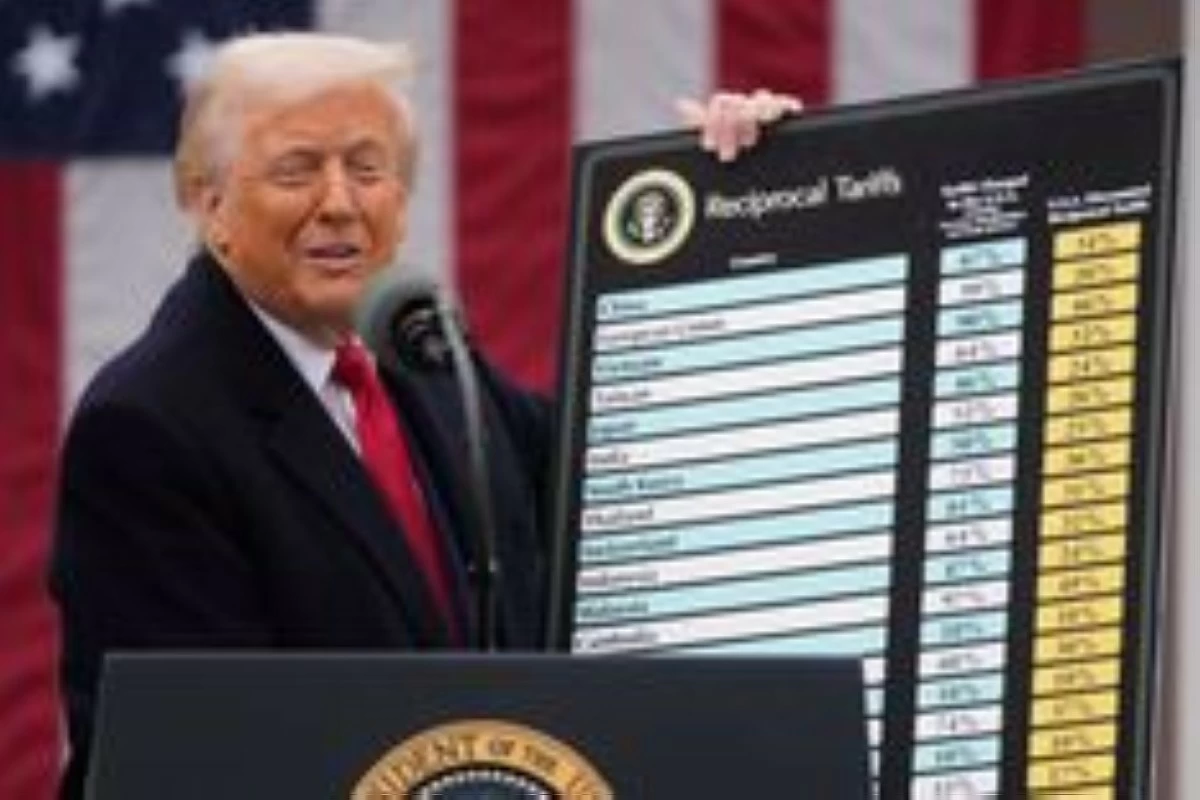
On a more positive note, Mukherjee said the UN is expecting that bilateral negotiations will lead to lower tariffs, although he said they won't return to the levels before US President Donald Trump's February announcement.
Nonetheless, Mukherjee said, resolving uncertainties would help individuals and businesses move forward with economic decisions and that would have a positive impact on the global economy.

Related Tags

United Nations Department of Economic and Social Affairs (UN-DESA) Donald Trump tariffs
ADVERTISEMENT
.most-popular .layout-ratio{ padding-bottom: 79.13%; } @media (min-width: 768px) and (max-width: 1024px) { .widget-title { font-size: 15px !important; } }

{{ articles_filter_1561_widget.title }}

.most-popular .layout-ratio{ padding-bottom: 79.13%; } @media (min-width: 768px) and (max-width: 1024px) { .widget-title { font-size: 15px !important; } }

{{ articles_filter_1562_widget.title }}

.most-popular .layout-ratio{ padding-bottom: 79.13%; } @media (min-width: 768px) and (max-width: 1024px) { .widget-title { font-size: 15px !important; } }

{{ articles_filter_1563_widget.title }}

{{ articles_filter_1564_widget.title }}

.mb-article-details { position: relative; } .mb-article-details .article-body-preview, .mb-article-details .article-body-summary{ font-size: 17px; line-height: 30px; font-family: "Libre Caslon Text", serif; color: #000; } .mb-article-details .article-body-preview iframe , .mb-article-details .article-body-summary iframe{ width: 100%; margin: auto; } .read-more-background { background: linear-gradient(180deg, color(display-p3 1.000 1.000 1.000 / 0) 13.75%, color(display-p3 1.000 1.000 1.000 / 0.8) 30.79%, color(display-p3 1.000 1.000 1.000) 72.5%); position: absolute; height: 200px; width: 100%; bottom: 0; display: flex; justify-content: center; align-items: center; padding: 0; } .read-more-background a{ color: #000; } .read-more-btn { padding: 17px 45px; font-family: Inter; font-weight: 700; font-size: 18px; line-height: 16px; text-align: center; vertical-align: middle; border: 1px solid black; background-color: white; } .hidden { display: none; }
function initializeAllSwipers() { // Get all hidden inputs with cms_article_id document.querySelectorAll('[id^="cms_article_id_"]').forEach(function (input) { const cmsArticleId = input.value; const articleSelector = '#article-' + cmsArticleId + ' .body_images'; const swiperElement = document.querySelector(articleSelector); if (swiperElement && !swiperElement.classList.contains('swiper-initialized')) { new Swiper(articleSelector, { loop: true, pagination: false, navigation: { nextEl: '#article-' + cmsArticleId + ' .swiper-button-next', prevEl: '#article-' + cmsArticleId + ' .swiper-button-prev', }, }); } }); } setTimeout(initializeAllSwipers, 3000); const intersectionObserver = new IntersectionObserver( (entries) => { entries.forEach((entry) => { if (entry.isIntersecting) { const newUrl = entry.target.getAttribute("data-url"); if (newUrl) { history.pushState(null, null, newUrl); let article = entry.target; // Extract metadata const author = article.querySelector('.author-section').textContent.replace('By', '').trim(); const section = article.querySelector('.section-info ').textContent.replace(' ', ' '); const title = article.querySelector('.article-title h1').textContent; // Parse URL for Chartbeat path format const parsedUrl = new URL(newUrl, window.location.origin); const cleanUrl = parsedUrl.host + parsedUrl.pathname; // Update Chartbeat configuration if (typeof window._sf_async_config !== 'undefined') { window._sf_async_config.path = cleanUrl; window._sf_async_config.sections = section; window._sf_async_config.authors = author; } // Track virtual page view with Chartbeat if (typeof pSUPERFLY !== 'undefined' && typeof pSUPERFLY.virtualPage === 'function') { try { pSUPERFLY.virtualPage({ path: cleanUrl, title: title, sections: section, authors: author }); } catch (error) { console.error('ping error', error); } } // Optional: Update document title if (title && title !== document.title) { document.title = title; } } } }); }, { threshold: 0.1 } ); function showArticleBody(button) { const article = button.closest("article"); const summary = article.querySelector(".article-body-summary"); const body = article.querySelector(".article-body-preview"); const readMoreSection = article.querySelector(".read-more-background"); // Hide summary and read-more section summary.style.display = "none"; readMoreSection.style.display = "none"; // Show the full article body body.classList.remove("hidden"); } document.addEventListener("DOMContentLoaded", () => { let loadCount = 0; // Track how many times articles are loaded const offset = [1, 2, 3, 4, 5, 6, 7, 8, 9, 10]; // Offset values const currentUrl = window.location.pathname.substring(1); let isLoading = false; // Prevent multiple calls if (!currentUrl) { console.log("Current URL is invalid."); return; } const sentinel = document.getElementById("load-more-sentinel"); if (!sentinel) { console.log("Sentinel element not found."); return; } function isSentinelVisible() { const rect = sentinel.getBoundingClientRect(); return ( rect.top < window.innerHeight && rect.bottom >= 0 ); } function onScroll() { if (isLoading) return; if (isSentinelVisible()) { if (loadCount >= offset.length) { console.log("Maximum load attempts reached."); window.removeEventListener("scroll", onScroll); return; } isLoading = true; const currentOffset = offset[loadCount]; window.loadMoreItems().then(() => { let article = document.querySelector('#widget_1690 > div:nth-last-of-type(2) article'); intersectionObserver.observe(article) loadCount++; }).catch(error => { console.error("Error loading more items:", error); }).finally(() => { isLoading = false; }); } } window.addEventListener("scroll", onScroll); });

Sign up by email to receive news.