ADVERTISEMENT

Showcasing Filipino innovation at World Expo Osaka 2025

Is the World Expo still relevant today?

Published May 16, 2025 02:49 pm
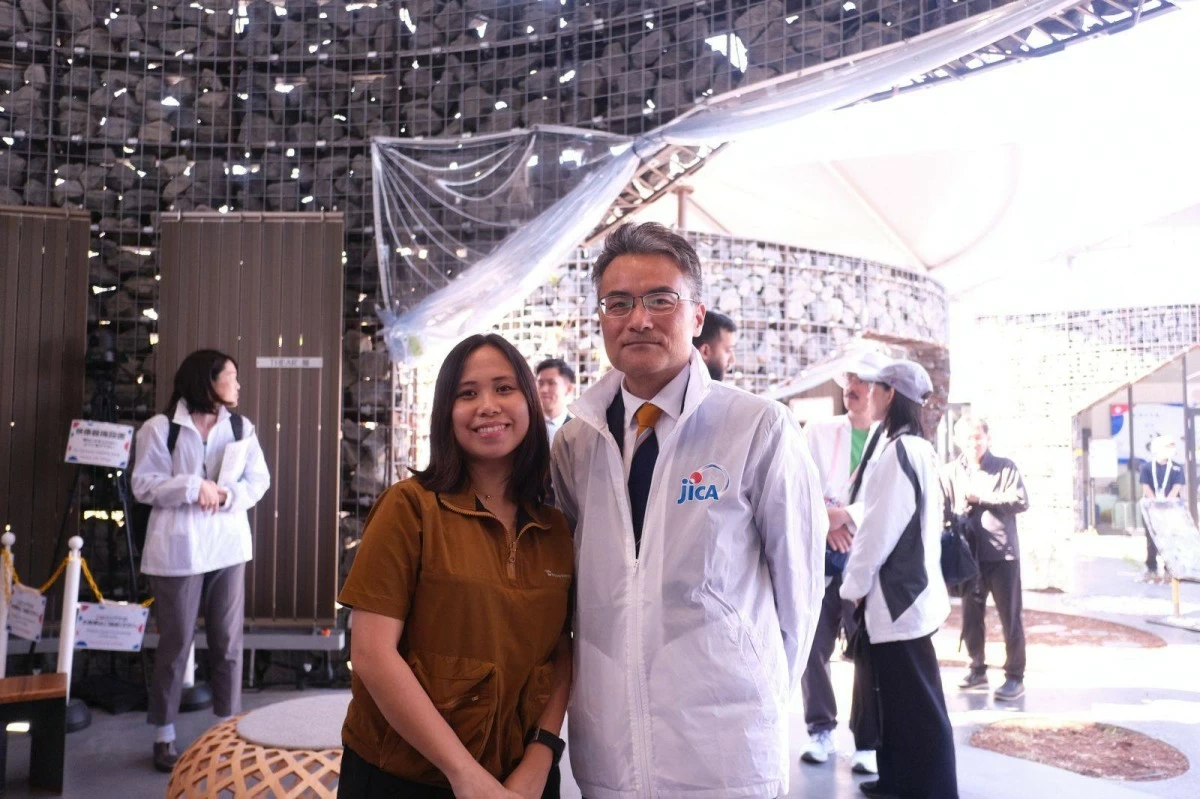
Winners of ‘Best Practices’ from Masungi and JICA pose for a photo inside the gabion huts of Future Life Village.

The first World Expo took place in 1851 in London, known as the “Great Exhibition.” It was a landmark event that brought together the marvels of industry, science, and design—ushering in a global tradition of sharing ideas and cultures. Since then, World Expos have become rare but powerful platforms where nations unite not to compete but to co-create.

In 2025, Osaka, Japan plays host to this gathering of imagination and innovation. Over 150 countries are participating, each constructing intricate pavilions that reflect their identity and hopes for the future. At the heart of it all stands “The Ring,” the largest wooden structure in the world, built on Yumeshima, a reclaimed artificial island just three kilometers from central Osaka.

At first glance, the expo felt like a Disneyland for international culture. But as I stepped into each pavilion, I found something deeper—carefully curated exhibits that speak of national pride, resilience, and shared responsibility. Despite the turbulence of today’s world, the expo reminded me that peace, creativity, and solidarity are still within reach.
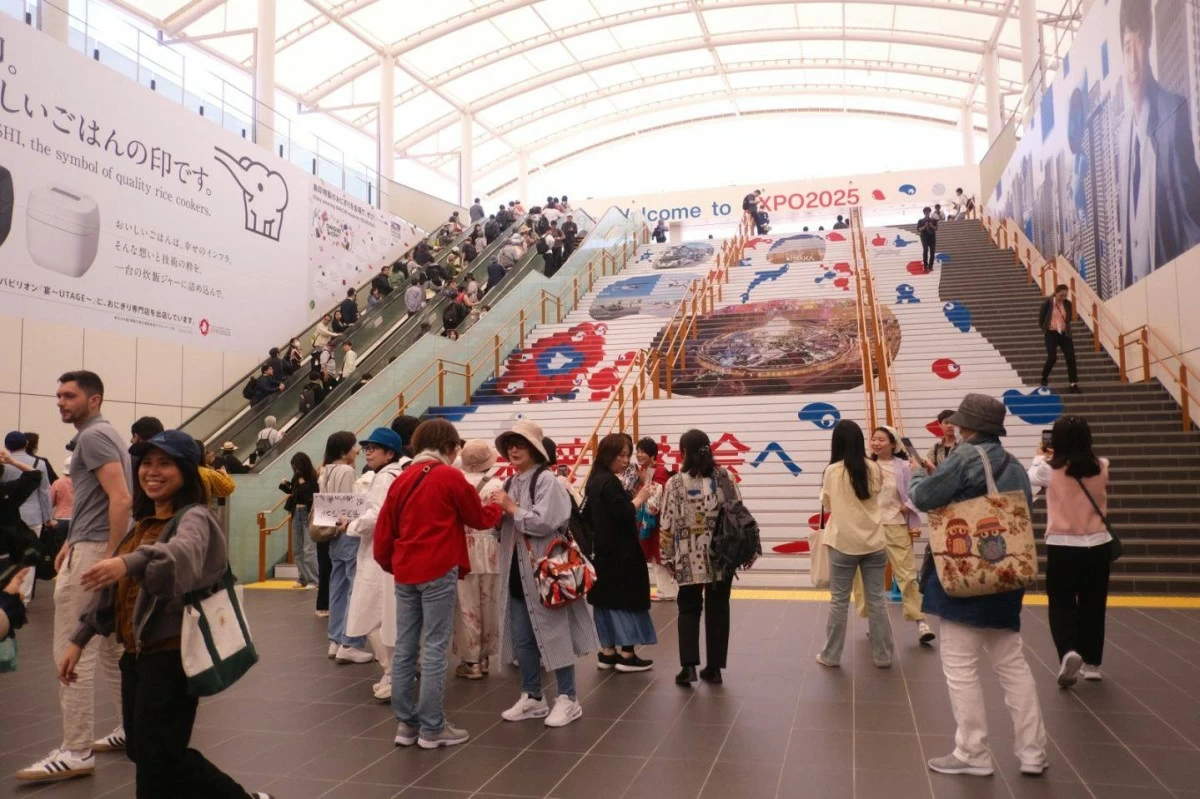
People from all over the world visit the 2025 World Expo in Osaka, Japan.

This year, I had the privilege of representing the Masungi Georeserve Foundation at the Future Life Village during “Best Practices Day.” Our project, “Masungi Geopark Project: Restoring Forgotten Watersheds Through Youth-led Movements,” was selected as one of the official Best Practices of Expo 2025, out of more than 2,000 global nominations.

The Best Practices Programme of the World Expo recognizes and disseminates high-quality projects that solve urgent global issues. Each chosen initiative reflects the expo’s theme, “Designing Future Society for Our Lives,” and demonstrates tangible, scalable impact. The jury for this recognition included experts from the Bureau International des Expositions, the Japan Association for the 2025 World Exposition, the National Museum of Emerging Science and Innovation, and ClimateInnov.

The Future Life Village, where the Best Practice winners are showcased, was a statement of sustainability. With striking views of the sea and surrounding mountains, its circular huts were built from gabions—wire-mesh containers filled with stones, typically used in erosion control and eco-architecture. This low-impact design echoed our own ethos at Masungi, where nature is not paved over but protected and embraced.

Philippine pavillion

Other featured panelists included JICA (Japan International Cooperation Agency), which presented a platform for disaster preparedness, and “Regen-8,” a Lebanese social enterprise delivering solar energy as a service to rural farming communities.

After my presentation, the host asked—first in Japanese, then translated into English—“What challenges do you encounter in the project?” I smiled and answered, “We have a hundred challenges,” which sparked laughter and nods from fellow changemakers in the room. Because no matter where we come from, this kind of work is never easy—but always worth it.

Being part of the Osaka World Expo was a powerful reminder that even as we grapple with difficulties at home, the world is watching. The environmental crisis knows no borders—and neither should our solutions.

In a world urgently searching for answers to the climate crisis and ecological collapse, initiatives including in Masungi offer a way forward. May our national and local leaders—including those newly elected—have the wisdom to see that this is more than just a conservation story. It is a scalable model for the future.

Let’s support long-term solutions. Let’s keep sight of the bigger picture. The forest is watching—and so is the world.
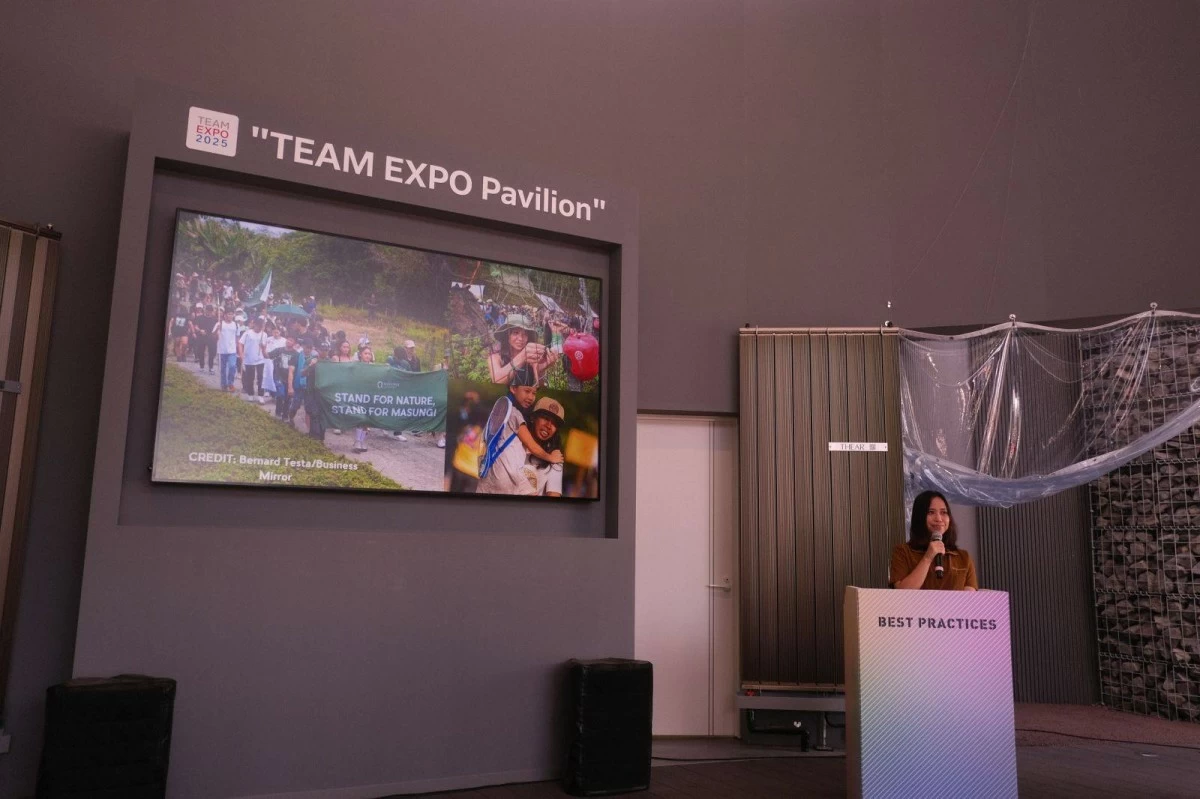
Dumaliang presents the Masungi Geopark Project during ‘Best Practices’ day.
ADVERTISEMENT
.most-popular .layout-ratio{ padding-bottom: 79.13%; } @media (min-width: 768px) and (max-width: 1024px) { .widget-title { font-size: 15px !important; } }

{{ articles_filter_1561_widget.title }}

.most-popular .layout-ratio{ padding-bottom: 79.13%; } @media (min-width: 768px) and (max-width: 1024px) { .widget-title { font-size: 15px !important; } }

{{ articles_filter_1562_widget.title }}

.most-popular .layout-ratio{ padding-bottom: 79.13%; } @media (min-width: 768px) and (max-width: 1024px) { .widget-title { font-size: 15px !important; } }

{{ articles_filter_1563_widget.title }}

{{ articles_filter_1564_widget.title }}

.mb-article-details { position: relative; } .mb-article-details .article-body-preview, .mb-article-details .article-body-summary{ font-size: 17px; line-height: 30px; font-family: "Libre Caslon Text", serif; color: #000; } .mb-article-details .article-body-preview iframe , .mb-article-details .article-body-summary iframe{ width: 100%; margin: auto; } .read-more-background { background: linear-gradient(180deg, color(display-p3 1.000 1.000 1.000 / 0) 13.75%, color(display-p3 1.000 1.000 1.000 / 0.8) 30.79%, color(display-p3 1.000 1.000 1.000) 72.5%); position: absolute; height: 200px; width: 100%; bottom: 0; display: flex; justify-content: center; align-items: center; padding: 0; } .read-more-background a{ color: #000; } .read-more-btn { padding: 17px 45px; font-family: Inter; font-weight: 700; font-size: 18px; line-height: 16px; text-align: center; vertical-align: middle; border: 1px solid black; background-color: white; } .hidden { display: none; }
function initializeAllSwipers() { // Get all hidden inputs with cms_article_id document.querySelectorAll('[id^="cms_article_id_"]').forEach(function (input) { const cmsArticleId = input.value; const articleSelector = '#article-' + cmsArticleId + ' .body_images'; const swiperElement = document.querySelector(articleSelector); if (swiperElement && !swiperElement.classList.contains('swiper-initialized')) { new Swiper(articleSelector, { loop: true, pagination: false, navigation: { nextEl: '#article-' + cmsArticleId + ' .swiper-button-next', prevEl: '#article-' + cmsArticleId + ' .swiper-button-prev', }, }); } }); } setTimeout(initializeAllSwipers, 3000); const intersectionObserver = new IntersectionObserver( (entries) => { entries.forEach((entry) => { if (entry.isIntersecting) { const newUrl = entry.target.getAttribute("data-url"); if (newUrl) { history.pushState(null, null, newUrl); let article = entry.target; // Extract metadata const author = article.querySelector('.author-section').textContent.replace('By', '').trim(); const section = article.querySelector('.section-info ').textContent.replace(' ', ' '); const title = article.querySelector('.article-title h1').textContent; // Parse URL for Chartbeat path format const parsedUrl = new URL(newUrl, window.location.origin); const cleanUrl = parsedUrl.host + parsedUrl.pathname; // Update Chartbeat configuration if (typeof window._sf_async_config !== 'undefined') { window._sf_async_config.path = cleanUrl; window._sf_async_config.sections = section; window._sf_async_config.authors = author; } // Track virtual page view with Chartbeat if (typeof pSUPERFLY !== 'undefined' && typeof pSUPERFLY.virtualPage === 'function') { try { pSUPERFLY.virtualPage({ path: cleanUrl, title: title, sections: section, authors: author }); } catch (error) { console.error('ping error', error); } } // Optional: Update document title if (title && title !== document.title) { document.title = title; } } } }); }, { threshold: 0.1 } ); function showArticleBody(button) { const article = button.closest("article"); const summary = article.querySelector(".article-body-summary"); const body = article.querySelector(".article-body-preview"); const readMoreSection = article.querySelector(".read-more-background"); // Hide summary and read-more section summary.style.display = "none"; readMoreSection.style.display = "none"; // Show the full article body body.classList.remove("hidden"); } document.addEventListener("DOMContentLoaded", () => { let loadCount = 0; // Track how many times articles are loaded const offset = [1, 2, 3, 4, 5, 6, 7, 8, 9, 10]; // Offset values const currentUrl = window.location.pathname.substring(1); let isLoading = false; // Prevent multiple calls if (!currentUrl) { console.log("Current URL is invalid."); return; } const sentinel = document.getElementById("load-more-sentinel"); if (!sentinel) { console.log("Sentinel element not found."); return; } function isSentinelVisible() { const rect = sentinel.getBoundingClientRect(); return ( rect.top < window.innerHeight && rect.bottom >= 0 ); } function onScroll() { if (isLoading) return; if (isSentinelVisible()) { if (loadCount >= offset.length) { console.log("Maximum load attempts reached."); window.removeEventListener("scroll", onScroll); return; } isLoading = true; const currentOffset = offset[loadCount]; window.loadMoreItems().then(() => { let article = document.querySelector('#widget_1690 > div:nth-last-of-type(2) article'); intersectionObserver.observe(article) loadCount++; }).catch(error => { console.error("Error loading more items:", error); }).finally(() => { isLoading = false; }); } } window.addEventListener("scroll", onScroll); });

Sign up by email to receive news.