






In a world that rarely slows down, where the next trend is already outdated and every news cycle feels apocalyptic, there’s a quiet, necessary call to pause. To breathe. To reflect. To feel. It may seem like “it’s the end of the world as we know it,” but writer and professor Genevieve L. Asenjo gently reminds us: it isn’t. Not yet.
Manila Bulletin
 Lifestyle
Luminaries and Life
Genevieve L. Asenjo writes with wit, wonder, and wisdom in new book of essays
Lifestyle
Luminaries and Life
Genevieve L. Asenjo writes with wit, wonder, and wisdom in new book of essays
Lifestyle
Luminaries and Life
Genevieve L. Asenjo writes with wit, wonder, and wisdom in new book of essays
Genevieve L. Asenjo writes with wit, wonder, and wisdom in new book of essays
Calm in a world on edge
Published May 16, 2025 11:57 pm


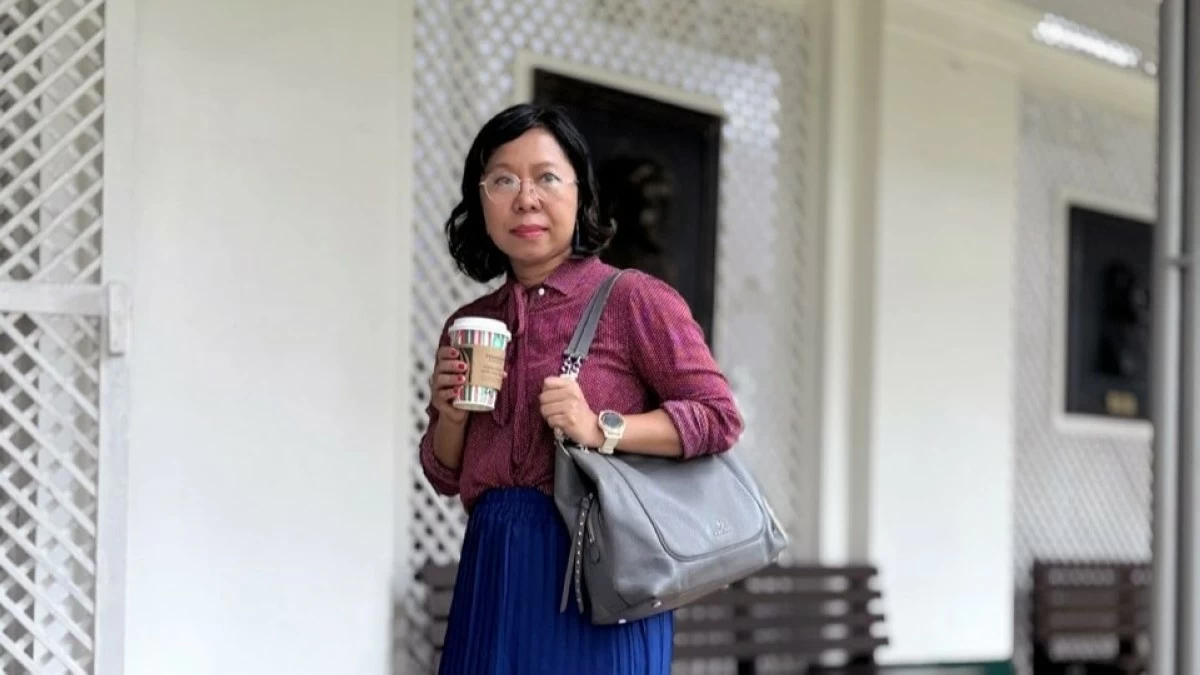
Genevieve L. Asenjo (Photo from @gen_asenjo/Instagram)
This is the spirit behind “Pagkamangha sa Parang-Katapusan-Ng-Mundo,” Genevieve’s first collection of personal essays. Launched early this year at the Philippine Book Festival and published by Isang Balangay, the book offers a space for stillness and presence, inviting readers to rediscover the beauty of deep reading, the quiet power of nature, and the resilience of the human spirit.
“What I hope readers gain is a renewed appreciation for deep reading—moments of stillness and absorption in language and story,” said Genevieve. “To rediscover joy in paying attention to the natural world, to everyday life, to insight unfolding slowly. And perhaps, to hold on to the belief that even if we feel close to the edge, life can still be lived beautifully, meaningfully, and always, for others.”
I know Genevieve for her marvelous fiction—most notably “Ang Itim na Orkidyas ng Isla Boracay,” a National Book Award winner—and her passionate advocacy for regional literature, especially in Kinaray-a, her mother tongue. But in “Pagkamangha,” she steps into more intimate terrain. And readers will not be disappointed as each essay gently reminds us of the beauty of being “human,” flaws and all.
Below are excerpts from an interview with Genevieve, where she reflects on her literary journey, the urgency of writing about the world’s wounds, and the comforting joy of coming home to Antique—on the page and in real life.
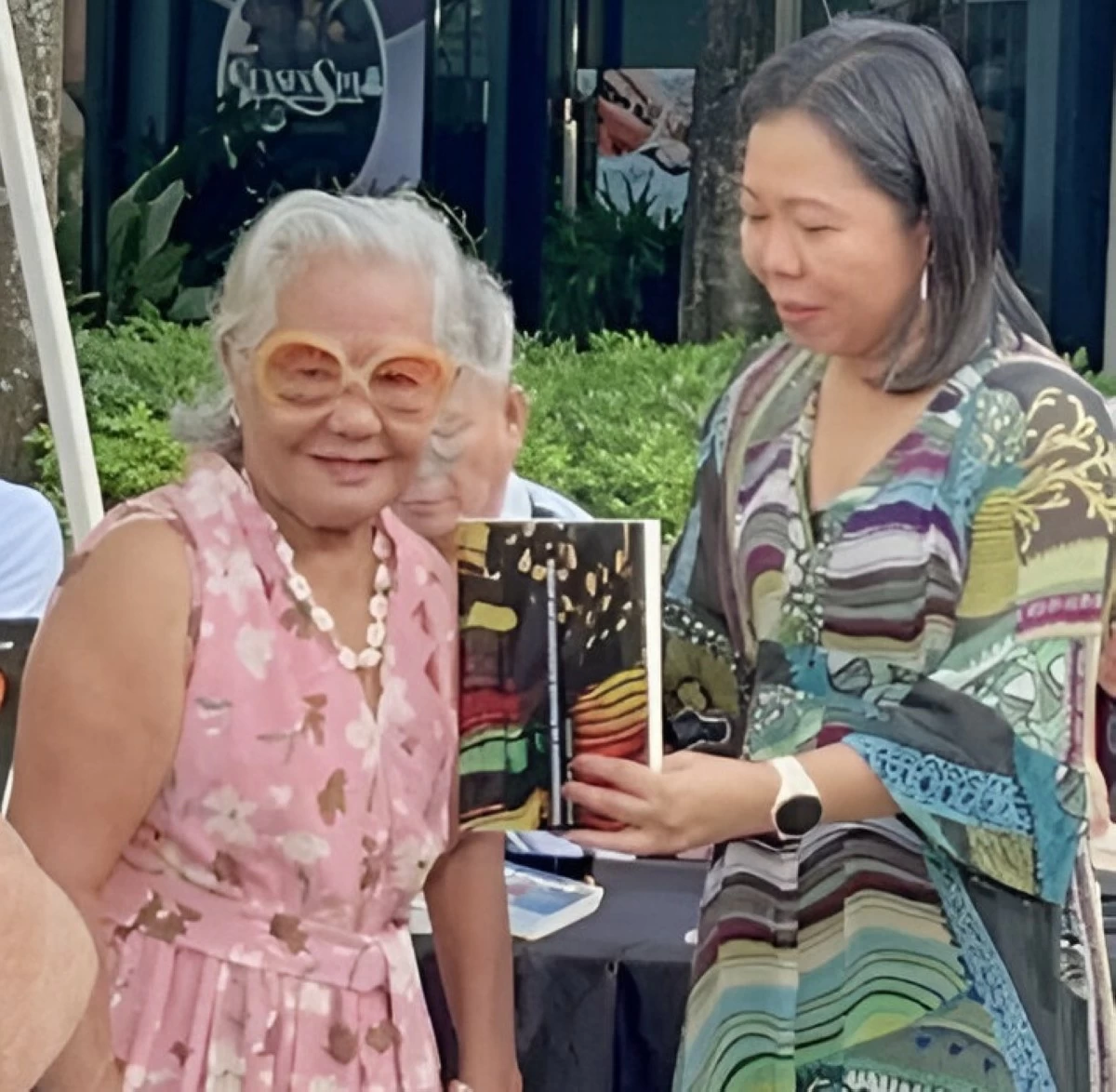
Genevieve presents her mother with a copy of the book during the launch at the Iloilo Mega Book Fair last April 13 in Iloilo City. (Photo by Jeanette Suello)
How did your journey as a writer begin?
I was surrounded by stories from the start. My mother’s books and the bedtime tales from our grandmothers—about kings, queens, princes, and distant lands—nourished my imagination.
In high school in Antique during the ’90s, I wrote for our school paper and joined literary workshops organized by the cultural group Paranubliun-Antique. That’s where I met Dr. Leoncio P. Deriada, who was gathering young writers across Panay to write in our local languages—Kinaray-a, Hiligaynon, Akeanon—alongside English and Filipino. He published my first poem, which won first prize in a competition, “Oyayi sa Tag-ulan,” in HomeLife Magazine in 1997. I shifted my degree from Communication Arts to Literature after that.
To equip myself as a writer, I did the essentials: read extensively, wrote consistently, and submitted my work for publication. I adopted a mindset of perseverance—try and try—and thankfully, my works found homes.
How did ‘Pagkamangha’ come to be?
This 2025 marks my 28th year in literary life if I trace it back to my first publication in 1997. Some of the essays were written pre-pandemic, but the turning point came in 2021 during my sabbatical leave. I returned to my hometown and lived in a hut for a year—a time of solitude, silence, and deep reflection. I wrote about culture, community, nature, love, loss, and hope. The essays reflect both personal insights and broader concerns.
There’s an urgency in these essays—about environmental collapse, about loss of empathy. Why do you feel these essays are urgent and important to read?
Because they speak to the realities we live in now. Climate change and environmental collapse are not abstract ideas—we see and feel them daily. Yet as Amitav Ghosh notes in “The Great Derangement,” there’s a crisis of imagination: these urgent realities are often relegated to science fiction or blockbuster films, rather than being centered in serious literary discourse.
Literature allows us to humanize crisis. It deepens our awareness, stirs empathy, and resists apathy. It helps us imagine alternatives. These essays connect ecological concerns with social justice, because disaster often reveals the harsh contours of inequality.
‘Literature allows us to humanize crisis. It deepens our awareness, stirs empathy, and resists apathy. It helps us imagine alternatives.’
How can we encourage more people—especially young readers—to engage with reflective works like yours?
While digital technology has shifted our reading habits, I believe people still read every day. The question is: what are they reading, where, and how?
To reach broader audiences, we need structural support. A publication grant would help lower the price of books, making them more accessible. Ideally, LGUs could purchase copies in bulk for school libraries and community centers. Making the book physically present in more spaces is key to inviting more readers in.
You write in Kinaray-a, Filipino, and English. How does language shape your storytelling?
Language carries memory, landscape, and worldview. When I write in Kinaray-a, I draw from a deeper well of rhythm, humor, and intimacy rooted in the land and people I come from. Filipino allows me to reach a broader audience while maintaining cultural nuance. English, meanwhile, brings a certain analytical distance. In “Pagkamangha,” the blending of languages allowed me to express complexity, to be reflective and poetic, intimate yet critical.

Genevieve ‘enters’ the world of ‘Pagkamangha’ in this artistic collage. (Photo by Ronald Verzo)
If ‘Pagkamangha’ were adapted into another form, what would it be?
A podcast series. Slow, meditative. One essay per episode, read aloud with soundscapes from nature—rain, birdsong, rustling leaves. It would recreate the quiet wonder and grounding presence that the book evokes.
What’s next for Genevieve L. Asenjo?
I’m working on two manuscripts. One is “Ang Mangingibig ay Bundok,” a mix of poems and flash nonfiction. The other is “Nasa Ilalim ng mga Paa ang Alamat,” a series of essays on walking and running—how these reveal stories about space, inequality, even disability. I’m always exploring how we move through the world, and how we write our lives as we go.