






Following the weaker-than-expected gross domestic product (GDP) growth in the first quarter of 2025, the country’s national socioeconomic planner stated that abandoning the Marcos administration’s ambitious growth goal of six percent to eight percent might be too soon.
Manila Bulletin
 Business
The Economy
'Too early to give up' Marcos admin's 6-8% growth target despite weak Q1— DEPDev chief Balisacan
Business
The Economy
'Too early to give up' Marcos admin's 6-8% growth target despite weak Q1— DEPDev chief Balisacan
Business
The Economy
'Too early to give up' Marcos admin's 6-8% growth target despite weak Q1— DEPDev chief Balisacan
'Too early to give up' Marcos admin's 6-8% growth target despite weak Q1— DEPDev chief Balisacan
By Derco Rosal
Published May 15, 2025 11:33 am


At A Glance
- Following the weaker-than-expected gross domestic product (GDP) growth in the first quarter of 2025, the country's national socioeconomic planner stated that abandoning the Marcos administration's ambitious growth goal of six percent to eight percent might be too soon.
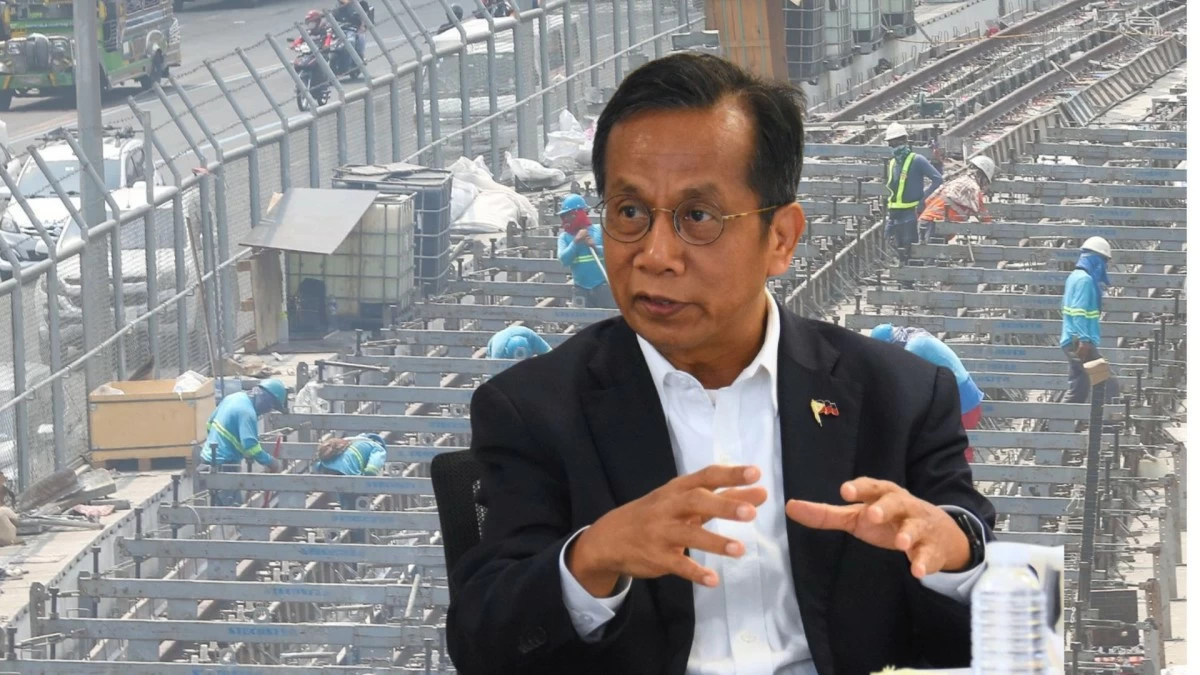
“It’s too early to give up six to eight percent for the medium term, meaning 2025 to 2028,” Department of Economy, Planning, and Development (DEPDev) Secretary Arsenio M. Balisacan told reporters on Wednesday, May 14, on the sidelines of SEAMEO INNOTECH’s signing ceremony.
“We have to be ambitious. We’ve already been left behind by our neighbors. If we don’t push hard for faster growth, we’ll always be last—that’s how I see it,” Balisacan asserted, adding that the target remains for the medium-term.
For the first three months of 2025, Philippine GDP expanded by 5.4 percent, almost stagnant from the 5.3 percent in the previous quarter and massively slower than the 5.9-percent expansion seen in the first quarter of 2024. It also fell significantly short of the government’s target.
Balisacan blamed the reduction in the economic expansion to the “very sharp increase in the trade deficit.”
“Net exports widened, with the trade deficit increasing by nearly 20 percent. Since net exports account for about 10 percent to 11 percent of GDP, this easily chipped away 2.1 percentage points from overall growth,” the national economist explained. This suggests that the economy could have grown by 7.5 percent in the first quarter.
“If exports and imports have grown in tandem, then the GDP growth could have been 6.2 percent,” he added.
DEPDev earlier said that for the local economy to achieve at least the lower end six percent of the growth target, it must grow by 6.2 percent quarterly, for the rest of the year.
Balisacan is optimistic of achieving the lower end of the target over the next three years. He pointed to global uncertainties but noted that other countries remain optimistic.
He cited Vietnam’s eight- to 10-percent growth target, aiming to become an advanced economy by mid-century. “Why can’t we be just as ambitious?” he said.
“Of course, we have direct challenges, serious challenges in fact—like our limited fiscal space, partly due to Covid-19 policy responses. We don’t have as much fiscal space as some of our neighbors. But that doesn’t mean we can’t still do much with what we have.”
To support growth over the last three years of the Marcos administration, Balisacan said that “we really need to work closely with Congress to ensure that the budget that is passed and approved supports impactful and strategic priorities.”
“Strategic in the sense that they address the very concerns of low productivity, more inclusive growth, faster poverty reduction, and better quality of employment,” he said.
Additionally, given the massive drop in net exports, Balisacan stressed that “we clearly have to work harder to make our exports more competitive to find new markets.”
“At the same time, we should negotiate very strongly. We have to diversify our exports and diversify our markets so that we don't become very vulnerable to any shocks coming from one market,” he added.
“For so long as that uncertainty stays, the ability of investors to make these commitments and investments, whether in the Philippines or elsewhere, is muted, dampened,” he further said, particularly referring to the tariff-saturated global trade storm.