

ADVERTISEMENT

Celebrating the pillar of society on International Day of Families

Published May 15, 2025 12:03 am  |  Updated May 14, 2025 05:20 pm

At A Glance

  • Each year on May 15, the world comes together to celebrate the International Day of Families—a moment not just for global awareness but for nations to reflect on the enduring strength of familial bonds.

Each year on May 15, the world comes together to celebrate the International Day of Families—a moment not just for global awareness but for nations to reflect on the enduring strength of familial bonds.
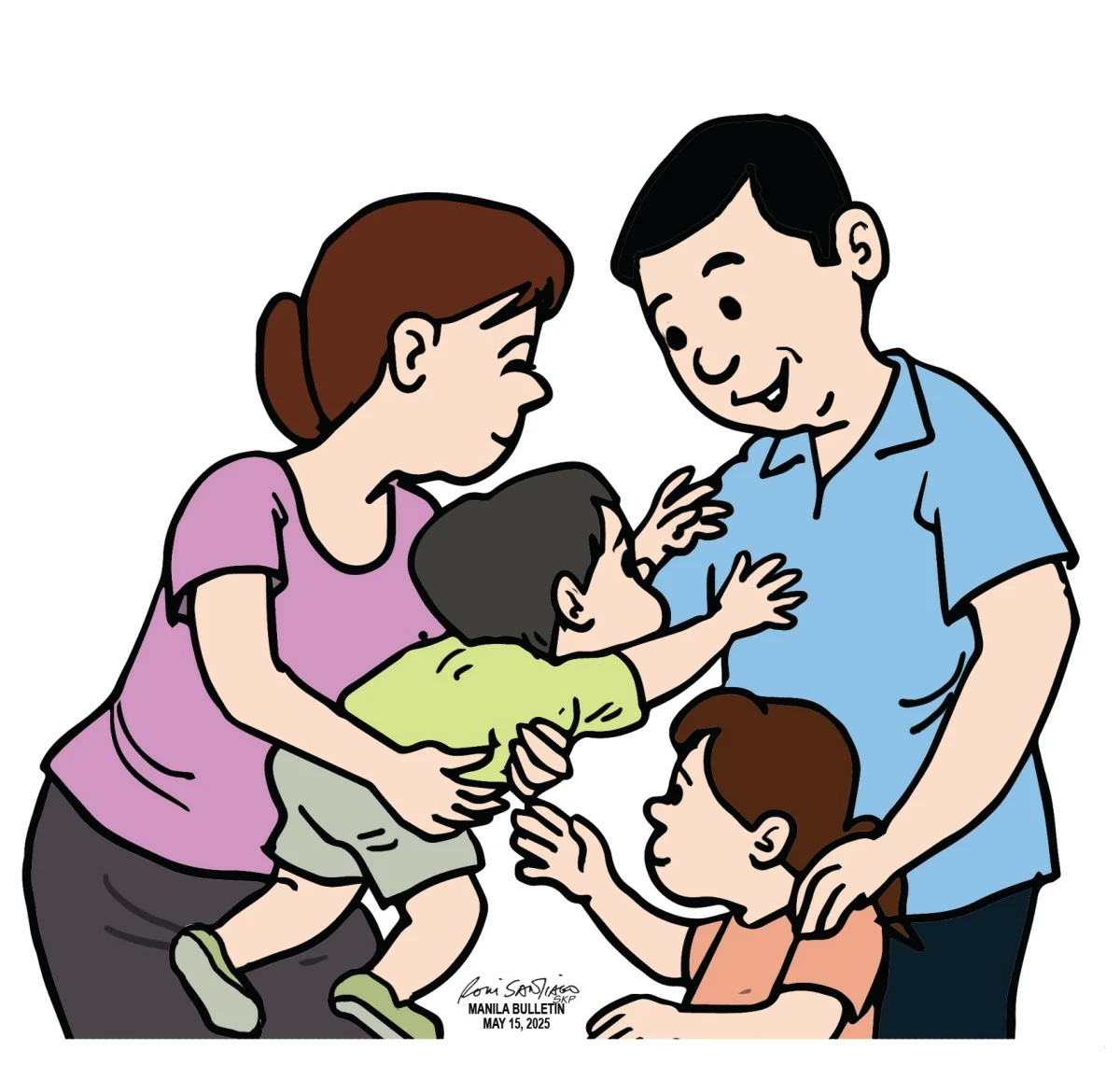
In the Philippines, as in many parts of the world, this day is not celebrated in the grand way of Mother’s Day or Father’s Day with flowers, gifts, special dinners, and shopping malls decorated to remind everybody of the occasion.  Perhaps it’s because “family day” is usually commemorated once a week, on Sundays, when family members, even those who have left the home, make time to get together for lunch or dinner, or both.

The family is more than a household unit.  It is a sanctuary of love, support, and shared responsibility.  In our country, it is common to find three generations living under one roof, or in one compound, sharing joys, burdens, and traditions. In Monday’s national midterm election, it was a common sight to see whole families trooping to the polling centers together, and even voting in the same precincts.

The Filipino concept of extended family reflects a deep-seated value of mutual care, often providing emotional and economic support that formal institutions cannot always replicate. In rural and urban areas alike, the family acts as the first line of social safety net –  offering an anchor during economic hardship, or natural calamities.

This was strongly demonstrated during the pandemic where family members had only each other to take care of their needs, creating a family bubble to protect themselves from the virus.

The value of the family is universal: This is where the future generation learns kindness, community spirit, and education. And this is where the past lives to guide the future.

That is the reason why the United Nations established the International Day of Families in 1993 to recognize the family’s significant role in development. The 1995 World Summit for Social Development in Copenhagen further emphasized the family as the fundamental unit of society, urging nations to provide comprehensive support for its well-being.

This year’s theme, “Family-oriented policies for sustainable development: Toward the second World Summit for Social Development,” underscores the vital role families play in achieving the 2030 Sustainable Development Goals (SDGs).

The observance not only promotes awareness of family-related issues but also highlights how policies that support family stability—such as those promoting work-life balance, health care, and education—are essential to long-term national progress. 

As countries prepare for the Second World Summit for Social Development in Doha this November, the International Day of Families 2025 will highlight good practices from around the globe.

But this day isn’t for governments alone to act. Citizens can celebrate by strengthening bonds within their own homes—organizing family reunions, conducting intergenerational storytelling, or volunteering for community services that support family welfare. Schools and workplaces can hold forums to raise awareness on the significance of family-oriented policies and encourage family-friendly environments. And candidates who recently won seats in the Senate and the House of Representatives should study laws to strengthen the family unit, starting with more job opportunities, health benefits, and housing.

In commemorating the International Day of Families, let us remember: strong families build strong communities. And in the Filipino context, where “kapwa” and “bayanihan” remain central to our identity, nurturing the family unit is nurturing the soul of the nation.

Let this day renew our collective commitment to uphold and protect this enduring pillar of society.

Related Tags

International Day of Families
ADVERTISEMENT
.most-popular .layout-ratio{ padding-bottom: 79.13%; } @media (min-width: 768px) and (max-width: 1024px) { .widget-title { font-size: 15px !important; } }

{{ articles_filter_1561_widget.title }}

.most-popular .layout-ratio{ padding-bottom: 79.13%; } @media (min-width: 768px) and (max-width: 1024px) { .widget-title { font-size: 15px !important; } }

{{ articles_filter_1562_widget.title }}

.most-popular .layout-ratio{ padding-bottom: 79.13%; } @media (min-width: 768px) and (max-width: 1024px) { .widget-title { font-size: 15px !important; } }

{{ articles_filter_1563_widget.title }}

{{ articles_filter_1564_widget.title }}

.mb-article-details { position: relative; } .mb-article-details .article-body-preview, .mb-article-details .article-body-summary{ font-size: 17px; line-height: 30px; font-family: "Libre Caslon Text", serif; color: #000; } .mb-article-details .article-body-preview iframe , .mb-article-details .article-body-summary iframe{ width: 100%; margin: auto; } .read-more-background { background: linear-gradient(180deg, color(display-p3 1.000 1.000 1.000 / 0) 13.75%, color(display-p3 1.000 1.000 1.000 / 0.8) 30.79%, color(display-p3 1.000 1.000 1.000) 72.5%); position: absolute; height: 200px; width: 100%; bottom: 0; display: flex; justify-content: center; align-items: center; padding: 0; } .read-more-background a{ color: #000; } .read-more-btn { padding: 17px 45px; font-family: Inter; font-weight: 700; font-size: 18px; line-height: 16px; text-align: center; vertical-align: middle; border: 1px solid black; background-color: white; } .hidden { display: none; }
function initializeAllSwipers() { // Get all hidden inputs with cms_article_id document.querySelectorAll('[id^="cms_article_id_"]').forEach(function (input) { const cmsArticleId = input.value; const articleSelector = '#article-' + cmsArticleId + ' .body_images'; const swiperElement = document.querySelector(articleSelector); if (swiperElement && !swiperElement.classList.contains('swiper-initialized')) { new Swiper(articleSelector, { loop: true, pagination: false, navigation: { nextEl: '#article-' + cmsArticleId + ' .swiper-button-next', prevEl: '#article-' + cmsArticleId + ' .swiper-button-prev', }, }); } }); } setTimeout(initializeAllSwipers, 3000); const intersectionObserver = new IntersectionObserver( (entries) => { entries.forEach((entry) => { if (entry.isIntersecting) { const newUrl = entry.target.getAttribute("data-url"); if (newUrl) { history.pushState(null, null, newUrl); let article = entry.target; // Extract metadata const author = article.querySelector('.author-section').textContent.replace('By', '').trim(); const section = article.querySelector('.section-info ').textContent.replace(' ', ' '); const title = article.querySelector('.article-title h1').textContent; // Parse URL for Chartbeat path format const parsedUrl = new URL(newUrl, window.location.origin); const cleanUrl = parsedUrl.host + parsedUrl.pathname; // Update Chartbeat configuration if (typeof window._sf_async_config !== 'undefined') { window._sf_async_config.path = cleanUrl; window._sf_async_config.sections = section; window._sf_async_config.authors = author; } // Track virtual page view with Chartbeat if (typeof pSUPERFLY !== 'undefined' && typeof pSUPERFLY.virtualPage === 'function') { try { pSUPERFLY.virtualPage({ path: cleanUrl, title: title, sections: section, authors: author }); } catch (error) { console.error('ping error', error); } } // Optional: Update document title if (title && title !== document.title) { document.title = title; } } } }); }, { threshold: 0.1 } ); function showArticleBody(button) { const article = button.closest("article"); const summary = article.querySelector(".article-body-summary"); const body = article.querySelector(".article-body-preview"); const readMoreSection = article.querySelector(".read-more-background"); // Hide summary and read-more section summary.style.display = "none"; readMoreSection.style.display = "none"; // Show the full article body body.classList.remove("hidden"); } document.addEventListener("DOMContentLoaded", () => { let loadCount = 0; // Track how many times articles are loaded const offset = [1, 2, 3, 4, 5, 6, 7, 8, 9, 10]; // Offset values const currentUrl = window.location.pathname.substring(1); let isLoading = false; // Prevent multiple calls if (!currentUrl) { console.log("Current URL is invalid."); return; } const sentinel = document.getElementById("load-more-sentinel"); if (!sentinel) { console.log("Sentinel element not found."); return; } function isSentinelVisible() { const rect = sentinel.getBoundingClientRect(); return ( rect.top < window.innerHeight && rect.bottom >= 0 ); } function onScroll() { if (isLoading) return; if (isSentinelVisible()) { if (loadCount >= offset.length) { console.log("Maximum load attempts reached."); window.removeEventListener("scroll", onScroll); return; } isLoading = true; const currentOffset = offset[loadCount]; window.loadMoreItems().then(() => { let article = document.querySelector('#widget_1690 > div:nth-last-of-type(2) article'); intersectionObserver.observe(article) loadCount++; }).catch(error => { console.error("Error loading more items:", error); }).finally(() => { isLoading = false; }); } } window.addEventListener("scroll", onScroll); });

Sign up by email to receive news.