







A total of eight countries are seeking the Department of Agriculture’s (DA) accreditation to export meat products to the Philippines, as the country moves to raise the supply of the commodity still reeling from African swine fever (ASF).
More countries looking to export meat to Philippines
Published May 14, 2025 06:18 pm


At A Glance
- Agriculture Undersecretary for Livestock Constante Palabrica told reporters on Wednesday, May 14, that Thailand is looking at exporting ducks to the Philippines, Taiwan is pushing for breeder pigs, while Chile and Paraguay are looking to ship a variety of meat products.
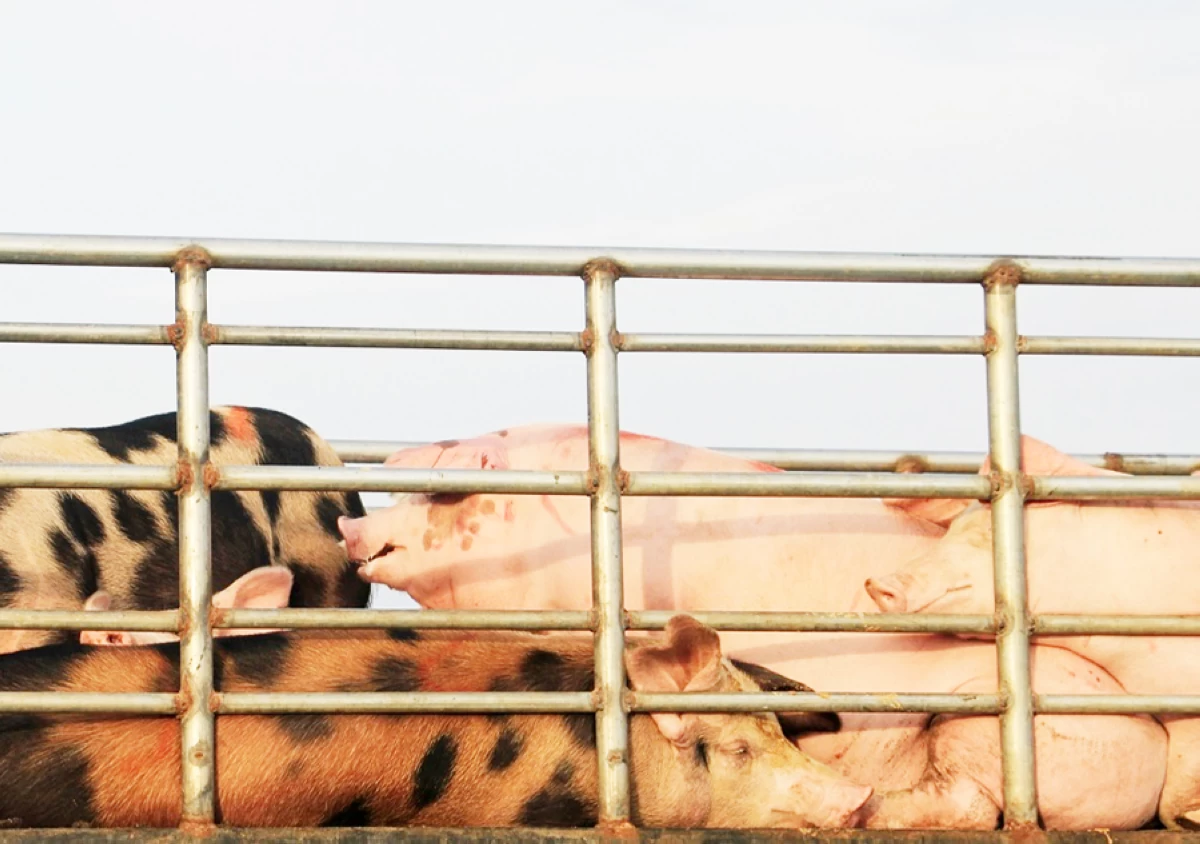
Agriculture Undersecretary for Livestock Constante Palabrica told reporters on Wednesday, May 14, that the likes of Paraguay, Thailand, Taiwan, and Chile, among others, are currently applying to get the agency’s approval.
Palabrica said Thailand is looking at exporting ducks to the Philippines, Taiwan is pushing for breeder pigs, while Chile and Paraguay are looking to ship a variety of meat products.
He said the DA is assessing a number of interested exporters “to get the best quality meat for the people at a reasonable price.”
“The more, the merrier for me, because there will be a competition of supply,” he said.
The official said increasing the country's import sources is only a temporary solution, as repopulation of the swine industry could take roughly three years before it once again reaches pre-ASF levels.
Since ASF’s first outbreak in 2019, the swine population fell from nearly 13 million heads to approximately eight million.
“Once the repopulation of pork is fixed, then we can lift it off. That's why I'm in a hurry to repopulate,” said Palabrica.
Agriculture Secretary Francisco Tiu Laurel earlier ordered Palabrica to create a roadmap to guide recovery efforts of the swine industry.
Data from the Bureau of Animal Industry (BAI) showed that meat imports last year rose to a record high of 1.45 million metric tons (MT), 20-percent higher than the 1.2 million MT in 2023.
Regionalization underway
The DA is set to introduce the regionalization scheme to allow the entry of poultry products into the country despite the exporter being affected by bird flu.
The agency regularly issues a temporary ban on countries facing cases of the highly pathogenic avian influenza (HPAI).
The prohibition covers the importation of domestic and wild birds and their products, including poultry meat, day-old chicks, eggs, and semen.
This country-wide ban is anticipated to be replaced by regionalization, which is set to allow regions free from bird flu to continue the delivery of poultry goods into the Philippines, despite other areas being affected by the animal disease.
Palabrica said the countries currently applying for this scheme include the United States (US), the United Kingdom (UK), Poland, Spain, Portugal, and Brazil.
He said the US, which currently faces a temporary ban on the state-level, is looking for a county-level ban instead.
“We're moving fast on the regionalization. Rest assured that it will be done,” said Palabrica, hinting that the applications will be approved within the year.