







A visit to at least one museum is always part of my travel itinerary, even if that’s only for a road trip to the north, south, or to a neighboring island. Especially if we are traveling to a foreign city for the first time, a museum stopover is a must. For me, it’s the “brochure” that completes the story of the place, and leaves us with much more appreciation for the city.
A museum is always part of my travel itinerary
Published May 14, 2025 05:46 pm


My children grew up with a museum visit as a likely stopover in any trip. Decades ago, on a Visita Iglesia for Maundy Thursday in a North Luzon town, I chanced upon a house of a national hero across a church. Still in the process of being installed, and with a family member saying it was not yet ready for the public, we managed to get a quick look at the national hero’s home.
In urbanized Makati during a late lunch with my two daughters, then pregnant, I discovered that Ayala Museum was a few steps away from where we were dining. So, off we went to spend an afternoon there – instead of the intended shopping for their babies.
In Vigan – which we visited regularly for many years because I was so enchanted – we walked through the town that is a living museum!
And in Intramuros where I have worked for many decades, we’ve visited museums that showcased many phases of our history from the pre-Spanish to the American period.
“Such is life with mom,” one of my kids once remarked to cousins. “We will always find ourselves in a museum if she sees one nearby, or reads about it before our trip.”
Now that my children are adults and have their own families, I listen closely to their conversations and observe their choices for their holidays. I find that the minute-stops and long walks in various museums had some influence in their lives. They drop comments on the past from something they saw in the Vatican Museum. They recall an artifact from a museum in Vigan that resembles something someone just purchased. They choose overnight stops at cities and towns offering more than just boutiques, but historical spots where they can learn more stories about the past.
Those are remarks that warm my heart, to know that insisting on stops that were not popular with the children then have enriched their knowledge of history.
In moments when I am alone and sipping my favorite wine, I often think about museums, believe it or not. I am a lover of history, so the stories museums tell have been most valuable to me.
At the Vatican Museum, where we were granted special entry because my daughter Jac was pregnant, I felt emotional watching my son patiently pushing her wheelchair around, often to hallways where there were less visitors. Jac, an artist, soaked in the artworks and artifacts, her face was flushed with appreciation. At the Sistine Chapel, we were emotional and cried, craning our necks to view the ceiling that we had only seen in books. I did not ever think I could be viewing that magnificent work of Michealangelo with my three children!
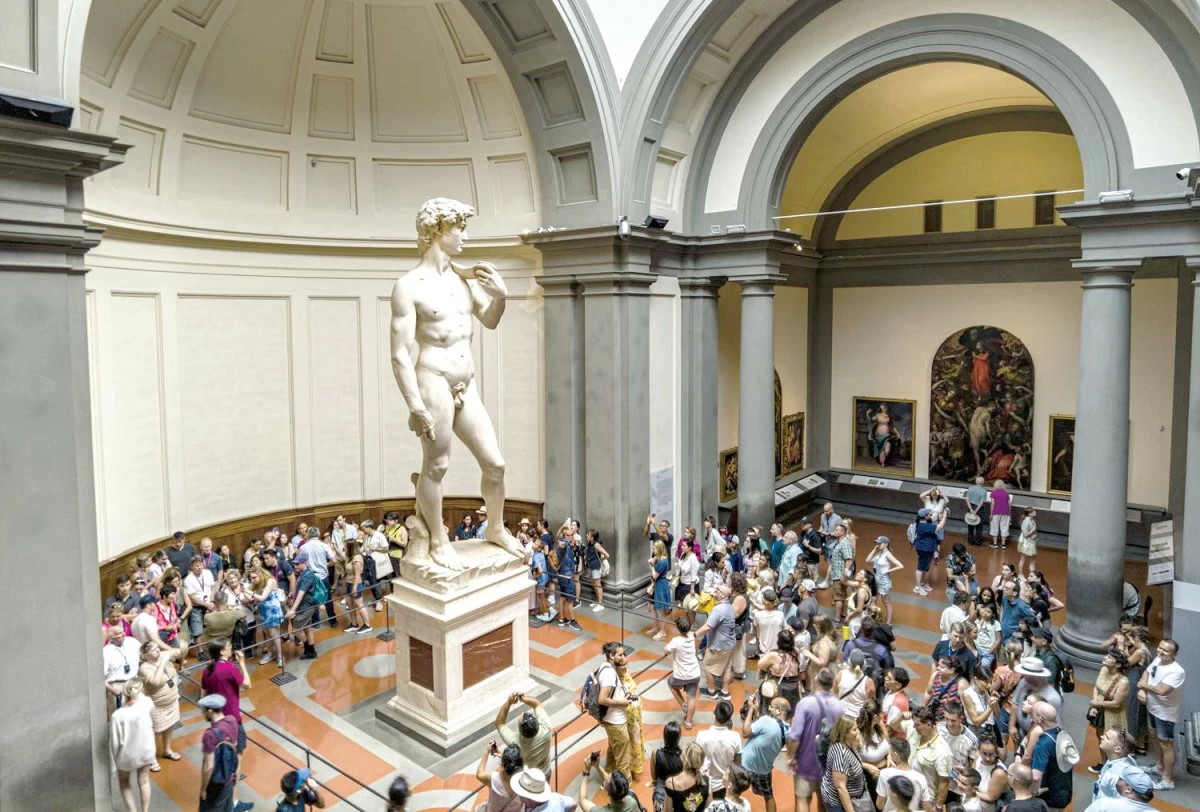
In Florence, we stood without moving for many minutes feasting our eyes on “David” and wondering how Michelangelo sculpted that magnificent work from a block of marble! We spent a long period in the Acacademia Gallery of Florence (Galleria dell'Accademia di Firenze), renowned mainly for housing "David," one of the most iconic sculptures of the Renaissance. The gallery was founded in 1784 to promote artistic studies. For that, we missed visiting other museums in our list!
It was at the Edo-Tokyo Museum where we immersed in the wonderful scenes of old Tokyo, (known as Edo until 1869) through exhibits which cover many features of the capital. There I saw how my love for museums had influenced my children. Jac had purchased a full Japanese kimono costume at Asakusa the day before to wear at the museum – to fully appreciate the experience! We posed for photos at one of the museum’s most impressive attractions – a full-scale model of Nihonbashi Bridge, which allowed people to pass into Edo. A few visitors took her photo too, perhaps charmed by a very foreign looking woman in Japanese costume. At the Open Air Museum in Hakone, she invited many photos when she posed with a paper umbrella on her shoulder at the Picasso Museum.

It's a good time to think about museums as planned destinations in any trip. May 18 is International Museum Day (IMD), a global event established in 1977 by the International Council of Museums (ICOM) which aims to raise awareness on the vital role museums play in cultural exchange.
Museums have long served as custodians of human history and creativity. The earliest known public museum is Ennigaldi-Nanna’s museum, dating back to around 530 BCE in Ur, present-day Iraq. In Europe, the Capitoline Museums in Rome, established in 1471, are considered the world’s oldest public museums.
In the Philippines, the University of Santo Tomas (UST) Museum of Arts and Sciences holds the distinction of being the oldest existing museum. Established in 1871, its origins trace back to 1682 as a “Gabinete de Fisica,” an observation room for mineral, botanical, and biological collections used in medical and pharmaceutical education.
On Sunday, consider celebrating International Museum Day by visiting a local museum with your family. It’s an opportunity to connect with the past, engage with the present, and inspire curiosity for the future.