

ADVERTISEMENT

No. 1 importer Philippines seen to buy record rice volume as consumption grows—USDA

Published May 13, 2025 01:23 pm

At A Glance

  • If the United States Department of Agriculture's (USDA) forecast is realized, the Philippines is set to solidify its ranking as the world's largest importer of rice for the fourth consecutive year.
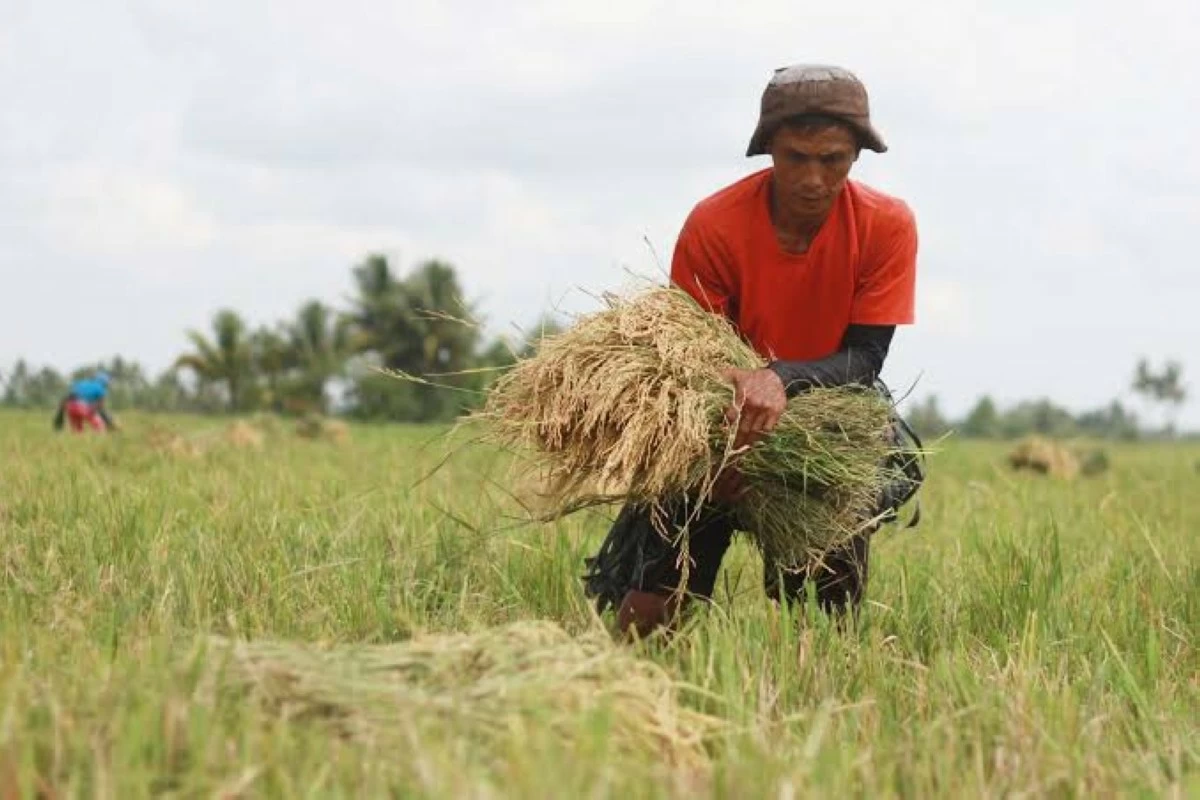
The Philippines, the world’s top rice importer, is expected to purchase a record-high volume of rice in the upcoming marketing year (MY), as the country sees continued growth in consumption, according to the United States Department of Agriculture (USDA).
In its latest “Grain: World Markets and Trade" report released on May 12, the USDA’s Foreign Agricultural Service (FAS) estimated Philippine rice imports to rise by two percent—from 5.4 million metric tons (MT) to 5.5 million MT—within the period starting July this year and ending in June next year.
The USDA attributed the increase to rising consumption, driven by the growing Filipino population which currently stands at over 110 million people.
Improving interest in Philippine tourism and the overall continued reliance on the staple were likewise cited as influential factors.
If the USDA’s forecast is realized, the Philippines is set to solidify its ranking as the world’s largest importer of rice for the fourth consecutive year.
The Philippines earlier dislodged China from the top position in MY 2022-2023, during which the country purchased 3.9 million MT of the staple food abroad.
The country’s total rice demandwhich includes actual consumption and residualsmay reach 17.7 million MT in MY 2025-2026, two-percent higher than the 17.3 million MT during MY 2024-2025, according to the USDA.
The increase in Philippine demand, alongside strong growth in India and Thailand, is anticipated to contribute greatly to the upward trajectory in global rice consumption, reaching a record 538.8 million tons.
Meanwhile, local rice production is projected to increase by 300,000 MT, to 12.3 million MT from 12 million MT in the previous year.
This is a strong turnaround from the recent drop in production due to a string of storms that ravaged rice fields in the second half of last year.
Despite a predicted increase, the Philippines will likely maintain its reliance on fellow Southeast Asian nation Vietnam for rice imports.
Earlier, the Vietnamese government said its shipments to the Philippines account for approximately 45 percent of their total rice exports.
The USDA’s projection for the upcoming year is seen as contrary to the earlier forecast of its FAS office in Manila, which estimated that rice imports will decline by two percent, from 5.3 million MT to 5.2 million MT.
The projected uptick in milled rice production to 12.25 million MT was cited as the contributing factor behind the decline.
This is aligned with the projection of the Department of Agriculture (DA) of lower rice imports this year due to an improvement in rice production, fueled by better weather conditions and higher stock carryover.
Last month, DA Assistant Secretary and spokesperson Arnel de Mesa said imports will decline to as low as 3.8 million MT this year, after reaching a record-high of 4.8 million MT in 2024.
Data from the Bureau of Plant Industry (BPI) showed that the country’s rice imports in the first quarter fell by 32 percent to 804,347 MT, from last year’s 1.2 million MT.

Related Tags

United States Department of Agriculture-Foreign Agricultural Service (USDA-FAS) rice imports
ADVERTISEMENT
.most-popular .layout-ratio{ padding-bottom: 79.13%; } @media (min-width: 768px) and (max-width: 1024px) { .widget-title { font-size: 15px !important; } }

{{ articles_filter_1561_widget.title }}

.most-popular .layout-ratio{ padding-bottom: 79.13%; } @media (min-width: 768px) and (max-width: 1024px) { .widget-title { font-size: 15px !important; } }

{{ articles_filter_1562_widget.title }}

.most-popular .layout-ratio{ padding-bottom: 79.13%; } @media (min-width: 768px) and (max-width: 1024px) { .widget-title { font-size: 15px !important; } }

{{ articles_filter_1563_widget.title }}

{{ articles_filter_1564_widget.title }}

.mb-article-details { position: relative; } .mb-article-details .article-body-preview, .mb-article-details .article-body-summary{ font-size: 17px; line-height: 30px; font-family: "Libre Caslon Text", serif; color: #000; } .mb-article-details .article-body-preview iframe , .mb-article-details .article-body-summary iframe{ width: 100%; margin: auto; } .read-more-background { background: linear-gradient(180deg, color(display-p3 1.000 1.000 1.000 / 0) 13.75%, color(display-p3 1.000 1.000 1.000 / 0.8) 30.79%, color(display-p3 1.000 1.000 1.000) 72.5%); position: absolute; height: 200px; width: 100%; bottom: 0; display: flex; justify-content: center; align-items: center; padding: 0; } .read-more-background a{ color: #000; } .read-more-btn { padding: 17px 45px; font-family: Inter; font-weight: 700; font-size: 18px; line-height: 16px; text-align: center; vertical-align: middle; border: 1px solid black; background-color: white; } .hidden { display: none; }
function initializeAllSwipers() { // Get all hidden inputs with cms_article_id document.querySelectorAll('[id^="cms_article_id_"]').forEach(function (input) { const cmsArticleId = input.value; const articleSelector = '#article-' + cmsArticleId + ' .body_images'; const swiperElement = document.querySelector(articleSelector); if (swiperElement && !swiperElement.classList.contains('swiper-initialized')) { new Swiper(articleSelector, { loop: true, pagination: false, navigation: { nextEl: '#article-' + cmsArticleId + ' .swiper-button-next', prevEl: '#article-' + cmsArticleId + ' .swiper-button-prev', }, }); } }); } setTimeout(initializeAllSwipers, 3000); const intersectionObserver = new IntersectionObserver( (entries) => { entries.forEach((entry) => { if (entry.isIntersecting) { const newUrl = entry.target.getAttribute("data-url"); if (newUrl) { history.pushState(null, null, newUrl); let article = entry.target; // Extract metadata const author = article.querySelector('.author-section').textContent.replace('By', '').trim(); const section = article.querySelector('.section-info ').textContent.replace(' ', ' '); const title = article.querySelector('.article-title h1').textContent; // Parse URL for Chartbeat path format const parsedUrl = new URL(newUrl, window.location.origin); const cleanUrl = parsedUrl.host + parsedUrl.pathname; // Update Chartbeat configuration if (typeof window._sf_async_config !== 'undefined') { window._sf_async_config.path = cleanUrl; window._sf_async_config.sections = section; window._sf_async_config.authors = author; } // Track virtual page view with Chartbeat if (typeof pSUPERFLY !== 'undefined' && typeof pSUPERFLY.virtualPage === 'function') { try { pSUPERFLY.virtualPage({ path: cleanUrl, title: title, sections: section, authors: author }); } catch (error) { console.error('ping error', error); } } // Optional: Update document title if (title && title !== document.title) { document.title = title; } } } }); }, { threshold: 0.1 } ); function showArticleBody(button) { const article = button.closest("article"); const summary = article.querySelector(".article-body-summary"); const body = article.querySelector(".article-body-preview"); const readMoreSection = article.querySelector(".read-more-background"); // Hide summary and read-more section summary.style.display = "none"; readMoreSection.style.display = "none"; // Show the full article body body.classList.remove("hidden"); } document.addEventListener("DOMContentLoaded", () => { let loadCount = 0; // Track how many times articles are loaded const offset = [1, 2, 3, 4, 5, 6, 7, 8, 9, 10]; // Offset values const currentUrl = window.location.pathname.substring(1); let isLoading = false; // Prevent multiple calls if (!currentUrl) { console.log("Current URL is invalid."); return; } const sentinel = document.getElementById("load-more-sentinel"); if (!sentinel) { console.log("Sentinel element not found."); return; } function isSentinelVisible() { const rect = sentinel.getBoundingClientRect(); return ( rect.top < window.innerHeight && rect.bottom >= 0 ); } function onScroll() { if (isLoading) return; if (isSentinelVisible()) { if (loadCount >= offset.length) { console.log("Maximum load attempts reached."); window.removeEventListener("scroll", onScroll); return; } isLoading = true; const currentOffset = offset[loadCount]; window.loadMoreItems().then(() => { let article = document.querySelector('#widget_1690 > div:nth-last-of-type(2) article'); intersectionObserver.observe(article) loadCount++; }).catch(error => { console.error("Error loading more items:", error); }).finally(() => { isLoading = false; }); } } window.addEventListener("scroll", onScroll); });

Sign up by email to receive news.