






The Marcos administration has successfully borrowed ₱25 billion from domestic lenders through short-dated debt papers, with creditor appetite remaining relatively high despite the drop in interest rates following the peaceful results of the midterm elections.
Manila Bulletin
 Business
Banking & Finance
Marcos admin borrows ₱25 billion from local lenders amid 'peaceful' election results
Business
Banking & Finance
Marcos admin borrows ₱25 billion from local lenders amid 'peaceful' election results
Business
Banking & Finance
Marcos admin borrows ₱25 billion from local lenders amid 'peaceful' election results
Marcos admin borrows ₱25 billion from local lenders amid 'peaceful' election results
By Derco Rosal
Published May 13, 2025 02:31 pm


At A Glance
- The Marcos administration has successfully borrowed ₱25 billion from domestic lenders through short-dated debt papers, with creditor appetite remaining relatively high despite the drop in interest rates following the peaceful results of the midterm elections.
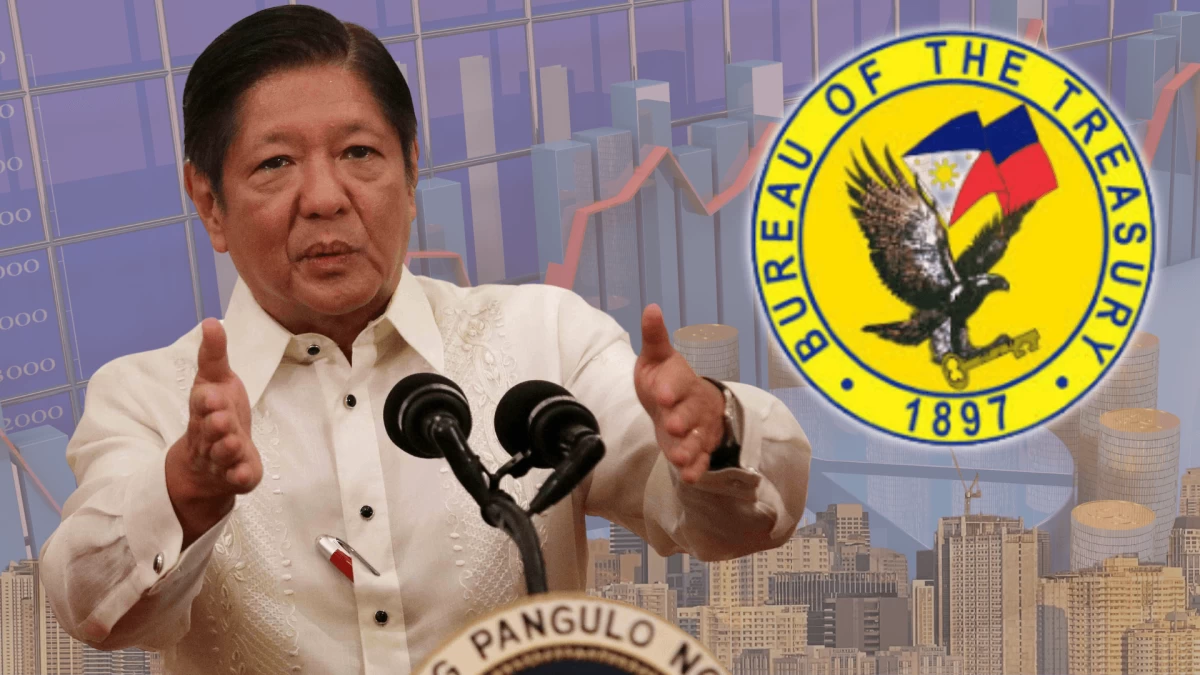
At Tuesday’s auction on May 13, the Bureau of the Treasury (BTr) fully awarded its ₱25 billion Treasury bill (T-bill) offer. Total bids reached ₱70.3 billion, which were almost three times the amount offered.
This week’s total bids were slightly lower than the ₱74.2 billion in tenders from the previous T-bill auction on May 5.
The government fully awarded the ₱8-billion offering for the 91-day T-bills. Total tenders reached ₱23.4 billion. The average rate was 5.546 percent, 2.7-basis points (bps) lower than the previous week’s 5.573-percent rate.
For the 182-day debt papers, the BTr raised ₱8 billion, fully awarding the offered amount. Bids reached ₱29.3 billion. It fetched an average rate of 5.65 percent, also lower than last week’s 5.667-percent rate.
Finally, the BTr borrowed the planned ₱9 billion through 364-day debt papers. Demand reached ₱17.6 billion. The average rate slightly dropped by 4.2 bps to 5.655 percent, from 5.697 percent.
Prior to Monday’s auction, PHP Bloomberg Valuation (PHP BVAL) Reference Rates showed that the 91-, 182- and 364-day T-bills were quoted at 5.522 percent, 5.67 percent, and 5.715 percent, respectively.
Notably, only the yields for the six-month and one-year government securities were lower than this official benchmark. The three-month debt paper was higher by 2.4 bps.
But all T-bill yields are higher than the central bank’s key policy rate of 5.5 percent.
Rizal Commercial Banking Corp. (RCBC) chief economist Michael Ricafort said that interest rates for short-dated debt papers “slightly eased after generally peaceful election results.”
He explained that lower political risk leads to a lower risk premium, which, in turn, results in lower T-bill yields, ultimately redounding to reduced borrowing costs for the government.
Ricafort added that the generally lower interest rates came after the Bangko Sentral ng Pilipinas (BSP) signaled potential larger rate cuts in 2025 due to recent inflation easing to an over a five-year low.
This could slow the appreciation of the local currency against the United States (US) dollar and reduce import costs.
Meanwhile, global crude oil prices remain low, supporting stable inflation and justifying potential BSP and US Federal Reserve (Fed) rate cuts. The US Fed is now expected to deliver at least three 25-bp cuts in 2025.
The first Fed cut is priced in for September 2025, later than the previously expected July 2025. This comes as the US and China recently eased tariff rates for each other, which could help stabilize trade dynamics and inflation.
Ricafort noted that the BSP may follow suit with rate cuts to maintain healthy interest rate differentials.
The Philippines borrows more locally—through treasury bills and bonds—than from foreign sources. This borrowing strategy takes advantage of domestic banks and creditors who are awash in cash, while veering away from foreign exchange risks and volatility.