

ADVERTISEMENT

Soviet-era spacecraft plunges to Earth after 53 years stuck in orbit

Published May 11, 2025 10:22 am

At A Glance

  • Launched in 1972 by the Soviet Union, the spacecraft known as Kosmos 482 was part of a series of missions bound for Venus. But this one never made it out of orbit around Earth, stranded there by a rocket malfunction.
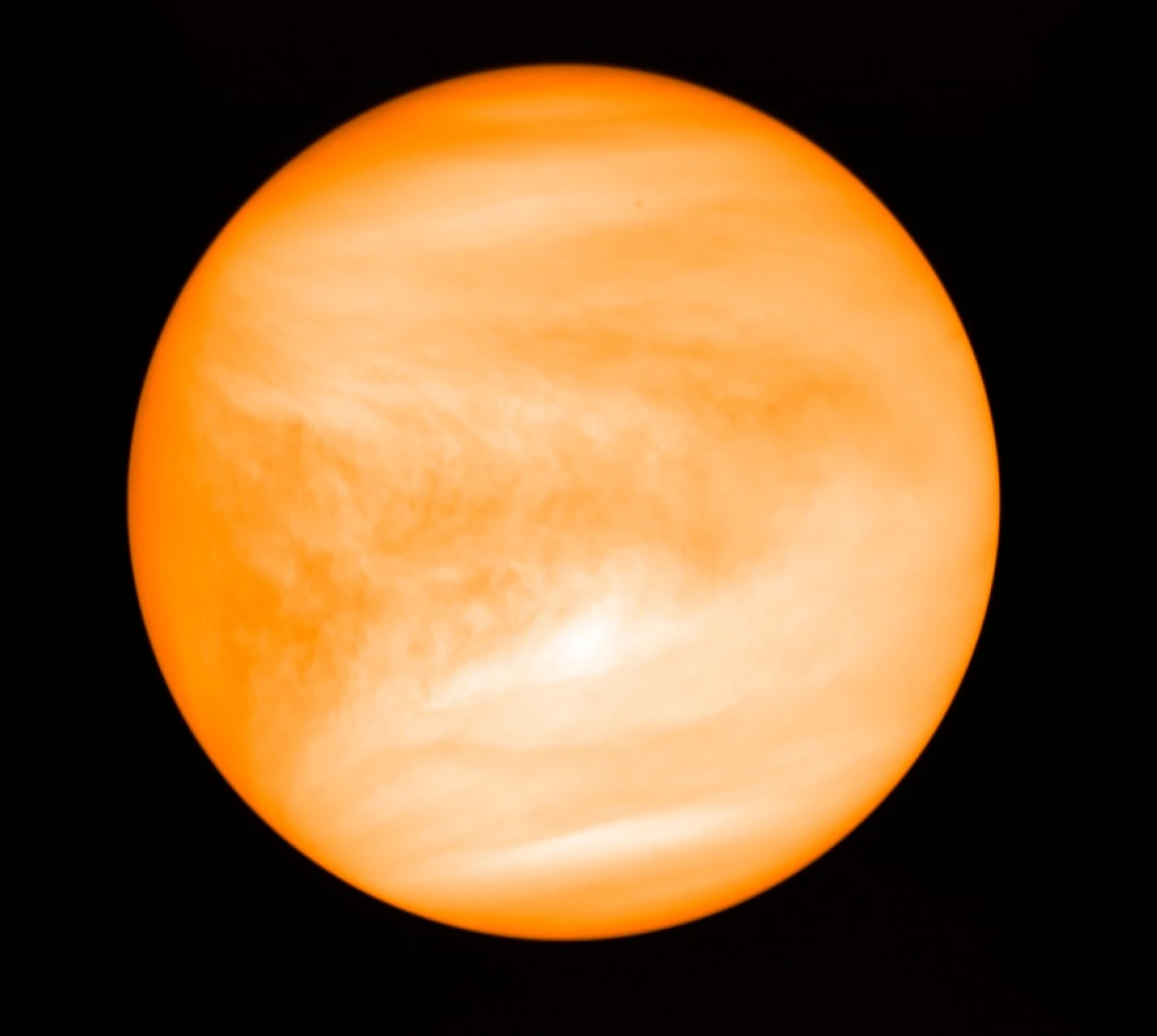
FILE - This photo provided by researcher Jane Greaves shows the planet Venus, seen from the Japan Aerospace Exploration Agency's Akatsuki probe in May 2016. (J. Greaves/Cardiff University/JAXA via AP)

A Soviet-era spacecraft plunged to Earth on Saturday, more than a half-century after its failed launch to Venus.

Its uncontrolled entry was confirmed by both the Russian Space Agency and European Union Space Surveillance and Tracking. The Russians indicated it came down over the Indian Ocean, but some experts were not so sure of the precise location. The European Space Agency’s space debris office also tracked the spacecraft's doom after it failed to appear over a German radar station.

It was not immediately known how much, if any, of the half-ton spacecraft survived the fiery descent from orbit. Experts said ahead of time that some if not all of it might come crashing down, given it was built to withstand a landing on Venus, the solar system’s hottest planet.

The chances of anyone getting clobbered by spacecraft debris were exceedingly low, scientists said.

Launched in 1972 by the Soviet Union, the spacecraft known as Kosmos 482 was part of a series of missions bound for Venus. But this one never made it out of orbit around Earth, stranded there by a rocket malfunction.
Much of the spacecraft came tumbling back to Earth within a decade of the failed launch. No longer able to resist gravity’s tug as its orbit dwindled, the spherical lander — an estimated 3 feet (1 meter) across — was the last part of the spacecraft to come down. The lander was encased in titanium, according to experts, and weighed more than 1,000 pounds (495 kilograms).

Any surviving wreckage will belong to Russia under a United Nations treaty.

After following the spacecraft’s downward spiral, scientists, military experts and others could not pinpoint in advance precisely when or where the spacecraft might come down. Solar activity added to the uncertainty as well as the spacecraft’s deteriorating condition after so long in space.

After so much anticipation, some observers were disappointed by the lingering uncertainty over the exact whereabouts of the spacecraft’s grave.

“If it was over the Indian Ocean, only the whales saw it,” Dutch scientist Marco Langbroek said via X.

As of Saturday afternoon, the U.S. Space Command had yet to confirm the spacecraft's demise as it collected and analyzed data from orbit.

The U.S. Space Command routinely monitors dozens of reentries each month. What set Kosmos 482 apart — and earned it extra attention from government and private space trackers — was that it was more likely to survive reentry, according to officials.

It was also coming in uncontrolled, without any intervention by flight controllers who normally target the Pacific and other vast expanses of water for old satellites and other space debris.

Related Tags

World news
ADVERTISEMENT
.most-popular .layout-ratio{ padding-bottom: 79.13%; } @media (min-width: 768px) and (max-width: 1024px) { .widget-title { font-size: 15px !important; } }

{{ articles_filter_1561_widget.title }}

.most-popular .layout-ratio{ padding-bottom: 79.13%; } @media (min-width: 768px) and (max-width: 1024px) { .widget-title { font-size: 15px !important; } }

{{ articles_filter_1562_widget.title }}

.most-popular .layout-ratio{ padding-bottom: 79.13%; } @media (min-width: 768px) and (max-width: 1024px) { .widget-title { font-size: 15px !important; } }

{{ articles_filter_1563_widget.title }}

{{ articles_filter_1564_widget.title }}

.mb-article-details { position: relative; } .mb-article-details .article-body-preview, .mb-article-details .article-body-summary{ font-size: 17px; line-height: 30px; font-family: "Libre Caslon Text", serif; color: #000; } .mb-article-details .article-body-preview iframe , .mb-article-details .article-body-summary iframe{ width: 100%; margin: auto; } .read-more-background { background: linear-gradient(180deg, color(display-p3 1.000 1.000 1.000 / 0) 13.75%, color(display-p3 1.000 1.000 1.000 / 0.8) 30.79%, color(display-p3 1.000 1.000 1.000) 72.5%); position: absolute; height: 200px; width: 100%; bottom: 0; display: flex; justify-content: center; align-items: center; padding: 0; } .read-more-background a{ color: #000; } .read-more-btn { padding: 17px 45px; font-family: Inter; font-weight: 700; font-size: 18px; line-height: 16px; text-align: center; vertical-align: middle; border: 1px solid black; background-color: white; } .hidden { display: none; }
function initializeAllSwipers() { // Get all hidden inputs with cms_article_id document.querySelectorAll('[id^="cms_article_id_"]').forEach(function (input) { const cmsArticleId = input.value; const articleSelector = '#article-' + cmsArticleId + ' .body_images'; const swiperElement = document.querySelector(articleSelector); if (swiperElement && !swiperElement.classList.contains('swiper-initialized')) { new Swiper(articleSelector, { loop: true, pagination: false, navigation: { nextEl: '#article-' + cmsArticleId + ' .swiper-button-next', prevEl: '#article-' + cmsArticleId + ' .swiper-button-prev', }, }); } }); } setTimeout(initializeAllSwipers, 3000); const intersectionObserver = new IntersectionObserver( (entries) => { entries.forEach((entry) => { if (entry.isIntersecting) { const newUrl = entry.target.getAttribute("data-url"); if (newUrl) { history.pushState(null, null, newUrl); let article = entry.target; // Extract metadata const author = article.querySelector('.author-section').textContent.replace('By', '').trim(); const section = article.querySelector('.section-info ').textContent.replace(' ', ' '); const title = article.querySelector('.article-title h1').textContent; // Parse URL for Chartbeat path format const parsedUrl = new URL(newUrl, window.location.origin); const cleanUrl = parsedUrl.host + parsedUrl.pathname; // Update Chartbeat configuration if (typeof window._sf_async_config !== 'undefined') { window._sf_async_config.path = cleanUrl; window._sf_async_config.sections = section; window._sf_async_config.authors = author; } // Track virtual page view with Chartbeat if (typeof pSUPERFLY !== 'undefined' && typeof pSUPERFLY.virtualPage === 'function') { try { pSUPERFLY.virtualPage({ path: cleanUrl, title: title, sections: section, authors: author }); } catch (error) { console.error('ping error', error); } } // Optional: Update document title if (title && title !== document.title) { document.title = title; } } } }); }, { threshold: 0.1 } ); function showArticleBody(button) { const article = button.closest("article"); const summary = article.querySelector(".article-body-summary"); const body = article.querySelector(".article-body-preview"); const readMoreSection = article.querySelector(".read-more-background"); // Hide summary and read-more section summary.style.display = "none"; readMoreSection.style.display = "none"; // Show the full article body body.classList.remove("hidden"); } document.addEventListener("DOMContentLoaded", () => { let loadCount = 0; // Track how many times articles are loaded const offset = [1, 2, 3, 4, 5, 6, 7, 8, 9, 10]; // Offset values const currentUrl = window.location.pathname.substring(1); let isLoading = false; // Prevent multiple calls if (!currentUrl) { console.log("Current URL is invalid."); return; } const sentinel = document.getElementById("load-more-sentinel"); if (!sentinel) { console.log("Sentinel element not found."); return; } function isSentinelVisible() { const rect = sentinel.getBoundingClientRect(); return ( rect.top < window.innerHeight && rect.bottom >= 0 ); } function onScroll() { if (isLoading) return; if (isSentinelVisible()) { if (loadCount >= offset.length) { console.log("Maximum load attempts reached."); window.removeEventListener("scroll", onScroll); return; } isLoading = true; const currentOffset = offset[loadCount]; window.loadMoreItems().then(() => { let article = document.querySelector('#widget_1690 > div:nth-last-of-type(2) article'); intersectionObserver.observe(article) loadCount++; }).catch(error => { console.error("Error loading more items:", error); }).finally(() => { isLoading = false; }); } } window.addEventListener("scroll", onScroll); });

Sign up by email to receive news.