ADVERTISEMENT

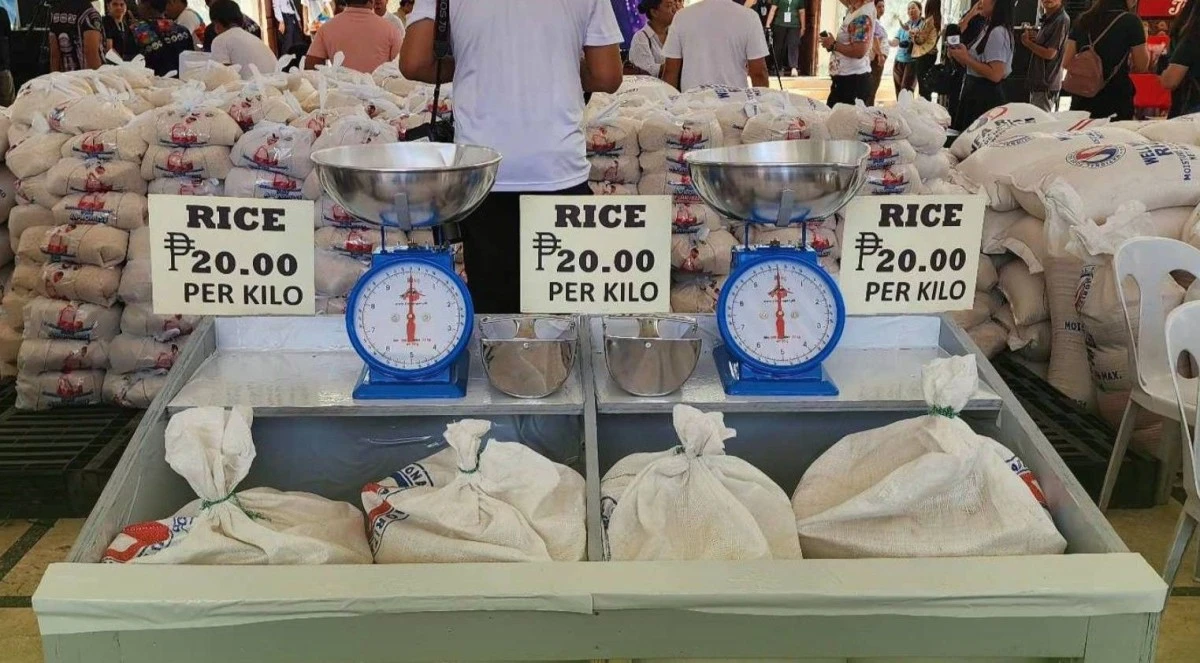
₱20-per-kilo rice available in Metro Manila Kadiwa stores starting May 13

Published May 10, 2025 08:45 am  |  Updated May 10, 2025 06:09 pm

Beginning May 13, a day after the midterm elections, Filipinos can purchase ₱20-per-kilo rice at a dozen Kadiwa ng Pangulo (KNP) stores across Metro Manila and nearby provinces.

The Department of Agriculture (DA) earlier launched the pilot program of the government’s ₱20 rice program on May 1 in Cebu City.

The rollout on KNP stores was then scheduled to start a day later, but it has since been halted after the agency moved to comply with the Commission on Elections (Comelec) 10-day ban on “ayuda,” or government assistance programs.

“As promised, the sale of ₱20 per kilo rice, which was initially launched on Labor Day, will resume right after the midterm elections,” Agriculture Secretary Francisco Tiu Laurel said in a statement.

Laurel said the program fulfills President Ferdinand “Bongbong” Marcos Jr.’s campaign promise while simultaneously providing relief to millions of indigent Filipinos.

He added that it will ease the burden on the National Food Authority’s (NFA) warehouses, enabling the agency to buy more palay (unmilled rice) from local farmers.

Initially slated to run only in Visayas, the ₱20 rice program was expanded to other regions through KNP stores and participating local government units (LGUs) after “a review of the DA’s budget and NFA stocks.”

Under the pilot test, participating LGUs will share the ₱13 per kilo subsidy with the DA’s Food Terminal Inc. (FTI) to reach the ₱20 rice threshold. Currently, the market price of rice stands at ₱33 per kilo.

LGUs will be in charge of determining the eligibility of the program’s beneficiaries.

For KNP stores, the ₱20 rice will be limited to vulnerable groups, such as solo parents, persons with disabilities (PWDs), senior citizens, and beneficiaries of the government’s Pantawid Pamilyang Pilipino Program (4Ps) program.

The DA has set an individual limit of 30 kilos per household.

Meanwhile, aside from the 12 KNP stores—whose locations have yet to be disclosed by the agency—32 more stores are scheduled to begin selling the subsidized rice by May 15.

The nationwide pilot run of the ₱20 rice program, which runs until December, is expected to serve as many as two million households, or around 10 million Filipinos.

President Marcos earlier directed the DA to extend the program until the end of his term in 2028.

“Despite critics’ claims, this targeted rice program will be pursued until the end of President Marcos’ term—this is the realization of his campaign promise,” said Laurel.

Related Tags

₱20-per-kilo rice Kadiwa ng Pangulo (KNP) Department of Agriculture (DA) Commission on Elections (Comelec) Agriculture Secretary Francisco Tiu Laurel
ADVERTISEMENT
.most-popular .layout-ratio{ padding-bottom: 79.13%; } @media (min-width: 768px) and (max-width: 1024px) { .widget-title { font-size: 15px !important; } }

{{ articles_filter_1561_widget.title }}

.most-popular .layout-ratio{ padding-bottom: 79.13%; } @media (min-width: 768px) and (max-width: 1024px) { .widget-title { font-size: 15px !important; } }

{{ articles_filter_1562_widget.title }}

.most-popular .layout-ratio{ padding-bottom: 79.13%; } @media (min-width: 768px) and (max-width: 1024px) { .widget-title { font-size: 15px !important; } }

{{ articles_filter_1563_widget.title }}

{{ articles_filter_1564_widget.title }}

.mb-article-details { position: relative; } .mb-article-details .article-body-preview, .mb-article-details .article-body-summary{ font-size: 17px; line-height: 30px; font-family: "Libre Caslon Text", serif; color: #000; } .mb-article-details .article-body-preview iframe , .mb-article-details .article-body-summary iframe{ width: 100%; margin: auto; } .read-more-background { background: linear-gradient(180deg, color(display-p3 1.000 1.000 1.000 / 0) 13.75%, color(display-p3 1.000 1.000 1.000 / 0.8) 30.79%, color(display-p3 1.000 1.000 1.000) 72.5%); position: absolute; height: 200px; width: 100%; bottom: 0; display: flex; justify-content: center; align-items: center; padding: 0; } .read-more-background a{ color: #000; } .read-more-btn { padding: 17px 45px; font-family: Inter; font-weight: 700; font-size: 18px; line-height: 16px; text-align: center; vertical-align: middle; border: 1px solid black; background-color: white; } .hidden { display: none; }
function initializeAllSwipers() { // Get all hidden inputs with cms_article_id document.querySelectorAll('[id^="cms_article_id_"]').forEach(function (input) { const cmsArticleId = input.value; const articleSelector = '#article-' + cmsArticleId + ' .body_images'; const swiperElement = document.querySelector(articleSelector); if (swiperElement && !swiperElement.classList.contains('swiper-initialized')) { new Swiper(articleSelector, { loop: true, pagination: false, navigation: { nextEl: '#article-' + cmsArticleId + ' .swiper-button-next', prevEl: '#article-' + cmsArticleId + ' .swiper-button-prev', }, }); } }); } setTimeout(initializeAllSwipers, 3000); const intersectionObserver = new IntersectionObserver( (entries) => { entries.forEach((entry) => { if (entry.isIntersecting) { const newUrl = entry.target.getAttribute("data-url"); if (newUrl) { history.pushState(null, null, newUrl); let article = entry.target; // Extract metadata const author = article.querySelector('.author-section').textContent.replace('By', '').trim(); const section = article.querySelector('.section-info ').textContent.replace(' ', ' '); const title = article.querySelector('.article-title h1').textContent; // Parse URL for Chartbeat path format const parsedUrl = new URL(newUrl, window.location.origin); const cleanUrl = parsedUrl.host + parsedUrl.pathname; // Update Chartbeat configuration if (typeof window._sf_async_config !== 'undefined') { window._sf_async_config.path = cleanUrl; window._sf_async_config.sections = section; window._sf_async_config.authors = author; } // Track virtual page view with Chartbeat if (typeof pSUPERFLY !== 'undefined' && typeof pSUPERFLY.virtualPage === 'function') { try { pSUPERFLY.virtualPage({ path: cleanUrl, title: title, sections: section, authors: author }); } catch (error) { console.error('ping error', error); } } // Optional: Update document title if (title && title !== document.title) { document.title = title; } } } }); }, { threshold: 0.1 } ); function showArticleBody(button) { const article = button.closest("article"); const summary = article.querySelector(".article-body-summary"); const body = article.querySelector(".article-body-preview"); const readMoreSection = article.querySelector(".read-more-background"); // Hide summary and read-more section summary.style.display = "none"; readMoreSection.style.display = "none"; // Show the full article body body.classList.remove("hidden"); } document.addEventListener("DOMContentLoaded", () => { let loadCount = 0; // Track how many times articles are loaded const offset = [1, 2, 3, 4, 5, 6, 7, 8, 9, 10]; // Offset values const currentUrl = window.location.pathname.substring(1); let isLoading = false; // Prevent multiple calls if (!currentUrl) { console.log("Current URL is invalid."); return; } const sentinel = document.getElementById("load-more-sentinel"); if (!sentinel) { console.log("Sentinel element not found."); return; } function isSentinelVisible() { const rect = sentinel.getBoundingClientRect(); return ( rect.top < window.innerHeight && rect.bottom >= 0 ); } function onScroll() { if (isLoading) return; if (isSentinelVisible()) { if (loadCount >= offset.length) { console.log("Maximum load attempts reached."); window.removeEventListener("scroll", onScroll); return; } isLoading = true; const currentOffset = offset[loadCount]; window.loadMoreItems().then(() => { let article = document.querySelector('#widget_1690 > div:nth-last-of-type(2) article'); intersectionObserver.observe(article) loadCount++; }).catch(error => { console.error("Error loading more items:", error); }).finally(() => { isLoading = false; }); } } window.addEventListener("scroll", onScroll); });

Sign up by email to receive news.