

ADVERTISEMENT

Bank of England cuts interest rates and welcomes word of US-UK trade deal

Published May 8, 2025 09:53 pm

At A Glance

  • Associated Press×
  • LONDON (AP) — The Bank of England cut its main interest rate by a quarter of a percentage point to 4.25% amid concerns over the potential shock to global growth emanating from the tariff policies of the Trump administration.

LONDON (AP) — The Bank of England cut its main interest rate by a quarter of a percentage point to 4.25% amid concerns over the potential shock to global growth emanating from the tariff policies of the Trump administration.

LONDON (AP) — The Bank of England cut its main interest rate by a quarter of a percentage point to 4.25% amid concerns over the potential shock to global growth emanating from the tariff policies of the Trump administration.

The decision Thursday was widely expected, though there was an array of opinion on the nine-member Monetary Policy Committee, with two voting for a bigger half-point cut to 4%, and two voting to hold rates.
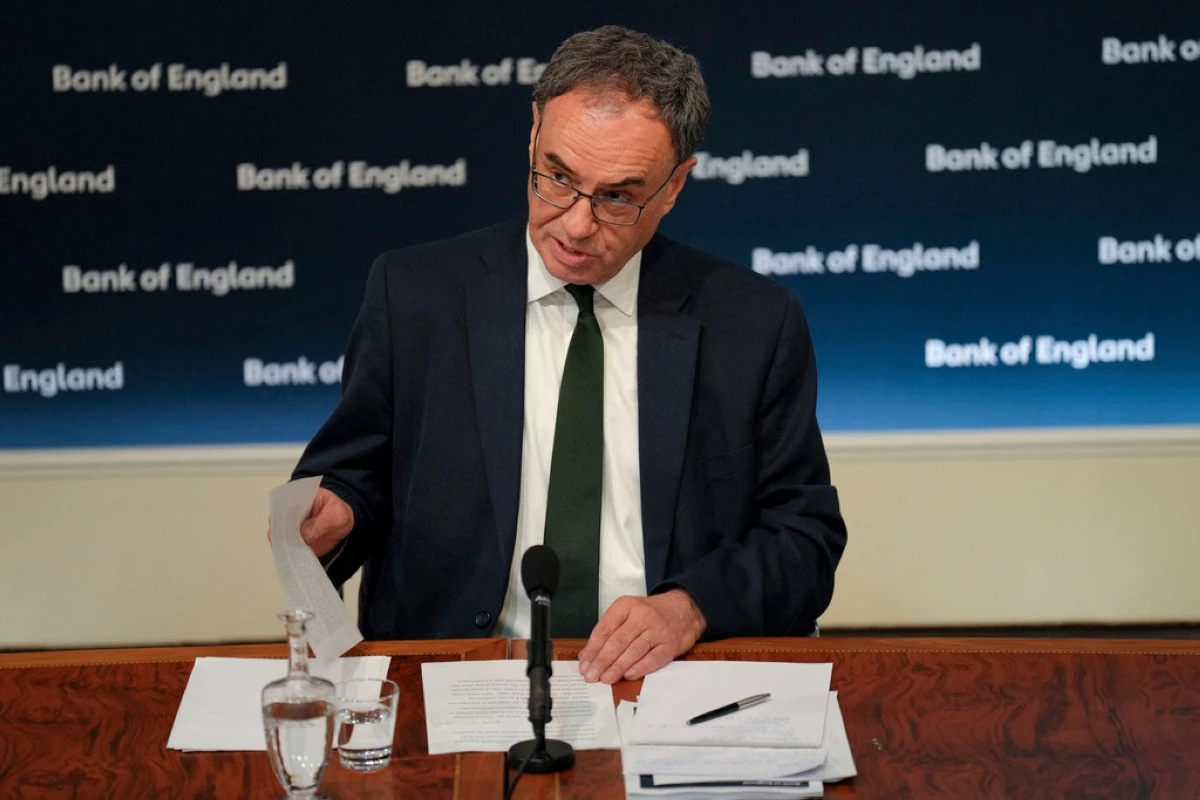
Bank of England Governor Andrew Bailey speaks, during the Monetary Policy Report press conference in London, Thursday, May 8, 2025. (Carlos Jasso/Pool Photo via AP)

Bank Gov. Andrew Bailey said inflationary pressures have continued to ease, paving the way for the fourth quarter-point rate cut since August.

“The past few weeks have shown how unpredictable the global economy can be,” he said. "That’s why we need to stick to a gradual and careful approach to further rate cuts.”

The decision is the first since President Donald Trump made his tariff announcement in early April. Though most tariffs were paused for 90 days following the ensuing market turmoil, including the 10% baseline tariff applied to U.K. goods entering the U.S., the backdrop for the global economy remains highly uncertain, particularly if the U.S.-China trade war persists.

Some of that uncertainty, with regard to the British economy, is expected to be lifted later Thursday when both Trump and British Prime Minister Keir Starmer separately outline details of a trade deal between the U.S. and the U.K. At the very least, they are expected to lower the tariff burden.

Bailey welcomed the prospect of a deal but said he didn’t know the exact details.

However, he said that as a “very open economy,” with global connections, the British economy would still be affected by tariffs applied to other economies.

“I say that because I hope the UK agreement, if it is the case this afternoon, will be the first of many," he said. “This will be good news all around, including the U.K. economy.”

The rate cut comes despite expectations that inflation will rise further above the bank's 2% target over coming months, from the current 2.6% as a result of a raft of price increases in April, such as domestic energy and water bills, and firms passing on tax rises to consumers.

“While headline inflation is expected to rise in the near-term, we do not expect that to persist,” said Bailey, adding that it will be back around target in two years time.

Unlike the Bank of England, and the European Central Bank, which last month cut interest rates too, the U.S. Federal Reserve kept rates unchanged Wednesday as its policymakers wait to see how Trump’s tariffs affect the U.S. economy before making any moves.

Most economists think the Bank of England will continue to lower borrowing rates over the coming months, though admitted that the three-way split in the voting may complicate its messaging.

“We still think the Bank will cut rates at least twice more later this year, but much like the Fed’s message yesterday, U.K. policy makers will want to see more data on how tariffs and domestic tax increases are being digested by the economy before moving decisively” said Luke Bartholomew, deputy chief economist at asset management firm Aberdeen.

Related Tags

WORLDNEWS
ADVERTISEMENT
.most-popular .layout-ratio{ padding-bottom: 79.13%; } @media (min-width: 768px) and (max-width: 1024px) { .widget-title { font-size: 15px !important; } }

{{ articles_filter_1561_widget.title }}

.most-popular .layout-ratio{ padding-bottom: 79.13%; } @media (min-width: 768px) and (max-width: 1024px) { .widget-title { font-size: 15px !important; } }

{{ articles_filter_1562_widget.title }}

.most-popular .layout-ratio{ padding-bottom: 79.13%; } @media (min-width: 768px) and (max-width: 1024px) { .widget-title { font-size: 15px !important; } }

{{ articles_filter_1563_widget.title }}

{{ articles_filter_1564_widget.title }}

.mb-article-details { position: relative; } .mb-article-details .article-body-preview, .mb-article-details .article-body-summary{ font-size: 17px; line-height: 30px; font-family: "Libre Caslon Text", serif; color: #000; } .mb-article-details .article-body-preview iframe , .mb-article-details .article-body-summary iframe{ width: 100%; margin: auto; } .read-more-background { background: linear-gradient(180deg, color(display-p3 1.000 1.000 1.000 / 0) 13.75%, color(display-p3 1.000 1.000 1.000 / 0.8) 30.79%, color(display-p3 1.000 1.000 1.000) 72.5%); position: absolute; height: 200px; width: 100%; bottom: 0; display: flex; justify-content: center; align-items: center; padding: 0; } .read-more-background a{ color: #000; } .read-more-btn { padding: 17px 45px; font-family: Inter; font-weight: 700; font-size: 18px; line-height: 16px; text-align: center; vertical-align: middle; border: 1px solid black; background-color: white; } .hidden { display: none; }
function initializeAllSwipers() { // Get all hidden inputs with cms_article_id document.querySelectorAll('[id^="cms_article_id_"]').forEach(function (input) { const cmsArticleId = input.value; const articleSelector = '#article-' + cmsArticleId + ' .body_images'; const swiperElement = document.querySelector(articleSelector); if (swiperElement && !swiperElement.classList.contains('swiper-initialized')) { new Swiper(articleSelector, { loop: true, pagination: false, navigation: { nextEl: '#article-' + cmsArticleId + ' .swiper-button-next', prevEl: '#article-' + cmsArticleId + ' .swiper-button-prev', }, }); } }); } setTimeout(initializeAllSwipers, 3000); const intersectionObserver = new IntersectionObserver( (entries) => { entries.forEach((entry) => { if (entry.isIntersecting) { const newUrl = entry.target.getAttribute("data-url"); if (newUrl) { history.pushState(null, null, newUrl); let article = entry.target; // Extract metadata const author = article.querySelector('.author-section').textContent.replace('By', '').trim(); const section = article.querySelector('.section-info ').textContent.replace(' ', ' '); const title = article.querySelector('.article-title h1').textContent; // Parse URL for Chartbeat path format const parsedUrl = new URL(newUrl, window.location.origin); const cleanUrl = parsedUrl.host + parsedUrl.pathname; // Update Chartbeat configuration if (typeof window._sf_async_config !== 'undefined') { window._sf_async_config.path = cleanUrl; window._sf_async_config.sections = section; window._sf_async_config.authors = author; } // Track virtual page view with Chartbeat if (typeof pSUPERFLY !== 'undefined' && typeof pSUPERFLY.virtualPage === 'function') { try { pSUPERFLY.virtualPage({ path: cleanUrl, title: title, sections: section, authors: author }); } catch (error) { console.error('ping error', error); } } // Optional: Update document title if (title && title !== document.title) { document.title = title; } } } }); }, { threshold: 0.1 } ); function showArticleBody(button) { const article = button.closest("article"); const summary = article.querySelector(".article-body-summary"); const body = article.querySelector(".article-body-preview"); const readMoreSection = article.querySelector(".read-more-background"); // Hide summary and read-more section summary.style.display = "none"; readMoreSection.style.display = "none"; // Show the full article body body.classList.remove("hidden"); } document.addEventListener("DOMContentLoaded", () => { let loadCount = 0; // Track how many times articles are loaded const offset = [1, 2, 3, 4, 5, 6, 7, 8, 9, 10]; // Offset values const currentUrl = window.location.pathname.substring(1); let isLoading = false; // Prevent multiple calls if (!currentUrl) { console.log("Current URL is invalid."); return; } const sentinel = document.getElementById("load-more-sentinel"); if (!sentinel) { console.log("Sentinel element not found."); return; } function isSentinelVisible() { const rect = sentinel.getBoundingClientRect(); return ( rect.top < window.innerHeight && rect.bottom >= 0 ); } function onScroll() { if (isLoading) return; if (isSentinelVisible()) { if (loadCount >= offset.length) { console.log("Maximum load attempts reached."); window.removeEventListener("scroll", onScroll); return; } isLoading = true; const currentOffset = offset[loadCount]; window.loadMoreItems().then(() => { let article = document.querySelector('#widget_1690 > div:nth-last-of-type(2) article'); intersectionObserver.observe(article) loadCount++; }).catch(error => { console.error("Error loading more items:", error); }).finally(() => { isLoading = false; }); } } window.addEventListener("scroll", onScroll); });

Sign up by email to receive news.