







It is the collective duty of the Filipinos to preserve and pass on the country's culture and traditions, President Marcos said.
Marcos: Preserve, pass on Filipino cultural treasures
Published May 7, 2025 04:16 pm


At A Glance
- Marcos encouraged the youth to learn about their own culture and tradition, telling them to "support the continuation of the priceless legacies that have been passed on to us by our cultural masters."
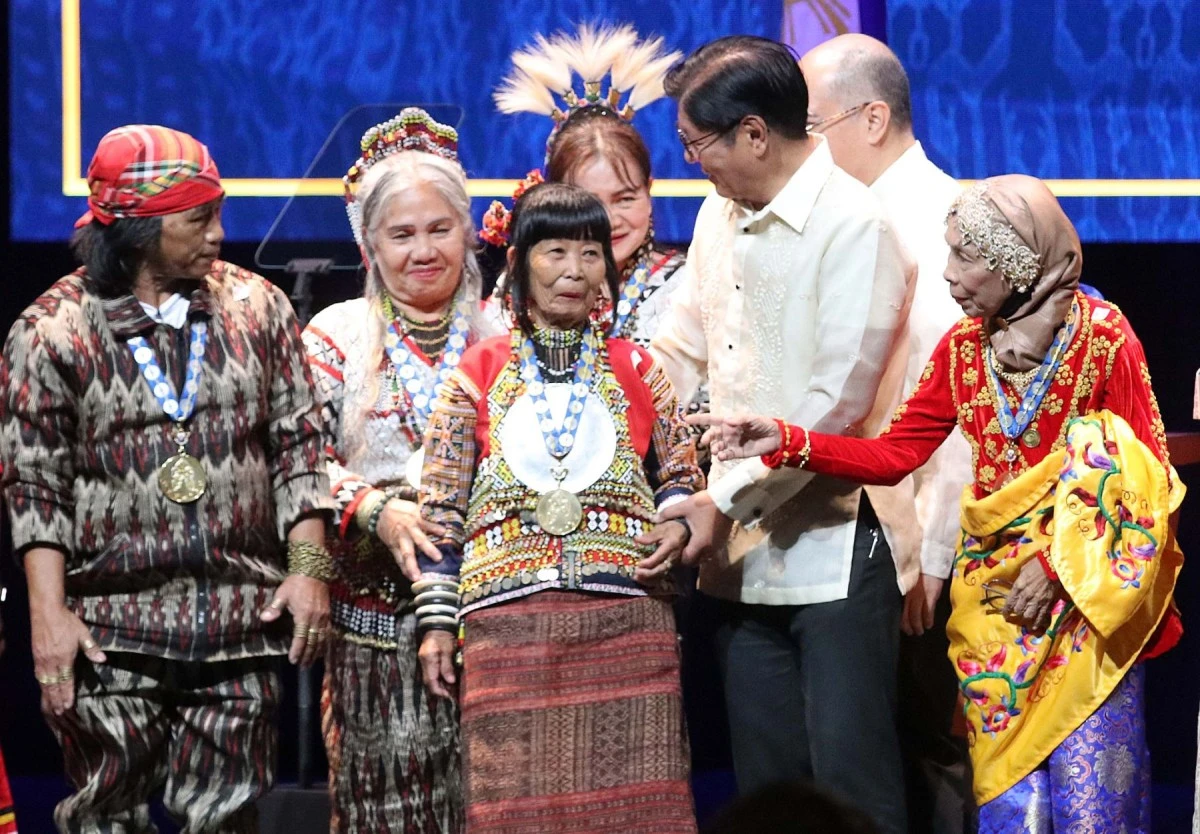
President Marcos leads the conferment of the nine new Gawad sa Manlilikha ng Bayan awardees on May 7, 2025, at the Metropolitan Theater in Manila. (Mark Balmores)
He said this as he led the official conferment of the Gawad sa Manlilikha ng Bayan or National Living Treasures Award to nine recipients, who demonstrated outstanding skills and unwavering dedication in preserving and promoting traditional Filipino arts.
"May today’s ceremony serve as a powerful reminder of our collective duty to protect, preserve, and to pass on the cultural treasures entrusted to us," Marcos said in his speech during the event held at the Metropolitan Theater in Manila on Wednesday, May 7.
Marcos also encouraged the youth to learn about their own culture and tradition, telling them to "support the continuation of the priceless legacies that have been passed on to us by our cultural masters."
"It is our civic duty to keep these traditions alive—for within them lie our voice, our strength, and the very essence of our identity," he said.
The President assured the awardees that his administration will continue to preserve the country's indigenous culture and traditions amid the modern world.
"Sa ating mga Manlilikha ng Bayan, maraming salamat po sa pagtuturo ng kahalagahan ng ating katutubong kultura. Sa gitna ng makabagong mundo, kayo ang tinig ng ating pinagmulan (To our Manlilikha ng Bayan, thank you very much for teaching us the value of indigenous culture. In the middle of the modern world, you are the voice of our origin)," Marcos said.
"Be assured that this administration, through the National Commission for Culture and the Arts (NCCA), will continue to champion traditional arts, indigenous knowledge, and cultural sustainability," Marcos told them.
The nine awardees were: Adelita Romualdo Bagcal from Banna, Ilocos Norte, a master of dallot— a traditional form of improvised, sung poetry often performed during community gatherings and rituals.
Rosie Godwino Sula, who hails from Lake Sebu, South Cotabato, is a respected T'boli chanter of k'lawan and sudsung, ancient epic songs passed down through generations.
Abina Tawide Coguit from La Paz, Agusan del Sur is a Manobo artisan renowned for her traditional embroidery and beadwork that adorn ritual clothing and accessories.
Sakinur-ain Mugong Delasas from Bongao, Tawi-Tawi is a Sama master of igal— a traditional dance form performed during weddings and religious celebrations.
Bundos Bansil Fara also from Lake Sebu, South Cotabato is a T'boli brasscaster who practices kemas— the intricate technique of lost-wax casting to produce bells, bracelets, and other ornaments.
Marife Ravidas Ganahon from Malaybalay, Bukidnon is a Higaonon mat weaver who uses indigenous materials like pandan leaves to create banig that feature geometric patterns and motifs.
Amparo Balansi Mabanag from Paracelis, Mountain Province is a Ga'dang embroiderer whose textile work showcases intricate, hand-stitched patterns that reflect the cosmology and social structure of the Ga'dang people. Her skills contribute to the continuity of this endangered art form.
Samporonia Pagsac Madanlo from Caraga, Davao Oriental is a Mandaya weaver of ikat or tie-dye weaving, producing textiles used in rituals and traditional attire.
Barbara Kibed Ofong from Lake Sebu, South Cotabato, another T'boli master weaver of t'nalak— a sacred cloth made from abaca fibers dyed using the ikat method.
Each awardee receives a gold-plated medallion minted by the Bangko Sentral ng Pilipinas, an initial grant of P200,000 upon conferment, and a lifetime monthly stipend of P50,000.
They are also entitled to a maximum of P750,000 in medical and hospitalization benefits.
In the event of their passing, they are accorded a state funeral.