

ADVERTISEMENT

Finally shining on her own

My mom, the world-renowned parchment craft artist

Published May 7, 2025 05:15 pm

At A Glance

  • There's no greater sacrifice than that which a parent makes for her child. I had never truly realized the extent to which my mother put mine and my sister's needs ahead of her own until I became a parent myself and learned the many sacrifices I had to make for my own dear child.
There’s no greater sacrifice than that which a parent makes for her child. I had never truly realized the extent to which my mother put mine and my sister’s needs ahead of her own until I became a parent myself and learned the many sacrifices I had to make for my own dear child.
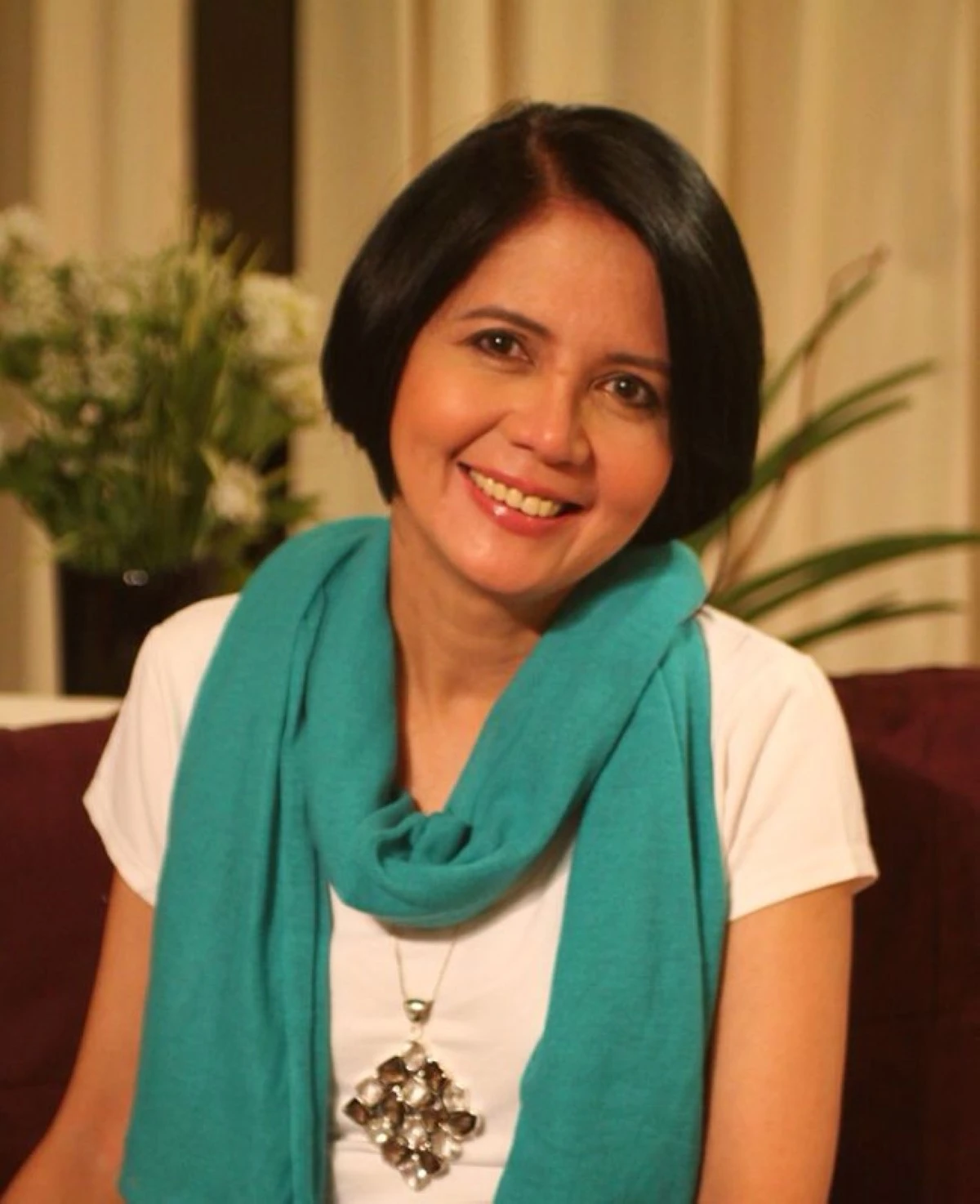
As my sister and myself were growing up, we never found ourselves lacking the tools with which to expand our creativity. After all, our mother always provided in abundance, whether it was rolls of newsprint with which to draw on, the finest sets of artist grade pencils and pastels, or new art project ideas to further grow our talents. It should come as no surprise that my sister and I eventually pursued creative careers. I may not draw as much, but you could say I never put the pen down, being a full-time journalist. My sister continued in the arts, finishing her studies in interior design and putting into practice in her own home.
It wasn’t until we were beginning to work for ourselves that my mom began to look for her own creative outlets. Initially starting as a way to save on Christmas gifts for family friends, my mom would learn a new craft each year, practice on it, and eventually get good enough to start creating gifts for our family friends by October.
It started simply enough, first with home-made wind chimes, then with paper quilling artwork, beadwork on bottles, followed by gold-leafing or decoupage art applied onto little cabinets. Each year our relatives and family friends would gush over her for the delicately made gifts. She eventually landed on a craft that caught her fancy for much longer: parchment paper craft.
This craft involves gently embossing intricate patterns and designs on parchment paper. While browsing the web, she discovered that a certain grade of parchment paper easily creases and marks when light pressure is applied. As one can imagine, this unique trait of the paper opens up a whole world of possibilities. Paired with intricate cutwork and light watercolor, the creations can range from elegant whitework to colorful, three-dimensional masterpieces.
She soon found herself an online community dedicated to the craft and quickly made friends. By chatting with and emailing them, she soon learned about the many guidebooks, magazines, and most especially tools with which to create these works of art. Delighted by the support of the community, she began sharing her works, which naturally earned praise. It wasn’t long before specialist magazines catering to the craft began contacting her to create bespoke pieces for their issues.
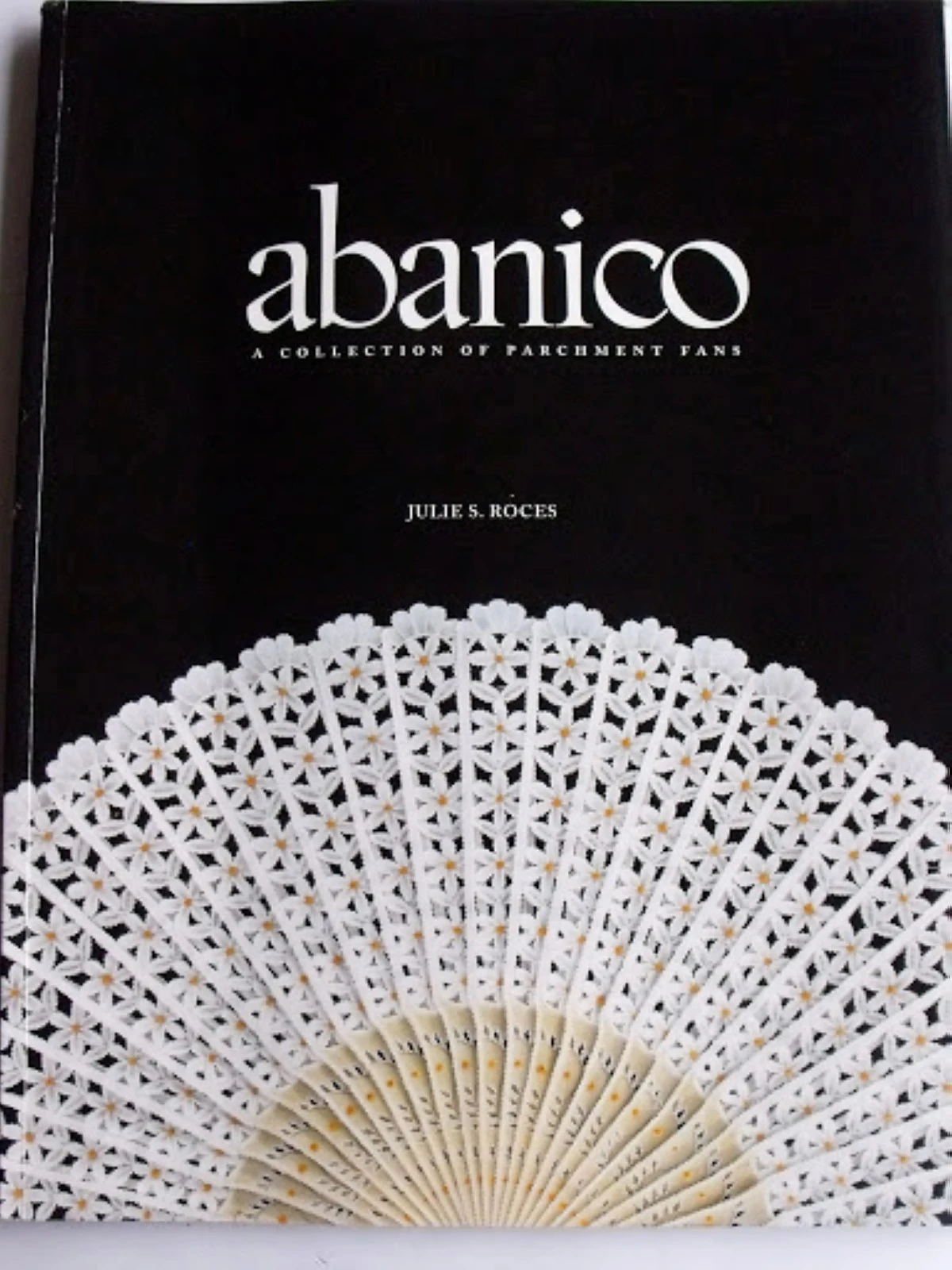
After a few years of creating commissioned work, she eventually decided to create her own book, containing a collection of her most intricate (and challenging) designs with photographs of her samples. Eager to show off her own culture and heritage, she decided to make the book solely about abanico designs.
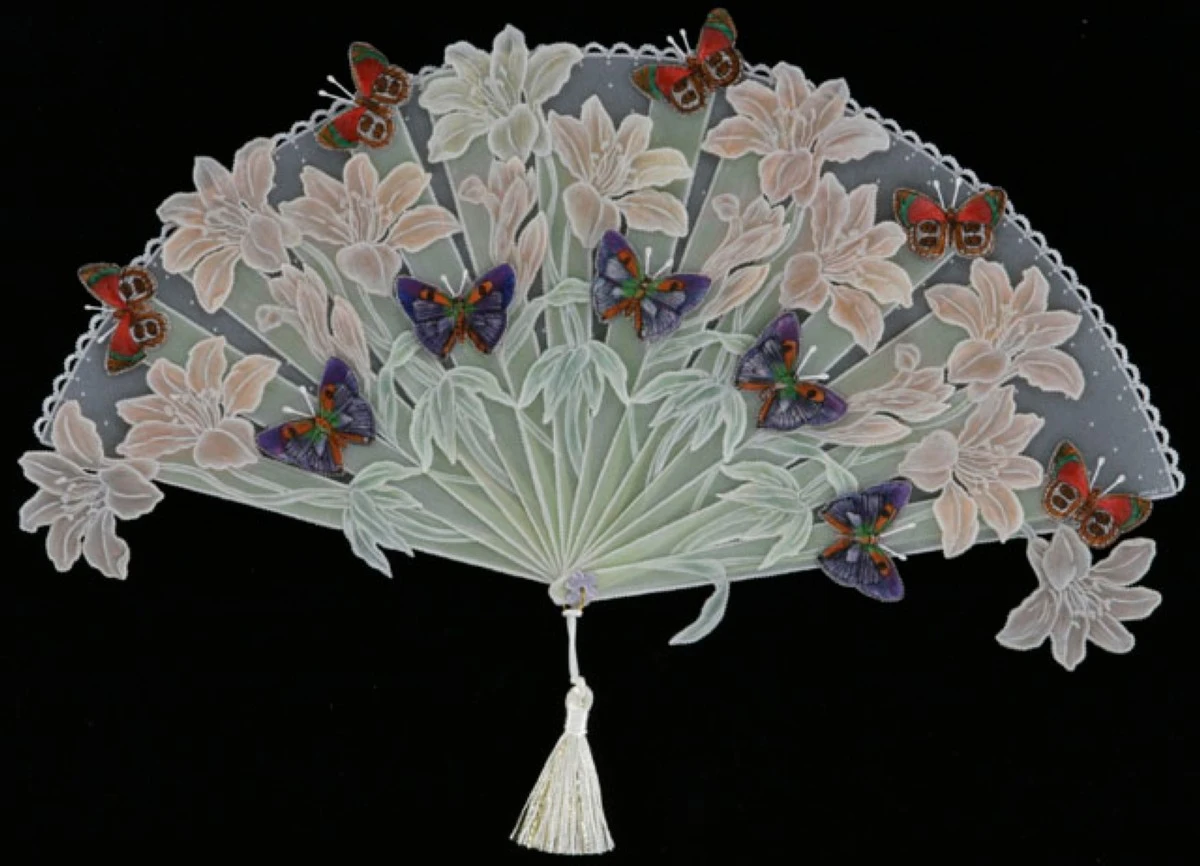
An abanico, Spanish for fan, was a cherished possession a long time ago. By dedicating the book solely to this style, it would stand out among the many selections, as well as showcase uniquely Filipino colonial influence.
Conceptualizing the book, designing the patterns, and eventually printing the book gave her quite a lot of anxiety. I did my best to encourage her, volunteering to edit and help organize its contents, as well as find a trusted layout artist. The cost of printing it was daunting as well, with her main worry being saddled with unsold copies.
These worries proved to be unfounded as, once it was printed, the book quickly sold out its initial run. Shops in the UK, the Netherlands, Australia, and Japan ordered large batches of copies. Copies of the second run were quite quickly reserved too. To this day, she continues to get inquiries about her book and where one might find copies.
For those curious about parchment craft and what you can make out of it, do a simple Google search. You might be surprised to find the patterns and works of a certain Filipina among the results. Be warned, they’re not easy. My mom is world-renowned expert at it, after all.

Related Tags

SPOTLIGHT FEATURES INIGO ROCES
ADVERTISEMENT
.most-popular .layout-ratio{ padding-bottom: 79.13%; } @media (min-width: 768px) and (max-width: 1024px) { .widget-title { font-size: 15px !important; } }

{{ articles_filter_1561_widget.title }}

.most-popular .layout-ratio{ padding-bottom: 79.13%; } @media (min-width: 768px) and (max-width: 1024px) { .widget-title { font-size: 15px !important; } }

{{ articles_filter_1562_widget.title }}

.most-popular .layout-ratio{ padding-bottom: 79.13%; } @media (min-width: 768px) and (max-width: 1024px) { .widget-title { font-size: 15px !important; } }

{{ articles_filter_1563_widget.title }}

{{ articles_filter_1564_widget.title }}

.mb-article-details { position: relative; } .mb-article-details .article-body-preview, .mb-article-details .article-body-summary{ font-size: 17px; line-height: 30px; font-family: "Libre Caslon Text", serif; color: #000; } .mb-article-details .article-body-preview iframe , .mb-article-details .article-body-summary iframe{ width: 100%; margin: auto; } .read-more-background { background: linear-gradient(180deg, color(display-p3 1.000 1.000 1.000 / 0) 13.75%, color(display-p3 1.000 1.000 1.000 / 0.8) 30.79%, color(display-p3 1.000 1.000 1.000) 72.5%); position: absolute; height: 200px; width: 100%; bottom: 0; display: flex; justify-content: center; align-items: center; padding: 0; } .read-more-background a{ color: #000; } .read-more-btn { padding: 17px 45px; font-family: Inter; font-weight: 700; font-size: 18px; line-height: 16px; text-align: center; vertical-align: middle; border: 1px solid black; background-color: white; } .hidden { display: none; }
function initializeAllSwipers() { // Get all hidden inputs with cms_article_id document.querySelectorAll('[id^="cms_article_id_"]').forEach(function (input) { const cmsArticleId = input.value; const articleSelector = '#article-' + cmsArticleId + ' .body_images'; const swiperElement = document.querySelector(articleSelector); if (swiperElement && !swiperElement.classList.contains('swiper-initialized')) { new Swiper(articleSelector, { loop: true, pagination: false, navigation: { nextEl: '#article-' + cmsArticleId + ' .swiper-button-next', prevEl: '#article-' + cmsArticleId + ' .swiper-button-prev', }, }); } }); } setTimeout(initializeAllSwipers, 3000); const intersectionObserver = new IntersectionObserver( (entries) => { entries.forEach((entry) => { if (entry.isIntersecting) { const newUrl = entry.target.getAttribute("data-url"); if (newUrl) { history.pushState(null, null, newUrl); let article = entry.target; // Extract metadata const author = article.querySelector('.author-section').textContent.replace('By', '').trim(); const section = article.querySelector('.section-info ').textContent.replace(' ', ' '); const title = article.querySelector('.article-title h1').textContent; // Parse URL for Chartbeat path format const parsedUrl = new URL(newUrl, window.location.origin); const cleanUrl = parsedUrl.host + parsedUrl.pathname; // Update Chartbeat configuration if (typeof window._sf_async_config !== 'undefined') { window._sf_async_config.path = cleanUrl; window._sf_async_config.sections = section; window._sf_async_config.authors = author; } // Track virtual page view with Chartbeat if (typeof pSUPERFLY !== 'undefined' && typeof pSUPERFLY.virtualPage === 'function') { try { pSUPERFLY.virtualPage({ path: cleanUrl, title: title, sections: section, authors: author }); } catch (error) { console.error('ping error', error); } } // Optional: Update document title if (title && title !== document.title) { document.title = title; } } } }); }, { threshold: 0.1 } ); function showArticleBody(button) { const article = button.closest("article"); const summary = article.querySelector(".article-body-summary"); const body = article.querySelector(".article-body-preview"); const readMoreSection = article.querySelector(".read-more-background"); // Hide summary and read-more section summary.style.display = "none"; readMoreSection.style.display = "none"; // Show the full article body body.classList.remove("hidden"); } document.addEventListener("DOMContentLoaded", () => { let loadCount = 0; // Track how many times articles are loaded const offset = [1, 2, 3, 4, 5, 6, 7, 8, 9, 10]; // Offset values const currentUrl = window.location.pathname.substring(1); let isLoading = false; // Prevent multiple calls if (!currentUrl) { console.log("Current URL is invalid."); return; } const sentinel = document.getElementById("load-more-sentinel"); if (!sentinel) { console.log("Sentinel element not found."); return; } function isSentinelVisible() { const rect = sentinel.getBoundingClientRect(); return ( rect.top < window.innerHeight && rect.bottom >= 0 ); } function onScroll() { if (isLoading) return; if (isSentinelVisible()) { if (loadCount >= offset.length) { console.log("Maximum load attempts reached."); window.removeEventListener("scroll", onScroll); return; } isLoading = true; const currentOffset = offset[loadCount]; window.loadMoreItems().then(() => { let article = document.querySelector('#widget_1690 > div:nth-last-of-type(2) article'); intersectionObserver.observe(article) loadCount++; }).catch(error => { console.error("Error loading more items:", error); }).finally(() => { isLoading = false; }); } } window.addEventListener("scroll", onScroll); });

Sign up by email to receive news.