

ADVERTISEMENT

DepEd clarifies: No 'auto-pass' policy in Philippine public schools, vows reforms

Mass promotion is not an official rule but a 'silent norm,' says DepEd Secretary Sonny Angara

Published May 7, 2025 10:53 pm

At A Glance

  • DepEd denies the existence of an auto-pass policy in Philippine public schools and promises reforms to ensure promotions reflect real student learning.
The Department of Education (DepEd) on Wednesday, May 7, reiterated that there is no automatic pass or "auto-pass" policy in the Philippine public school system, amid growing concerns about the trend of mass promotion — where students advance to the next grade level despite not meeting learning standards.
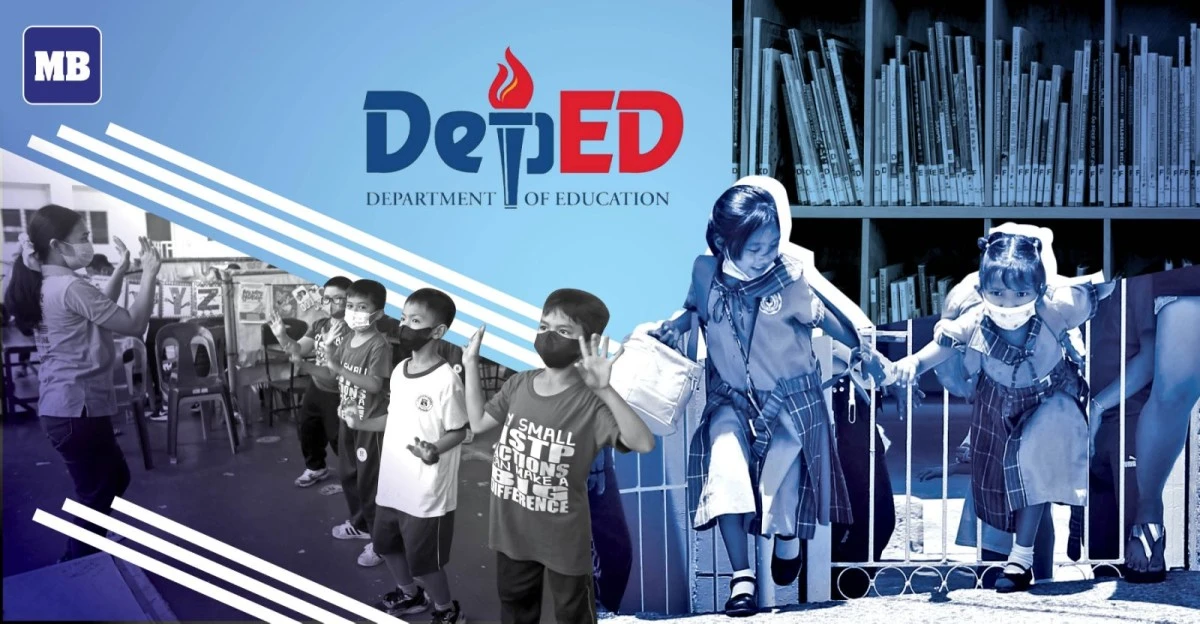
DepEd acknowledged that certain systemic practices and pressures may be encouraging schools and teachers to pass students regardless of performance. (DepEd / MB Visual Content Group)
“Wala pong policy ang DepEd na automatic na pagpasa sa mga estudyante (DepEd has no policy of automatically passing students),” said Education Secretary Sonny Angara in a statement.
Angara acknowledged, however, that certain systemic practices and pressures may be encouraging schools and teachers to pass students regardless of performance.
“But we have to admit — some features of our system we inherited may be putting quiet pressure on schools and teachers to promote students,” Angara said. “That’s something we are determined to correct,” he added.
He emphasized that while mass promotion is not a formal DepEd rule, it has become a “silent norm” in some schools.
“We want to change that,” Angara said, stressing that promotion must be grounded in actual learning. “And real learning should be what our system makes possible — not just expected,” he added.
No official ‘auto-pass’ policy, DepEd affirms
In response to President Marcos’ directive to address low literacy and poor academic performance, DepEd stressed that there is no auto-pass policy in public schools.
However, the agency admitted that some incentive structures and evaluation systems might be unintentionally encouraging mass promotion.
Certain practices may be reinforcing such trends, DepEd said, adding that it is now taking action under Angara’s leadership to “course-correct” in pursuit of improved literacy and meaningful learning outcomes.
Angara also noted that teacher evaluations are guided by a broader set of criteria — including performance, process, financial, and citizen/client satisfaction results — and not solely by student promotion rates.
“When school-level success is measured mainly by how many students move up, and when teachers feel that their own evaluations and promotions depend on that too, then we can’t be surprised if the system bends in that direction,” Angara said. “That’s not a flaw in the people, but a flaw in the design,” he added.
DepEd launches comprehensive review of promotion and assessment policies
As part of a broader initiative to raise literacy rates and strengthen foundational skills, DepEd is now conducting a comprehensive review of its assessment, remediation, and promotion policies.
The agency said this review aims to establish clearer academic standards, effective remediation programs, and fairer teacher evaluation systems to ensure that promotions are based on actual learning outcomes.
DepEd also reiterated its commitment to a system where students advance because they are truly ready — not because of silent pressure or outdated metrics.

Related Tags

DepEd DepEd Secretary Sonny Angara Philippine education system mass promotion auto-pass
ADVERTISEMENT
.most-popular .layout-ratio{ padding-bottom: 79.13%; } @media (min-width: 768px) and (max-width: 1024px) { .widget-title { font-size: 15px !important; } }

{{ articles_filter_1561_widget.title }}

.most-popular .layout-ratio{ padding-bottom: 79.13%; } @media (min-width: 768px) and (max-width: 1024px) { .widget-title { font-size: 15px !important; } }

{{ articles_filter_1562_widget.title }}

.most-popular .layout-ratio{ padding-bottom: 79.13%; } @media (min-width: 768px) and (max-width: 1024px) { .widget-title { font-size: 15px !important; } }

{{ articles_filter_1563_widget.title }}

{{ articles_filter_1564_widget.title }}

.mb-article-details { position: relative; } .mb-article-details .article-body-preview, .mb-article-details .article-body-summary{ font-size: 17px; line-height: 30px; font-family: "Libre Caslon Text", serif; color: #000; } .mb-article-details .article-body-preview iframe , .mb-article-details .article-body-summary iframe{ width: 100%; margin: auto; } .read-more-background { background: linear-gradient(180deg, color(display-p3 1.000 1.000 1.000 / 0) 13.75%, color(display-p3 1.000 1.000 1.000 / 0.8) 30.79%, color(display-p3 1.000 1.000 1.000) 72.5%); position: absolute; height: 200px; width: 100%; bottom: 0; display: flex; justify-content: center; align-items: center; padding: 0; } .read-more-background a{ color: #000; } .read-more-btn { padding: 17px 45px; font-family: Inter; font-weight: 700; font-size: 18px; line-height: 16px; text-align: center; vertical-align: middle; border: 1px solid black; background-color: white; } .hidden { display: none; }
function initializeAllSwipers() { // Get all hidden inputs with cms_article_id document.querySelectorAll('[id^="cms_article_id_"]').forEach(function (input) { const cmsArticleId = input.value; const articleSelector = '#article-' + cmsArticleId + ' .body_images'; const swiperElement = document.querySelector(articleSelector); if (swiperElement && !swiperElement.classList.contains('swiper-initialized')) { new Swiper(articleSelector, { loop: true, pagination: false, navigation: { nextEl: '#article-' + cmsArticleId + ' .swiper-button-next', prevEl: '#article-' + cmsArticleId + ' .swiper-button-prev', }, }); } }); } setTimeout(initializeAllSwipers, 3000); const intersectionObserver = new IntersectionObserver( (entries) => { entries.forEach((entry) => { if (entry.isIntersecting) { const newUrl = entry.target.getAttribute("data-url"); if (newUrl) { history.pushState(null, null, newUrl); let article = entry.target; // Extract metadata const author = article.querySelector('.author-section').textContent.replace('By', '').trim(); const section = article.querySelector('.section-info ').textContent.replace(' ', ' '); const title = article.querySelector('.article-title h1').textContent; // Parse URL for Chartbeat path format const parsedUrl = new URL(newUrl, window.location.origin); const cleanUrl = parsedUrl.host + parsedUrl.pathname; // Update Chartbeat configuration if (typeof window._sf_async_config !== 'undefined') { window._sf_async_config.path = cleanUrl; window._sf_async_config.sections = section; window._sf_async_config.authors = author; } // Track virtual page view with Chartbeat if (typeof pSUPERFLY !== 'undefined' && typeof pSUPERFLY.virtualPage === 'function') { try { pSUPERFLY.virtualPage({ path: cleanUrl, title: title, sections: section, authors: author }); } catch (error) { console.error('ping error', error); } } // Optional: Update document title if (title && title !== document.title) { document.title = title; } } } }); }, { threshold: 0.1 } ); function showArticleBody(button) { const article = button.closest("article"); const summary = article.querySelector(".article-body-summary"); const body = article.querySelector(".article-body-preview"); const readMoreSection = article.querySelector(".read-more-background"); // Hide summary and read-more section summary.style.display = "none"; readMoreSection.style.display = "none"; // Show the full article body body.classList.remove("hidden"); } document.addEventListener("DOMContentLoaded", () => { let loadCount = 0; // Track how many times articles are loaded const offset = [1, 2, 3, 4, 5, 6, 7, 8, 9, 10]; // Offset values const currentUrl = window.location.pathname.substring(1); let isLoading = false; // Prevent multiple calls if (!currentUrl) { console.log("Current URL is invalid."); return; } const sentinel = document.getElementById("load-more-sentinel"); if (!sentinel) { console.log("Sentinel element not found."); return; } function isSentinelVisible() { const rect = sentinel.getBoundingClientRect(); return ( rect.top < window.innerHeight && rect.bottom >= 0 ); } function onScroll() { if (isLoading) return; if (isSentinelVisible()) { if (loadCount >= offset.length) { console.log("Maximum load attempts reached."); window.removeEventListener("scroll", onScroll); return; } isLoading = true; const currentOffset = offset[loadCount]; window.loadMoreItems().then(() => { let article = document.querySelector('#widget_1690 > div:nth-last-of-type(2) article'); intersectionObserver.observe(article) loadCount++; }).catch(error => { console.error("Error loading more items:", error); }).finally(() => { isLoading = false; }); } } window.addEventListener("scroll", onScroll); });

Sign up by email to receive news.