ADVERTISEMENT

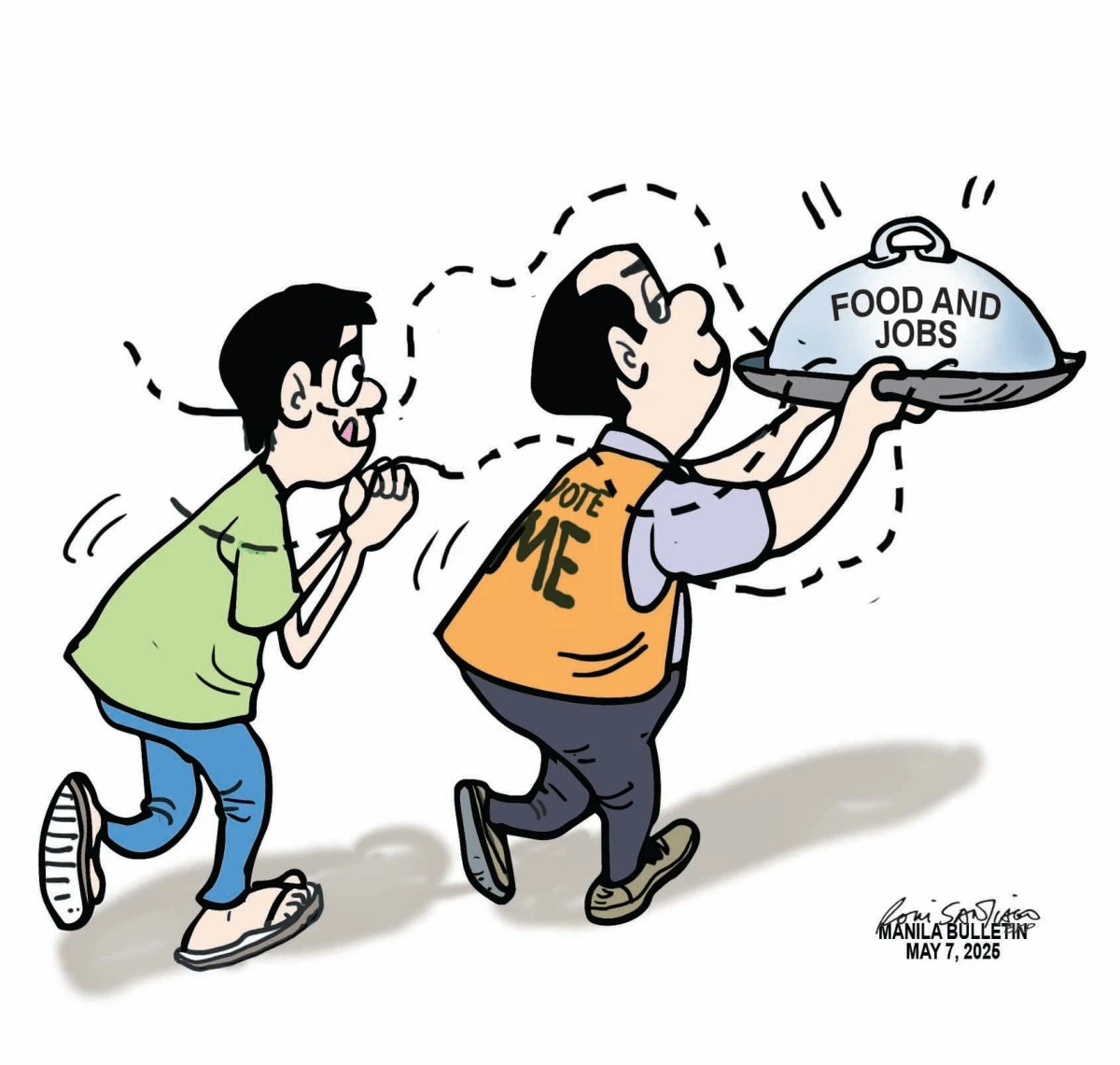
Candidates, beware; Filipinos want stable jobs, food security

Published May 7, 2025 12:05 am  |  Updated May 6, 2025 06:03 pm
With the May 12 midterm elections just on the horizon, the Filipino electorate has made clear what they look for from candidates running for elective posts. They want stable jobs and food security—employment that can support their families and food supply they can depend on.
In the latest Social Weather Stations (SWS) survey, commissioned by the Stratbase, 93 percent of Filipinos say they will vote for candidates who prioritize increasing job opportunities and ensuring food security. These are survival instincts in the country still reeling from pandemic aftershocks, inflationary pressure, and extreme climate events. They echo the sound of millions of stomachs growling, the concerns of parents lying awake till late in the night wondering what to eat the next day and how to pay their monthly bills, the cries of farmers watching their crops wither under a punishing sun or drown in unseasonal rains.
Yet, many candidates are still campaigning the traditional way—offering promises of good governance and fighting corruption without tackling how they’ll put food on the table or wages in wallets. They shake hands, kiss babies, and dance onstage while the people they claim to serve are breaking their backs just for survival.
What explains this overwhelming focus on jobs and food? Decades of development have not made everyday life more secure for most Filipinos. The average worker remains underpaid, and millions continue to live below the poverty line. The agricultural sector, once a national strength, has regressed due to policy neglect, lack of mechanization, and vulnerability to both climate and global supply shocks. And when food prices surge, it’s the poor who take the brunt. A robust agriculture sector not only feeds the population but also provides employment to millions. Yet, it has been marginalized in favor of short-term imports and foreign investment deals that rarely trickle down. Voters see this clearly. They live it.
No doubt, job creation and food security are the main concerns of the electorate. This is about their right to live without fear—fear of eviction, of hunger, of watching one’s children drop out of school to help the family survive. That fear is a reality faced by millions of Filipinos.
Keep in mind that for too long, joblessness and hunger have been a big issue that have not been fully addressed. Just imagine a jeepney driver whose earnings barely cover fuel; a young graduate stuck in a contract job with no benefits; a parent lining up for subsidized rice that might not last a week. These are not isolated stories. They are basically the Filipino story. And behind every one of them is a question politicians must finally answer: Where were you when Filipinos needed you most?
It’s clear that the Filipino voter is closely watching the affairs of the government. They are now demanding specifics—not general plans, not motherhood statements, but clear, tangible solutions.
This coming election is about the sufferings of the Filipino electorate and their hope for relief.
Voters want to hear about investments in local agriculture, manufacturing, digital work, and rural livelihoods. They want leaders who will protect farmers from import abuse, build farm-to-market roads, and ensure food prices remain stable despite global shocks.
But more than promises, they want empathy backed by action. Because they’ve heard it all before. And they’ve been disappointed too many times.
In the final stretch to election day, let’s all remember that this poll exercise is about who can help Filipinos put food on their tables and secure dignified work. Who will they be?
ADVERTISEMENT
.most-popular .layout-ratio{ padding-bottom: 79.13%; } @media (min-width: 768px) and (max-width: 1024px) { .widget-title { font-size: 15px !important; } }

{{ articles_filter_1561_widget.title }}

.most-popular .layout-ratio{ padding-bottom: 79.13%; } @media (min-width: 768px) and (max-width: 1024px) { .widget-title { font-size: 15px !important; } }

{{ articles_filter_1562_widget.title }}

.most-popular .layout-ratio{ padding-bottom: 79.13%; } @media (min-width: 768px) and (max-width: 1024px) { .widget-title { font-size: 15px !important; } }

{{ articles_filter_1563_widget.title }}

{{ articles_filter_1564_widget.title }}

.mb-article-details { position: relative; } .mb-article-details .article-body-preview, .mb-article-details .article-body-summary{ font-size: 17px; line-height: 30px; font-family: "Libre Caslon Text", serif; color: #000; } .mb-article-details .article-body-preview iframe , .mb-article-details .article-body-summary iframe{ width: 100%; margin: auto; } .read-more-background { background: linear-gradient(180deg, color(display-p3 1.000 1.000 1.000 / 0) 13.75%, color(display-p3 1.000 1.000 1.000 / 0.8) 30.79%, color(display-p3 1.000 1.000 1.000) 72.5%); position: absolute; height: 200px; width: 100%; bottom: 0; display: flex; justify-content: center; align-items: center; padding: 0; } .read-more-background a{ color: #000; } .read-more-btn { padding: 17px 45px; font-family: Inter; font-weight: 700; font-size: 18px; line-height: 16px; text-align: center; vertical-align: middle; border: 1px solid black; background-color: white; } .hidden { display: none; }
function initializeAllSwipers() { // Get all hidden inputs with cms_article_id document.querySelectorAll('[id^="cms_article_id_"]').forEach(function (input) { const cmsArticleId = input.value; const articleSelector = '#article-' + cmsArticleId + ' .body_images'; const swiperElement = document.querySelector(articleSelector); if (swiperElement && !swiperElement.classList.contains('swiper-initialized')) { new Swiper(articleSelector, { loop: true, pagination: false, navigation: { nextEl: '#article-' + cmsArticleId + ' .swiper-button-next', prevEl: '#article-' + cmsArticleId + ' .swiper-button-prev', }, }); } }); } setTimeout(initializeAllSwipers, 3000); const intersectionObserver = new IntersectionObserver( (entries) => { entries.forEach((entry) => { if (entry.isIntersecting) { const newUrl = entry.target.getAttribute("data-url"); if (newUrl) { history.pushState(null, null, newUrl); let article = entry.target; // Extract metadata const author = article.querySelector('.author-section').textContent.replace('By', '').trim(); const section = article.querySelector('.section-info ').textContent.replace(' ', ' '); const title = article.querySelector('.article-title h1').textContent; // Parse URL for Chartbeat path format const parsedUrl = new URL(newUrl, window.location.origin); const cleanUrl = parsedUrl.host + parsedUrl.pathname; // Update Chartbeat configuration if (typeof window._sf_async_config !== 'undefined') { window._sf_async_config.path = cleanUrl; window._sf_async_config.sections = section; window._sf_async_config.authors = author; } // Track virtual page view with Chartbeat if (typeof pSUPERFLY !== 'undefined' && typeof pSUPERFLY.virtualPage === 'function') { try { pSUPERFLY.virtualPage({ path: cleanUrl, title: title, sections: section, authors: author }); } catch (error) { console.error('ping error', error); } } // Optional: Update document title if (title && title !== document.title) { document.title = title; } } } }); }, { threshold: 0.1 } ); function showArticleBody(button) { const article = button.closest("article"); const summary = article.querySelector(".article-body-summary"); const body = article.querySelector(".article-body-preview"); const readMoreSection = article.querySelector(".read-more-background"); // Hide summary and read-more section summary.style.display = "none"; readMoreSection.style.display = "none"; // Show the full article body body.classList.remove("hidden"); } document.addEventListener("DOMContentLoaded", () => { let loadCount = 0; // Track how many times articles are loaded const offset = [1, 2, 3, 4, 5, 6, 7, 8, 9, 10]; // Offset values const currentUrl = window.location.pathname.substring(1); let isLoading = false; // Prevent multiple calls if (!currentUrl) { console.log("Current URL is invalid."); return; } const sentinel = document.getElementById("load-more-sentinel"); if (!sentinel) { console.log("Sentinel element not found."); return; } function isSentinelVisible() { const rect = sentinel.getBoundingClientRect(); return ( rect.top < window.innerHeight && rect.bottom >= 0 ); } function onScroll() { if (isLoading) return; if (isSentinelVisible()) { if (loadCount >= offset.length) { console.log("Maximum load attempts reached."); window.removeEventListener("scroll", onScroll); return; } isLoading = true; const currentOffset = offset[loadCount]; window.loadMoreItems().then(() => { let article = document.querySelector('#widget_1690 > div:nth-last-of-type(2) article'); intersectionObserver.observe(article) loadCount++; }).catch(error => { console.error("Error loading more items:", error); }).finally(() => { isLoading = false; }); } } window.addEventListener("scroll", onScroll); });

Sign up by email to receive news.