






 Business
The Economy
Balisacan touts Philippine economic potential, $2-trillion GDP possible by 2050
Business
The Economy
Balisacan touts Philippine economic potential, $2-trillion GDP possible by 2050
Balisacan touts Philippine economic potential, $2-trillion GDP possible by 2050
By Derco Rosal


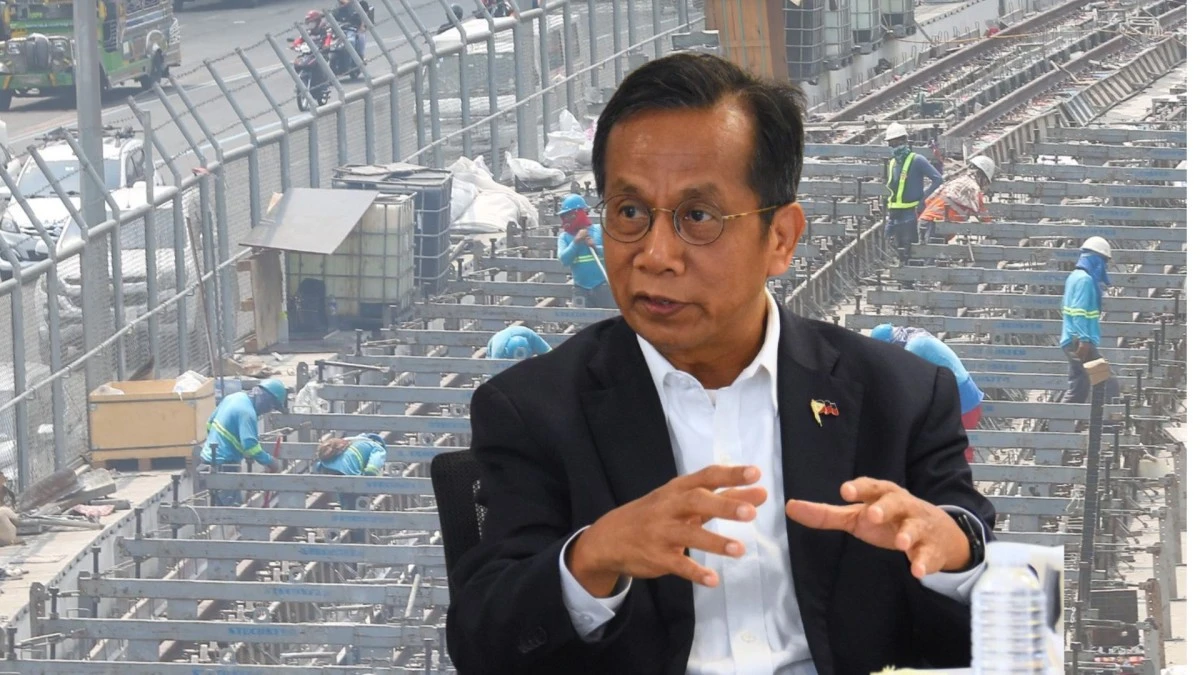
National Socioeconomic Planner Arsenio Balisacan stated that the country’s gross domestic product (GDP) could reach $2 trillion, or about ₱112 trillion, by 2050 if the economy continues to expand and no major global disruptions occur.
“At our current growth trajectory—and barring significant external shocks—we anticipate reaching a $2 trillion economy by 2050,” Balisacan said at the Philippine Economic Dialogue, held on the sidelines of the 58th annual meeting of the Asian Development Bank’s (ADB) board of governors in Milan, Italy, on Tuesday, May 6.
Currently, the local economy is valued at $392 billion (about ₱22.34 trillion), which stands at 19.6 percent of the 2050 economic expectations.
According to the Department of Economy, Planning, and Development (DEPDev), the Philippines is positioned as a dynamic investment destination of choice in the global economy.
Balisacan cited the present GDP size, the economy’s “desirable market features,” its progress towards reaching upper-middle income country (UMIC) status, and its large population with a median age of 27.
“The Philippines has sustained its strong economic momentum and is staying the course by following a clear roadmap for inclusive growth,” DEPDev said. Last year, the Philippine GDP expanded by an average rate of 5.7 percent, dragged by a lackluster economic performance in the second half of the year.
Specifically, the below-than-expected growth in the last quarter of 2024 was blamed on the series of typhoons that ravaged the country. First-quarter GDP data will be released on Thursday, May 8.
Balisacan said the Philippine economy is “poised for transformation,” with efforts focused on boosting both new and existing sectors.
He assured that the government supports private-sector-led development by building an open, forward-looking economy that encourages long-term investments and inclusive progress. He also pointed to better governance rules for public-private partnership (PPP) projects, “which have enhanced transparency and investor confidence.”
This said, Balisacan invited investors to explore opportunities in the Luzon Economic Corridor, a major government initiative to strengthen trade and attract more investments in the region.
“The Luzon Economic Corridor connects Subic, Clark, Manila, and Batangas through coordinated investments in logistics, energy, and infrastructure. This corridor supports key sectors, such as agribusiness, semiconductors, manufacturing, and finance—serving as a launchpad into Asian and global markets,” he explained.
Balisacan also emphasized the government’s push for infrastructure, noting that 207 flagship projects worth around $178 billion are underway at different stages of implementation.
“Strong macroeconomic fundamentals, reform momentum, a skilled and young workforce, and a strategic location position the Philippines as your ideal partner of choice in Asia and globally,” he campaigned.
Top economic officials also emphasized the government’s focus on human capital investment, procurement reforms, and infrastructure upgrades under the Build Better More (BBM) program. They also pointed to stable fiscal metrics and effective inflation management, supporting sustained growth and private-sector participation.