ADVERTISEMENT

PH-New Zealand SOVFA: Timely regional security initiative

Published May 5, 2025 12:05 am  |  Updated May 4, 2025 03:54 pm

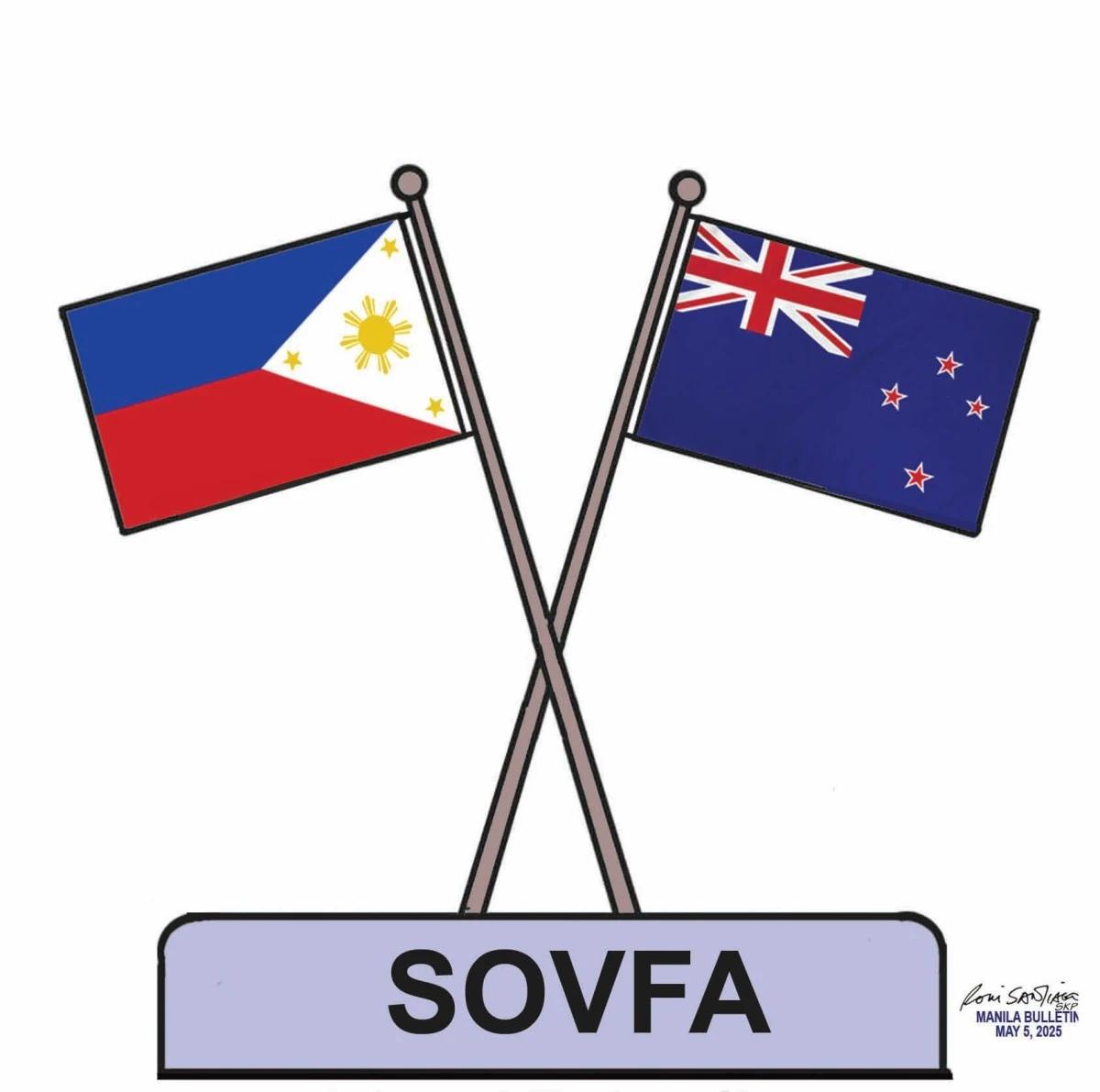
The recent signing of the Status of Visiting Forces Agreement (SOVFA) between the Philippines and New Zealand marks a timely and strategic milestone in the evolving security landscape of the Asia-Pacific region. As the geopolitical climate becomes increasingly complex, this accord reinforces the Philippines’ commitment to enhancing its defense partnerships while advancing its pursuit of a more self-reliant defense posture.

The Asia-Pacific region today is navigating through heightened tensions, most notably in the South China Sea and the Taiwan Strait. The sharpening rivalry between major powers has placed smaller nations in a delicate balancing act—safeguarding sovereignty while maintaining open and constructive international engagement. In this context, the SOVFA with New Zealand reflects Manila’s broader strategic calculus: building a network of like-minded partners that can promote peace, stability, and the rule of law across the region.

New Zealand, while geographically distant from the immediate flashpoints of maritime disputes, is a Pacific nation with a longstanding commitment to regional security,

 multilateralism, and democratic values. Its participation in peacekeeping, humanitarian response, and defense cooperation underlines its proactive role in promoting regional resilience. Through the SOVFA, the Philippines gains a valuable partner in military training, disaster response, and maritime security cooperation—areas that are increasingly critical in the face of climate-related disasters and security threats.

This development dovetails with the Philippines’ ongoing efforts to strengthen its defense capabilities through the Revised Armed Forces of the Philippines Modernization Program. While the nation continues to face constraints in terms of defense spending and logistics, partnerships such as the one forged with New Zealand help bridge capability gaps through joint exercises, interoperability programs, and the sharing of strategic knowledge and best practices. The agreement allows for New Zealand forces to train with Philippine counterparts on local soil under clear legal guidelines, fostering mutual respect and operational familiarity.

It also aligns well with President Ferdinand Marcos Jr.’s pivot towards a more dynamic and multidimensional foreign policy. While traditional alliances—such as with the United States—remain cornerstones of Philippine defense strategy, expanding defense cooperation with partners like Japan, Australia, South Korea, and now New Zealand, signals Manila’s resolve to diversify its strategic engagements. Such diversification not only reduces overdependence on any single partner but also reinforces the country’s ability to respond to a broader spectrum of challenges, including non-traditional security threats like terrorism, cyberattacks, and natural disasters.

In the ASEAN and broader Asia-Pacific context, the Philippines–New Zealand SOVFA contributes to the regional architecture of peace and security. It complements the efforts of ASEAN in promoting cooperative security frameworks, and strengthens the collective voice of smaller and middle powers seeking to uphold international law, freedom of navigation, and regional stability.

As we witness the return of great power competition and the increasing fluidity of security alignments, bilateral agreements like the SOVFA are more than mere legal instruments. They are strategic declarations—clear signals that nations like the Philippines are neither passive bystanders nor mere pawns, but active contributors to a stable and rules-based regional order.

In forging this accord with New Zealand, the Philippines takes another confident step forward in safeguarding its national interests while contributing to the peace and security of the wider Asia-Pacific community. 

ADVERTISEMENT
.most-popular .layout-ratio{ padding-bottom: 79.13%; } @media (min-width: 768px) and (max-width: 1024px) { .widget-title { font-size: 15px !important; } }

{{ articles_filter_1561_widget.title }}

.most-popular .layout-ratio{ padding-bottom: 79.13%; } @media (min-width: 768px) and (max-width: 1024px) { .widget-title { font-size: 15px !important; } }

{{ articles_filter_1562_widget.title }}

.most-popular .layout-ratio{ padding-bottom: 79.13%; } @media (min-width: 768px) and (max-width: 1024px) { .widget-title { font-size: 15px !important; } }

{{ articles_filter_1563_widget.title }}

{{ articles_filter_1564_widget.title }}

.mb-article-details { position: relative; } .mb-article-details .article-body-preview, .mb-article-details .article-body-summary{ font-size: 17px; line-height: 30px; font-family: "Libre Caslon Text", serif; color: #000; } .mb-article-details .article-body-preview iframe , .mb-article-details .article-body-summary iframe{ width: 100%; margin: auto; } .read-more-background { background: linear-gradient(180deg, color(display-p3 1.000 1.000 1.000 / 0) 13.75%, color(display-p3 1.000 1.000 1.000 / 0.8) 30.79%, color(display-p3 1.000 1.000 1.000) 72.5%); position: absolute; height: 200px; width: 100%; bottom: 0; display: flex; justify-content: center; align-items: center; padding: 0; } .read-more-background a{ color: #000; } .read-more-btn { padding: 17px 45px; font-family: Inter; font-weight: 700; font-size: 18px; line-height: 16px; text-align: center; vertical-align: middle; border: 1px solid black; background-color: white; } .hidden { display: none; }
function initializeAllSwipers() { // Get all hidden inputs with cms_article_id document.querySelectorAll('[id^="cms_article_id_"]').forEach(function (input) { const cmsArticleId = input.value; const articleSelector = '#article-' + cmsArticleId + ' .body_images'; const swiperElement = document.querySelector(articleSelector); if (swiperElement && !swiperElement.classList.contains('swiper-initialized')) { new Swiper(articleSelector, { loop: true, pagination: false, navigation: { nextEl: '#article-' + cmsArticleId + ' .swiper-button-next', prevEl: '#article-' + cmsArticleId + ' .swiper-button-prev', }, }); } }); } setTimeout(initializeAllSwipers, 3000); const intersectionObserver = new IntersectionObserver( (entries) => { entries.forEach((entry) => { if (entry.isIntersecting) { const newUrl = entry.target.getAttribute("data-url"); if (newUrl) { history.pushState(null, null, newUrl); let article = entry.target; // Extract metadata const author = article.querySelector('.author-section').textContent.replace('By', '').trim(); const section = article.querySelector('.section-info ').textContent.replace(' ', ' '); const title = article.querySelector('.article-title h1').textContent; // Parse URL for Chartbeat path format const parsedUrl = new URL(newUrl, window.location.origin); const cleanUrl = parsedUrl.host + parsedUrl.pathname; // Update Chartbeat configuration if (typeof window._sf_async_config !== 'undefined') { window._sf_async_config.path = cleanUrl; window._sf_async_config.sections = section; window._sf_async_config.authors = author; } // Track virtual page view with Chartbeat if (typeof pSUPERFLY !== 'undefined' && typeof pSUPERFLY.virtualPage === 'function') { try { pSUPERFLY.virtualPage({ path: cleanUrl, title: title, sections: section, authors: author }); } catch (error) { console.error('ping error', error); } } // Optional: Update document title if (title && title !== document.title) { document.title = title; } } } }); }, { threshold: 0.1 } ); function showArticleBody(button) { const article = button.closest("article"); const summary = article.querySelector(".article-body-summary"); const body = article.querySelector(".article-body-preview"); const readMoreSection = article.querySelector(".read-more-background"); // Hide summary and read-more section summary.style.display = "none"; readMoreSection.style.display = "none"; // Show the full article body body.classList.remove("hidden"); } document.addEventListener("DOMContentLoaded", () => { let loadCount = 0; // Track how many times articles are loaded const offset = [1, 2, 3, 4, 5, 6, 7, 8, 9, 10]; // Offset values const currentUrl = window.location.pathname.substring(1); let isLoading = false; // Prevent multiple calls if (!currentUrl) { console.log("Current URL is invalid."); return; } const sentinel = document.getElementById("load-more-sentinel"); if (!sentinel) { console.log("Sentinel element not found."); return; } function isSentinelVisible() { const rect = sentinel.getBoundingClientRect(); return ( rect.top < window.innerHeight && rect.bottom >= 0 ); } function onScroll() { if (isLoading) return; if (isSentinelVisible()) { if (loadCount >= offset.length) { console.log("Maximum load attempts reached."); window.removeEventListener("scroll", onScroll); return; } isLoading = true; const currentOffset = offset[loadCount]; window.loadMoreItems().then(() => { let article = document.querySelector('#widget_1690 > div:nth-last-of-type(2) article'); intersectionObserver.observe(article) loadCount++; }).catch(error => { console.error("Error loading more items:", error); }).finally(() => { isLoading = false; }); } } window.addEventListener("scroll", onScroll); });

Sign up by email to receive news.