ADVERTISEMENT

Road Safety Month begins with tragedy: A wake-up call

Published May 4, 2025 12:03 am  |  Updated May 4, 2025 02:20 pm

May is Road Safety Month in the Philippines—a time designated to raise awareness, promote responsible road behavior, and advocate for the prevention of road crashes. Coinciding with the Global Road Safety Week observed every third week of May, this month-long campaign aims to engage all sectors of society in making our roads safer. Yet, this year’s observance began under a shadow of grief.

On May 1, a devastating multi-vehicle collision at an NLEX toll booth in Tarlac claimed 10 lives—including four children—and injured 37 persons. The crash was caused by a bus that plowed into a line of vehicles. The tragic incident once again brought to the fore the many factors that can lead to such accidents — poor vehicle maintenance, overworked personnel, reckless driving, and inadequate enforcement.

Unfortunately, such accidents are not isolated incidents. They represent a worsening trend. In December 2024 alone, two major collisions occurred. On Dec. 5, a truck with faulty brakes caused the collision of 16 motorcycles, five four-wheeled vehicles killing four and injuring 25 persons on the overpass at Katipunan Avenue in Quezon City. Just four days later, an SUV lost control along UN Avenue in Manila, crashing into 13 vehicles – including 10 motorcycles, 2 cars, and one tricycle – injuring six persons.

Earlier that year, in April 2024, a bus with brake failure triggered a fatal chain collision on Commonwealth Avenue, killing three and injuring 17. Only days later, two more lives were lost in yet another multi-vehicle accident on the same road.

These incidents—occurring in major highways —underscore a sobering truth: our roads remain dangerously unsafe. Whether due to mechanical failure, human error, or lax enforcement, the cost is the same—lives lost, families broken, and communities grieving.

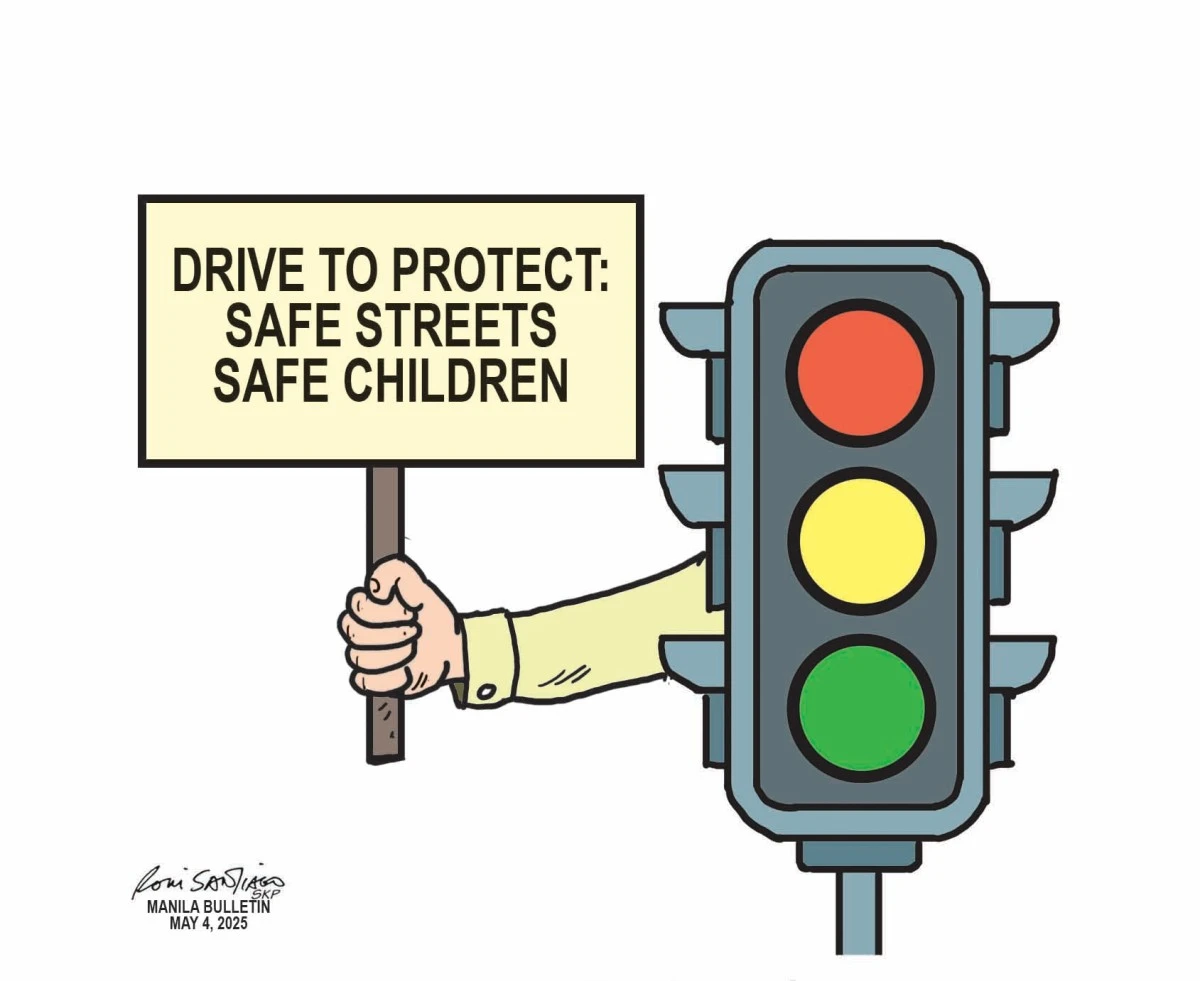
This year’s Road Safety Month campaign, led by the Department of Transportation (DOTr) and the Land Transportation Office (LTO) carries the theme “Drive to Protect: Safe Streets, Safe Children.” As part of the broader “Stop Road Crash” initiative, the LTO is rolling out educational campaigns, stricter enforcement, school outreach efforts, and partnerships with local government units and stakeholders.

These efforts align with the Philippine Road Safety Action Plan 2023–2028, launched two years ago by the DOTr in collaboration with the World Health Organization (WHO). The plan sets an ambitious but necessary goal: to reduce road traffic deaths by 35 percent by 2028. It’s a vital target, considering the WHO’s grim global statistic—1.3 million people die annually in road crashes, making it the leading cause of death among children and young adults.

But plans and themes alone won’t save lives.

To achieve real change, we must build a culture of safety rooted in the three E’s of road safety: Education, Engineering, and Enforcement.

Education means sustained public information campaigns, compulsory driver training, and road safety integration in schools.

Engineering requires safe road design, proper signage, lighting, and well-maintained infrastructure.

Enforcement involves strict implementation of traffic laws, holding violators accountable, and ensuring that unfit vehicles and drivers are taken off the roads.

These are not new ideas—they have been echoed for decades by safety advocates, engineers, and legislators. Yet implementation remains uneven, and accountability often elusive.Road safety is a shared responsibility. Motorists must drive with discipline. Pedestrians must be vigilant and law-abiding. Fleet owners must prioritize vehicle maintenance. And government agencies must fulfill their mandates with consistency and integrity.

Let this month be more than symbolic. Let it be a turning point. The loss of lives should not just be mourned—it should move us to action.

Related Tags

Editorial
ADVERTISEMENT
.most-popular .layout-ratio{ padding-bottom: 79.13%; } @media (min-width: 768px) and (max-width: 1024px) { .widget-title { font-size: 15px !important; } }

{{ articles_filter_1561_widget.title }}

.most-popular .layout-ratio{ padding-bottom: 79.13%; } @media (min-width: 768px) and (max-width: 1024px) { .widget-title { font-size: 15px !important; } }

{{ articles_filter_1562_widget.title }}

.most-popular .layout-ratio{ padding-bottom: 79.13%; } @media (min-width: 768px) and (max-width: 1024px) { .widget-title { font-size: 15px !important; } }

{{ articles_filter_1563_widget.title }}

{{ articles_filter_1564_widget.title }}

.mb-article-details { position: relative; } .mb-article-details .article-body-preview, .mb-article-details .article-body-summary{ font-size: 17px; line-height: 30px; font-family: "Libre Caslon Text", serif; color: #000; } .mb-article-details .article-body-preview iframe , .mb-article-details .article-body-summary iframe{ width: 100%; margin: auto; } .read-more-background { background: linear-gradient(180deg, color(display-p3 1.000 1.000 1.000 / 0) 13.75%, color(display-p3 1.000 1.000 1.000 / 0.8) 30.79%, color(display-p3 1.000 1.000 1.000) 72.5%); position: absolute; height: 200px; width: 100%; bottom: 0; display: flex; justify-content: center; align-items: center; padding: 0; } .read-more-background a{ color: #000; } .read-more-btn { padding: 17px 45px; font-family: Inter; font-weight: 700; font-size: 18px; line-height: 16px; text-align: center; vertical-align: middle; border: 1px solid black; background-color: white; } .hidden { display: none; }
function initializeAllSwipers() { // Get all hidden inputs with cms_article_id document.querySelectorAll('[id^="cms_article_id_"]').forEach(function (input) { const cmsArticleId = input.value; const articleSelector = '#article-' + cmsArticleId + ' .body_images'; const swiperElement = document.querySelector(articleSelector); if (swiperElement && !swiperElement.classList.contains('swiper-initialized')) { new Swiper(articleSelector, { loop: true, pagination: false, navigation: { nextEl: '#article-' + cmsArticleId + ' .swiper-button-next', prevEl: '#article-' + cmsArticleId + ' .swiper-button-prev', }, }); } }); } setTimeout(initializeAllSwipers, 3000); const intersectionObserver = new IntersectionObserver( (entries) => { entries.forEach((entry) => { if (entry.isIntersecting) { const newUrl = entry.target.getAttribute("data-url"); if (newUrl) { history.pushState(null, null, newUrl); let article = entry.target; // Extract metadata const author = article.querySelector('.author-section').textContent.replace('By', '').trim(); const section = article.querySelector('.section-info ').textContent.replace(' ', ' '); const title = article.querySelector('.article-title h1').textContent; // Parse URL for Chartbeat path format const parsedUrl = new URL(newUrl, window.location.origin); const cleanUrl = parsedUrl.host + parsedUrl.pathname; // Update Chartbeat configuration if (typeof window._sf_async_config !== 'undefined') { window._sf_async_config.path = cleanUrl; window._sf_async_config.sections = section; window._sf_async_config.authors = author; } // Track virtual page view with Chartbeat if (typeof pSUPERFLY !== 'undefined' && typeof pSUPERFLY.virtualPage === 'function') { try { pSUPERFLY.virtualPage({ path: cleanUrl, title: title, sections: section, authors: author }); } catch (error) { console.error('ping error', error); } } // Optional: Update document title if (title && title !== document.title) { document.title = title; } } } }); }, { threshold: 0.1 } ); function showArticleBody(button) { const article = button.closest("article"); const summary = article.querySelector(".article-body-summary"); const body = article.querySelector(".article-body-preview"); const readMoreSection = article.querySelector(".read-more-background"); // Hide summary and read-more section summary.style.display = "none"; readMoreSection.style.display = "none"; // Show the full article body body.classList.remove("hidden"); } document.addEventListener("DOMContentLoaded", () => { let loadCount = 0; // Track how many times articles are loaded const offset = [1, 2, 3, 4, 5, 6, 7, 8, 9, 10]; // Offset values const currentUrl = window.location.pathname.substring(1); let isLoading = false; // Prevent multiple calls if (!currentUrl) { console.log("Current URL is invalid."); return; } const sentinel = document.getElementById("load-more-sentinel"); if (!sentinel) { console.log("Sentinel element not found."); return; } function isSentinelVisible() { const rect = sentinel.getBoundingClientRect(); return ( rect.top < window.innerHeight && rect.bottom >= 0 ); } function onScroll() { if (isLoading) return; if (isSentinelVisible()) { if (loadCount >= offset.length) { console.log("Maximum load attempts reached."); window.removeEventListener("scroll", onScroll); return; } isLoading = true; const currentOffset = offset[loadCount]; window.loadMoreItems().then(() => { let article = document.querySelector('#widget_1690 > div:nth-last-of-type(2) article'); intersectionObserver.observe(article) loadCount++; }).catch(error => { console.error("Error loading more items:", error); }).finally(() => { isLoading = false; }); } } window.addEventListener("scroll", onScroll); });

Sign up by email to receive news.