

ADVERTISEMENT

title

Several countries sending firefighting planes to Israel to help tackle major wildfire

Published May 2, 2025 07:45 am  |  Updated May 2, 2025 04:49 pm

JERUSALEM (AP) — Several countries were sending firefighting aircraft to Israel on Thursday as crews battled for a second day to extinguish a wildfire that had shut down a major highway linking Tel Aviv and Jerusalem and sent drivers scrambling from their cars.
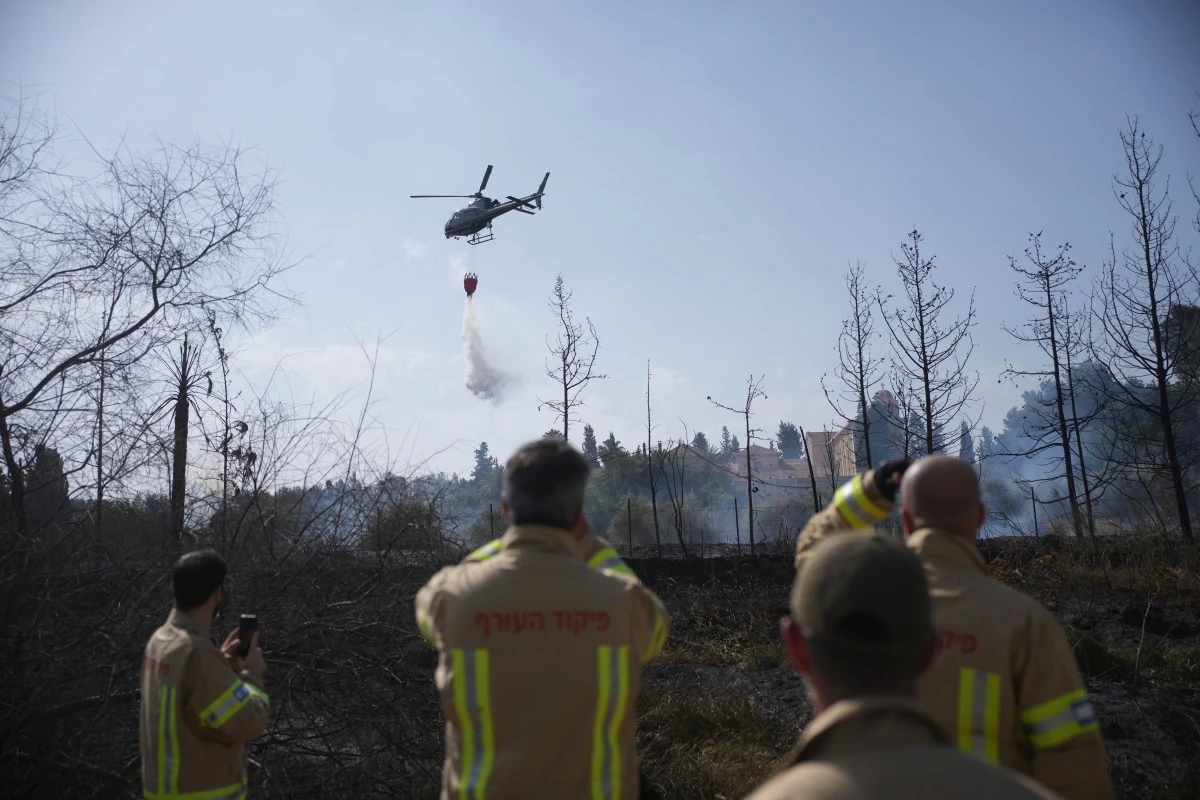
Israeli firefighters watch a helicopter drop water on a wildfire next to a monastery in Latrun, Israel, outside of Jerusalem, Thursday, May 1, 2025. (AP Photo/Ohad Zwigenberg)

The fire broke out around midday in the hills outside Jerusalem on Wednesday, fueled by hot, dry conditions and fanned by strong winds that quickly whipped up the flames burning through pine forests. Several communities were evacuated as a precaution as the smoke turned the skies over Jerusalem gray. Many of the country's independence day celebrations were cancelled as security forces were diverted towards the fire.

The fire has burned about 5,000 acres (20 square kilometers) and is the most significant Israel has seen in the past decade, according to Tal Volvovitch, a spokesperson for Israel’s fire and rescue authority. She said the fire has “miraculously” not damaged any homes.

Israel’s fire and rescue authority warned the public to stay away from parks or forests, and to be exceptionally careful while lighting barbecues. Thursday is Israel’s Independence Day, which is typically marked with large family cookouts in parks and forests.

At least 12 people were treated in hospitals on Wednesday, mainly due to smoke inhalation, while another 10 people were treated in the field, Magen David Adom Ambulance services said. Twenty firefighters have been lightly injured, Volvovitch said.

Italy, Croatia, Spain, France, Ukraine, and Romania were sending planes to help battle the flames, while several other countries, including North Macedonia and Cyprus, were also sending water-dropping aircrafts. Israeli authorities said 10 firefighting planes were operating on Thursday morning, with another eight aircraft to arrive during the course of the day.

Israel's fire and rescue authority lifted the evacuation order on approximately a dozen towns in the Jerusalem hills on Thursday.

Three Catholic religious communities who were forced to evacuate from their properties on Wednesday were also able to return on Thursday, said Farid Jubran, the spokesperson for the Latin Patriarchate. He said their agricultural lands, including vineyards and olive trees, suffered heavy damage, and some of the buildings were damaged. But there were no injuries, and historic churches were not affected.

The main highway linking Jerusalem to Tel Aviv reopened on Thursday, a day after the flames had encroached on the road, forcing drivers to abandon their cars and flee in terror. On Thursday morning, broad swathes of burned areas were visible from the highway, while pink anti-flame retardant dusted the top of burned trees and bushes. Smoke and the smell of fire hung heavy in the air.

Israel often sees fires in the summertime, but such strong fires this early in the year are unusual. Many of Israel's forests are planted rather than natural.

One of the organizations that manages Israel's forests said that the fires had perfect conditions to spread: a winter with little rain, hot and dry weather, and exceptionally strong winds that are shifting direction constantly.

Anat Gold, the director of Israel's central region for the Jewish National Fund, known by its Hebrew acronym KKL, which manages forests, plants trees, and promotes settlement in the Holy Land, said the fire was mostly contained. But she added that workers were struggling to plow buffer zones and fire breaks as the same spots ignited repeatedly in the quickly changing winds.

Gold said climate change, which has resulted in decreased rainfall in the region, contributed to the fire's ferocity. “Of course when there's a series of drought years, it's a fertile ground for fires,” she said.

In 2010, a massive forest fire burned for four days on northern Israel’s Mount Carmel, claiming 44 lives and destroying around 12,000 acres, much of it woodland.

Related Tags

WORLDNEWS
ADVERTISEMENT
.most-popular .layout-ratio{ padding-bottom: 79.13%; } @media (min-width: 768px) and (max-width: 1024px) { .widget-title { font-size: 15px !important; } }

{{ articles_filter_1561_widget.title }}

.most-popular .layout-ratio{ padding-bottom: 79.13%; } @media (min-width: 768px) and (max-width: 1024px) { .widget-title { font-size: 15px !important; } }

{{ articles_filter_1562_widget.title }}

.most-popular .layout-ratio{ padding-bottom: 79.13%; } @media (min-width: 768px) and (max-width: 1024px) { .widget-title { font-size: 15px !important; } }

{{ articles_filter_1563_widget.title }}

{{ articles_filter_1564_widget.title }}

.mb-article-details { position: relative; } .mb-article-details .article-body-preview, .mb-article-details .article-body-summary{ font-size: 17px; line-height: 30px; font-family: "Libre Caslon Text", serif; color: #000; } .mb-article-details .article-body-preview iframe , .mb-article-details .article-body-summary iframe{ width: 100%; margin: auto; } .read-more-background { background: linear-gradient(180deg, color(display-p3 1.000 1.000 1.000 / 0) 13.75%, color(display-p3 1.000 1.000 1.000 / 0.8) 30.79%, color(display-p3 1.000 1.000 1.000) 72.5%); position: absolute; height: 200px; width: 100%; bottom: 0; display: flex; justify-content: center; align-items: center; padding: 0; } .read-more-background a{ color: #000; } .read-more-btn { padding: 17px 45px; font-family: Inter; font-weight: 700; font-size: 18px; line-height: 16px; text-align: center; vertical-align: middle; border: 1px solid black; background-color: white; } .hidden { display: none; }
function initializeAllSwipers() { // Get all hidden inputs with cms_article_id document.querySelectorAll('[id^="cms_article_id_"]').forEach(function (input) { const cmsArticleId = input.value; const articleSelector = '#article-' + cmsArticleId + ' .body_images'; const swiperElement = document.querySelector(articleSelector); if (swiperElement && !swiperElement.classList.contains('swiper-initialized')) { new Swiper(articleSelector, { loop: true, pagination: false, navigation: { nextEl: '#article-' + cmsArticleId + ' .swiper-button-next', prevEl: '#article-' + cmsArticleId + ' .swiper-button-prev', }, }); } }); } setTimeout(initializeAllSwipers, 3000); const intersectionObserver = new IntersectionObserver( (entries) => { entries.forEach((entry) => { if (entry.isIntersecting) { const newUrl = entry.target.getAttribute("data-url"); if (newUrl) { history.pushState(null, null, newUrl); let article = entry.target; // Extract metadata const author = article.querySelector('.author-section').textContent.replace('By', '').trim(); const section = article.querySelector('.section-info ').textContent.replace(' ', ' '); const title = article.querySelector('.article-title h1').textContent; // Parse URL for Chartbeat path format const parsedUrl = new URL(newUrl, window.location.origin); const cleanUrl = parsedUrl.host + parsedUrl.pathname; // Update Chartbeat configuration if (typeof window._sf_async_config !== 'undefined') { window._sf_async_config.path = cleanUrl; window._sf_async_config.sections = section; window._sf_async_config.authors = author; } // Track virtual page view with Chartbeat if (typeof pSUPERFLY !== 'undefined' && typeof pSUPERFLY.virtualPage === 'function') { try { pSUPERFLY.virtualPage({ path: cleanUrl, title: title, sections: section, authors: author }); } catch (error) { console.error('ping error', error); } } // Optional: Update document title if (title && title !== document.title) { document.title = title; } } } }); }, { threshold: 0.1 } ); function showArticleBody(button) { const article = button.closest("article"); const summary = article.querySelector(".article-body-summary"); const body = article.querySelector(".article-body-preview"); const readMoreSection = article.querySelector(".read-more-background"); // Hide summary and read-more section summary.style.display = "none"; readMoreSection.style.display = "none"; // Show the full article body body.classList.remove("hidden"); } document.addEventListener("DOMContentLoaded", () => { let loadCount = 0; // Track how many times articles are loaded const offset = [1, 2, 3, 4, 5, 6, 7, 8, 9, 10]; // Offset values const currentUrl = window.location.pathname.substring(1); let isLoading = false; // Prevent multiple calls if (!currentUrl) { console.log("Current URL is invalid."); return; } const sentinel = document.getElementById("load-more-sentinel"); if (!sentinel) { console.log("Sentinel element not found."); return; } function isSentinelVisible() { const rect = sentinel.getBoundingClientRect(); return ( rect.top < window.innerHeight && rect.bottom >= 0 ); } function onScroll() { if (isLoading) return; if (isSentinelVisible()) { if (loadCount >= offset.length) { console.log("Maximum load attempts reached."); window.removeEventListener("scroll", onScroll); return; } isLoading = true; const currentOffset = offset[loadCount]; window.loadMoreItems().then(() => { let article = document.querySelector('#widget_1690 > div:nth-last-of-type(2) article'); intersectionObserver.observe(article) loadCount++; }).catch(error => { console.error("Error loading more items:", error); }).finally(() => { isLoading = false; }); } } window.addEventListener("scroll", onScroll); });

Sign up by email to receive news.