ADVERTISEMENT

New York City closes tunnel supplying half of its water for big $2B fix

Published Sep 30, 2024 05:21 am

New York City water.jpg

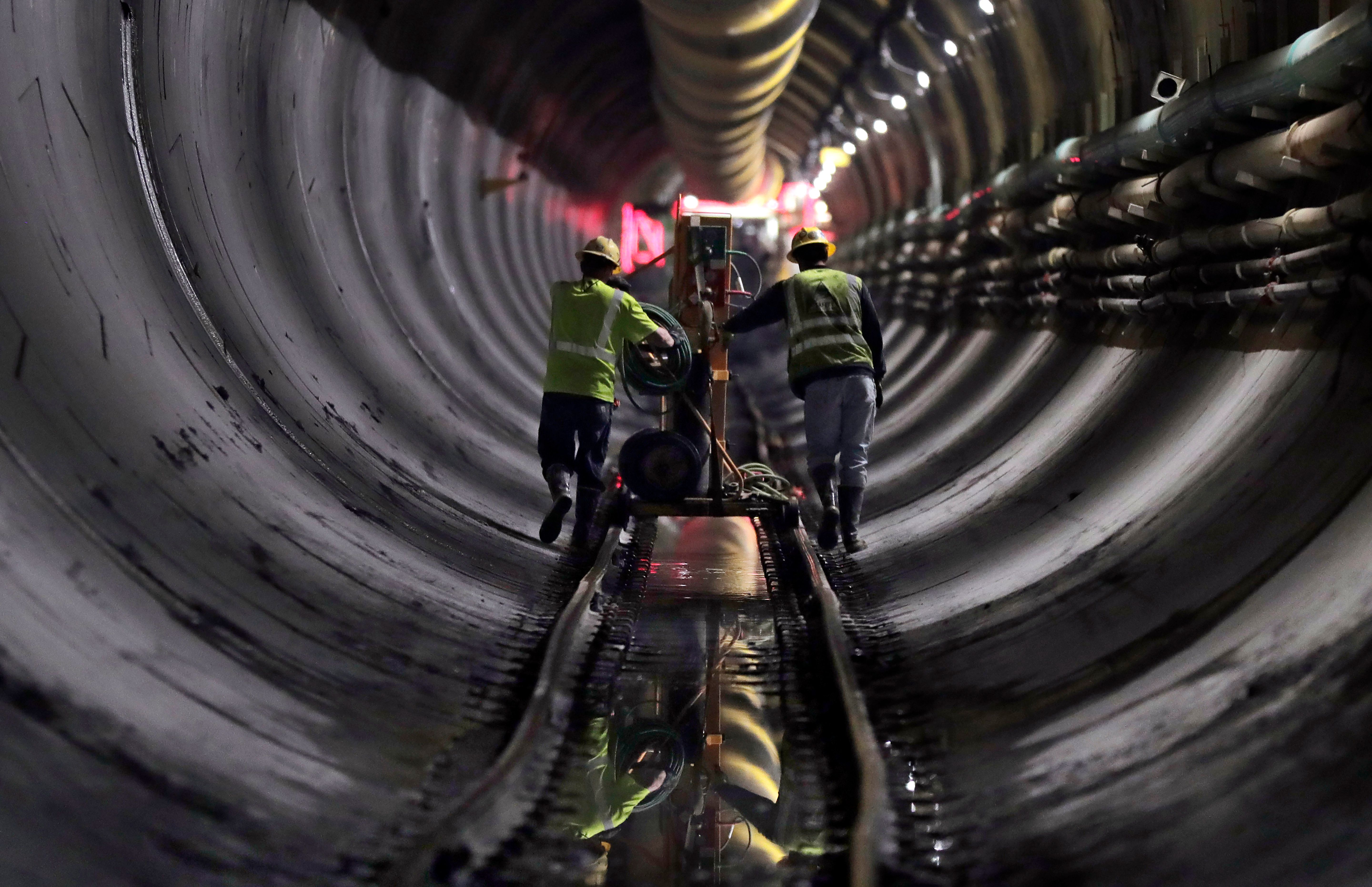
Tunnel workers push equipment up a rail track to a machine boring a 2.5-mile bypass tunnel for the Delaware Aqueduct in Marlboro, N.Y., May 16, 2018. (AP Photo/Julie Jacobson, File)


A stretch of aqueduct that supplies about half of New York City's water is being shut down through the winter as part of a $2 billion project to address massive leaks beneath the Hudson River.

The temporary shutdown of the Delaware Aqueduct in upstate New York has been in the works for years, with officials steadily boosting capacity from other parts of the city's sprawling 19-reservoir system. Water will flow uninterrupted from city faucets after the shutdown begins this week, officials said, though its famously crisp taste might be affected as other sources are tapped into more heavily.

“The water will alway be there,” Paul Rush, deputy commissioner for the city’s Department of Environmental Protection. “We’re going to be changing the mix of water that consumers get.”

The Delaware Aqueduct is the longest tunnel in the world and carries water for 85 miles (137 kilometers) from four reservoirs in the Catskill region to other reservoirs in the city's northern suburbs. Operating since 1944, it provides roughly half of the 1.1 billion gallons (4.2 billion liters) a day used by more than 8 million New York City residents. The system also serves some upstate municipalities.

But the aqueduct leaks up to 35 million gallons (132 million liters) of water a day, nearly all of it from a section far below the Hudson River.

The profuse leakage has been known about for decades, but city officials faced a quandary: they could not take the critical aqueduct offline for years to repair the tunnel. So instead, they began constructing a parallel 2.5-mile (4-kilometer) bypass tunnel under the river about a decade ago.

The new tunnel will be connected during the shut down, which is expected to last up to eight months. More than 40 miles (64 kilometers) of the aqueduct running down from the four upstate reservoirs will be out of service during that time, though a section closer to the city will remain in use.

Other leaks farther north in the aqueduct also will be repaired in the coming months.

Rush said the work was timed to avoid summer months, when demand is higher. The city also has spent years making improvements to other parts of the system, some of which are more than 100 years old.

“There’s a lot of work done thinking about where the alternate supply would come from,” Rush said.

Capacity has been increased for the complementary Catskill Aqueduct and more drinking water will come from the dozen reservoirs and three lakes of the Croton Watershed in the city's northern suburbs.

The heavier reliance on those suburban reservoirs could affect the taste of water due to a higher presence of minerals and algae in the Croton system, according to city officials.

“While some residents may notice a temporary, subtle difference in taste or aroma during the repairs, changes in taste don’t mean something is wrong with the water," DEP Commissioner Rohit Aggarwala said in a prepared statement. "Just like different brands of bottled water taste a bit different, so do our different reservoirs.”

Related Tags

New York City WORLDNEWS
ADVERTISEMENT
.most-popular .layout-ratio{ padding-bottom: 79.13%; } @media (min-width: 768px) and (max-width: 1024px) { .widget-title { font-size: 15px !important; } }

{{ articles_filter_1561_widget.title }}

.most-popular .layout-ratio{ padding-bottom: 79.13%; } @media (min-width: 768px) and (max-width: 1024px) { .widget-title { font-size: 15px !important; } }

{{ articles_filter_1562_widget.title }}

.most-popular .layout-ratio{ padding-bottom: 79.13%; } @media (min-width: 768px) and (max-width: 1024px) { .widget-title { font-size: 15px !important; } }

{{ articles_filter_1563_widget.title }}

{{ articles_filter_1564_widget.title }}

.mb-article-details { position: relative; } .mb-article-details .article-body-preview, .mb-article-details .article-body-summary{ font-size: 17px; line-height: 30px; font-family: "Libre Caslon Text", serif; color: #000; } .mb-article-details .article-body-preview iframe , .mb-article-details .article-body-summary iframe{ width: 100%; margin: auto; } .read-more-background { background: linear-gradient(180deg, color(display-p3 1.000 1.000 1.000 / 0) 13.75%, color(display-p3 1.000 1.000 1.000 / 0.8) 30.79%, color(display-p3 1.000 1.000 1.000) 72.5%); position: absolute; height: 200px; width: 100%; bottom: 0; display: flex; justify-content: center; align-items: center; padding: 0; } .read-more-background a{ color: #000; } .read-more-btn { padding: 17px 45px; font-family: Inter; font-weight: 700; font-size: 18px; line-height: 16px; text-align: center; vertical-align: middle; border: 1px solid black; background-color: white; } .hidden { display: none; }
function initializeAllSwipers() { // Get all hidden inputs with cms_article_id document.querySelectorAll('[id^="cms_article_id_"]').forEach(function (input) { const cmsArticleId = input.value; const articleSelector = '#article-' + cmsArticleId + ' .body_images'; const swiperElement = document.querySelector(articleSelector); if (swiperElement && !swiperElement.classList.contains('swiper-initialized')) { new Swiper(articleSelector, { loop: true, pagination: false, navigation: { nextEl: '#article-' + cmsArticleId + ' .swiper-button-next', prevEl: '#article-' + cmsArticleId + ' .swiper-button-prev', }, }); } }); } setTimeout(initializeAllSwipers, 3000); const intersectionObserver = new IntersectionObserver( (entries) => { entries.forEach((entry) => { if (entry.isIntersecting) { const newUrl = entry.target.getAttribute("data-url"); if (newUrl) { history.pushState(null, null, newUrl); let article = entry.target; // Extract metadata const author = article.querySelector('.author-section').textContent.replace('By', '').trim(); const section = article.querySelector('.section-info ').textContent.replace(' ', ' '); const title = article.querySelector('.article-title h1').textContent; // Parse URL for Chartbeat path format const parsedUrl = new URL(newUrl, window.location.origin); const cleanUrl = parsedUrl.host + parsedUrl.pathname; // Update Chartbeat configuration if (typeof window._sf_async_config !== 'undefined') { window._sf_async_config.path = cleanUrl; window._sf_async_config.sections = section; window._sf_async_config.authors = author; } // Track virtual page view with Chartbeat if (typeof pSUPERFLY !== 'undefined' && typeof pSUPERFLY.virtualPage === 'function') { try { pSUPERFLY.virtualPage({ path: cleanUrl, title: title, sections: section, authors: author }); } catch (error) { console.error('ping error', error); } } // Optional: Update document title if (title && title !== document.title) { document.title = title; } } } }); }, { threshold: 0.1 } ); function showArticleBody(button) { const article = button.closest("article"); const summary = article.querySelector(".article-body-summary"); const body = article.querySelector(".article-body-preview"); const readMoreSection = article.querySelector(".read-more-background"); // Hide summary and read-more section summary.style.display = "none"; readMoreSection.style.display = "none"; // Show the full article body body.classList.remove("hidden"); } document.addEventListener("DOMContentLoaded", () => { let loadCount = 0; // Track how many times articles are loaded const offset = [1, 2, 3, 4, 5, 6, 7, 8, 9, 10]; // Offset values const currentUrl = window.location.pathname.substring(1); let isLoading = false; // Prevent multiple calls if (!currentUrl) { console.log("Current URL is invalid."); return; } const sentinel = document.getElementById("load-more-sentinel"); if (!sentinel) { console.log("Sentinel element not found."); return; } function isSentinelVisible() { const rect = sentinel.getBoundingClientRect(); return ( rect.top < window.innerHeight && rect.bottom >= 0 ); } function onScroll() { if (isLoading) return; if (isSentinelVisible()) { if (loadCount >= offset.length) { console.log("Maximum load attempts reached."); window.removeEventListener("scroll", onScroll); return; } isLoading = true; const currentOffset = offset[loadCount]; window.loadMoreItems().then(() => { let article = document.querySelector('#widget_1690 > div:nth-last-of-type(2) article'); intersectionObserver.observe(article) loadCount++; }).catch(error => { console.error("Error loading more items:", error); }).finally(() => { isLoading = false; }); } } window.addEventListener("scroll", onScroll); });

Sign up by email to receive news.