ADVERTISEMENT

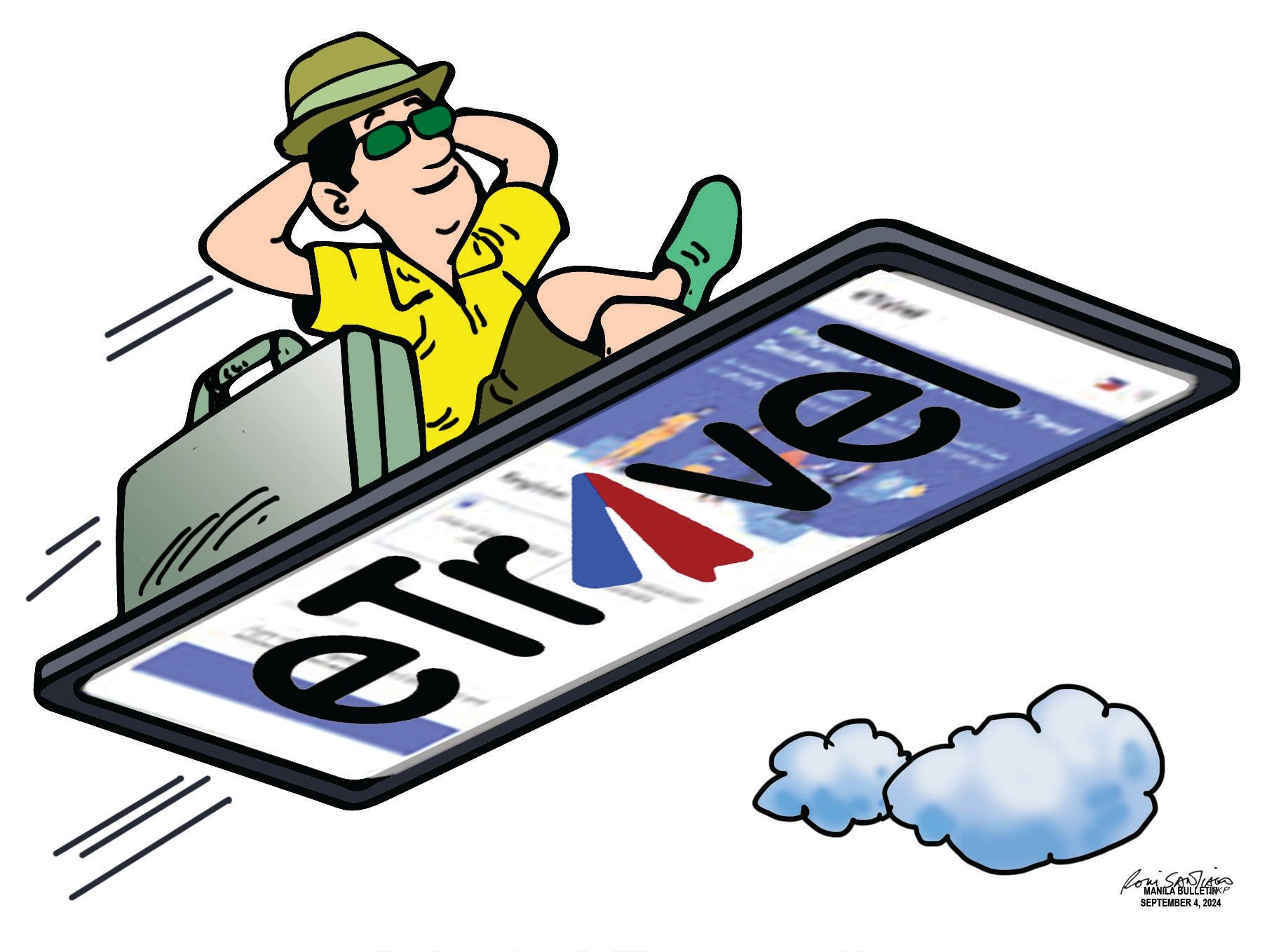
Better travel experience through Philippine eTravel System

Published Sep 3, 2024 04:03 pm

E CARTOON SEP 4, 2024 (1).jpg


The Philippines is heading to a technological revolution in travel management after President Marcos institutionalized the country’s Electronic Travel Information (eTravel) System through Administrative Order (AO) No. 24, signed by Executive Secretary Lucas Bersamin on Aug. 27. 


The eTravel System is expected to enhance travel experience as it aims to provide more convenience and accessibility to passengers and encourage more travelers to visit the country. This initiative promises to bolster border control, enhance health surveillance, and provide invaluable insights into tourism statistics.


One of the primary advantages of the eTravel System is its ability to streamline and secure border control processes. By digitizing travel information, authorities can quickly and accurately verify the identities of travelers, reducing the risk of illegal entry and enhancing national security. For instance, the United States’ Electronic System for Travel Authorization (ESTA) has significantly improved the efficiency and security of its visa waiver program. Similarly, the European Union’s Schengen Information System (SIS) facilitates the exchange of information on individuals and goods crossing borders, thereby strengthening security across member states.


In the wake of global health crises, such as the Covid-19 pandemic, the importance of robust health surveillance systems is crucial. An institutionalized eTravel System can play a crucial role in monitoring and controlling the spread of infectious diseases. By collecting health-related data from travelers, authorities can quickly identify and respond to potential health threats. Countries like South Korea have successfully implemented electronic travel systems that include health declarations, which have been instrumental in managing public health during the pandemic.


Tourism is a vital sector in the country as it contributes significantly to the economy. The eTravel System can provide detailed and accurate data on tourist arrivals, preferences, and behaviors. This information is invaluable for policymakers and businesses in making informed decisions to enhance the tourism experience and promote sustainable growth. Japan’s electronic travel system, for example, has enabled the collection of comprehensive tourism data, helping to tailor marketing strategies and improve tourist services.


Beyond border control, the eTravel System can enhance overall security by integrating with other national databases and surveillance systems. This integration allows for real-time monitoring and analysis of travel patterns, helping to identify and mitigate potential security threats. The success of Singapore’s Immigration and Checkpoints Authority (ICA) in using electronic travel information to enhance security and efficiency at its borders serves as a compelling example.


The move to institutionalize the country’s eTravel System is a step in the right direction. It promises enhanced border control, health surveillance, and tourism statistics analysis. By learning from the successes of electronic travel systems in countries like the United States, the European Union, South Korea, Japan, and Singapore, the Philippines can implement a robust travel system that not only improves security but also supports the growth and sustainability of its tourism industry. 


With the institutionalization of the eTravel System, the future of travel management in the country looks promising, with technology playing a pivotal role in ensuring the safety and well-being of its citizens and visitors alike. The government must ensure that the system complies with national and international data protection regulations. Protecting sensitive traveler information from cyber threats and ensuring data privacy is paramount. The success of, and the trust in the system lies on the assurance that every user’s data will be protected.


Let visitors and locals alike enjoy a better travel experience through the eTravel System. 
 

Related Tags

e-Travel EDITORIAL
ADVERTISEMENT
.most-popular .layout-ratio{ padding-bottom: 79.13%; } @media (min-width: 768px) and (max-width: 1024px) { .widget-title { font-size: 15px !important; } }

{{ articles_filter_1561_widget.title }}

.most-popular .layout-ratio{ padding-bottom: 79.13%; } @media (min-width: 768px) and (max-width: 1024px) { .widget-title { font-size: 15px !important; } }

{{ articles_filter_1562_widget.title }}

.most-popular .layout-ratio{ padding-bottom: 79.13%; } @media (min-width: 768px) and (max-width: 1024px) { .widget-title { font-size: 15px !important; } }

{{ articles_filter_1563_widget.title }}

{{ articles_filter_1564_widget.title }}

.mb-article-details { position: relative; } .mb-article-details .article-body-preview, .mb-article-details .article-body-summary{ font-size: 17px; line-height: 30px; font-family: "Libre Caslon Text", serif; color: #000; } .mb-article-details .article-body-preview iframe , .mb-article-details .article-body-summary iframe{ width: 100%; margin: auto; } .read-more-background { background: linear-gradient(180deg, color(display-p3 1.000 1.000 1.000 / 0) 13.75%, color(display-p3 1.000 1.000 1.000 / 0.8) 30.79%, color(display-p3 1.000 1.000 1.000) 72.5%); position: absolute; height: 200px; width: 100%; bottom: 0; display: flex; justify-content: center; align-items: center; padding: 0; } .read-more-background a{ color: #000; } .read-more-btn { padding: 17px 45px; font-family: Inter; font-weight: 700; font-size: 18px; line-height: 16px; text-align: center; vertical-align: middle; border: 1px solid black; background-color: white; } .hidden { display: none; }
function initializeAllSwipers() { // Get all hidden inputs with cms_article_id document.querySelectorAll('[id^="cms_article_id_"]').forEach(function (input) { const cmsArticleId = input.value; const articleSelector = '#article-' + cmsArticleId + ' .body_images'; const swiperElement = document.querySelector(articleSelector); if (swiperElement && !swiperElement.classList.contains('swiper-initialized')) { new Swiper(articleSelector, { loop: true, pagination: false, navigation: { nextEl: '#article-' + cmsArticleId + ' .swiper-button-next', prevEl: '#article-' + cmsArticleId + ' .swiper-button-prev', }, }); } }); } setTimeout(initializeAllSwipers, 3000); const intersectionObserver = new IntersectionObserver( (entries) => { entries.forEach((entry) => { if (entry.isIntersecting) { const newUrl = entry.target.getAttribute("data-url"); if (newUrl) { history.pushState(null, null, newUrl); let article = entry.target; // Extract metadata const author = article.querySelector('.author-section').textContent.replace('By', '').trim(); const section = article.querySelector('.section-info ').textContent.replace(' ', ' '); const title = article.querySelector('.article-title h1').textContent; // Parse URL for Chartbeat path format const parsedUrl = new URL(newUrl, window.location.origin); const cleanUrl = parsedUrl.host + parsedUrl.pathname; // Update Chartbeat configuration if (typeof window._sf_async_config !== 'undefined') { window._sf_async_config.path = cleanUrl; window._sf_async_config.sections = section; window._sf_async_config.authors = author; } // Track virtual page view with Chartbeat if (typeof pSUPERFLY !== 'undefined' && typeof pSUPERFLY.virtualPage === 'function') { try { pSUPERFLY.virtualPage({ path: cleanUrl, title: title, sections: section, authors: author }); } catch (error) { console.error('ping error', error); } } // Optional: Update document title if (title && title !== document.title) { document.title = title; } } } }); }, { threshold: 0.1 } ); function showArticleBody(button) { const article = button.closest("article"); const summary = article.querySelector(".article-body-summary"); const body = article.querySelector(".article-body-preview"); const readMoreSection = article.querySelector(".read-more-background"); // Hide summary and read-more section summary.style.display = "none"; readMoreSection.style.display = "none"; // Show the full article body body.classList.remove("hidden"); } document.addEventListener("DOMContentLoaded", () => { let loadCount = 0; // Track how many times articles are loaded const offset = [1, 2, 3, 4, 5, 6, 7, 8, 9, 10]; // Offset values const currentUrl = window.location.pathname.substring(1); let isLoading = false; // Prevent multiple calls if (!currentUrl) { console.log("Current URL is invalid."); return; } const sentinel = document.getElementById("load-more-sentinel"); if (!sentinel) { console.log("Sentinel element not found."); return; } function isSentinelVisible() { const rect = sentinel.getBoundingClientRect(); return ( rect.top < window.innerHeight && rect.bottom >= 0 ); } function onScroll() { if (isLoading) return; if (isSentinelVisible()) { if (loadCount >= offset.length) { console.log("Maximum load attempts reached."); window.removeEventListener("scroll", onScroll); return; } isLoading = true; const currentOffset = offset[loadCount]; window.loadMoreItems().then(() => { let article = document.querySelector('#widget_1690 > div:nth-last-of-type(2) article'); intersectionObserver.observe(article) loadCount++; }).catch(error => { console.error("Error loading more items:", error); }).finally(() => { isLoading = false; }); } } window.addEventListener("scroll", onScroll); });

Sign up by email to receive news.