ADVERTISEMENT

Kanlaon Volcano remains at Alert Level 2 amid fluctuating activity

Published Sep 20, 2024 06:40 am
IMG_4299.jpeg
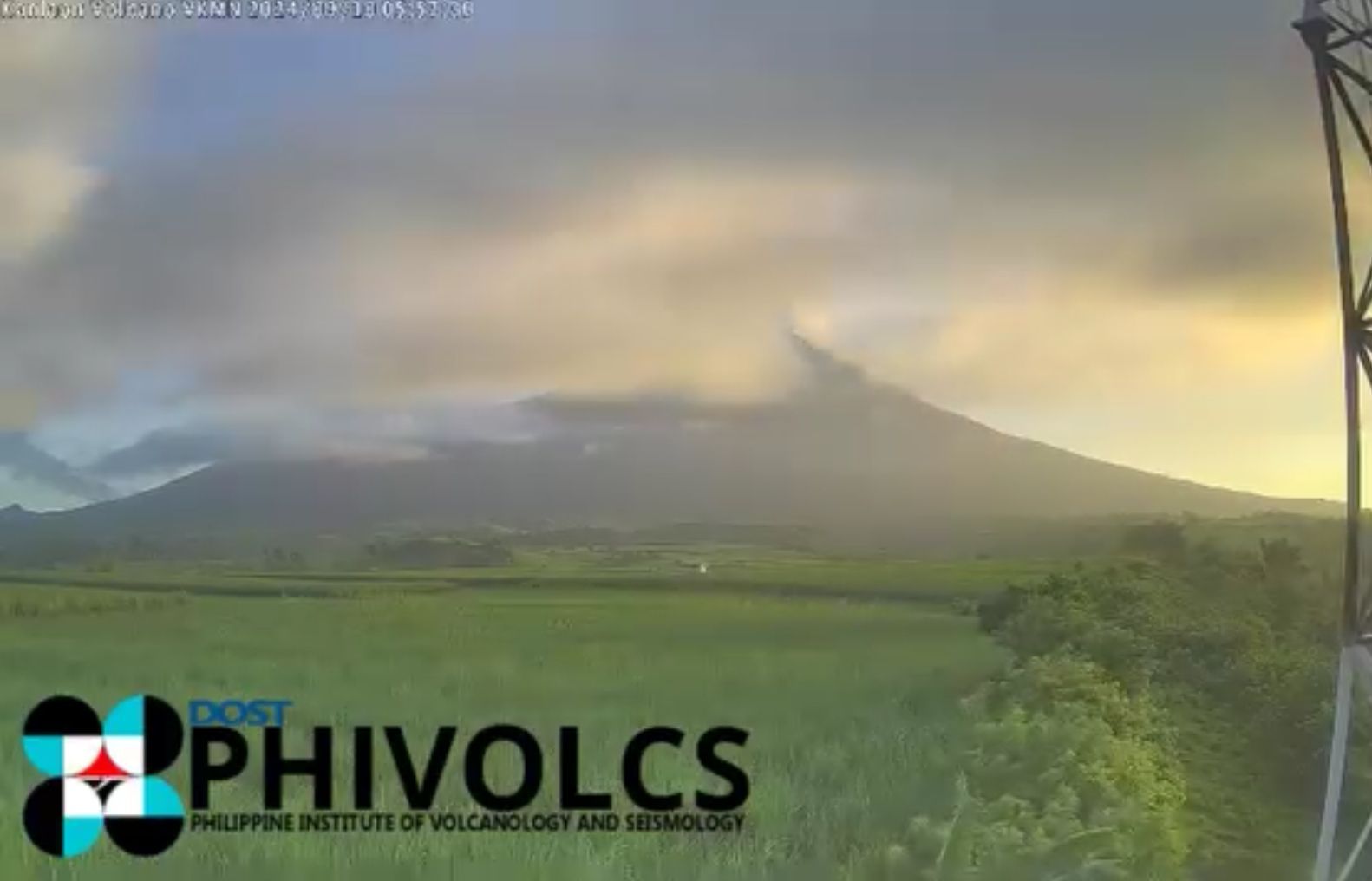
Photo of Kanlaon Volcano taken on Sept. 11, 2024 (Courtesy of the Philippine Institute of Volcanology and Seismology)

Philippine Institute of Volcanology and Seismology (Phivolcs) Director Teresito Bacolcol said on Friday, Sept. 20 that Kanlaon Volcano continues to be under Alert Level 2 (increasing unrest), as volcanic monitoring parameters show “fluctuating” seismic and gas emission activities.

In a televised public briefing, Bacolcol said the number of recorded earthquakes dropped significantly from 337 on Sept. 11 to five early this week.

However, in the past 24 hours, the count has increased again to 45.

Bacolcol added that Phivolcs had detected similar fluctuations in Kanlaon Volcano’s sulfur dioxide (SO2) emissions, which reached a record high of 11,556 tons on Sept. 11.

As of Friday, SO2 flux has decreased to 8,932 tons but remains elevated.

Bacolcol warned that Kanlaon’s volcanic activities could still escalate, thus Alert Level 2 remains in effect.

He reminded the public to avoid entering the permanent danger zone, as a phreatic or steam-driven eruption could occur at “any time.”

Kanlaon had an explosive eruption on June 3, accompanied by voluminous plumes, incandescent flow of molten rock, and pyroclastic currents characterized by the rapid flow of volcanic gases and rocks down the volcano’s slopes. 

Since then, no significant eruptions have occurred, but steaming and ongoing volcanic earthquakes continue to be monitored, Bacolcol said.

Residents are urged to remain vigilant and avoid the four-kilometer-radius permanent danger zone to reduce the risk of volcanic hazards, such as pyroclastic density currents, ballistic projectiles, and rockfalls.

In case of ash fall affecting communities downwind of Kanlaon Volcano, Phivolcs advised individuals to protect themselves by covering their noses and mouths with a damp cloth or dust mask. 

Civil aviation authorities are asked to inform pilots to avoid the volcano’s summit to prevent hazards from volcanic ash and fragments.

Likewise, communities near river systems on Kanlaon Volcano’s southern and western slopes, particularly those previously affected by lahars and muddy streamflows, are advised to take precautions if heavy rain is expected or begins.

Related Tags

sulfur dioxide emission volcanic earthquakes Kanlaon Volcano PHIVOLCS
ADVERTISEMENT
.most-popular .layout-ratio{ padding-bottom: 79.13%; } @media (min-width: 768px) and (max-width: 1024px) { .widget-title { font-size: 15px !important; } }

{{ articles_filter_1561_widget.title }}

.most-popular .layout-ratio{ padding-bottom: 79.13%; } @media (min-width: 768px) and (max-width: 1024px) { .widget-title { font-size: 15px !important; } }

{{ articles_filter_1562_widget.title }}

.most-popular .layout-ratio{ padding-bottom: 79.13%; } @media (min-width: 768px) and (max-width: 1024px) { .widget-title { font-size: 15px !important; } }

{{ articles_filter_1563_widget.title }}

{{ articles_filter_1564_widget.title }}

.mb-article-details { position: relative; } .mb-article-details .article-body-preview, .mb-article-details .article-body-summary{ font-size: 17px; line-height: 30px; font-family: "Libre Caslon Text", serif; color: #000; } .mb-article-details .article-body-preview iframe , .mb-article-details .article-body-summary iframe{ width: 100%; margin: auto; } .read-more-background { background: linear-gradient(180deg, color(display-p3 1.000 1.000 1.000 / 0) 13.75%, color(display-p3 1.000 1.000 1.000 / 0.8) 30.79%, color(display-p3 1.000 1.000 1.000) 72.5%); position: absolute; height: 200px; width: 100%; bottom: 0; display: flex; justify-content: center; align-items: center; padding: 0; } .read-more-background a{ color: #000; } .read-more-btn { padding: 17px 45px; font-family: Inter; font-weight: 700; font-size: 18px; line-height: 16px; text-align: center; vertical-align: middle; border: 1px solid black; background-color: white; } .hidden { display: none; }
function initializeAllSwipers() { // Get all hidden inputs with cms_article_id document.querySelectorAll('[id^="cms_article_id_"]').forEach(function (input) { const cmsArticleId = input.value; const articleSelector = '#article-' + cmsArticleId + ' .body_images'; const swiperElement = document.querySelector(articleSelector); if (swiperElement && !swiperElement.classList.contains('swiper-initialized')) { new Swiper(articleSelector, { loop: true, pagination: false, navigation: { nextEl: '#article-' + cmsArticleId + ' .swiper-button-next', prevEl: '#article-' + cmsArticleId + ' .swiper-button-prev', }, }); } }); } setTimeout(initializeAllSwipers, 3000); const intersectionObserver = new IntersectionObserver( (entries) => { entries.forEach((entry) => { if (entry.isIntersecting) { const newUrl = entry.target.getAttribute("data-url"); if (newUrl) { history.pushState(null, null, newUrl); let article = entry.target; // Extract metadata const author = article.querySelector('.author-section').textContent.replace('By', '').trim(); const section = article.querySelector('.section-info ').textContent.replace(' ', ' '); const title = article.querySelector('.article-title h1').textContent; // Parse URL for Chartbeat path format const parsedUrl = new URL(newUrl, window.location.origin); const cleanUrl = parsedUrl.host + parsedUrl.pathname; // Update Chartbeat configuration if (typeof window._sf_async_config !== 'undefined') { window._sf_async_config.path = cleanUrl; window._sf_async_config.sections = section; window._sf_async_config.authors = author; } // Track virtual page view with Chartbeat if (typeof pSUPERFLY !== 'undefined' && typeof pSUPERFLY.virtualPage === 'function') { try { pSUPERFLY.virtualPage({ path: cleanUrl, title: title, sections: section, authors: author }); } catch (error) { console.error('ping error', error); } } // Optional: Update document title if (title && title !== document.title) { document.title = title; } } } }); }, { threshold: 0.1 } ); function showArticleBody(button) { const article = button.closest("article"); const summary = article.querySelector(".article-body-summary"); const body = article.querySelector(".article-body-preview"); const readMoreSection = article.querySelector(".read-more-background"); // Hide summary and read-more section summary.style.display = "none"; readMoreSection.style.display = "none"; // Show the full article body body.classList.remove("hidden"); } document.addEventListener("DOMContentLoaded", () => { let loadCount = 0; // Track how many times articles are loaded const offset = [1, 2, 3, 4, 5, 6, 7, 8, 9, 10]; // Offset values const currentUrl = window.location.pathname.substring(1); let isLoading = false; // Prevent multiple calls if (!currentUrl) { console.log("Current URL is invalid."); return; } const sentinel = document.getElementById("load-more-sentinel"); if (!sentinel) { console.log("Sentinel element not found."); return; } function isSentinelVisible() { const rect = sentinel.getBoundingClientRect(); return ( rect.top < window.innerHeight && rect.bottom >= 0 ); } function onScroll() { if (isLoading) return; if (isSentinelVisible()) { if (loadCount >= offset.length) { console.log("Maximum load attempts reached."); window.removeEventListener("scroll", onScroll); return; } isLoading = true; const currentOffset = offset[loadCount]; window.loadMoreItems().then(() => { let article = document.querySelector('#widget_1690 > div:nth-last-of-type(2) article'); intersectionObserver.observe(article) loadCount++; }).catch(error => { console.error("Error loading more items:", error); }).finally(() => { isLoading = false; }); } } window.addEventListener("scroll", onScroll); });

Sign up by email to receive news.