

ADVERTISEMENT

Huge python grabs Thai woman in her kitchen, squeezes her two hours before she can be freed

Published Sep 20, 2024 04:09 am

BANGKOK (AP) — A 64-year-old woman was preparing to do her evening dishes at her home outside Bangkok when she felt a sharp pain in her thigh and looked down to see a huge python taking hold of her.
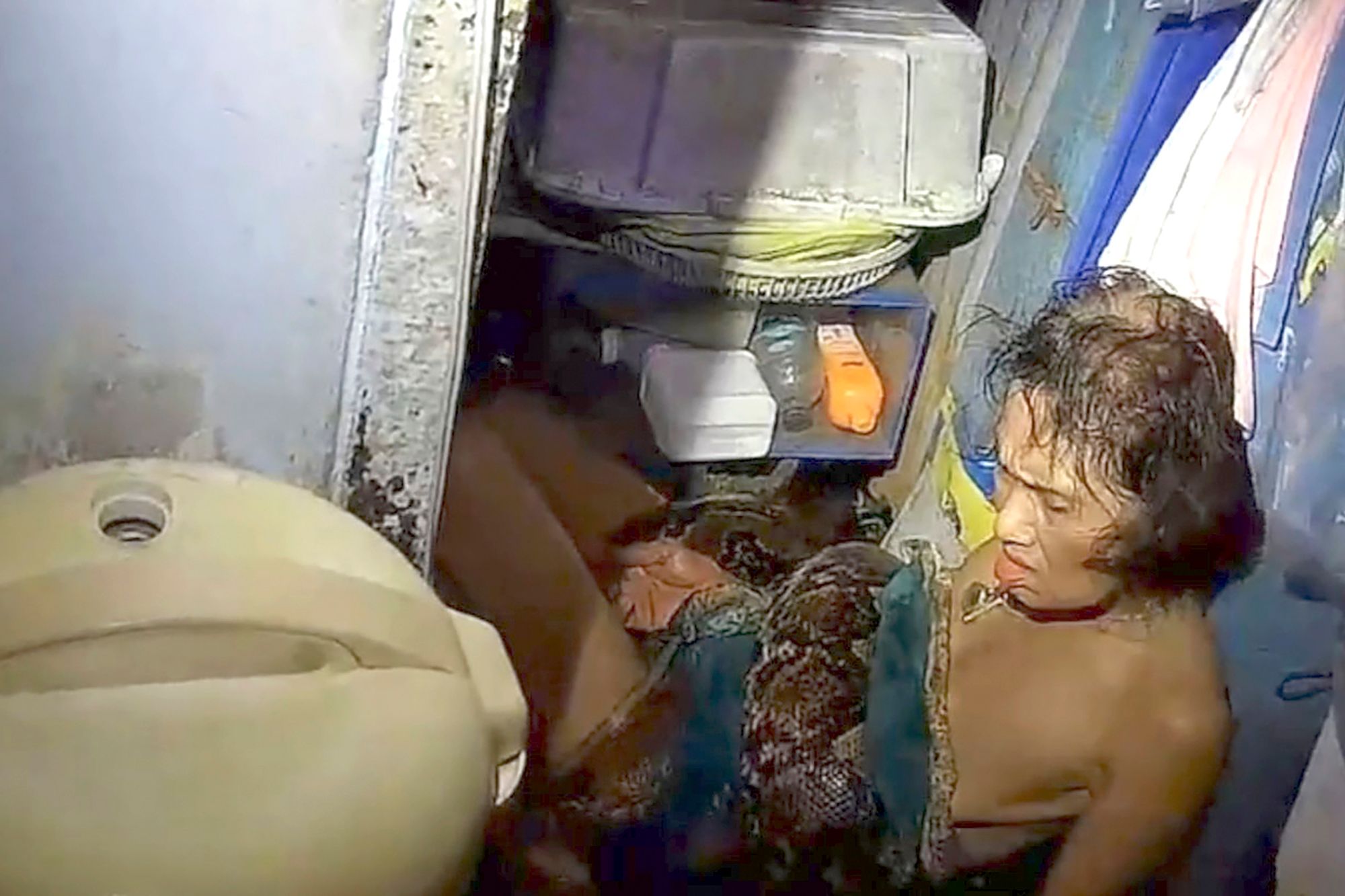
Python.jpg

In this photo provided by Kunyakit Thanawtchaikun, a python coils itself around Arom Arunro's torso, squeezing her down to the floor of her kitchen in Samut Prakan province, Thailand, Tuesday, Sept. 17, 2024. (AP Photo/Kunyakit Thanawtchaikun)


“I was about to scoop some water and when I sat down it bit me immediately,” Arom Arunroj told Thailand's Thairath newspaper. “When I looked I saw the snake wrapping around me.”

The four-to-five-meter-long (13-to-16-foot-long) python coiled itself around her torso, squeezing her down to the floor of her kitchen.

“I grabbed it by the head, but it wouldn't release me,” she said. “It only tightened.”

Pythons are non-venomous constrictors, which kill their prey by gradually squeezing the breath out of it.

Propped up against her kitchen door, she cried for help but it wasn't until a neighbor happened to be walking by about an hour and a half later and heard her screams that authorities were called.

Responding police officer Anusorn Wongmalee told The Associated Press on Thursday that when he arrived the woman was still leaning against her door, looking exhausted and pale, with the snake coiled around her.

Police and animal control officers used a crowbar to hit the snake on the head until it released its grip and slithered away before it could be captured.

In all, Arom spent about two hours on Tuesday night in the clutches of the python before being freed.

She was treated for several bites but appeared to be otherwise unharmed in videos of her talking to Thai media shortly after the incident.

Encounters with snakes are not uncommon in Thailand, and last year 26 people were killed by venomous snake bites, according to government statistics. A total of 12,000 people were treated for venomous bites by snakes and other animals 2023.

The reticulated python is the largest snake found in Thailand and usually ranges in size from 1.5 meters to 6.5 meters (5 to 21 feet), weighing up to about 75 kilograms (165 pounds). They have been found as big as 10 meters (33 feet) long and 130 kilograms (287 pounds).

Smaller pythons feed on small mammals such as rats, but larger snakes switch to prey such as pigs, deer and even domestic dogs and cats. Attacks on humans are not common, though do happen occasionally.

Related Tags

python WORLDNEWS
ADVERTISEMENT
.most-popular .layout-ratio{ padding-bottom: 79.13%; } @media (min-width: 768px) and (max-width: 1024px) { .widget-title { font-size: 15px !important; } }

{{ articles_filter_1561_widget.title }}

.most-popular .layout-ratio{ padding-bottom: 79.13%; } @media (min-width: 768px) and (max-width: 1024px) { .widget-title { font-size: 15px !important; } }

{{ articles_filter_1562_widget.title }}

.most-popular .layout-ratio{ padding-bottom: 79.13%; } @media (min-width: 768px) and (max-width: 1024px) { .widget-title { font-size: 15px !important; } }

{{ articles_filter_1563_widget.title }}

{{ articles_filter_1564_widget.title }}

.mb-article-details { position: relative; } .mb-article-details .article-body-preview, .mb-article-details .article-body-summary{ font-size: 17px; line-height: 30px; font-family: "Libre Caslon Text", serif; color: #000; } .mb-article-details .article-body-preview iframe , .mb-article-details .article-body-summary iframe{ width: 100%; margin: auto; } .read-more-background { background: linear-gradient(180deg, color(display-p3 1.000 1.000 1.000 / 0) 13.75%, color(display-p3 1.000 1.000 1.000 / 0.8) 30.79%, color(display-p3 1.000 1.000 1.000) 72.5%); position: absolute; height: 200px; width: 100%; bottom: 0; display: flex; justify-content: center; align-items: center; padding: 0; } .read-more-background a{ color: #000; } .read-more-btn { padding: 17px 45px; font-family: Inter; font-weight: 700; font-size: 18px; line-height: 16px; text-align: center; vertical-align: middle; border: 1px solid black; background-color: white; } .hidden { display: none; }
function initializeAllSwipers() { // Get all hidden inputs with cms_article_id document.querySelectorAll('[id^="cms_article_id_"]').forEach(function (input) { const cmsArticleId = input.value; const articleSelector = '#article-' + cmsArticleId + ' .body_images'; const swiperElement = document.querySelector(articleSelector); if (swiperElement && !swiperElement.classList.contains('swiper-initialized')) { new Swiper(articleSelector, { loop: true, pagination: false, navigation: { nextEl: '#article-' + cmsArticleId + ' .swiper-button-next', prevEl: '#article-' + cmsArticleId + ' .swiper-button-prev', }, }); } }); } setTimeout(initializeAllSwipers, 3000); const intersectionObserver = new IntersectionObserver( (entries) => { entries.forEach((entry) => { if (entry.isIntersecting) { const newUrl = entry.target.getAttribute("data-url"); if (newUrl) { history.pushState(null, null, newUrl); let article = entry.target; // Extract metadata const author = article.querySelector('.author-section').textContent.replace('By', '').trim(); const section = article.querySelector('.section-info ').textContent.replace(' ', ' '); const title = article.querySelector('.article-title h1').textContent; // Parse URL for Chartbeat path format const parsedUrl = new URL(newUrl, window.location.origin); const cleanUrl = parsedUrl.host + parsedUrl.pathname; // Update Chartbeat configuration if (typeof window._sf_async_config !== 'undefined') { window._sf_async_config.path = cleanUrl; window._sf_async_config.sections = section; window._sf_async_config.authors = author; } // Track virtual page view with Chartbeat if (typeof pSUPERFLY !== 'undefined' && typeof pSUPERFLY.virtualPage === 'function') { try { pSUPERFLY.virtualPage({ path: cleanUrl, title: title, sections: section, authors: author }); } catch (error) { console.error('ping error', error); } } // Optional: Update document title if (title && title !== document.title) { document.title = title; } } } }); }, { threshold: 0.1 } ); function showArticleBody(button) { const article = button.closest("article"); const summary = article.querySelector(".article-body-summary"); const body = article.querySelector(".article-body-preview"); const readMoreSection = article.querySelector(".read-more-background"); // Hide summary and read-more section summary.style.display = "none"; readMoreSection.style.display = "none"; // Show the full article body body.classList.remove("hidden"); } document.addEventListener("DOMContentLoaded", () => { let loadCount = 0; // Track how many times articles are loaded const offset = [1, 2, 3, 4, 5, 6, 7, 8, 9, 10]; // Offset values const currentUrl = window.location.pathname.substring(1); let isLoading = false; // Prevent multiple calls if (!currentUrl) { console.log("Current URL is invalid."); return; } const sentinel = document.getElementById("load-more-sentinel"); if (!sentinel) { console.log("Sentinel element not found."); return; } function isSentinelVisible() { const rect = sentinel.getBoundingClientRect(); return ( rect.top < window.innerHeight && rect.bottom >= 0 ); } function onScroll() { if (isLoading) return; if (isSentinelVisible()) { if (loadCount >= offset.length) { console.log("Maximum load attempts reached."); window.removeEventListener("scroll", onScroll); return; } isLoading = true; const currentOffset = offset[loadCount]; window.loadMoreItems().then(() => { let article = document.querySelector('#widget_1690 > div:nth-last-of-type(2) article'); intersectionObserver.observe(article) loadCount++; }).catch(error => { console.error("Error loading more items:", error); }).finally(() => { isLoading = false; }); } } window.addEventListener("scroll", onScroll); });

Sign up by email to receive news.