ADVERTISEMENT

Majority of pigs inoculated with ASF vaccine have developed antibodies, says DA

Published Sep 17, 2024 02:32 am
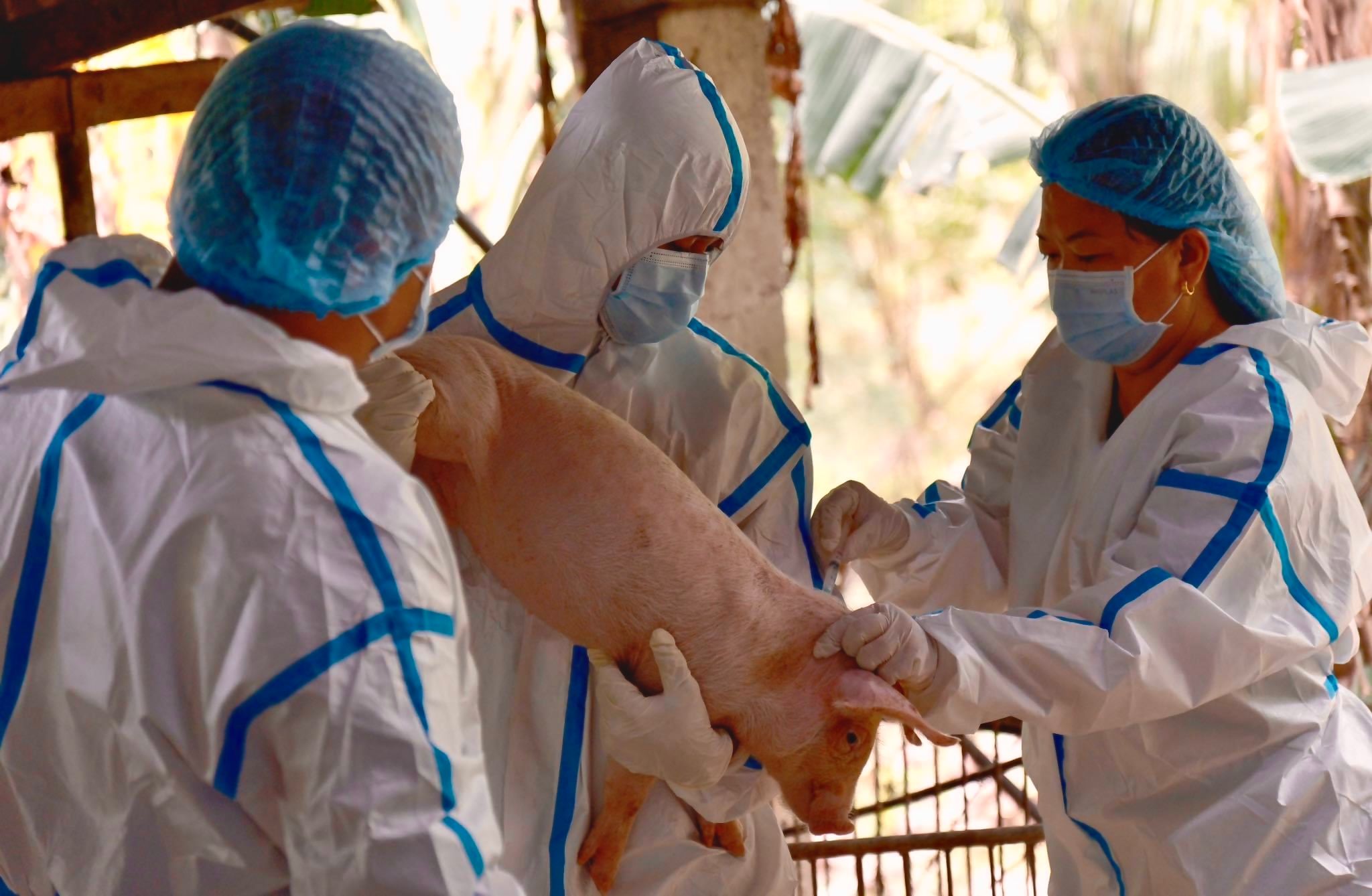
IMG_7185.jpeg
(DA PHOTO)

A majority of the pigs inoculated with the African Swine Fever (ASF) vaccine in Batangas have produced antibodies within 14 days of inoculation, the Department of Agriculture (DA) announced on Tuesday, Sept. 17.

Agriculture Assistant Secretary for Swine and Poultry, Constante “Dante” Palabrica, who is a doctor of veterinary medicine, said 60 percent of the inoculated hogs developed antibodies.

“Results are out: the vaccinated pigs showed antibodies 60 percent of total pigs after 14 [days] post vaccination—good sign so next will be after 14 days to check for [an] increase in percent,” Palabrica told the Manila Bulletin in a text message.

He explained that it is normal for the vaccinated hogs to not all have developed antibodies yet, as some take longer than others.

“After 14 days kukuha ulit ng dugo upang makita na ‘yung negative magiging positive. Hindi sabay-sabay sila nag react—normal ‘yan [na] reaction (After 14 days, blood will be drawn again to see if the negative ones will turn positive. They don't all react at the same time—that's a normal reaction),” said Palabrica.

Meanwhile, Palabrica urged the public not to believe erroneous reports circulating on social media linking the deaths of some inoculated pigs to the ASF vaccine.

“Hayaan munang magtuloy-tuloy ang monitoring ng mga binakunahan at huwag maging judgemental sa ilang baboy na namatay na dahil may comorbidities. Tinututukan natin ito at BAI (Bureau of Animal Industry) na magsasabi kung okay or hindi —huwag maniwala sa fake news (Let the monitoring of the vaccinated continue, and don’t be judgmental about the few pigs that died due to comorbidities. We are closely monitoring this, and the Bureau of Animal Industry (BAI) will determine if everything is okay or not—don’t believe in fake news),” he said.

The DA official was referring to the six pigs inoculated with the ASF vaccine in Batangas that died because of their preexisting conditions, not because of the vaccine.

Assistant Secretary Arnel De Mesa, the spokesperson of the DA, said one of the six pigs was crippled while the five others were suffering from pulmonary ailments that were not disclosed prior to the vaccination.

The agriculture department started the administration of the ASF vaccine in Lobo, Batangas on August 30, inoculating a total of 41 pigs. Small-hold and backyard hog-raisers were prioritized in the controlled ASF vaccination.

Since it is under controlled testing, the DA closely monitoring the effects of the ASF vaccine on the first batch of inoculated pigs.

Only 31 vaccinated pigs are currently being monitored, as six from the first batch of hogs inoculated with the ASF vaccine died due to comorbidities.

The agency has allocated 10,000 doses of ASF vaccine to Batangas province.

Based on DA’s data, 7,900 hogs have been culled in Batangas due to ASF as of Sept. 6.

Reports said ASF has been detected in 96 barangays across Batangas.

The agriculture department had earlier increased indemnification for diseased hogs surrendered for culling, raising the compensation ceiling to ₱12,000 for breeders from the previous maximum of ₱5,000.

To curb the spread of the highly fatal disease, the government has allotted ₱300 million to procure 600,000 doses of the ASF vaccine from Vietnam.

ADVERTISEMENT
.most-popular .layout-ratio{ padding-bottom: 79.13%; } @media (min-width: 768px) and (max-width: 1024px) { .widget-title { font-size: 15px !important; } }

{{ articles_filter_1561_widget.title }}

.most-popular .layout-ratio{ padding-bottom: 79.13%; } @media (min-width: 768px) and (max-width: 1024px) { .widget-title { font-size: 15px !important; } }

{{ articles_filter_1562_widget.title }}

.most-popular .layout-ratio{ padding-bottom: 79.13%; } @media (min-width: 768px) and (max-width: 1024px) { .widget-title { font-size: 15px !important; } }

{{ articles_filter_1563_widget.title }}

{{ articles_filter_1564_widget.title }}

.mb-article-details { position: relative; } .mb-article-details .article-body-preview, .mb-article-details .article-body-summary{ font-size: 17px; line-height: 30px; font-family: "Libre Caslon Text", serif; color: #000; } .mb-article-details .article-body-preview iframe , .mb-article-details .article-body-summary iframe{ width: 100%; margin: auto; } .read-more-background { background: linear-gradient(180deg, color(display-p3 1.000 1.000 1.000 / 0) 13.75%, color(display-p3 1.000 1.000 1.000 / 0.8) 30.79%, color(display-p3 1.000 1.000 1.000) 72.5%); position: absolute; height: 200px; width: 100%; bottom: 0; display: flex; justify-content: center; align-items: center; padding: 0; } .read-more-background a{ color: #000; } .read-more-btn { padding: 17px 45px; font-family: Inter; font-weight: 700; font-size: 18px; line-height: 16px; text-align: center; vertical-align: middle; border: 1px solid black; background-color: white; } .hidden { display: none; }
function initializeAllSwipers() { // Get all hidden inputs with cms_article_id document.querySelectorAll('[id^="cms_article_id_"]').forEach(function (input) { const cmsArticleId = input.value; const articleSelector = '#article-' + cmsArticleId + ' .body_images'; const swiperElement = document.querySelector(articleSelector); if (swiperElement && !swiperElement.classList.contains('swiper-initialized')) { new Swiper(articleSelector, { loop: true, pagination: false, navigation: { nextEl: '#article-' + cmsArticleId + ' .swiper-button-next', prevEl: '#article-' + cmsArticleId + ' .swiper-button-prev', }, }); } }); } setTimeout(initializeAllSwipers, 3000); const intersectionObserver = new IntersectionObserver( (entries) => { entries.forEach((entry) => { if (entry.isIntersecting) { const newUrl = entry.target.getAttribute("data-url"); if (newUrl) { history.pushState(null, null, newUrl); let article = entry.target; // Extract metadata const author = article.querySelector('.author-section').textContent.replace('By', '').trim(); const section = article.querySelector('.section-info ').textContent.replace(' ', ' '); const title = article.querySelector('.article-title h1').textContent; // Parse URL for Chartbeat path format const parsedUrl = new URL(newUrl, window.location.origin); const cleanUrl = parsedUrl.host + parsedUrl.pathname; // Update Chartbeat configuration if (typeof window._sf_async_config !== 'undefined') { window._sf_async_config.path = cleanUrl; window._sf_async_config.sections = section; window._sf_async_config.authors = author; } // Track virtual page view with Chartbeat if (typeof pSUPERFLY !== 'undefined' && typeof pSUPERFLY.virtualPage === 'function') { try { pSUPERFLY.virtualPage({ path: cleanUrl, title: title, sections: section, authors: author }); } catch (error) { console.error('ping error', error); } } // Optional: Update document title if (title && title !== document.title) { document.title = title; } } } }); }, { threshold: 0.1 } ); function showArticleBody(button) { const article = button.closest("article"); const summary = article.querySelector(".article-body-summary"); const body = article.querySelector(".article-body-preview"); const readMoreSection = article.querySelector(".read-more-background"); // Hide summary and read-more section summary.style.display = "none"; readMoreSection.style.display = "none"; // Show the full article body body.classList.remove("hidden"); } document.addEventListener("DOMContentLoaded", () => { let loadCount = 0; // Track how many times articles are loaded const offset = [1, 2, 3, 4, 5, 6, 7, 8, 9, 10]; // Offset values const currentUrl = window.location.pathname.substring(1); let isLoading = false; // Prevent multiple calls if (!currentUrl) { console.log("Current URL is invalid."); return; } const sentinel = document.getElementById("load-more-sentinel"); if (!sentinel) { console.log("Sentinel element not found."); return; } function isSentinelVisible() { const rect = sentinel.getBoundingClientRect(); return ( rect.top < window.innerHeight && rect.bottom >= 0 ); } function onScroll() { if (isLoading) return; if (isSentinelVisible()) { if (loadCount >= offset.length) { console.log("Maximum load attempts reached."); window.removeEventListener("scroll", onScroll); return; } isLoading = true; const currentOffset = offset[loadCount]; window.loadMoreItems().then(() => { let article = document.querySelector('#widget_1690 > div:nth-last-of-type(2) article'); intersectionObserver.observe(article) loadCount++; }).catch(error => { console.error("Error loading more items:", error); }).finally(() => { isLoading = false; }); } } window.addEventListener("scroll", onScroll); });

Sign up by email to receive news.