ADVERTISEMENT

US hits Russian state media with sanctions for raising money for Moscow's troops in Ukraine

Published Sep 14, 2024 11:39 am
AP24257660663556.jpg
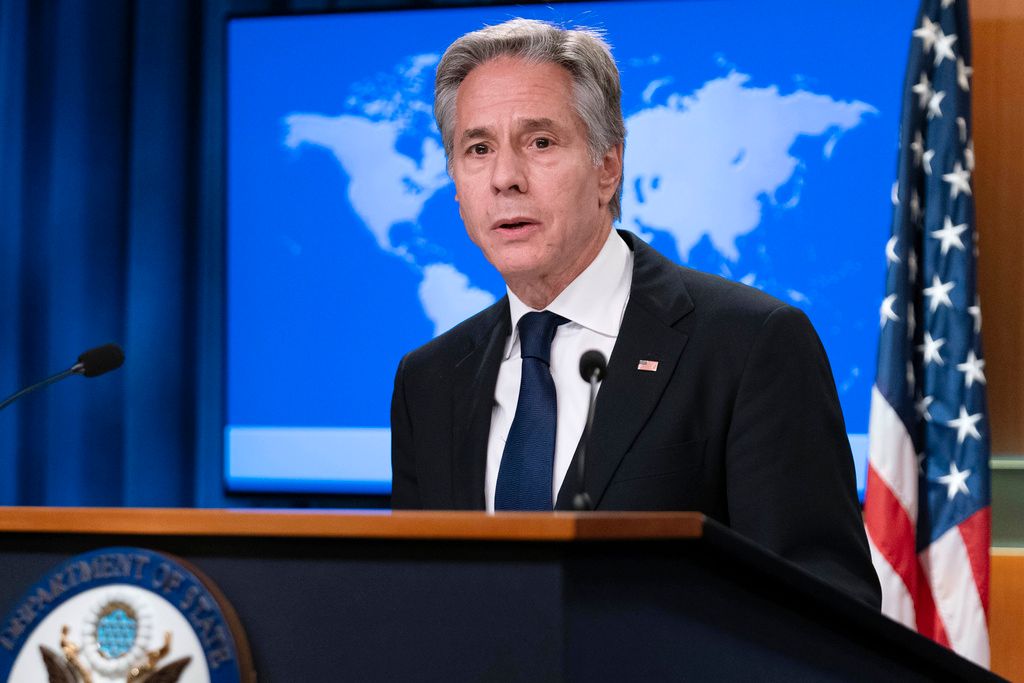
Secretary of State Antony Blinken speaks during a news conference about Russia's election interference at the Department of State in Washington, Friday, Sept. 13, 2024. (AP Photo/Jose Luis Magana)

WASHINGTON (AP) — The U.S. State Department announced new sanctions on Russian state media Friday, accusing a Kremlin news outlet of working hand-in-hand with the Russian military and running fundraising campaigns to pay for sniper rifles, body armor and other equipment for soldiers fighting in Ukraine.

While the outlet, RT, has previously been sanctioned for its work to spread Kremlin propaganda and disinformation, the new allegations suggest its role goes far beyond influence operations. Instead, Secretary of State Antony Blinken said, RT is a key part of Russia's war machine and its efforts to undermine its democratic adversaries.

“RT wants its new covert intelligence capabilities, like its longstanding propaganda disinformation efforts, to remain hidden,” Blinken told reporters. “Our most powerful antidote to Russia’s lies is the truth. It’s shining a bright light on what the Kremlin is trying to do under the cover of darkness.”

RT has also created websites posing as legitimate news sites to spread disinformation and propaganda in Europe, Africa, South America and elsewhere, officials said. They say the outlet has also expanded its use of cyber operations with a new unit with ties to Russian intelligence created last year.

The crowd-sourcing effort ran on Russian social media platforms and sought to raise funds for military supplies, some of which were procured in China, officials said. There were no obvious connections between RT and the fundraising campaign, or any indication that Chinese officials knew their products were being sold to Russia.

The list of supplies also included night-vision equipment, drones, radios and generators.

RT's actions show "it's not just a firehouse of disinformation, but a fully-fledged member of the intelligence apparatus and operation of the Russian government,” said Jamie Rubin, who heads the State Department's Global Engagement Center.

President Putin’s spokesperson Dmitry Peskov told The Associated Press that the allegations were “nonsense.” RT is “media” and “quite effective,” Peskov said.

The sanctions announced Friday target RT’s parent organization, TV-Novosti, as well as a related state media group called Rossiya Segodnya and its general director Dmitry Kiselyov. A third organization and its leader, Nelli Parutenko, were also sanctioned for allegedly running a vote-buying scheme in Moldova designed to help Moscow’s preferred candidates in an upcoming election.

Russia’s Foreign Ministry spokeswoman Maria Zakharova suggested the sanctions against RT were unnecessary because it has already been sanctioned.

“I think a new profession should appear in the United States — a specialist in sanctions already imposed against Russia,” she wrote on her Telegram channel.

Russia's global propaganda work is receiving extra scrutiny in the months leading up to the U.S. election. Last week, the Biden administration seized Kremlin-run websites and charged two RT employees with covertly paying a Tennessee company nearly $10 million for its content.

The company then paid several popular far-right influencers, whose content often mirrored Russian talking points. Two of the influencers said they had no idea their work was being supported by Russia.

This summer, intelligence officials warned that Russia was using unwitting Americans to spread its propaganda by disguising it in English on sites popular with Americans. Officials say Russia seeks to divide Americans ahead of the election as a way of reducing support for Ukraine.

Russia's influence operations also appear designed to support former President Donald Trump, who has criticized Ukraine and the NATO alliance while praising Russian President Vladimir Putin.

Related Tags

WORLDNEWS
ADVERTISEMENT
.most-popular .layout-ratio{ padding-bottom: 79.13%; } @media (min-width: 768px) and (max-width: 1024px) { .widget-title { font-size: 15px !important; } }

{{ articles_filter_1561_widget.title }}

.most-popular .layout-ratio{ padding-bottom: 79.13%; } @media (min-width: 768px) and (max-width: 1024px) { .widget-title { font-size: 15px !important; } }

{{ articles_filter_1562_widget.title }}

.most-popular .layout-ratio{ padding-bottom: 79.13%; } @media (min-width: 768px) and (max-width: 1024px) { .widget-title { font-size: 15px !important; } }

{{ articles_filter_1563_widget.title }}

{{ articles_filter_1564_widget.title }}

.mb-article-details { position: relative; } .mb-article-details .article-body-preview, .mb-article-details .article-body-summary{ font-size: 17px; line-height: 30px; font-family: "Libre Caslon Text", serif; color: #000; } .mb-article-details .article-body-preview iframe , .mb-article-details .article-body-summary iframe{ width: 100%; margin: auto; } .read-more-background { background: linear-gradient(180deg, color(display-p3 1.000 1.000 1.000 / 0) 13.75%, color(display-p3 1.000 1.000 1.000 / 0.8) 30.79%, color(display-p3 1.000 1.000 1.000) 72.5%); position: absolute; height: 200px; width: 100%; bottom: 0; display: flex; justify-content: center; align-items: center; padding: 0; } .read-more-background a{ color: #000; } .read-more-btn { padding: 17px 45px; font-family: Inter; font-weight: 700; font-size: 18px; line-height: 16px; text-align: center; vertical-align: middle; border: 1px solid black; background-color: white; } .hidden { display: none; }
function initializeAllSwipers() { // Get all hidden inputs with cms_article_id document.querySelectorAll('[id^="cms_article_id_"]').forEach(function (input) { const cmsArticleId = input.value; const articleSelector = '#article-' + cmsArticleId + ' .body_images'; const swiperElement = document.querySelector(articleSelector); if (swiperElement && !swiperElement.classList.contains('swiper-initialized')) { new Swiper(articleSelector, { loop: true, pagination: false, navigation: { nextEl: '#article-' + cmsArticleId + ' .swiper-button-next', prevEl: '#article-' + cmsArticleId + ' .swiper-button-prev', }, }); } }); } setTimeout(initializeAllSwipers, 3000); const intersectionObserver = new IntersectionObserver( (entries) => { entries.forEach((entry) => { if (entry.isIntersecting) { const newUrl = entry.target.getAttribute("data-url"); if (newUrl) { history.pushState(null, null, newUrl); let article = entry.target; // Extract metadata const author = article.querySelector('.author-section').textContent.replace('By', '').trim(); const section = article.querySelector('.section-info ').textContent.replace(' ', ' '); const title = article.querySelector('.article-title h1').textContent; // Parse URL for Chartbeat path format const parsedUrl = new URL(newUrl, window.location.origin); const cleanUrl = parsedUrl.host + parsedUrl.pathname; // Update Chartbeat configuration if (typeof window._sf_async_config !== 'undefined') { window._sf_async_config.path = cleanUrl; window._sf_async_config.sections = section; window._sf_async_config.authors = author; } // Track virtual page view with Chartbeat if (typeof pSUPERFLY !== 'undefined' && typeof pSUPERFLY.virtualPage === 'function') { try { pSUPERFLY.virtualPage({ path: cleanUrl, title: title, sections: section, authors: author }); } catch (error) { console.error('ping error', error); } } // Optional: Update document title if (title && title !== document.title) { document.title = title; } } } }); }, { threshold: 0.1 } ); function showArticleBody(button) { const article = button.closest("article"); const summary = article.querySelector(".article-body-summary"); const body = article.querySelector(".article-body-preview"); const readMoreSection = article.querySelector(".read-more-background"); // Hide summary and read-more section summary.style.display = "none"; readMoreSection.style.display = "none"; // Show the full article body body.classList.remove("hidden"); } document.addEventListener("DOMContentLoaded", () => { let loadCount = 0; // Track how many times articles are loaded const offset = [1, 2, 3, 4, 5, 6, 7, 8, 9, 10]; // Offset values const currentUrl = window.location.pathname.substring(1); let isLoading = false; // Prevent multiple calls if (!currentUrl) { console.log("Current URL is invalid."); return; } const sentinel = document.getElementById("load-more-sentinel"); if (!sentinel) { console.log("Sentinel element not found."); return; } function isSentinelVisible() { const rect = sentinel.getBoundingClientRect(); return ( rect.top < window.innerHeight && rect.bottom >= 0 ); } function onScroll() { if (isLoading) return; if (isSentinelVisible()) { if (loadCount >= offset.length) { console.log("Maximum load attempts reached."); window.removeEventListener("scroll", onScroll); return; } isLoading = true; const currentOffset = offset[loadCount]; window.loadMoreItems().then(() => { let article = document.querySelector('#widget_1690 > div:nth-last-of-type(2) article'); intersectionObserver.observe(article) loadCount++; }).catch(error => { console.error("Error loading more items:", error); }).finally(() => { isLoading = false; }); } } window.addEventListener("scroll", onScroll); });

Sign up by email to receive news.