

ADVERTISEMENT

Iran says it successfully launched a satellite in its program criticized by West over missile fears

Published Sep 14, 2024 11:52 pm

TEHRAN, Iran (AP) — Iran launched a satellite into space Saturday with a rocket built by the country's paramilitary Revolutionary Guard, state-run media reported, the latest for a program the West fears helps Tehran advance its ballistic missile program.
AP24258419919659.jpg
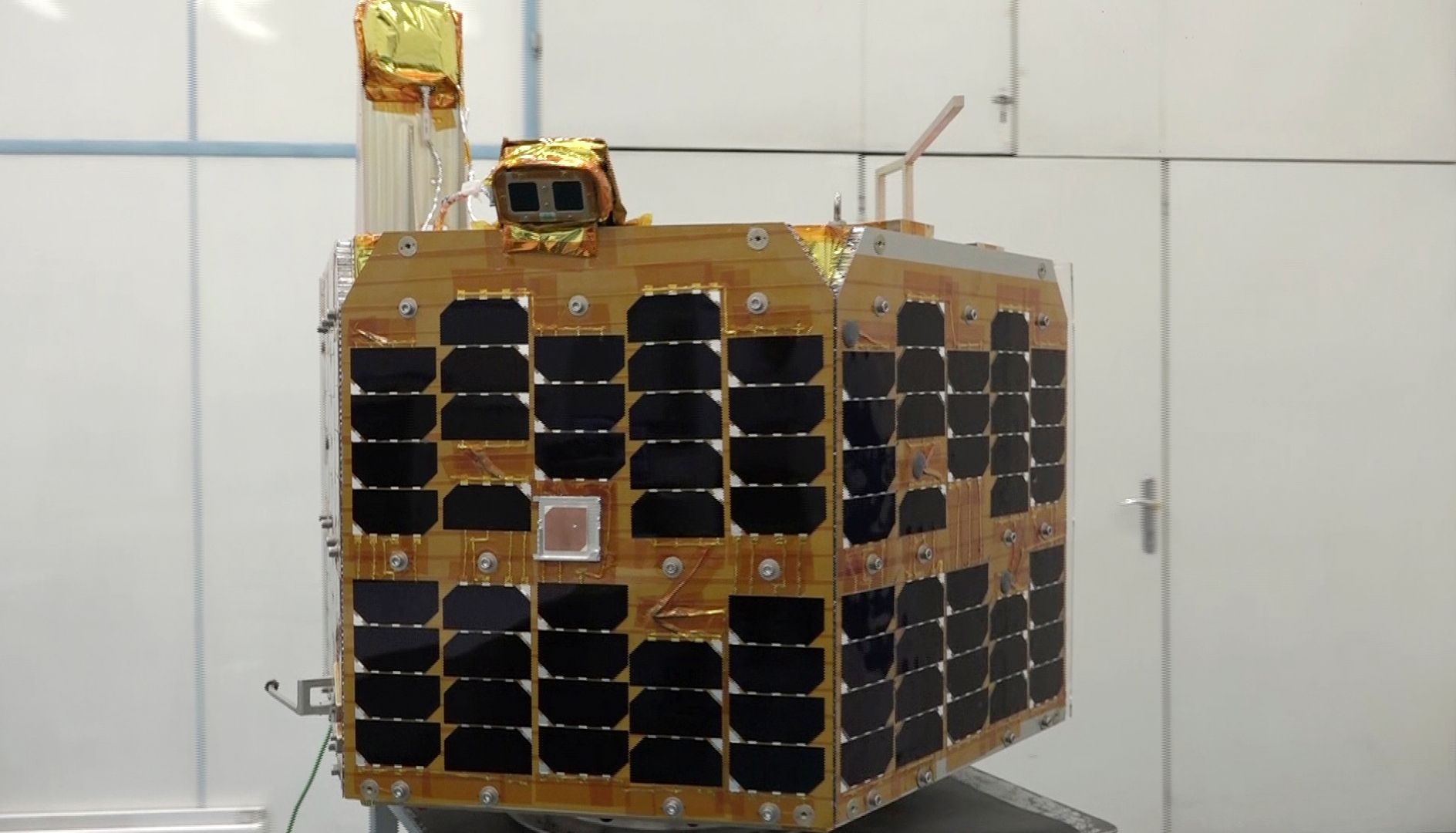
This undated photo provided by Iranian Space Agency, ISA, shows Chamran-1 satellite. Iran launched the satellite into space Saturday, Sept. 14, 2024, with a rocket built by the country's paramilitary Revolutionary Guard, state-run media reported, the latest for a program the West fears helps Tehran advance its ballistic missile program. (ISA via AP)

Iran described the launch as a success, which would be the second such launch to put a satellite into orbit with the rocket. There was no immediate independent confirmation of the launch's success.

Footage later released by Iranian media showed the rocket blast off from a mobile launcher. An Associated Press analysis of the video and other imagery later released suggested the launch happened at the Guard's launch pad on the outskirts of the city of Shahroud, some 350 kilometers (215 miles) east of the capital, Tehran.

The launch comes amid heightened tensions gripping the wider Middle East over the ongoing Israel-Hamas war in the Gaza Strip, during which Tehran launched an unprecedented direct missile-and-drone attack on Israel. Meanwhile, Iran continues to enrich uranium to nearly weapons-grade levels, raising concerns among nonproliferation experts about Tehran's program.

Iran identified the satellite-carrying rocket as the Qaem-100, which the Guard used in January for another successful launch. Qaem means "upright" in Iran's Farsi language.

The solid-fuel, three-stage rocket put the Chamran-1 satellite, weighing 60 kilograms (132 pounds), into a 550-kilometer (340-mile) orbit, state media reported. The rocket bore a Quranic verse: "That which is left by Allah is better for you, if you are believers."

A state-owned subsidiary of Iran's Defense Ministry and experts at the Aerospace Research Institute built the satellite with others to "test hardware and software systems for orbital maneuver technology validation," state media said, without elaborating.

Gen. Hossein Salami, the head of the Guard, praised the launch in a statement and said scientists successfully overcame "the atmosphere of extensive and oppressive international sanctions."

The U.S. State Department and the American military did not immediately respond to requests for comment over the Iranian launch.

The United States had previously said Iran's satellite launches defy a U.N. Security Council resolution and called on Tehran to undertake no activity involving ballistic missiles capable of delivering nuclear weapons. U.N. sanctions related to Iran's ballistic missile program expired last October.

Under Iran's relatively moderate former President Hassan Rouhani, the Islamic Republic slowed its space program for fear of raising tensions with the West. Hard-line President Ebrahim Raisi, a protege of Supreme Leader Ayatollah Ali Khamenei who came to power in 2021, has pushed the program forward. Raisi died in a helicopter crash in May.

It's unclear what Iran's new president, the reformist Masoud Pezeshkian, wants for the program as he was silent on the issue while campaigning.

The U.S. intelligence community's worldwide threat assessment this year said Iran's development of satellite launch vehicles "would shorten the timeline" for Iran to develop an intercontinental ballistic missile because it uses similar technology.

Intercontinental ballistic missiles can be used to deliver nuclear weapons. Iran is now producing uranium close to weapons-grade levels after the collapse of its nuclear deal with world powers. Tehran has enough enriched uranium for "several" nuclear weapons, if it chooses to produce them, the head of the International Atomic Energy Agency repeatedly has warned.

Iran has always denied seeking nuclear weapons and says its space program, like its nuclear activities, is for purely civilian purposes. However, U.S. intelligence agencies and the IAEA say Iran had an organized military nuclear program up until 2003.

The launch also came ahead of the second anniversary of the death of 22-year-old Mahsa Amini, which sparked nationwide protests against Iran's mandatory headscarf, or hijab, law and the country's Shiite theocracy.


Related Tags

world news
ADVERTISEMENT
.most-popular .layout-ratio{ padding-bottom: 79.13%; } @media (min-width: 768px) and (max-width: 1024px) { .widget-title { font-size: 15px !important; } }

{{ articles_filter_1561_widget.title }}

.most-popular .layout-ratio{ padding-bottom: 79.13%; } @media (min-width: 768px) and (max-width: 1024px) { .widget-title { font-size: 15px !important; } }

{{ articles_filter_1562_widget.title }}

.most-popular .layout-ratio{ padding-bottom: 79.13%; } @media (min-width: 768px) and (max-width: 1024px) { .widget-title { font-size: 15px !important; } }

{{ articles_filter_1563_widget.title }}

{{ articles_filter_1564_widget.title }}

.mb-article-details { position: relative; } .mb-article-details .article-body-preview, .mb-article-details .article-body-summary{ font-size: 17px; line-height: 30px; font-family: "Libre Caslon Text", serif; color: #000; } .mb-article-details .article-body-preview iframe , .mb-article-details .article-body-summary iframe{ width: 100%; margin: auto; } .read-more-background { background: linear-gradient(180deg, color(display-p3 1.000 1.000 1.000 / 0) 13.75%, color(display-p3 1.000 1.000 1.000 / 0.8) 30.79%, color(display-p3 1.000 1.000 1.000) 72.5%); position: absolute; height: 200px; width: 100%; bottom: 0; display: flex; justify-content: center; align-items: center; padding: 0; } .read-more-background a{ color: #000; } .read-more-btn { padding: 17px 45px; font-family: Inter; font-weight: 700; font-size: 18px; line-height: 16px; text-align: center; vertical-align: middle; border: 1px solid black; background-color: white; } .hidden { display: none; }
function initializeAllSwipers() { // Get all hidden inputs with cms_article_id document.querySelectorAll('[id^="cms_article_id_"]').forEach(function (input) { const cmsArticleId = input.value; const articleSelector = '#article-' + cmsArticleId + ' .body_images'; const swiperElement = document.querySelector(articleSelector); if (swiperElement && !swiperElement.classList.contains('swiper-initialized')) { new Swiper(articleSelector, { loop: true, pagination: false, navigation: { nextEl: '#article-' + cmsArticleId + ' .swiper-button-next', prevEl: '#article-' + cmsArticleId + ' .swiper-button-prev', }, }); } }); } setTimeout(initializeAllSwipers, 3000); const intersectionObserver = new IntersectionObserver( (entries) => { entries.forEach((entry) => { if (entry.isIntersecting) { const newUrl = entry.target.getAttribute("data-url"); if (newUrl) { history.pushState(null, null, newUrl); let article = entry.target; // Extract metadata const author = article.querySelector('.author-section').textContent.replace('By', '').trim(); const section = article.querySelector('.section-info ').textContent.replace(' ', ' '); const title = article.querySelector('.article-title h1').textContent; // Parse URL for Chartbeat path format const parsedUrl = new URL(newUrl, window.location.origin); const cleanUrl = parsedUrl.host + parsedUrl.pathname; // Update Chartbeat configuration if (typeof window._sf_async_config !== 'undefined') { window._sf_async_config.path = cleanUrl; window._sf_async_config.sections = section; window._sf_async_config.authors = author; } // Track virtual page view with Chartbeat if (typeof pSUPERFLY !== 'undefined' && typeof pSUPERFLY.virtualPage === 'function') { try { pSUPERFLY.virtualPage({ path: cleanUrl, title: title, sections: section, authors: author }); } catch (error) { console.error('ping error', error); } } // Optional: Update document title if (title && title !== document.title) { document.title = title; } } } }); }, { threshold: 0.1 } ); function showArticleBody(button) { const article = button.closest("article"); const summary = article.querySelector(".article-body-summary"); const body = article.querySelector(".article-body-preview"); const readMoreSection = article.querySelector(".read-more-background"); // Hide summary and read-more section summary.style.display = "none"; readMoreSection.style.display = "none"; // Show the full article body body.classList.remove("hidden"); } document.addEventListener("DOMContentLoaded", () => { let loadCount = 0; // Track how many times articles are loaded const offset = [1, 2, 3, 4, 5, 6, 7, 8, 9, 10]; // Offset values const currentUrl = window.location.pathname.substring(1); let isLoading = false; // Prevent multiple calls if (!currentUrl) { console.log("Current URL is invalid."); return; } const sentinel = document.getElementById("load-more-sentinel"); if (!sentinel) { console.log("Sentinel element not found."); return; } function isSentinelVisible() { const rect = sentinel.getBoundingClientRect(); return ( rect.top < window.innerHeight && rect.bottom >= 0 ); } function onScroll() { if (isLoading) return; if (isSentinelVisible()) { if (loadCount >= offset.length) { console.log("Maximum load attempts reached."); window.removeEventListener("scroll", onScroll); return; } isLoading = true; const currentOffset = offset[loadCount]; window.loadMoreItems().then(() => { let article = document.querySelector('#widget_1690 > div:nth-last-of-type(2) article'); intersectionObserver.observe(article) loadCount++; }).catch(error => { console.error("Error loading more items:", error); }).finally(() => { isLoading = false; }); } } window.addEventListener("scroll", onScroll); });

Sign up by email to receive news.