

ADVERTISEMENT

Marcos: Dad's wisdom remains a guiding force

Published Sep 11, 2024 12:07 am

At A Glance

  • In a Facebook post, the President said he will continue to honor his father's legacy.
  • In a speech, Marcos said his father's greatest and most important quality that brought him to the presidency was that he was a Filipino.

President Marcos said that his namesake father, the late former president Ferdinand Marcos Sr., continues to be his inspiration in "leading the Philippines forward."
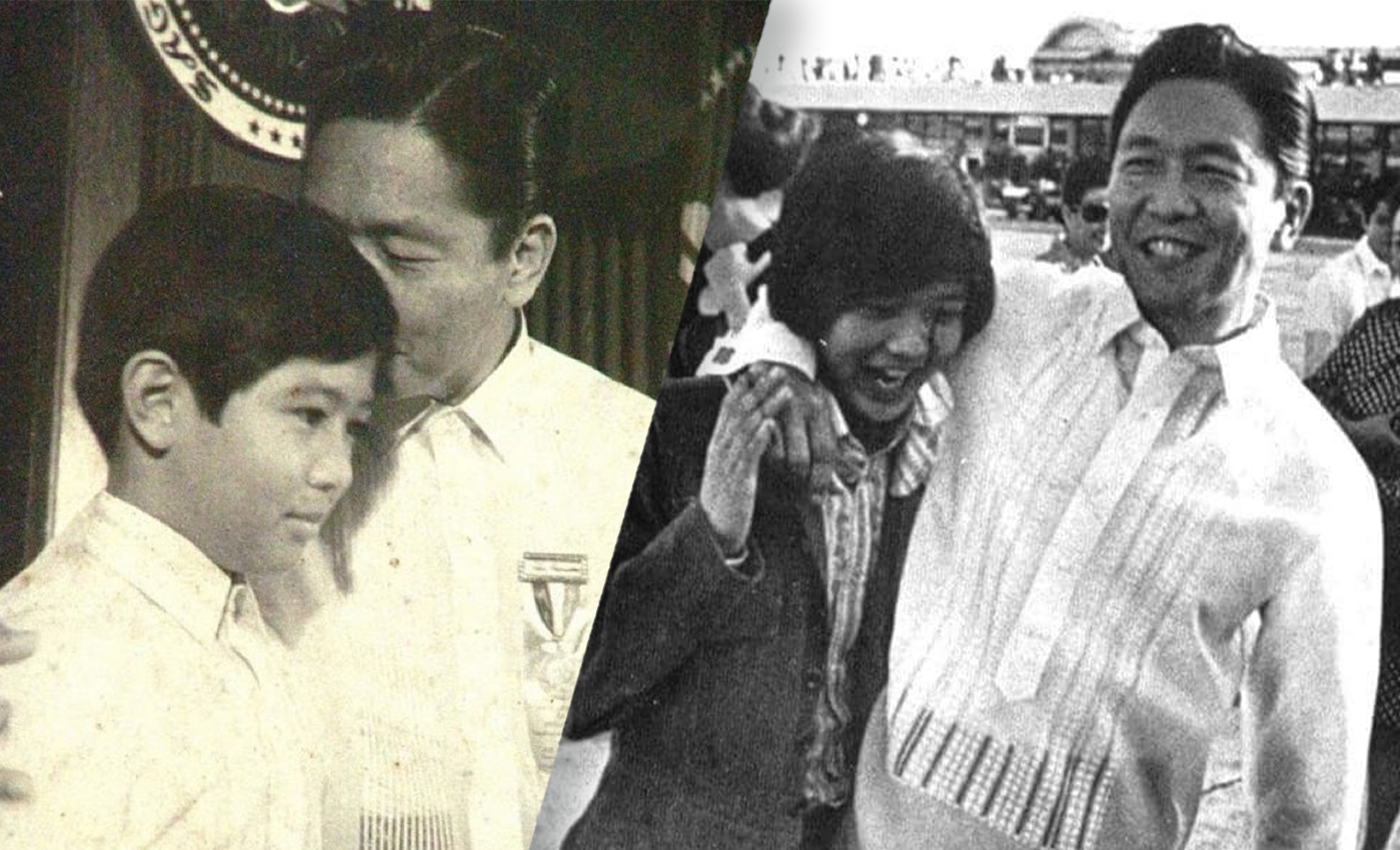
BBM FM.jpg
President Ferdinand 'Bongbong' Marcos Jr. and his father, the late president Ferdinand Marcos Sr. (bongbongmarcos/Instagram)

Marcos said this as he led the commemoration of his late father's 107th death anniversary on Wednesday, Sept. 11.

In a Facebook post, the President said he will continue to honor his father's legacy.

"Not a day goes by where I don’t think about my father. His wisdom remains a guiding force, a steady voice of reason reminding me of the principles that should lead our nation forward," he wrote.

"Happy birthday, Dad! We continue to celebrate you and honor your lasting legacy," he added.

Before this, Marcos and his wife, First Lady Liza Araneta-Marcos, along with other family members, graced a concert in honor of the late strongman at the Ferdinand E. Marcos Memorial Stadium in Laoag City, Ilocos Norte on Tuesday evening.

On Tuesday, President Marcos declared Sept. 11, 2024, a special non-working day in Ilocos Norte in honor of his late father's 107th birth anniversary.

The President, through Proclamation 671, said the people of Ilocos Norte deserve to have the opportunity to celebrate the occasion.

"It is fitting and proper that the people of the Province of Ilocos Norte be given full opportunity to participate in the occasion and enjoy the celebration," Marcos' proclamation read.


Most important quality


In his speech during the Marcos Day celebration in Batac City, Ilocos Norte on Wednesday morning, the President said his father's greatest and most important quality that brought him to the presidency was that he was a Filipino.

"I am always reminded of what was engraved in the mausoleum when my father was still buried here. It was one single word: Filipino. And that is the essence of my father," he said.

"His whole life was dedicated to the Filipino. His whole life was dedicated to the Philippines," he added.

When faced with complications, President Marcos said he would often ask himself what his father would do.

"When things are confusing; when things have become so complex— what is the essence of service that my father taught me: be a Filipino. Serve the Filipino. Protect Filipinos and the Philippines," he said.

"I will be eternally grateful to my dad for the lessons that he taught us, for the values that imbue in our very souls," he added.

The Chief Executive likewise noted how his father sacrificed for the country.

"All that he did was to serve Filipinos. He sacrificed everything. We (his family) felt that he also sacrificed because we didn't see my father, we didn't see my mother. They were busy doing their work and serving the Philippines and serving the Filipino," Marcos said.

"The greatest service that he could do was to serve the entire country of the Philippines," he added.

Last year, President Marcos described his father as "a true Filipino and Ilocano icon whose exceptional mind matched the nation-loving spirit that he possesses and that he demonstrates."

He said Marcos Sr. would be remembered for the "peace and order that he fought and stood for," which he said inspired Filipinos to build on and feel the dreams left in the hearts of many.

The Chief Executive likewise reminded everyone of the Philippines' values and the work that needs to be done, noting the "unwavering pursuit of unity" his father passionately espoused to the people.  

"The Philippines is ours to love, and the path to a New Philippines—a more equitable, sustainable, and resilient one—is ours to make," Marcos said.

"In his memory, may our actions from this point on be directed by the desire to preserve and share the rich heritage of our province, of our nation," he added.

The infamous Ferdinand Edralin Marcos, the President's father, was born on Sept. 11, 1917, in Sarrat, Ilocos Norte. He is the country's 10th president who served for 20 years from 1965 to 1986.

His presidency, however, became controversial after he placed the Philippines under martial law from 1972 to 1981, a period many Filipinos call one of the darkest chapters in Philippine history due to the numerous human rights violations, arrests, deaths, and disappearances linked to it.

Related Tags

Bongbong Marcos Ferdinand Marcos Birth anniversary President Marcos Ferdinand Marcos Sr.
ADVERTISEMENT
.most-popular .layout-ratio{ padding-bottom: 79.13%; } @media (min-width: 768px) and (max-width: 1024px) { .widget-title { font-size: 15px !important; } }

{{ articles_filter_1561_widget.title }}

.most-popular .layout-ratio{ padding-bottom: 79.13%; } @media (min-width: 768px) and (max-width: 1024px) { .widget-title { font-size: 15px !important; } }

{{ articles_filter_1562_widget.title }}

.most-popular .layout-ratio{ padding-bottom: 79.13%; } @media (min-width: 768px) and (max-width: 1024px) { .widget-title { font-size: 15px !important; } }

{{ articles_filter_1563_widget.title }}

{{ articles_filter_1564_widget.title }}

.mb-article-details { position: relative; } .mb-article-details .article-body-preview, .mb-article-details .article-body-summary{ font-size: 17px; line-height: 30px; font-family: "Libre Caslon Text", serif; color: #000; } .mb-article-details .article-body-preview iframe , .mb-article-details .article-body-summary iframe{ width: 100%; margin: auto; } .read-more-background { background: linear-gradient(180deg, color(display-p3 1.000 1.000 1.000 / 0) 13.75%, color(display-p3 1.000 1.000 1.000 / 0.8) 30.79%, color(display-p3 1.000 1.000 1.000) 72.5%); position: absolute; height: 200px; width: 100%; bottom: 0; display: flex; justify-content: center; align-items: center; padding: 0; } .read-more-background a{ color: #000; } .read-more-btn { padding: 17px 45px; font-family: Inter; font-weight: 700; font-size: 18px; line-height: 16px; text-align: center; vertical-align: middle; border: 1px solid black; background-color: white; } .hidden { display: none; }
function initializeAllSwipers() { // Get all hidden inputs with cms_article_id document.querySelectorAll('[id^="cms_article_id_"]').forEach(function (input) { const cmsArticleId = input.value; const articleSelector = '#article-' + cmsArticleId + ' .body_images'; const swiperElement = document.querySelector(articleSelector); if (swiperElement && !swiperElement.classList.contains('swiper-initialized')) { new Swiper(articleSelector, { loop: true, pagination: false, navigation: { nextEl: '#article-' + cmsArticleId + ' .swiper-button-next', prevEl: '#article-' + cmsArticleId + ' .swiper-button-prev', }, }); } }); } setTimeout(initializeAllSwipers, 3000); const intersectionObserver = new IntersectionObserver( (entries) => { entries.forEach((entry) => { if (entry.isIntersecting) { const newUrl = entry.target.getAttribute("data-url"); if (newUrl) { history.pushState(null, null, newUrl); let article = entry.target; // Extract metadata const author = article.querySelector('.author-section').textContent.replace('By', '').trim(); const section = article.querySelector('.section-info ').textContent.replace(' ', ' '); const title = article.querySelector('.article-title h1').textContent; // Parse URL for Chartbeat path format const parsedUrl = new URL(newUrl, window.location.origin); const cleanUrl = parsedUrl.host + parsedUrl.pathname; // Update Chartbeat configuration if (typeof window._sf_async_config !== 'undefined') { window._sf_async_config.path = cleanUrl; window._sf_async_config.sections = section; window._sf_async_config.authors = author; } // Track virtual page view with Chartbeat if (typeof pSUPERFLY !== 'undefined' && typeof pSUPERFLY.virtualPage === 'function') { try { pSUPERFLY.virtualPage({ path: cleanUrl, title: title, sections: section, authors: author }); } catch (error) { console.error('ping error', error); } } // Optional: Update document title if (title && title !== document.title) { document.title = title; } } } }); }, { threshold: 0.1 } ); function showArticleBody(button) { const article = button.closest("article"); const summary = article.querySelector(".article-body-summary"); const body = article.querySelector(".article-body-preview"); const readMoreSection = article.querySelector(".read-more-background"); // Hide summary and read-more section summary.style.display = "none"; readMoreSection.style.display = "none"; // Show the full article body body.classList.remove("hidden"); } document.addEventListener("DOMContentLoaded", () => { let loadCount = 0; // Track how many times articles are loaded const offset = [1, 2, 3, 4, 5, 6, 7, 8, 9, 10]; // Offset values const currentUrl = window.location.pathname.substring(1); let isLoading = false; // Prevent multiple calls if (!currentUrl) { console.log("Current URL is invalid."); return; } const sentinel = document.getElementById("load-more-sentinel"); if (!sentinel) { console.log("Sentinel element not found."); return; } function isSentinelVisible() { const rect = sentinel.getBoundingClientRect(); return ( rect.top < window.innerHeight && rect.bottom >= 0 ); } function onScroll() { if (isLoading) return; if (isSentinelVisible()) { if (loadCount >= offset.length) { console.log("Maximum load attempts reached."); window.removeEventListener("scroll", onScroll); return; } isLoading = true; const currentOffset = offset[loadCount]; window.loadMoreItems().then(() => { let article = document.querySelector('#widget_1690 > div:nth-last-of-type(2) article'); intersectionObserver.observe(article) loadCount++; }).catch(error => { console.error("Error loading more items:", error); }).finally(() => { isLoading = false; }); } } window.addEventListener("scroll", onScroll); });

Sign up by email to receive news.