

ADVERTISEMENT

'Bebinca' may enter PAR on Sept. 13, to enhance 'habagat'

Published Sep 11, 2024 05:44 am

At A Glance

  • Once the tropical cyclone enters the PAR, it will be given the local name "Ferdie."
  • It will enhance the effects of the southwest monsoon, potentially causing heavy rainfall over Bicol Region, Mimaropa, Visayas, and the northern and western portions of Mindanao.
IMG_4240.jpeg
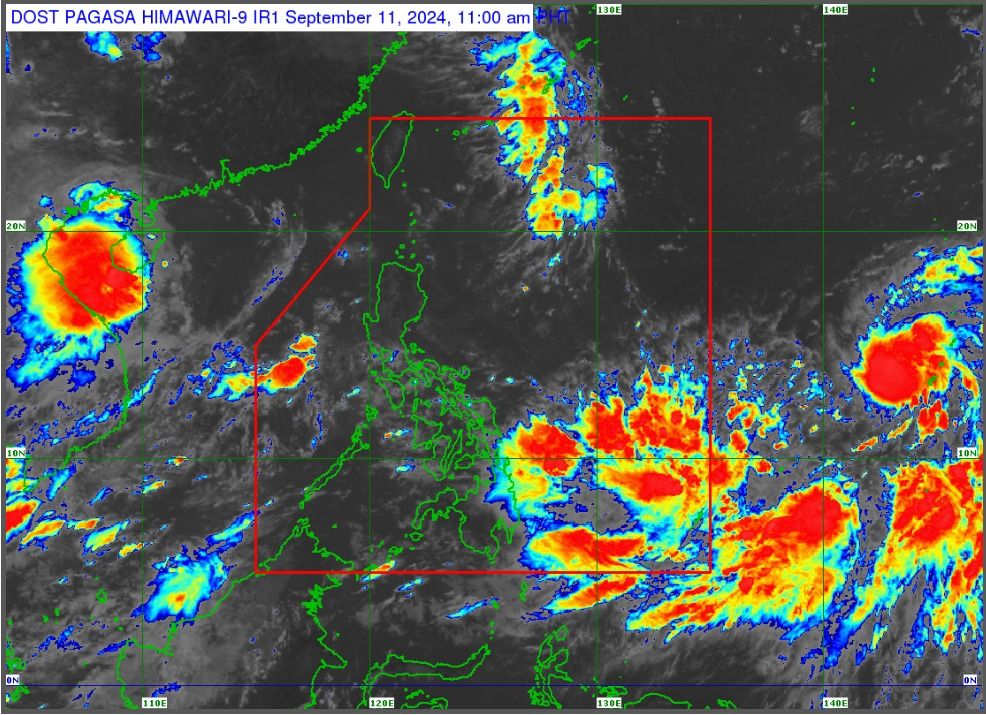
Satellite image of Tropical Storm Bebinca (PAGASA)

The tropical storm with the international name “Bebinca” is expected to enter the country’s area of responsibility by Friday, Sept. 13, and will likely enhance the effects of the southwest monsoon (habagat) as the weekend approaches, the Philippine Atmospheric, Geophysical and Astronomical Services Administration (PAGASA) said on Wednesday, Sept. 11.

Before Wednesday noon, PAGASA said Bebinca continues to intensify while moving away from Guam. 

As of 10 a.m., the center of the tropical storm was located 1,825 kilometers (km) east-northeast of Eastern Visayas or 1,955 km east of southeastern Luzon.

It has maximum sustained winds of 85 kilometers per hour (kph) near the center and gusts of up to 105 kph.
IMG_4241.jpeg
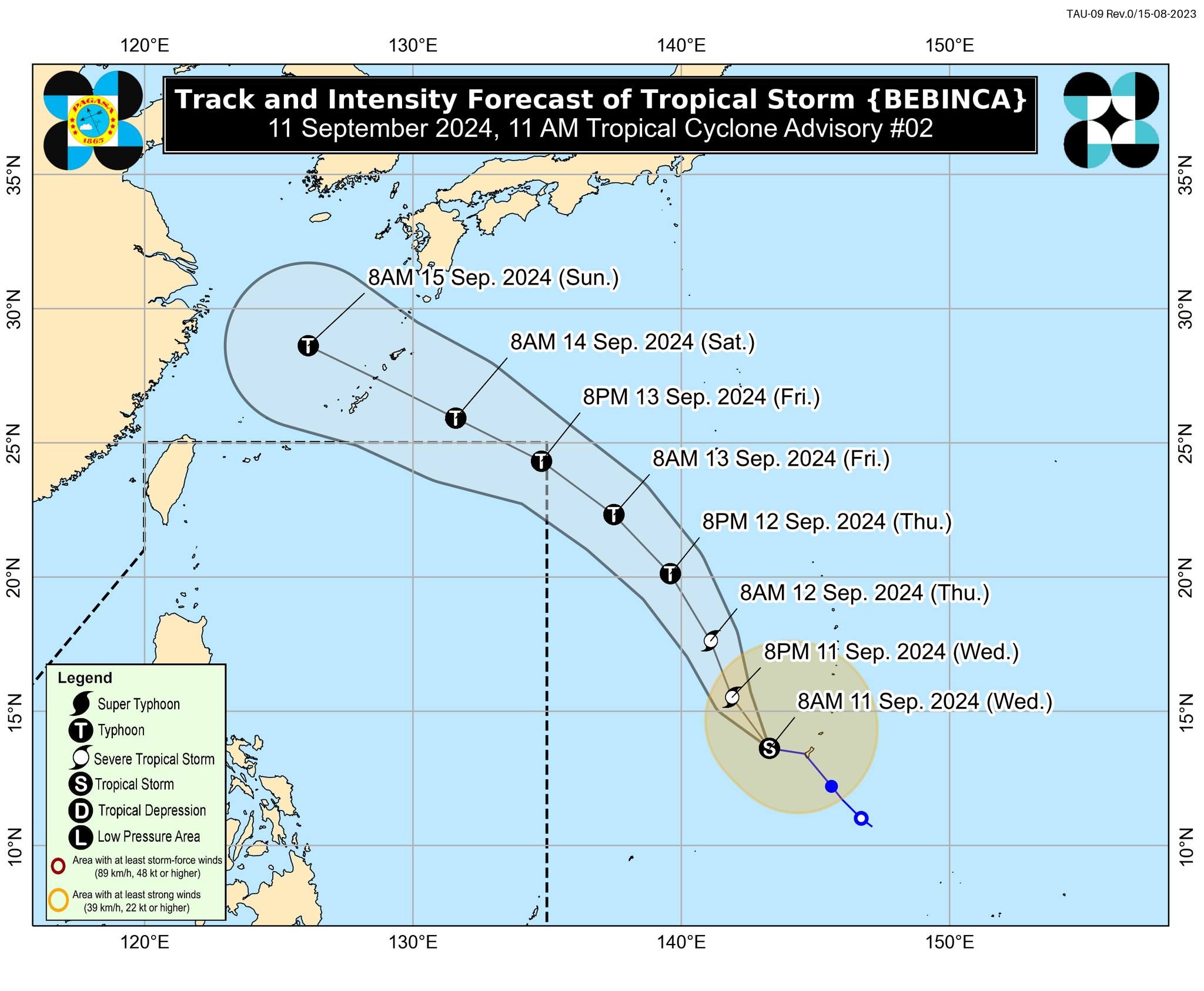
Tropical Storm Bebinca’s projected track and intensity (PAGASA)

Bebinca is moving westward at 25 kph and is expected to enter the Philippine area of responsibility (PAR) on Friday afternoon or evening as a typhoon.

Once it enters, it will be given the local name “Ferdie.”

However, it may only briefly stay inside the PAR, likely exiting the area by Saturday morning, Sept. 14.

PAGASA said that despite its distance from the Philippine landmass and having no direct impact on the country, Bebinca will enhance the effects of the southwest monsoon, potentially causing heavy rainfall over Bicol Region, Mimaropa, Visayas, and the northern and western portions of Mindanao.

It warned of possible flooding or landslides, particularly in areas identified as "highly or very highly susceptible" to these hazards and areas that have received significant rainfall in the past few days.

Likewise, up to moderate seas are expected in the next 24 hours over the western seaboard of Palawan, including Kalayaan Islands, the eastern seaboard of southern Palawan, and the eastern seaboard of Mindanao due to the habagat.

PAGASA advised mariners of motorized bancas and similarly-sized vessels to take precautionary measures while at sea and, if possible, avoid navigating under these conditions.

READ MORE: https://mb.com.ph/2024/9/11/storm-trough-habagat-to-bring-rains-across-parts-of-the-philippines

Related Tags

PAGASA Habagat tropical cyclone
ADVERTISEMENT
.most-popular .layout-ratio{ padding-bottom: 79.13%; } @media (min-width: 768px) and (max-width: 1024px) { .widget-title { font-size: 15px !important; } }

{{ articles_filter_1561_widget.title }}

.most-popular .layout-ratio{ padding-bottom: 79.13%; } @media (min-width: 768px) and (max-width: 1024px) { .widget-title { font-size: 15px !important; } }

{{ articles_filter_1562_widget.title }}

.most-popular .layout-ratio{ padding-bottom: 79.13%; } @media (min-width: 768px) and (max-width: 1024px) { .widget-title { font-size: 15px !important; } }

{{ articles_filter_1563_widget.title }}

{{ articles_filter_1564_widget.title }}

.mb-article-details { position: relative; } .mb-article-details .article-body-preview, .mb-article-details .article-body-summary{ font-size: 17px; line-height: 30px; font-family: "Libre Caslon Text", serif; color: #000; } .mb-article-details .article-body-preview iframe , .mb-article-details .article-body-summary iframe{ width: 100%; margin: auto; } .read-more-background { background: linear-gradient(180deg, color(display-p3 1.000 1.000 1.000 / 0) 13.75%, color(display-p3 1.000 1.000 1.000 / 0.8) 30.79%, color(display-p3 1.000 1.000 1.000) 72.5%); position: absolute; height: 200px; width: 100%; bottom: 0; display: flex; justify-content: center; align-items: center; padding: 0; } .read-more-background a{ color: #000; } .read-more-btn { padding: 17px 45px; font-family: Inter; font-weight: 700; font-size: 18px; line-height: 16px; text-align: center; vertical-align: middle; border: 1px solid black; background-color: white; } .hidden { display: none; }
function initializeAllSwipers() { // Get all hidden inputs with cms_article_id document.querySelectorAll('[id^="cms_article_id_"]').forEach(function (input) { const cmsArticleId = input.value; const articleSelector = '#article-' + cmsArticleId + ' .body_images'; const swiperElement = document.querySelector(articleSelector); if (swiperElement && !swiperElement.classList.contains('swiper-initialized')) { new Swiper(articleSelector, { loop: true, pagination: false, navigation: { nextEl: '#article-' + cmsArticleId + ' .swiper-button-next', prevEl: '#article-' + cmsArticleId + ' .swiper-button-prev', }, }); } }); } setTimeout(initializeAllSwipers, 3000); const intersectionObserver = new IntersectionObserver( (entries) => { entries.forEach((entry) => { if (entry.isIntersecting) { const newUrl = entry.target.getAttribute("data-url"); if (newUrl) { history.pushState(null, null, newUrl); let article = entry.target; // Extract metadata const author = article.querySelector('.author-section').textContent.replace('By', '').trim(); const section = article.querySelector('.section-info ').textContent.replace(' ', ' '); const title = article.querySelector('.article-title h1').textContent; // Parse URL for Chartbeat path format const parsedUrl = new URL(newUrl, window.location.origin); const cleanUrl = parsedUrl.host + parsedUrl.pathname; // Update Chartbeat configuration if (typeof window._sf_async_config !== 'undefined') { window._sf_async_config.path = cleanUrl; window._sf_async_config.sections = section; window._sf_async_config.authors = author; } // Track virtual page view with Chartbeat if (typeof pSUPERFLY !== 'undefined' && typeof pSUPERFLY.virtualPage === 'function') { try { pSUPERFLY.virtualPage({ path: cleanUrl, title: title, sections: section, authors: author }); } catch (error) { console.error('ping error', error); } } // Optional: Update document title if (title && title !== document.title) { document.title = title; } } } }); }, { threshold: 0.1 } ); function showArticleBody(button) { const article = button.closest("article"); const summary = article.querySelector(".article-body-summary"); const body = article.querySelector(".article-body-preview"); const readMoreSection = article.querySelector(".read-more-background"); // Hide summary and read-more section summary.style.display = "none"; readMoreSection.style.display = "none"; // Show the full article body body.classList.remove("hidden"); } document.addEventListener("DOMContentLoaded", () => { let loadCount = 0; // Track how many times articles are loaded const offset = [1, 2, 3, 4, 5, 6, 7, 8, 9, 10]; // Offset values const currentUrl = window.location.pathname.substring(1); let isLoading = false; // Prevent multiple calls if (!currentUrl) { console.log("Current URL is invalid."); return; } const sentinel = document.getElementById("load-more-sentinel"); if (!sentinel) { console.log("Sentinel element not found."); return; } function isSentinelVisible() { const rect = sentinel.getBoundingClientRect(); return ( rect.top < window.innerHeight && rect.bottom >= 0 ); } function onScroll() { if (isLoading) return; if (isSentinelVisible()) { if (loadCount >= offset.length) { console.log("Maximum load attempts reached."); window.removeEventListener("scroll", onScroll); return; } isLoading = true; const currentOffset = offset[loadCount]; window.loadMoreItems().then(() => { let article = document.querySelector('#widget_1690 > div:nth-last-of-type(2) article'); intersectionObserver.observe(article) loadCount++; }).catch(error => { console.error("Error loading more items:", error); }).finally(() => { isLoading = false; }); } } window.addEventListener("scroll", onScroll); });

Sign up by email to receive news.