

ADVERTISEMENT

House ratifies bill creating archipelagic sea lanes

Published Sep 9, 2024 10:27 pm

At A Glance

  • The House of Representatives on Monday, Sep. 9 ratified the bicameral conference committee report on the proposed Philippine Archipelagic Sea Lanes (ASLs) bill, bringing it one step closer to its enactment by President Marcos.
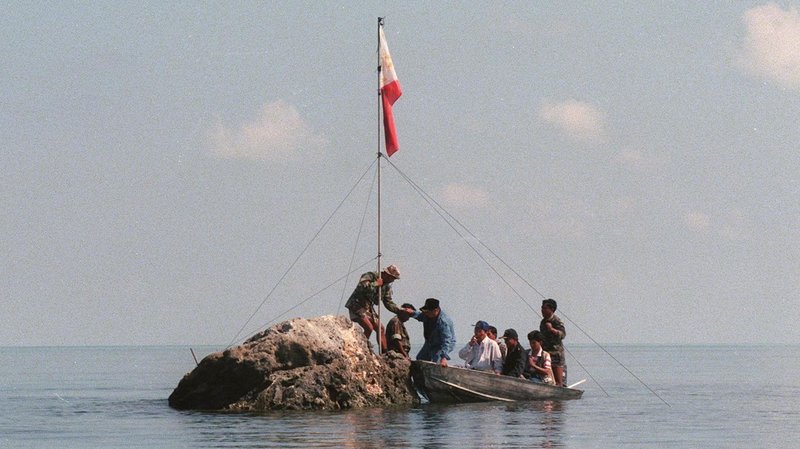
Diplomatic protest won't affect PH-China ties — Palace(AFP)


The House of Representatives on Monday, Sep. 9 ratified the bicameral conference committee report on the proposed Philippine Archipelagic Sea Lanes (ASLs) bill, bringing it one step closer to its enactment by President Marcos.

Pangasinan 3rd district Rep. Maria Rachel Arenas, the chairperson of the House Committee on Foreign Affairs, said the measure aims to the improve the protection of the country’s maritime domain.

“The establishment of archipelagic sea lanes within our waters, as mandated by the UNCLOS (United Nations Convention on the Law of the Sea), is essential to safeguard the integrity of our national territory while maintaining our commitments under international law,” Arenas said in a statement.

Once signed into law, the designation of ASLs is expected to further strengthen the country’s governance and security within its maritime features—which is crucial amidst China’s persistent claims over the West Philippine Sea (WPS).

As indicated in the measure, the system of archipelagic sea lanes of the Philippines and its air routes shall be defined by connecting the coordinates of the following axis lines:

  • Philippine Sea-Balintang Channel-West Philippine Sea
  • Celebes Sea-Sibutu Passage-Sulu Sea-Cuyo East Pass-Mindoro Strait-West Philippine Sea
  • Celebes Sea-Basilan Strait-Sulu Sea-Nasubata Channel-Balabac Strait-West Philippine Sea

Arenas noted that with this measure, the Philippines’ national interest is likewise balanced with the right of the international community, as provided in the UNCLOS.

Also called as the Law of the Sea Convention, the UNCLOS lays down the legal framework for the world’s oceans and seas by defining the rules governing the obligations of states, particularly on the uses of these waters and their resources.

“This Act is designed to provide clear guidelines for the passage of foreign ships and aircraft through our archipelagic waters, ensuring that such passage does not undermine our national security or disturb the peace and good order of our country,” explained Arenas.

“Together with the Philippine Maritime Zones Act, [it] reinforces the Philippines' commitment to international maritime law, particularly UNCLOS, while fostering greater cooperation with neighboring states in maintaining peace and stability in the region,” the congresswoman added.

Arenas, who headed the House contingent to the bicameral conference committee, finalized the committee report last week together with Senator Francis Tolentino, chairman of the Senate Special Committee on Philippine Maritime and Admiralty Zones.

Last Sep. 4, the Senate also ratified the report.

Following the House’s ratification on Monday, the bill will now be prepared for transmittal to the Office of the President.

Related Tags

Maria Rachel J. Arenas bicameral conference committee House of Representatives Archipelagic Sea Lanes Bill
ADVERTISEMENT
.most-popular .layout-ratio{ padding-bottom: 79.13%; } @media (min-width: 768px) and (max-width: 1024px) { .widget-title { font-size: 15px !important; } }

{{ articles_filter_1561_widget.title }}

.most-popular .layout-ratio{ padding-bottom: 79.13%; } @media (min-width: 768px) and (max-width: 1024px) { .widget-title { font-size: 15px !important; } }

{{ articles_filter_1562_widget.title }}

.most-popular .layout-ratio{ padding-bottom: 79.13%; } @media (min-width: 768px) and (max-width: 1024px) { .widget-title { font-size: 15px !important; } }

{{ articles_filter_1563_widget.title }}

{{ articles_filter_1564_widget.title }}

.mb-article-details { position: relative; } .mb-article-details .article-body-preview, .mb-article-details .article-body-summary{ font-size: 17px; line-height: 30px; font-family: "Libre Caslon Text", serif; color: #000; } .mb-article-details .article-body-preview iframe , .mb-article-details .article-body-summary iframe{ width: 100%; margin: auto; } .read-more-background { background: linear-gradient(180deg, color(display-p3 1.000 1.000 1.000 / 0) 13.75%, color(display-p3 1.000 1.000 1.000 / 0.8) 30.79%, color(display-p3 1.000 1.000 1.000) 72.5%); position: absolute; height: 200px; width: 100%; bottom: 0; display: flex; justify-content: center; align-items: center; padding: 0; } .read-more-background a{ color: #000; } .read-more-btn { padding: 17px 45px; font-family: Inter; font-weight: 700; font-size: 18px; line-height: 16px; text-align: center; vertical-align: middle; border: 1px solid black; background-color: white; } .hidden { display: none; }
function initializeAllSwipers() { // Get all hidden inputs with cms_article_id document.querySelectorAll('[id^="cms_article_id_"]').forEach(function (input) { const cmsArticleId = input.value; const articleSelector = '#article-' + cmsArticleId + ' .body_images'; const swiperElement = document.querySelector(articleSelector); if (swiperElement && !swiperElement.classList.contains('swiper-initialized')) { new Swiper(articleSelector, { loop: true, pagination: false, navigation: { nextEl: '#article-' + cmsArticleId + ' .swiper-button-next', prevEl: '#article-' + cmsArticleId + ' .swiper-button-prev', }, }); } }); } setTimeout(initializeAllSwipers, 3000); const intersectionObserver = new IntersectionObserver( (entries) => { entries.forEach((entry) => { if (entry.isIntersecting) { const newUrl = entry.target.getAttribute("data-url"); if (newUrl) { history.pushState(null, null, newUrl); let article = entry.target; // Extract metadata const author = article.querySelector('.author-section').textContent.replace('By', '').trim(); const section = article.querySelector('.section-info ').textContent.replace(' ', ' '); const title = article.querySelector('.article-title h1').textContent; // Parse URL for Chartbeat path format const parsedUrl = new URL(newUrl, window.location.origin); const cleanUrl = parsedUrl.host + parsedUrl.pathname; // Update Chartbeat configuration if (typeof window._sf_async_config !== 'undefined') { window._sf_async_config.path = cleanUrl; window._sf_async_config.sections = section; window._sf_async_config.authors = author; } // Track virtual page view with Chartbeat if (typeof pSUPERFLY !== 'undefined' && typeof pSUPERFLY.virtualPage === 'function') { try { pSUPERFLY.virtualPage({ path: cleanUrl, title: title, sections: section, authors: author }); } catch (error) { console.error('ping error', error); } } // Optional: Update document title if (title && title !== document.title) { document.title = title; } } } }); }, { threshold: 0.1 } ); function showArticleBody(button) { const article = button.closest("article"); const summary = article.querySelector(".article-body-summary"); const body = article.querySelector(".article-body-preview"); const readMoreSection = article.querySelector(".read-more-background"); // Hide summary and read-more section summary.style.display = "none"; readMoreSection.style.display = "none"; // Show the full article body body.classList.remove("hidden"); } document.addEventListener("DOMContentLoaded", () => { let loadCount = 0; // Track how many times articles are loaded const offset = [1, 2, 3, 4, 5, 6, 7, 8, 9, 10]; // Offset values const currentUrl = window.location.pathname.substring(1); let isLoading = false; // Prevent multiple calls if (!currentUrl) { console.log("Current URL is invalid."); return; } const sentinel = document.getElementById("load-more-sentinel"); if (!sentinel) { console.log("Sentinel element not found."); return; } function isSentinelVisible() { const rect = sentinel.getBoundingClientRect(); return ( rect.top < window.innerHeight && rect.bottom >= 0 ); } function onScroll() { if (isLoading) return; if (isSentinelVisible()) { if (loadCount >= offset.length) { console.log("Maximum load attempts reached."); window.removeEventListener("scroll", onScroll); return; } isLoading = true; const currentOffset = offset[loadCount]; window.loadMoreItems().then(() => { let article = document.querySelector('#widget_1690 > div:nth-last-of-type(2) article'); intersectionObserver.observe(article) loadCount++; }).catch(error => { console.error("Error loading more items:", error); }).finally(() => { isLoading = false; }); } } window.addEventListener("scroll", onScroll); });

Sign up by email to receive news.