







Fight against fake news: Collective responsibility of a unified citizenry


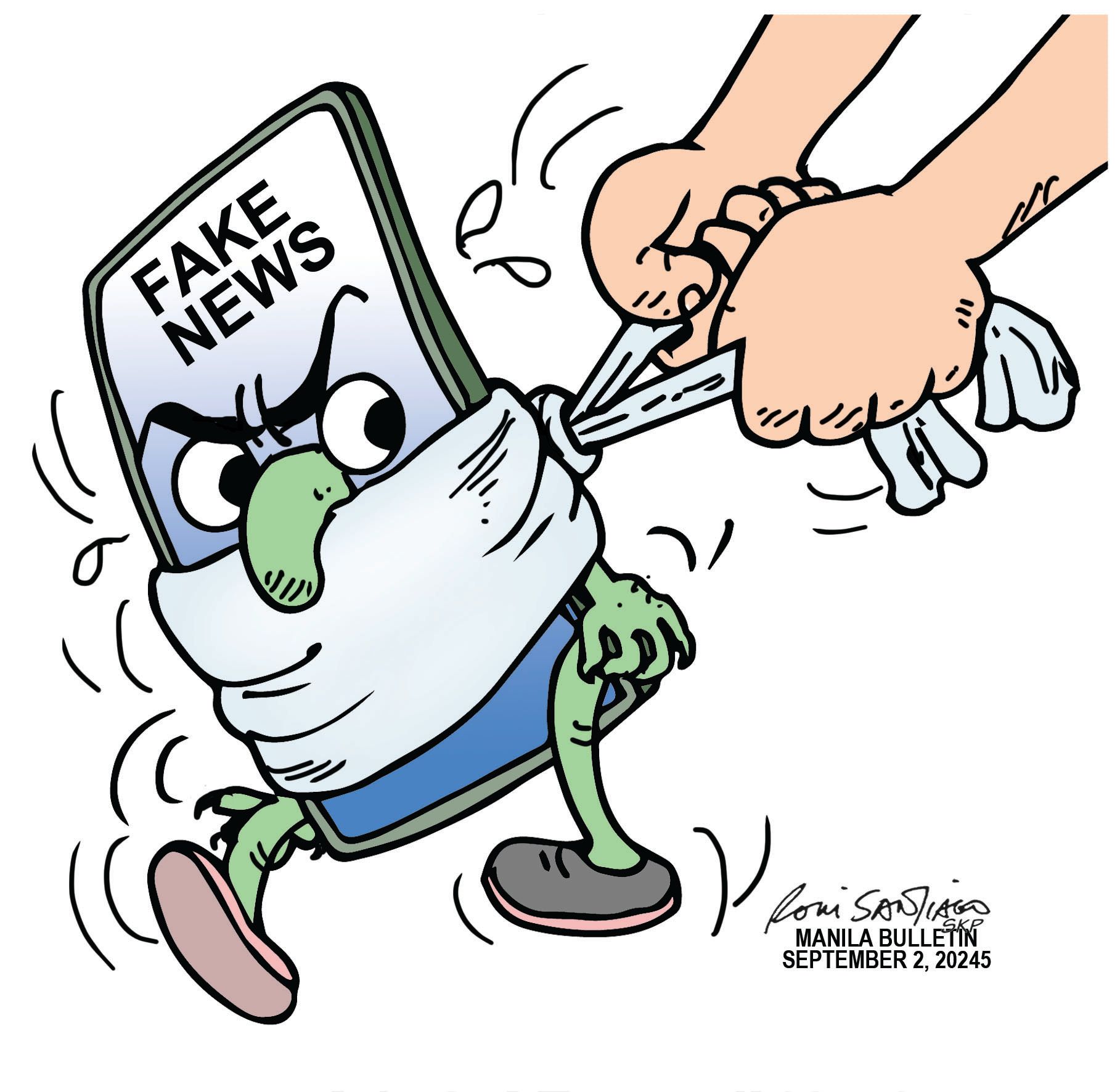
The observance of National Press Freedom Day last Aug. 30, 2024, brought to light a pressing issue that continues to threaten the essential fabric of our democracy: fake news. Over 60 media institutions, socio-civic organizations, NGOs, and educational institutions have manifested their solidarity by signing a covenant to combat disinformation. it is clear that the fight against fake news has become an urgent national priority.
With the filing of certificates of candidacy for the 2025 midterm elections barely a month away, there is need to fortify the guardrails of democratic dialogue. It is imperative to forestall a potential torrent of fake news that is likely to flood social media channels accessible to millions of Filipinos from mobile phones and similar digital gadgets.
Fake news is a serious problem in the Philippines, not only because it distorts the truth but also because it undermines public trust in the media, government institutions, and even the concept of truth itself. In a country where social media penetration is among the highest in the world, the spread of disinformation can be swift and devastating. Disinformation creates a climate of confusion and fear, making it difficult for citizens to make informed decisions, which is essential for a healthy democracy.
The proliferation of trolls on social media outlets has exacerbated the problem. These trolls, often paid operatives, are responsible for spreading false information, harassing those who stand for the truth, and creating echo chambers that reinforce lies and distortions. They manipulate public opinion by using fake accounts and automated bots to amplify their messages, making it seem as if they represent a significant portion of the population. This not only disrupts civil discourse but also erodes the integrity of social media platforms as spaces for genuine interaction and exchange of ideas.
In this context, raising awareness and social consciousness is not just an option—it is a necessity. Education plays a crucial role in equipping the public with the tools to discern fact from fiction. Media literacy programs must be integrated into the curriculum at all levels of education to help young people recognize and resist the lure of disinformation. Moreover, the general public must be encouraged to critically evaluate the sources of their information and to question the motivations behind the content they encounter online.
The fight against fake news is a collective responsibility that extends beyond journalists and media practitioners. It involves every Filipino who values truth, justice, and the well-being of our society. The covenant signatories — led by GMA Network and joined by the Manila Bulletin — have vowed to take an active role in combating disinformation by reporting fake news, supporting credible news sources, and fostering a culture of transparency and accountability in both traditional and social media.
Moving forward, let us remember that the defense of truth is not just about preserving press freedom—it is about protecting the very essence of our democracy. Together, we can stem the tide of fake news and ensure that the Philippines remains a nation where truth prevails.